Tag: wood

  • Stone & Wood Brewing Innovates With Refreshing Citrus Radler Beer Blend

    Stone & Wood Brewing Innovates With Refreshing Citrus Radler Beer Blend

    Stone & Wood Brewing Company has introduced a new beer blend, Citrus Radler, targeting customers who prefer lighter, more refreshing beverages. This innovative blend combines beer with citrus elements, providing a flavorful twist to traditional beer.

    A New Favorite: Citrus Radler

    The Citrus Radler is described as a light, invigorating beverage with a zestful aroma and taste, characterized by notes of orange, grapefruit, and lemon. Radlers are typically a combination of beer and citrus components, such as lemon soda, lemonade, or freshly squeezed juice.

    Stone & Wood’s unique spin on the Radler is light-bodied and designed for easy consumption. The product is free of added preservatives and is brewed exclusively using Australian malts and hops. Each 300ml can contain a moderate alcohol content of 4 per cent ABV.

    The company describes the Citrus Radler as a “bright and sessionable salute to the Australian golden hour.” It is a carefully crafted blend of Australian pale malts, Galaxy hops, and real Australian lemons, providing a refreshing experience to beer enthusiasts.

    Availability and Pricing

    The Citrus Radler is now available for purchase online and at select retail locations, including BWS and Dan Murphy’s stores. The product is priced at $17 for a pack of four and $60 for a pack of sixteen, providing customers with a range of options that cater to their unique preferences and consumption habits.

    Questions & Answers

    What is the Citrus Radler?
    Citrus Radler is a new beer blend introduced by Stone & Wood Brewing Company, featuring a refreshing blend of beer and citrus elements.

    What are the key characteristics of the Citrus Radler?
    It’s a light-bodied, zesty beverage with notes of orange, grapefruit, and lemon. It’s made using Australian malts and hops and contains no added preservatives.

    Where can the Citrus Radler be purchased and how much does it cost?
    Customers can buy Citrus Radler online or at select BWS and Dan Murphy’s stores. The price is $17 for a four-pack and $60 for a sixteen-pack.
  • Wood export likely to hit $14.5B in 2023

    Wood export likely to hit $14.5B in 2023

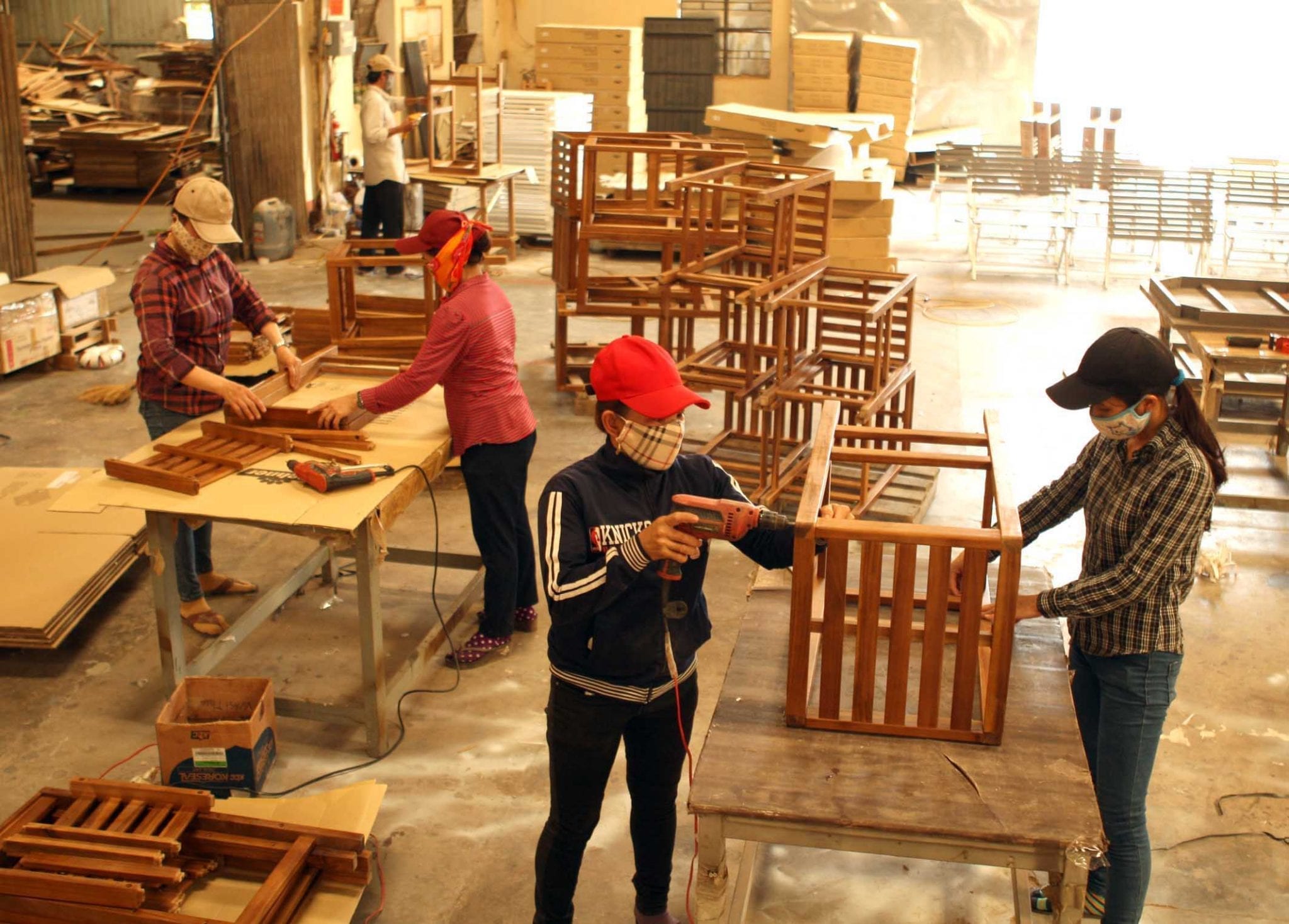
    Vietnam’s wood export is likely to hit about $14.5 billion this year, lower than the yearly target of $17 billion, said Vice Chairman of the Handicraft and Wood Industry Association of Ho Chi Minh City (HAWA) Nguyen Chanh Phuong.

    The figure could reach roughly $6 billion between now and the year’s end.

    Since early this year, wood and wooden furniture export has been dull, with a shortage of orders common in most businesses. In the past eight months, the export turnover neared $8.3 billion, down around 26% annually, Phuong told a local press conference on September 13.

    Since May this year, the Vietnamese firms have been importing a significant amount of raw wood materials which rise by 5-10% per month. This is a sign that they are actively preparing for end-of-year orders, he added.

    Citing data from the International Trade Centre (ITC), Phuong revealed that the Vietnamese wood enterprises are also importing a substantial amount of machinery and equipment, totaling approximately $240 million, mostly from China, Europe, the Republic of Korea and Japan, among others.

  • Timber exporters face sharp decline in orders

    Timber exporters face sharp decline in orders

    Vietnamese wood and wooden furniture enterprises have been facing many difficulties as export orders have dropped 50-60% since the beginning of this year, pushing firms to cut off at least half of their production capacities.

    Data from the General Department of Customs showed that the export turnover of wood and wooden products reached $3.9 billion in the first four months, down 30.6% year-on-year.

    At the same time, the import value of wood and wooden products also decreased significantly to $634 million, down 33.6% over the same period last year.

    During the four months, Vietnamese exports of these goods to major markets all decreased sharply such as the U.S. ($2.02 billion, 38%); Japan ($556 million, 1.5%); South Korea ($274 million, 22%) and China ($481 million, 13%).

    Analysts and businesses have said that the decrease in wood and wooden goods exports was foreseeable. They attributable the decline to inflation surges in some countries, which were also major importers of Vietnam’s wood and wooden goods, resulting in sluggish demand for these products.

    For example, the U.S. imported $1.24 billion worth of timber and wooden products from Vietnam in the first three months, a year-on-year drop of 42%.

    In the context of inflation and the banking crisis, U.S. banks have tightened credit, making importers unable to finance import goods in large quantities. The demand for U.S. wooden furniture imports has plummeted, analysts said.

    According to wood exporters, their export orders from the U.S. market have decreased between 50% and 55% depending on the type of wood products. Meanwhile, orders from the E.U. – another key export market, also dropped 60%.

    Chairman of the Binh Duong Woodworking Association Nguyen Liem said amid the current difficult context, the provincial wood enterprises had slashed their production capacities by 60%.

    “The current global economic situation is very unpredictable,” Liem said. “All market signals are not bright, and it is hard for wood enterprises to draw up their business plans.”

    Liem also predicted that when the market situation improved, and the inventory decreased, foreign customers would continue to order but not sooner than early 2024.

    Around the beginning of 2024, the market would be less difficult, and businesses would have export orders again. Still, only small ones, he said, forecasting that the market would likely recover at the end of 2024. However, the recovery growth would depend on the world’s economic and political situation.

    Despite a sharp slump in orders, trade experts said the U.S. remained a key export outlet for Vietnam’s wood industry. Therefore, businesses need to maintain the U.S. market by updating information and converting production according to the market’s consumption trends.

    In addition, management agencies should support businesses to bring Vietnamese wooden goods into large distribution systems such as Walmart, Costco and Amazon. This was an effective way for the firms to develop their brands, avoiding relying too much on intermediaries, trade experts said.

  • Wood exports to hit record of $18B this year

    Wood exports to hit record of $18B this year

    The export turnover of wood and wood products is expected to set a record high of $18 billion in 2023, with wood pellets and woodchips forecast to enter the one-billion U.S. dollar club.

    President of the Vietnam Timber & Forest Products Association (Viforest) Do Xuan Lap said that the figure will represent a 7-9% growth rate.

    To that end, the industry will focus on raising the competitiveness of enterprises by reducing the use of imported wood, applying science and technology to improve labour productivity, and stepping up digital transformation to cut production costs.

    In fact, in the fourth quarter of 2022, the number of orders decreased, and the gloomy atmosphere may linger on until the end of the first quarter of 2023. However, most of the businesses believe that the situation may begin brightening from the second quarter.

    Pellets and woodchips are also hoped to be a motivation for the development of the sector this year.

    Nguyen Thanh Phong, head of the wood pellet branch under the Viforest, said that Vietnam earned over $700 million from exporting nearly 4.7 million tonnes of pellets last year, up 35% in volume and 81% in value year-on-year,

    Currently, Vietnam is the world’s second-biggest exporter of wood pellets, and the export value of this product is predicted to surpass $1 billion this year.

  • RM25b export target for wood-based products achievable: Malaysian Council

    RM25b export target for wood-based products achievable: Malaysian Council

    The Malaysian Timber Council (MTC) remains optimistic that Malaysia will achieve its RM25 billion export target for wood-based products by 2020 despite a fragile global trade and economy caused by the US-China trade war. “We believe that the RM25 billion target is still achievable notwithstanding the potential headwinds that may come along the way, for instance Brexit, US-China trade war and other regional conflicts,” MTC CEO Richard said.

    “The good part about the timber and wood industry is that a lot of Malaysian businesses are very innovative, and they respond to changes quite quickly, in terms of adjusting to the changing needs and demands and also the challenges of the industry as well as economy,” he added.

    To recap, the Ministry of Plantation Industries and Commodities (MPIC) had in 2017 reduced the wood-based exports target from RM53 billion to RM25 billion due to shortage of raw materials.

    Yu said the RM25 billion target is more “realistic”, noting that the previous RM53 billion target was first formulated prior to the 2008 global financial crisis.

    “The planning and the formulation of the strategy was before that (the financial crisis). At that point of time, even in terms of the exchange rate was pretty favourable to us from ringgit terms perspective.

    “And looking at last year’s numbers, I think to get another incremental of about RM1 billion-RM2 billion for another three years should be quite realistic,” he added.

    The timber industry’s contributed RM23.2 billion to the government coffers in 2017, up 4.8% compared to last year’s figures.

    As at August 2018, the export figures had reached RM14.57 billion, in which the wooden furniture, plywood, sawn timber, fibreboard and builders’ joinery and carpentry are the main revenue generators for the sector.

    However, Yu noted that there is concern raised by the industry players on the potential Chinese products dumping.

    “That will obviously have an effect on our exports. But I believe the Ministry of International Trade and Industry is monitoring this issue closely,” he said.

    At present, Malaysia exports timber and timber-based products in over 160 countries.

    Moving forward, Yu said the country’s commitment in maintaining its forest cover at above 50% will ensure that the timber industry remains sustainable in the long-term.

    The MTC was established in January 1992 to facilitate the local industry players and promote the development and growth of the timber industry.

  • Vietnamese steel, wood firms might gain from US-China trade war

    Vietnamese steel, wood firms might gain from US-China trade war

    The recent escalation of trade tensions between the U.S. and China could have a positive effect for some industries in Vietnam, but experts warn these gains could prove short-lived.

    U.S. President Donald Trump announced last week that he would push ahead with tariffs on $50 billion of Chinese imports starting July 6, and China retaliated by slapping the same amount of duties on commodities from the U.S.

    The U.S. would impose a 25 percent tariff on more than 800 strategically important imports from China including cars and oil, while China announced that it would slap a 25 percent tariff on 659 U.S. products, from soybeans to seafood.

    Vietnamese wood businesses will be benefit from this trade war should the U.S. impose a heavy tax on Chinese wood starting this July, a representative of the Handicraft and Wood Industry Association of Ho Chi Minh City (HAWA) said.

    In the first two months this year, exports to the U.S. accounted for 39.7 percent of total wood export turnover, an increase of 14.6 percent from the same time last year, the source said.

    One of the reasons for this increase is the anti-dumping duties U.S. slapped on China at the end of last year, the source said.

    Vietnam is currently the fifth largest exporter of wood to the U.S., while China tops the list, according to HAWA statistics. If Vietnamese businesses can take this opportunity, growth can be much faster than now, the source said.

    Apart from wood, Vietnamese steel businesses would also enjoy a surge in steel exports to the U.S. if the latter ups its anti-dumping tariffs on China by 25-35 percent, Nguyen Huy Do, marketing director of Vietnam Italy Steel Jsc, said.

    However, industry insiders are warning that China might invest in manufacturing steel in Vietnam to have a ‘Vietnam label’ on products that will eventually be exported to the U.S.

    Last month, the U.S. Commerce Department slapped steep import duties on steel products from Vietnam that originated in China, finding that they evaded U.S. anti-dumping and anti-subsidy orders.

    After this, the Vietnam Steel Association has requested authorities to impose tighter controls on foreign investment in steel.

    Another risk is that China dumps its residual inventories on other countries in the region, including Vietnam, which will result in an unstable trade market, Dinh Tuan Minh, research director of market research firm Viet Analytics, said recently.

    Vietnam therefore needs to be careful amidst this trade war between the world’s largest economies and should not let itself be the target of steep tariffs, Minh said.

    “What the U.S. is doing to China can be done to Vietnam at some point,” he said.

  • Vietnam wood firms to refuse contraband

    Vietnam wood firms to refuse contraband

    Vietnamese wood companies will not exploit, transport, process, produce or trade in illegal wood and wooden products, according to the Viet Nam Wood and Forest Association (VIFORES).

    With a view to achieve sustainable development of its exports, the wood industry has committed to refrain from illegal trading at a conference in Ha Noi late Friday, VIFORES chairman Nguyen Ton Quyen said.

    Member companies of the VIFORES, Handicraft and Wood Industry Association of HCM City (HAWA), Forest Products Association of Binh Dinh (FPA Binh Dinh) and Binh Duong Forest Products Association of Binh Duong (BFPA) have all agreed to support the Government and management offices of the central and local administration in building, completing and implementing suitable policies and mechanism, in accordance with the Voluntary Partnership Agreement on Forest Law Enforcement, Governance and Trade (VPA/FLEGT) signed between Viet Nam and the European Union (EU).

    This action aims to promote competition of Vietnam’s wood and wooden products enterprises in the world market, developing a mechanism to manage wood in natural forests, and encourage sustainable development of planted forests.

    The enterprises will promote the use, processing and trading of wood and wooden products that are made from trees of planted forests in Vietnam and from legally-imported wooden material.

    They will also commit to co-operation in building and developing comprehensive and transparent information system and database on local wood processing industry, Quyen said.

    These commitments will encourage local enterprises, organisations and individuals to produce, process and trade only legal wood and wooden products, and promote plantation of forests in the nation to create active and legal wood material for local wood processing industry, he said.

    The commitments will also provide solutions to building a brand for Vietnam’s wooden products, and developing legal wood trading relationships with countries supplying wood material to Vietnam and countries importing Vietnamese wooden products.

    To Xuan Phuc, an expert from NGO Forest Trends, said wood material imported to Viet Nam has played an important role in the production and processing of Vietnam’s wooden products for export and the home market.

    Viet Nam has annually exported four million to 4.5 million cubic metres of wood, earning US$1.8 to $2 billion, so there are risks of illegal wood being exported, he said.

    Quyen said the United States, European Union and Australia have strict rules to regulate imported wood material. Thus, it is difficult for local enterprises to export their wooden products to these markets.

    The Ministry of Agriculture and Rural Development said that in the first four months, Viet Nam had earned $2.4 billion, a year-on-year increase of 12.7 per cent in the export value of wood and wooden products. The US, China and Japan were the three largest export markets for local wooden products.

  • Lack of timber threatens wood industry

    Lack of timber threatens wood industry

    This was stated by Bui Chinh Nghia, deputy head of the Ministry of Agriculture and Rural Development’s (MARD) Forestry Department. Nghia said this would result in a cut of some 40,000 cu.m. of raw material this year. Ensuring timber supply for domestic manufacturing is a problem in Vietnam as a large amount of raw timber is exported despite many domestic producers lacking raw material.

    To have enough material for processing and exports, many businesses have proposed that the government prohibit the export of raw material to other countries.

    If the quantity of exported wood is retained in the country, it would help local businesses take the initiative in signing orders with their partners in Europe and the United States.
    Sharing his opinion on this proposal, Huynh Kim Bau, assistant to the director of Saigon Furniture Co. Ltd, said the government should levy a tariff of 30-35 per cent on raw timber exports, the same level as applied by some regional countries, such as Cambodia and Thailand, to lower exports. In addition, enterprises need to plant high-quality tree species that grow in a short period of time to meet the industry’s increasing demand.

    Huynh Van Hanh, deputy chairman of the Handicraft and Wood Industry Association of HCM City, said small- and medium-sized enterprises (SMEs) needed to co-operate with each other if they wanted to compete with foreign firms globally.

    The association should make decisions based on three criteria — they are in real need of co-operation with other, they should trust their partners, and their rights and interests should be based on fairness as the work will be divided equally based on production and supply for each participant.

    As for those enterprises which are capable of expanding their business, they should invest in advanced technology to raise capacity and quality to overcome difficulties and access large orders.

    Hanh said Vietnam had more than 4,000 timber processing and export businesses but only seven per cent of them were large and could easily access huge orders from clients from the United States, Japan and the European Union. The remainder, which was small and medium enterprises, had weak competition capacity and small investment capital, hence they faced more difficulties while seeking orders.

    Meanwhile, the number of foreign investment businesses in the country was few, but they retained more than 50 per cent of the market share. Vietnamese SMEs mostly did outsourcing work of foreign investment businesses.

    Duong Phuong Thao, deputy director of the Import-Export Department under the Ministry of Industry and Trade, said Vietnam exported processed wood worth US$7 billion in 2016, while global demand stood at $400 billion for wood products. Vietnam’s wood industry, he said, must grow further to capitalise on the huge global demand.

    In 2017, MARD will switch the use of 200,000ha under small tree forests to growing large trees and issue sustainable forest certificate to those land areas. The total area under large trees granted sustainable forest certificates is expected to reach 500,000ha by 2020, promising a high-quality and certified source of timber for processing and exporting.

    Thao added that the Vietnamese Government planned to negotiate with its Lao and Cambodian counterparts to create better conditions for Vietnamese firms to source timber from forests in these countries to increase the supply of raw material.

    The local wood industry uses 30 million cu.m. of raw timber for manufacturing every year and has shipped products to more than 100 countries and territories. Only two-thirds of the timber is sourced domestically while the rest has to be imported.

  • Wood exports inch up, but prospects cloudy

    Wood exports inch up, but prospects cloudy

    iệt Nam estimated to gain US$7.3 billion from the export value of wood and wooden products this year, a slight increase of 1 per cent year on year, reported the Ministry of Agriculture and Rural Development’s General Department of Forestry.

    Nguyễn Bá Ngãi, deputy director of the general department, said this year, export value of forest products gained growth of 5-10 per cent depending on different products but the export value of wood and wooden products rose by 1 per cent against last year, reported Hải Quan (Customs) newspaper.

    The slight growth was due to strong reduction in the export value of wooden chips compared with last year, or 61 per cent of the export value of wooden chips in 2015, he said.

    Decrease in exports of wooden chips this year was due to a fall in demand for this product on the world market, especially China, said Ngãi, adding that Vietnamese wooden chip products have faced competition with similar products from other countries such as Thailand, Australia and some African nations.

    This year, Việt Nam promoted diversification of the export market to increase market shares on the world market, Ngãi said. Especially, Việt Nam has completed negotiations on the Voluntary Partnership Agreement on Forest Law Enforcement, Governance and Trade (VPA/FLEGT) between Việt Nam and the European Union, opening many opportunities on market development in the future.

    Lack of material

    Experts also said Việt Nam’s wood processing industry would continue development in production and business over the coming years.

    However, wood processing enterprises said the industry had fallen due to a lack of material for production.

    Bùi Như Việt, vice chairman of the Bình Dương Wood Association, said enterprises in the South were lacking material for production because in the past, many Chinese enterprises had come to purchase large volumes of wood.

    Trương Mộng Trinh, director of Mộc Lục Wood Company, also said more and more foreign enterprises had purchased wooden material, leading to a lower supply of the material for local processing companies and a higher price for wood, from VNĐ2-3 million per cubic metre to VNĐ5 million at present.

    Đỗ Xuân Lập, chairman of Bình Định Wood Association, said now, the price of rubber wood had increased by 20-25 per cent and there was strong competition for wood on the local market.

    This put pressure of procuring enough wood for production on enterprises in HCM City, Bình Dương, Đồng Nai and Bình Định provinces, he said.

    Local wood producers said the Government had solutions on avoiding the lack of material for wood processing but export tariff rates at present had not limited export activities for wood, especially exports to China, reported Công Thương newspaper.

    To ensure sustainable supply of this material in the future, the local enterprises expect the Ministry of Agriculture and Rural Development and the Việt Nam Wood and Forest Products Association to propose solutions to the Government on limiting exports of material for wood processing.

    Especially, the enterprises proposed increasing export tariffs for timber and sawn timber to 20 per cent as one of the efficient solutions to limit exports of timber for processing wooden products.

    Dương Phương Thảo, deputy head of the Import and Export Department from the Ministry of Industry and Trade, said in the future, the State should control exports of wood while also creating favourable conditions for local enterprises to exploit wood in foreign countries.

    That meant the Government would work with Việt Nam’s enterprises to grow trees for supplying wood in Cambodia and Laos as well as the governments of the two countries to import the material to Việt Nam, she said.

  • Indonesia ships first containers of timber under EU legality scheme

    Indonesia ships first containers of timber under EU legality scheme

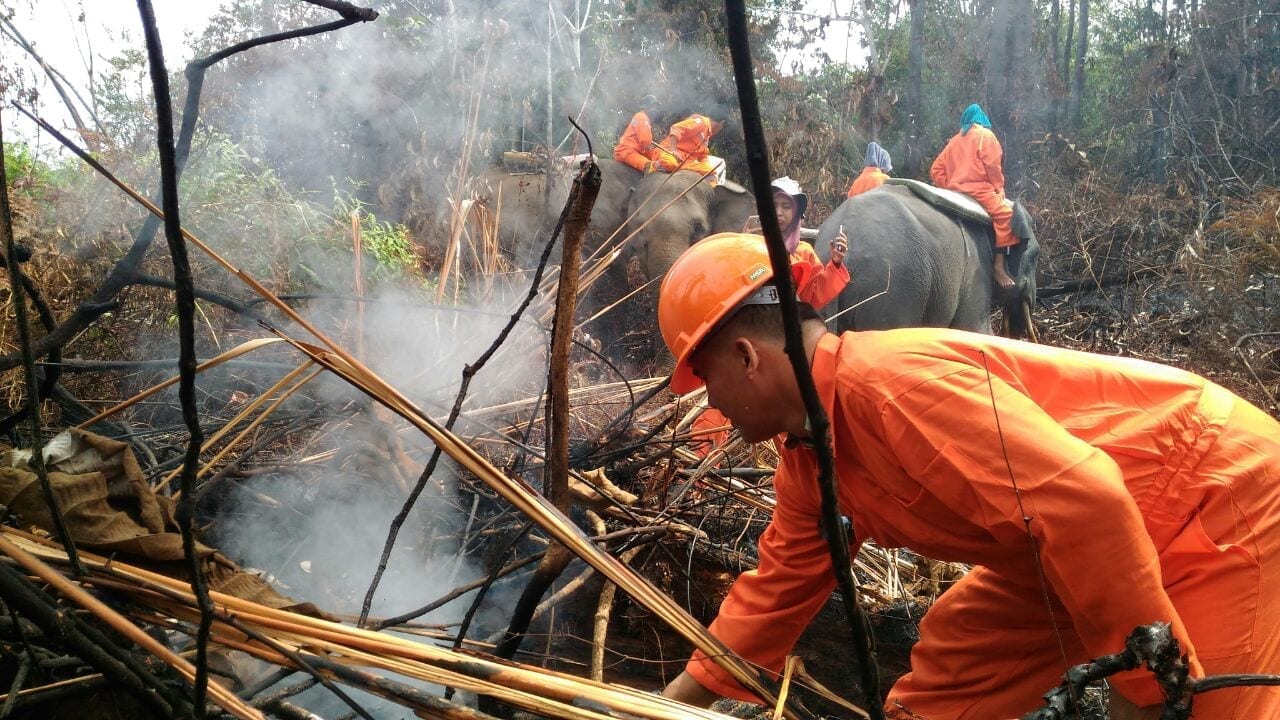
    Tesso Nilo National Park, Riau Province, Indonesia. This patch of forest is supposed to provide a habitat for tigers and elephants, but is constantly under threat of fire, illegal logging and encroachment. Image:

    The first containers of plywood certified as legal under the EU’s anti-illegal-logging action plan were shipped out of the Indonesian capital on Tuesday, a milestone in the fight against blackmarket timber in one of the world’s most heavily forested countries.

    Of the 15 nations that have agreed to take part in the scheme, Indonesia is first to succeed in establishing a national system for verifying the legality of its timber — a considerable achievement for a country where unscrupulous loggers pocketed a presumed $60.7-81.4 billion from illicit sales between 2003 and 2014, according to the nation’s antigraft agency. Indonesia lost nearly $9 billion in state revenue from unreported timber sales during the same period.

    “This signifies Indonesia’s commitment to combat illegal logging and the illicit timber trade,” said Rufi’ie, a director at the Ministry of Environment and Forestry.

    Rufi’ie, who like many Indonesians goes by one name, added that 36 certifications had already been issued under the scheme, known as Forest Law Enforcement, Governance and Trade (FLEGT). He said he hoped Indonesia’s compliance with the program would increase the value of its exports.

    With the adoption of the scheme, EU timber importers will not have to perform their own due dilligence on certified shipments from the archipelago country, increasing the competitiveness of Indoensian timber vis-a-vis other producers.

    Vietnam appears likely to be the second country receive the EU’s blessing to issue FLEGT licenses.

    A board member of the Indoesian Wood Panel Association (Apkindo), Gunawan Lim, said he expected plywood exports to jump 20 percent next year on the strength of the new certification, largely because not just Europe but other developed countries were also concerned with legality.

    Aida Greenbury, the head of sustainability at Asia Pulp & Paper, Indonesia’s largest pulp and paper company, agreed: “As nations around the world from Japan to Australia look to tackle illegal logging, Indonesia will benefit from major first-mover advantage for buyers looking for legal products.”

    The focus now shifts to maintaining the credibility of Indonesia’s Timber Legality Assurance System (SVLK), on which the issuance of FLEGT licenses is based.

    Indonesia is home to hundreds of thousands of forestry enterprises, many of which operate informally and on a small scale, and which can be difficult to monitor.

    Large companies break the law, too. On Wednesday, the Supreme Court convicted PT Merbau Pelalawan Lestari of logging outside the boundaries of its permit area on Indonesia’s main western island of Sumatra.

    NGOs called on the Indonesian government to make sure the scheme was properly enforced and monitored.

    Faith Doherty, forest campaign leader at London-based the Environment Investigation Agency, urged the EU to “swiftly [follow] up information on illegal timber trade entering the EU, including information submitted by independent investigators.”

    The WWF urged greater transparency, calling on the Indonesian government to ensure that civil society groups “will be granted full access to information including relevant data and planning documents,” Aditya Bayunanda said. “Holding up such information would greatly decrease the credibility and transparency of the system.”