Retail News CRM

Tag: Xiaomi

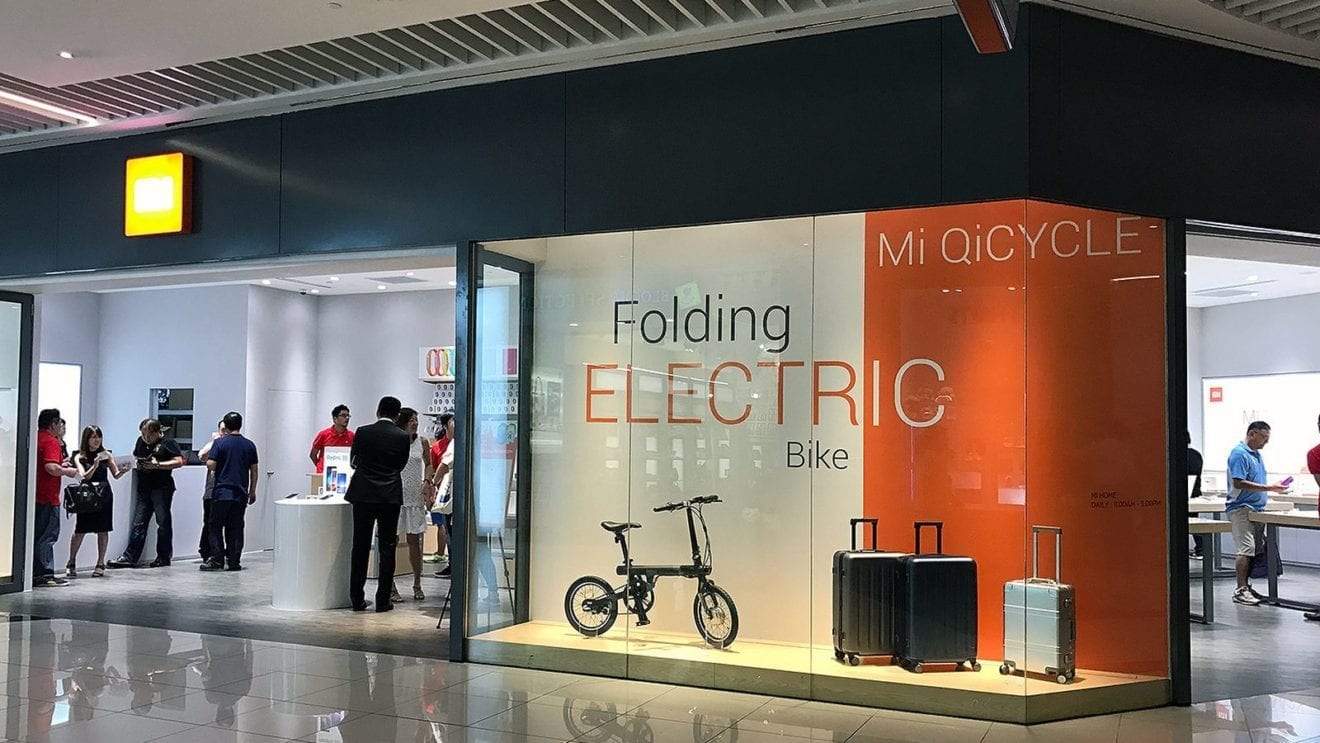
  • Xiaomi’s 100th Mi Home Store in China Opens

    Xiaomi’s 100th Mi Home Store in China Opens

    Xiaomi was once heralded as the internet phone king of China after it took the centre stage in selling its smartphones in China. That has however seen a decline due to the influx of other phone makers into the online channel. The likes of OPPO and Vivo have even outpaced Xiaomi by incorporating both offline and online sales channels, leading to a serious decline in revenue. This has prompted the company, dubbed the Apple of China, to open offline stores in China.

    Xiaomi had revealed last year that it plans to open 1000 Mi stores across several cities in China by the year 2020. In order to achieve that target, the company’s CEO Lei Jun hinted earlier this year that this company would open over 200 retail stores this year. The company has now hit 100 stores in total since the start of the project.The figure followed the opening of four new shops in Zhengzhou, Guangzhou, Foshan and Shanghai. The achievement si coming just five months after the 50th Mi home store was opened in December.

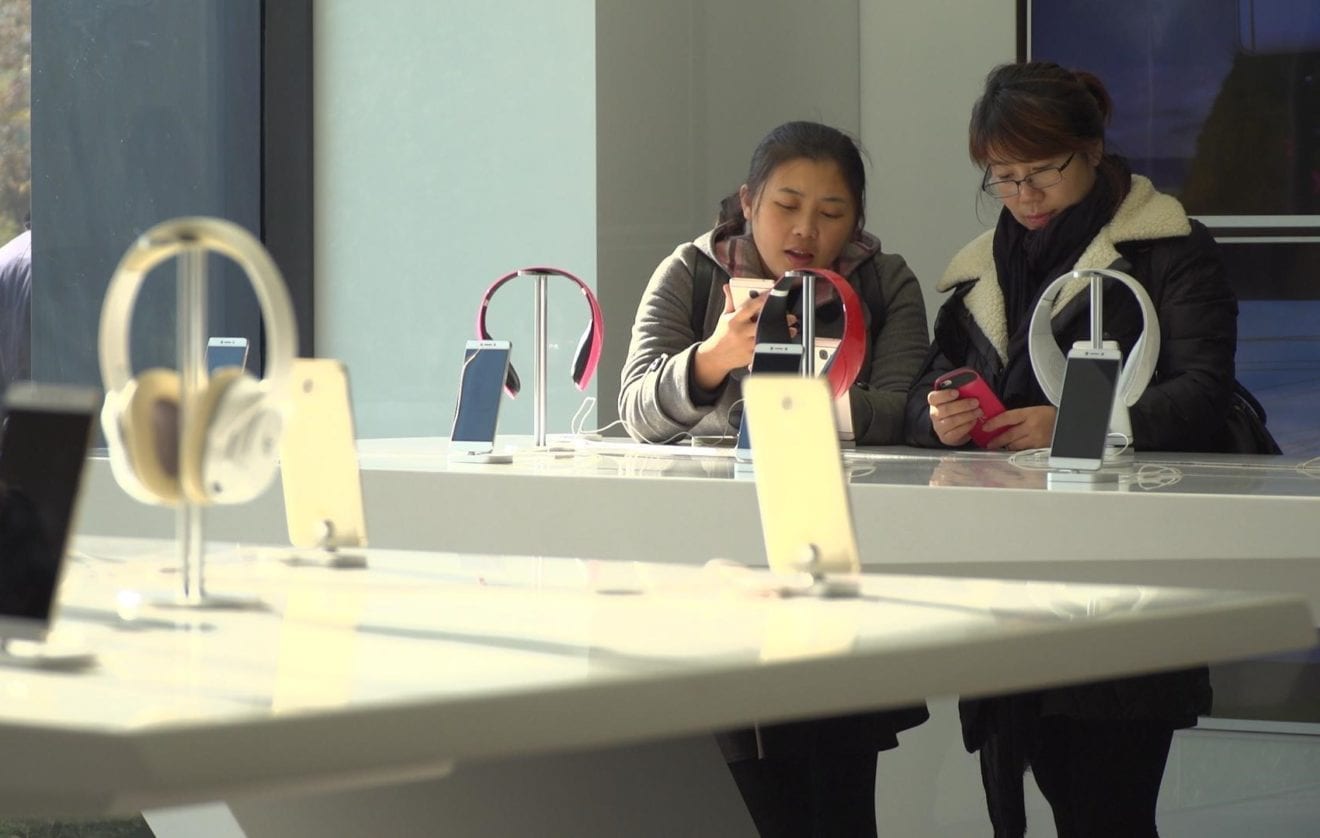
    At present, the Mi Home stores are located in major cities like Beijing, Guangzhou, Shenzhen, Nanjing, Chengdu, Hangzho, Wuhan, Zhuzhai, Zhengzhou, Changsha, Wuxi, Dongguan, Jinan, Dalian, Xiamen, Qingdao, Shenyang and others. Apart from sales, the shops cater for after sales service needs of customers as well as sales of accessories and technical support services. From the look of things, the Mi Stores seem to also stock other Mi smart gadgets apart from smartphones.

    Xiaomi has so far released quite a number of products this year and the pace seems not to be abating. With its recent determined pace, could we see Xiaomi contending at the top three at the end of this year? That is looking likely, even though its competitors are not sleeping either.

  • China’s Xiaomi branches out beyond smartphones to crack Indian market

    China’s Xiaomi branches out beyond smartphones to crack Indian market

    Chinese technology giant Xiaomi, best known for making smartphones and once hailed as an iPhone slayer, has decided the key to breaking the Indian market lies in a rather different product: the air purifier.

    “We have studied the demands of Indian customers, taking their living environment, preferences and consumption power into consideration. The air purifier is the product for us to further establish ourselves in India,” said Eugene Chan, regional manager of Mi Home, Xiaomi’s retail outlet chain.

    The air purifier is the product for us to further establish ourselves in India

    The Beijing-based firm is betting big on a bricks-and-mortar strategy to expand its presence in India, a country viewed by tech companies around the world as the next big internet market after China.

    Another part of the growth strategy is to branch out into making and selling products besides smartphones in an effort to rejuvenate the brand as an “everything store” in the South Asian country.

    With its first self-operated retail store set to open in Bangalore next month, Xiaomi plans to open five to 10 more offline stores under the Mi Home brand in India this year, selling products ranging from smartphones and fitness trackers to speakers and robot vacuum cleaners – and, of course, air purifiers.

    The plan is likely to include manufacturing some of the items locally to keep costs down.

    “We are considering producing air purifiers as well as other home appliance products in India locally to make sure that our products are still at affordable prices even sold offline in overseas countries,” said Chan, who is in charge of Mi Home’s expansion in South China and foreign markets.

    India, the fastest growing smartphone market in the world, has attracted a number of Chinese manufacturers, such as Huawei Technologies and Lenovo, as their sales at home stagnate. Xiaomi – one of the world’s most valuable companies in 2014, estimated to be worth US$45 billion – has recently announced plans to set up a second smartphone factory in India.

    Once compared to Apple for its sleek smartphones and dominance in China’s market, Xiaomi’s founder and CEO Lei Jun has recently sought to revamp the company into something more like US warehouse retailer Costco Wholesale, which sells everything from wine and cereal to diamond rings.

    He has halted the company’s online-only sales strategy, which originally catapulted Xiaomi to the top, and announced the goal of opening 1,000 Mi Home retail outlets in China in the next three years. Lei is aiming for sales from these stores to top 70 billion yuan annually within five years.

    The company currently operates 68 Mi Home stores in locations including Hong Kong and Taiwan.

    Xiaomi didn’t reveal the size of its investment in its physical expansion in India. But Chan said the offline strategy is good for both sales and marketing there.

    “We hope to bring 102 different kinds of products made by Xiaomi and its partners to Indian customers via Mi Home,” he said.

    In a recent interview with Blomberg, Lei said he expected to double Xiaomi’s revenue in India to US$2 billion in 2017.

    “The cost of offline expansion is much higher than purely selling products online,” said IDC China’s research manager Jin Di. “But Xiaomi needs to expand its product portfolio in India because the profit margin on smartphones is quite thin due to fierce competition. Home appliances, such as air purifiers, have much better margin than smartphones.”

    Xiaomi’s smartphone shipments in India grew 15.3 per cent in the fourth quarter of 2016, beating the industry’s 5.2 per cent, according IDC.

    This article appeared in the South China Morning Post print edition as:

    Xiaomi bets big on air purifiers in India

  • We expect to grow over 100% in India this year says Xiaomi CEO

    We expect to grow over 100% in India this year says Xiaomi CEO

    Xiaomi chairman and CEO Jun Lei is a sales man to the core – he even tries to market the $1 pen that his company sells as he winds up an interview. The company, which crossed $1 billion revenue in India last year and managed to grab the second spot behind Samsung, plans to go aggressive in the country, which Lei views as the second most important market after China.

    It is also looking at stronger brickand-mortar retail presence in India and elsewhere as its focus on the online-only model has been blamed for losing momentum in sales. While being upbeat on India, Lei sees many obstacles — from a complicated tax regime to weak infrastructure and poor broadband connectivity. Excerpts:

    Do you agree with the view that India is next China?

    India is the most important market after China. We look forward to continue to grow in India. Similar to China, we believe that India will experience same transformation in 10 to 20 years.

    PM Narendra Modi has focused a lot on Make in India initiative. Do you think India can become a factory to the world?

    Of course, we believe in that. We will first satisfy the needs of the local market… then we could consider the possibility of exporting.

    Do you face problems regarding infrastructure, government policies?

    From an optimistic point of view, we believe that the Make in India initiative has been pushed and adopted widely. We still see a lot of obstacles. For example, a lot of states have different tax rates. This could further complicate manufacturing and sales aspect. We look forward to GST to come in. We think India’s tax currently is much higher than China. Warehouse logistic costs are quite high. We also need a lot of effort in the transportation efficiency. Internet infrastructure is also a challenge. In China, 4G bandwidth is popular where a lot of cities are pushing for free Wi-Fi. We believe all these are worth the attention of the Indian government.

    Will there be higher focus on brick-and-mortar stores now?

    Online enabled us to reach our dreams of high efficiency. We’re trying to use the same Internet-plus philosophy when it comes to (offline) retail. In China, we initiated the concept of Mi Home. We’re trying to reach the same efficiency level when we do offline retail compared to our online efficiency. We’re trying to price it at the same level for offline as well. We need to ensure that there’s value for money. We need to ensure that our channels and partners are also successful and make profits. Our focus this year will be to continue to extend our market share in online and then experiment with the Internet+retail concept.

    How many stores will you require?

    We have expanded offline retail through 10,000 (multi-brand) shops. Recently, we have partnered with four big retail chains in South India. We are planning to open our own stores.

    Do you intend to make investments in Indian startups?

    We have invested in a few Indian companies. We have announced our investments in Hungama, India’s largest radio platform. We invested in a few more but we have not publicly disclosed them. Xiaomi has invested in 165 companies worldwide by 2016-end. We emphasize on building the ecosystem around us as smartphone is the infrastructure of mobile internet. It really requires a lot more applications and services to further accelerate the industry. So, we really believe in supporting mobile start-ups in India.

    In China sales have been below expectations…

    In the past two years, we have indeed faced some challenges in China. It is mainly due to the fact that we reached 50% market share in the online smartphone market in China. For us to continue our growth, the key challenge is to enter offline. Last year, we made definitive improvements and progress in offline in China. We have made a major breakthrough in understanding how to do retail offline in an e-commerce manner. We are now back on track for rapid growth as our China momentum is picking up. We expect India business to grow over 100% this year.

  • Oppo, Vivo founder reveals how he toppled Apple in China

    Oppo, Vivo founder reveals how he toppled Apple in China

    Duan Yongping is convinced Tim Cook didn’t have a clue who he was when they first met a couple years ago. The Apple boss probably does now.

    Duan is the reclusive billionaire who founded Oppo and Vivo, the twin smartphone brands that dealt the world’s largest company a stinging defeat in China last year. Once derided as cheap iPhone knockoffs, they leapfrogged the rankings and shoved Apple Inc. out of the top three in 2016 — when iPhone shipments fell in China for the first time.

    They managed to do it because the American smartphone giant didn’t adapt to local competition, the entrepreneur told Bloomberg in what he said was his first interview in 10 years. Oppo and Vivo employed tactics Apple was reluctant to match, such as cheaper devices with high-end features, for fear of jeopardizing its winning formula elsewhere, Duan said.

    “Apple couldn’t beat us in China because even they have flaws,” the 56-year-old electronics mogul said. “They’re maybe too stubborn sometimes. They made a lot of great things, like their operating system, but we surpass them in other areas.”

    That’s not to say Duan doesn’t appreciate the iPhone maker’s global clout. In fact, the billionaire’s obsession with his US rival is legion: he’s long been a big-time investor in Apple and an unabashed fan of its chief executive officer.

    “I’ve met Tim Cook on several occasions. He might not know me but we’ve chatted a little,” Duan said. “I like him a lot.”

    Apple couldn’t confirm Duan’s meeting with Cook when contacted by Bloomberg. But Duan has blogged incessantly about Apple’s products, share price and operations since 2013, when the company was worth half what it is today. He needs “a really big pocket” because he carries four devices, including a heavily-used iPhone. In a 2015 post, he argued Apple’s profit should reach $100 billion within five years. Today, Duan won’t say when he actually bought in but says much of his overseas wealth remains tied up in the iPhone maker. He even lives in Palo Alto, an easy drive from Apple’s new UFO-like headquarters in Cupertino.

    “Apple is an extraordinary company. It is a model for us to learn from,” Duan said. “We don’t have the concept of surpassing anyone, the focus instead is to improve ourselves.”

    Oppo’s gains against Apple may now earn an even broader following for the billionaire dubbed China’s Warren Buffett by local media for his investment acumen. Born in Jiangxi, a birthplace of Mao Zedong’s Communist revolution, Duan began his career at a state-run vacuum tube plant before making his name with homegrown electronics.

    Duan left the factory floor around 1990, when China was just embracing capitalism and opening industries to private investment. He headed to southern China’s Guangdong province, then the cradle of liberal reforms, to run a struggling electronics plant. His first product was the “Subor” gaming console with dual-cartridge slots — a direct shot at Nintendo Co.’s classic Family Computer, known elsewhere as the Nintendo Entertainment System. The 100- to 400-yuan Subor became a hit in the absence of local competitors. Duan even enlisted Kung Fu star Jackie Chan to endorse the device. By 1995, revenue from the Subor exceeded 1 billion yuan.

    Duan left to set up a new business that year as the operation flourished — a pattern he would repeat in later years. He christened his second venture Bubugao, literally “rising higher step-by-step.” BBK, as the company came to be known, created a popular line of VCD and MP3 players but later also made DVD players for global brands. Subsidiary Bubugao Communication Equipment Co. became one of the country’s biggest feature-phone makers around 2000, going head-to-head with Nokia and Motorola.

    It was the first iPhone in 2007 that paved the way for Oppo and Vivo. While they share a common founder in Duan, the sister brands are fierce competitors, trotting out dueling marketing campaigns in markets from India to Southeast Asia. Their salesmanship philosophy plays well in emerging markets, IDC research manager Kiranjeet Kaur said.

    “The companies fully understand how to make the best of their people, a specialty they inherited from Duan,” said Nicole Peng, a senior director at Canalys. Importantly, they understood their millennial audience. “Many of their managers are young and have been working at the company since graduation.”

    Duan’s latest endeavors were, in part, dreamed up in Apple’s backyard. By 2001 at the age of 40, Duan had decided to move to California to focus on investment and philanthropy, later installing his family in a mansion he reportedly bought from Cisco Systems Inc. Chairman John Chambers. But the advent of the smartphone forced the entrepreneur out of retirement.

    By the second half of 2000s, BBK was on the verge of falling apart as sales of its basic devices slowed. The likes of Huawei and Coolpad were making smartphones priced at around 1,000 yuan. That nearly put the company under, Duan recalled.

    “We were in serious discussions about how to close the company peacefully — in a way that the employees can leave unhurt and suppliers don’t lose money,” he said.

    Those intense brainstorming sessions spawned the two businesses that would go on to embody Duan’s greatest success. In 2005, the entrepreneur and his protege Tony Chen decided to create a new company. Dubbed Oppo, it sold music players but ramped up to smartphones in 2011. In 2009, BBK itself created Vivo, headed by another of Duan’s disciples, Shen Wei.

    “Making mobile phones was not my call,” said Duan. “But I reckoned we could do well in this market.”

    At first, neither label garnered much attention. The iPhone was captivating users with its revolutionary apps system and elegant interface, while BlackBerrys lorded over the corporate market. But Oppo and Vivo then developed a marketing-blitz approach that relied on local celebrity endorsement and a vast re-sellers’ store network across China. They crafted an affordable image that appealed to a millennial crowd, then tricked out their devices with high-end specs. On the surface, Oppo and Vivo phones now routinely surpass the iPhone on measures such as charging speeds, memory and battery life.

    It paid off. The duo together shipped more than 147 million smartphones in China in 2016, dwarfing Huawei Technologies Co.’s 76.6 million units, Apple’s 44.9 million and Xiaomi’s 41.5 million, IDC estimates. Oppo and Vivo both doubled their 2015 haul. In the fourth quarter, they were No. 1 and No. 3, respectively — Huawei was second. Their approach worked particularly well in lower-tier cities, where mid-range phones became a mainstream hit, said Tay Xiaohan, an IDC analyst.

    Duan’s smartphone progeny are also gaining some momentum beyond their home turf. In the fourth quarter, Oppo and Vivo were fourth and fifth in the world, respectively. About a quarter of Oppo’s shipments went to markets like India, where it hopes to dig in before Apple establishes a meaningful presence.

    “Smartphones are an unprecedented opportunity. We forecast at least for the next 10 or 20 years, there’s no replacement. But we don’t know,” Duan said.

    Cook said on the weekend that Apple doesn’t have a specific goal for market share.

    “The competition is more fierce in China — not only in this industry, but in many industries,” Cook told the China Development Forum in Beijing. “I think that’s a credit to a number of local companies that put their energies into making good products.”

    Duan has increasingly kept his distance from the Chinese smartphone makers despite remaining a significant shareholder (he won’t say how much). He says he prefers to stay out of the spotlight and enjoy California with his journalist wife and kids. In fact, he attends board meetings but claims to get most of his information on Oppo and Vivo from the internet, to avoid “disturbing them.”

    His rivals have been less considerate. Last October, Xiaomi Corp. co-founder Lei Jun lambasted competitors who build dense store channels in rural areas in pursuit of quick sales. In an interview with China Entrepreneurs Magazine in October, Lei accused such players of using “imbalanced information” to trick buyers into shunning Xiaomi, precipitating its decline from the top spot.

    “Those who said this were insane,” Duan said without naming names. “When someone talks about an information imbalance, deep down they believe consumers are idiots.”

    His most visible passion these days is stock investment, which is why he agreed to pay a then-record $620,100 in 2006 to lunch with Buffett. Quotes from the Sage of Omaha still pepper Duan’s blogposts, right alongside tips on golf and Apple.

    Duan cemented his reputation as a savvy financier in part by digging his friend, Netease Inc. founder William Ding, out of a hole. Ding’s internet company tanked to as low as 13 cents after the dot-com bubble burst, then almost became the first U.S.-listed Chinese company to get tossed off the Nasdaq over an auditing issue. Duan came to his friend’s aid, buying about 5 percent of Netease with just $2 million in 2002, when the stock price averaged 16 cents. Company filings show he still held just over 4 million shares as of March 2009, but Duan said he sold much of that when Netease hit $40.

    His other much-studied holding is premium-liquor company Kweichow Moutai Co. He said he bought in at 180 yuan in late 2012. While it nearly halved in 2014, Moutai today trades above 370 yuan.

    Duan isn’t shy about talking up his trades, not least of which is Apple, which remains near a record high despite a rare sales decline in 2016. But looking back on his decades as first entrepreneur then stock-picker, his proudest moments remain rooted in BBK. Though he claims to keep it at arm’s length, he admits to worrying about succession and whether the company culture will survive another generation of leaders.

    And while BBK’s Vivo and Duan’s own Oppo have done well, there’s no certainty in a fast-moving business. Both are starting to ramp up everything from the features on their phones to marketing campaigns: Oppo notably used Barcelona’s Mobile World Congress to unveil its most advanced camera technology yet, signaling a new maturity.

    One thing’s for sure, Duan doesn’t see himself returning to an active executive, leaving others to deal with the next challenge.

    “I’ve made it clear many years ago, I will never make a comeback,” he said. “If there’s a problem they can’t fix, then neither can I.”
  • Xiaomi Vietnam has launched

    Xiaomi Vietnam has launched

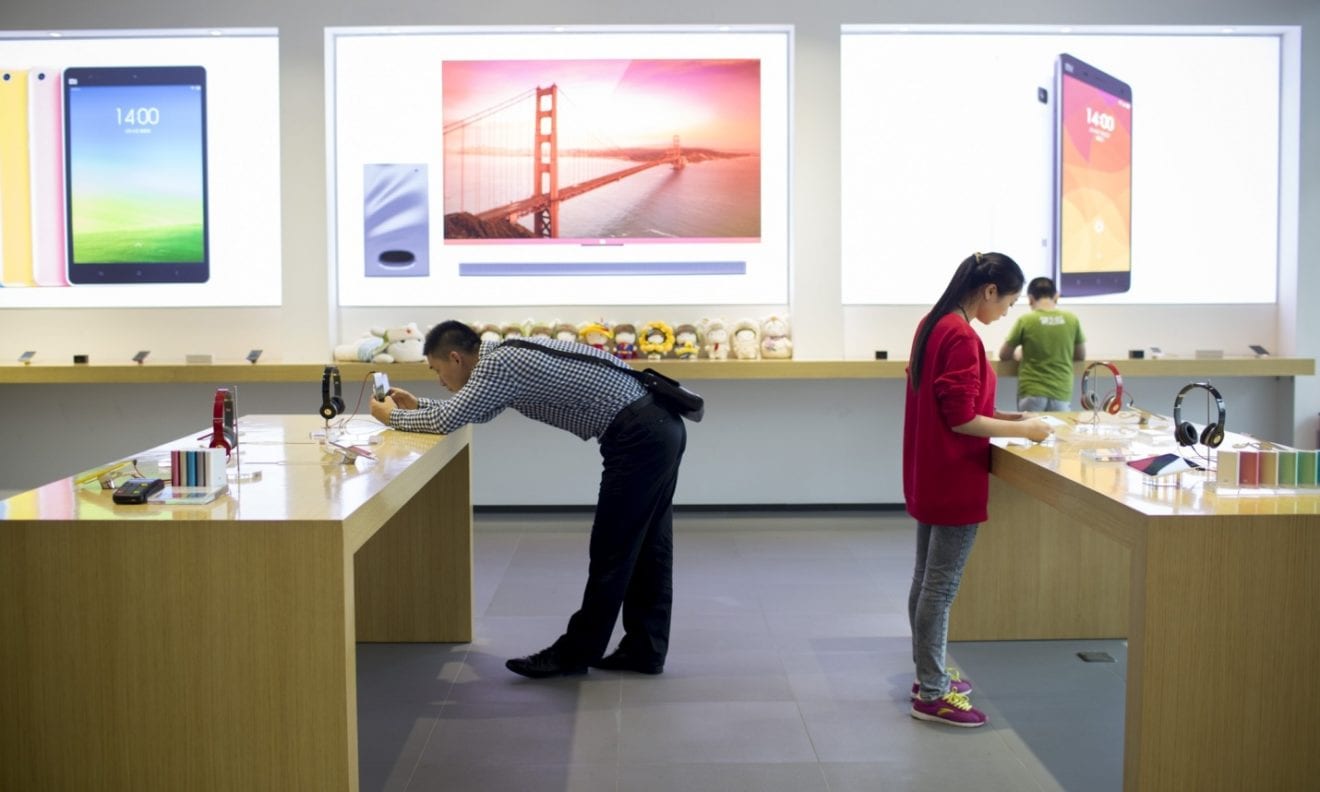
    Chinese smartphone brand Xiaomi has launched in Vietnam.

    The official distribution partner of Xiaomi Vietnam is Digiworld, which has opened four warranty centres in Ho Chi Minh City, Hanoi and Danang.

    Doan Hong Viet, CEO – Digiworld, and Wang Xiang, Senior Vice President – Xiaomi

    Xiaomi2

    Xiaomi1

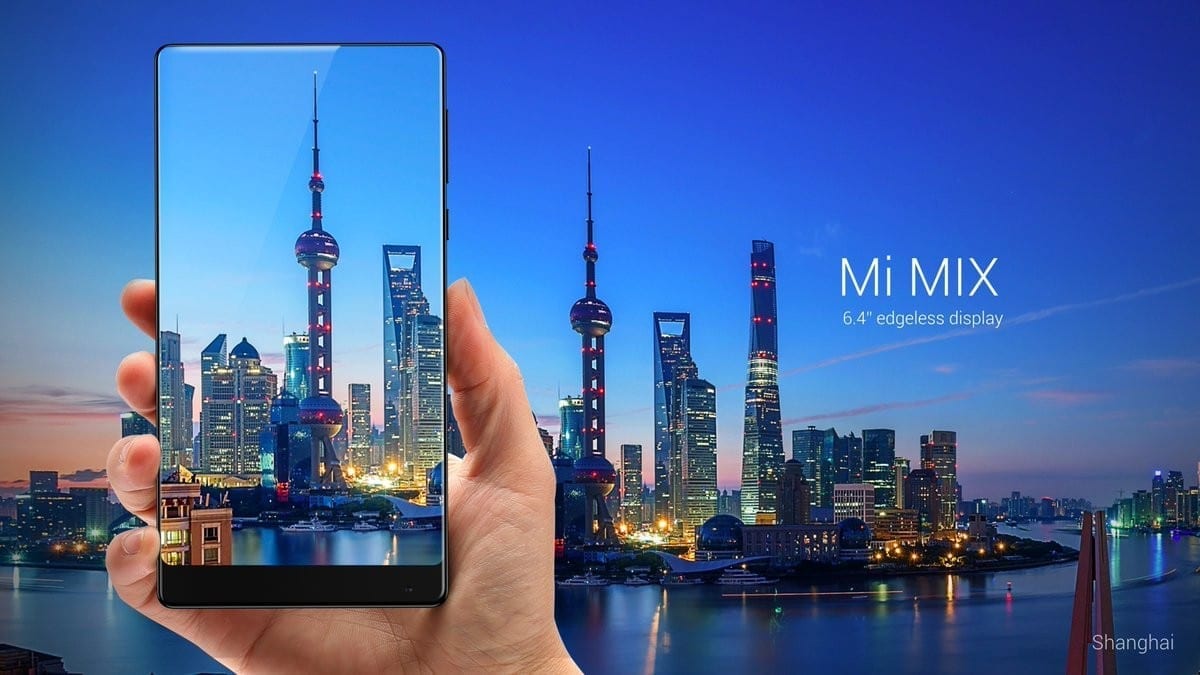
    Xiaomi Vietnam will initially launch its three latest smartphone models – the Redmi, Redmi Note 4, and Mi Mix.

    In the next months, Xiaomi Vietnam will launch other products include wifi routers Mi Routers Pro and Mi Routers HD.

    All products will be sold through retailers such as The Gioi Di Dong, Hnam Mobile, Mai Nguyen, VinPro, Aeon Mall – both online and offline.

    There is no word as yet on whether the company will bring other products into Vietnam, which include flat screen TVs, AV equipment and robot vacuum cleaners.

  • Xiaomi plans ambitious plans to roll out retail outlets overseas

    Xiaomi plans ambitious plans to roll out retail outlets overseas

    Chinese smartphone maker Xiaomi is likely to expand its sales model of online to offline integration abroad, as its chief executive pins his hopes on so-called “new retail” to arrest a slide in its home market as well as winning more buyers overseas.

    Lei Jun, founder and chief executive of the Beijing-based Xiaomi, said on Monday the company will adopt its sales strategy in China while making expansion overseas, a practice that would require self-built retail outlets on foreign land in addition to the company’s existing online presence overseas.

    “We will bring our (sales) practice in China to overseas markets,” Lei said on the sideline of the ongoing meeting of the National People’s Congress in Beijing without disclosing any detailed plans.

    The integration of online and offline sales, coined as new retail in China, is one of the key areas Lei, an NPC deputy, emphasises in his proposals to the NPC.

    He said the new retail model provides “better customer experience” while at the same time “boosts sales efficiency”.

    Offline stores are good for Xiaomi to attract overseas buyers in India and Southeast Asia as for a significant proportion of them smartphones are still big-ticket item. They want to check out real products first before making purchases and offline stores can also provide after-sales services

    Jessie Ding, an analyst with market research firm Canalys

    Earlier this year, Lei announced plans to open 1,000 bricks-and-mortar stores in China over the next three years, part of the company’s effort to reach its target of 10 billion yuan in revenue in 2017.

    The company opened 50 stores in 2016 after finding it online sales model being challenged by domestic rivals.

    The company, which was China’s best selling smartphone maker in 2014, saw its shipments in the country last year slump 23 per cent with a market share of just 8.9 per cent, according to IDC data.

    Via the aggressive outlet strategy in smaller cities in China, domestic players Oppo saw smartphone shipments more than double to 78.4 million units last year as it took top spot with a 16.8 per cent share. China’s Huawei Technologies and Vivo both rose at a double-digit pace to rank second and third.

    As most of China’s major smartphone makers look overseas for business growth, Xiaomi faces tough competition not only at home but also abroad, said analysts.

    “Offline stores are good for Xiaomi to attract overseas buyers in India and Southeast Asia as for a significant proportion of them smartphones are still big-ticket item,” said Jessie Ding, an analyst with market research firm Canalys.

    “They want to check out real products first before making purchases and offline stores can also provide after-sales services,” she added.

    Lei said the next decade will be a golden era for the globalisation of Chinese smartphone makers thanks to increased innovation and manufacturing skills.

    “Our global expansion started three years ago. But our strategy is to move to neighbouring countries first, before going to the West mainly because we haven’t got enough talented staff to support such drastic expansion,“ he said.

  • What exactly is wrong with China’s ‘Apple’ Xiaomi?

    What exactly is wrong with China’s ‘Apple’ Xiaomi?

    Although it crossed $1 billion in revenue in 2016 within the first two years of its operations in India, Xiaomi — once touted as the “Apple” of China — has slipped to fourth spot back home as the demand for its smartphones declined 22 per cent annually — eventually taking it to seventh spot in the global smartphone ranking with a 16 per cent drop in sales.

    The decline came even as Hugo Barra, Xiaomi’s high-profile head of international operations, left the company in January and joined Facebook to lead its virtual reality (VR) project.

    According to the experts, the key reason for this decline is Xiaomi’s rivals racing ahead with key features, better innovations, bigger marketing budgets and wider online and offline distribution channels.

    “Until 2016, Xiaomi relied only on online channels for smartphone sales which contributes approximately 30 per cent of the total smartphones sales in China, leaving a huge chunk of the market untapped. Its competitors invested heavily in building strong offline channels, expanding their reach to tier-2 and tier-3 cities and moving ahead of Xiaomi,” Shobhit Srivastava, Research Analyst, Mobile Devices and Ecosystems at market research firm Counterpoint Research, told IANS.

    Another reason for Xiaomi’s slipping growth is the rising average selling price (ASP) of the maturing China smartphone market, experts noted.

    “Bulk of the sales in China is coming from upgrades where Huawei, OPPO and Vivo are gaining market share while Xiaomi remains in the below-$150 category. Xiaomi also lacks in research and development unlike its Chinese counterparts which are vertically integrated,” Srivastava added.

    An email sent to the company for its reaction to the decline in global smartphone sales didn’t elicit any response.

    Xiaomi’s main markets have been China and India which combined get more than 95 per cent shipment share. While performance in India improved in 2016, the company lost market share in China resulting in the decline of overall global smartphone ranking.

    Huawei, Oppo and Vivo have emerged as clear winners with Oppo and Vivo registering significant growth in China.

    Shipping 44.9 million iPhones to China, even Apple has beaten Xiaomi that shipped 41.5 million smartphones in 2016, market research firm International Data Corporation (IDC) revealed earlier this month.

    According to IDC’s “Quarterly Mobile Phone Tracker” report, Apple dropped from 58.4 million iPhones in 2015 and Xiaomi from 64 million Mi phones — drops of 23 per cent and 36 per cent, respectively.

    Amid the global gloom, it is the Indian smartphone market that has helped Xiaomi gain profits.

    “They (Xiaomi) have already established their presence in India with a revenue of more than $1 billion in 2016 in the country. They will keep going as they have a strong management team,” Jaideep Mehta, Managing Director, IDC South Asia, told IANS.

    “On Barra, I would say that a senior executive has just moved on. Of Course, he will be missed, but the company is bigger than one individual,” he added.

    Coincidently, Xiaomi is not going to showcase any product at the upcoming Mobile World Congress (MWC), the telecom industry’s largest event, in Barcelona, Spain, later this month. There are reports that Xiaomi doesn’t have new devices to showcase during the MWC show.

    This indicates there is something wrong somewhere and the company needs to plug the problem fast before its global presence plunges further.

    “To recover and sustain growth, Xiaomi will have to focus on building strong offline channels as it will open up a significant market for the company. It needs to concentrate more on its R&D and come up with a device in the higher-mid end segment for the increasing Chinese middle-class population with higher disposable incomes,” Srivastava emphasised.

  • Xiaomi targets 10bn yuan revenue from 1000 new offline stores

    Xiaomi targets 10bn yuan revenue from 1000 new offline stores

    Chinese smartphone maker Xiaomi has pinned its hopes on offline sales with a plan to open 1,000 brick-and-mortar stores over the next three years, targeting 10 billion yuan in revenue from this channel, its founder and chief executive Lei Jun said on Wednesday.

    Xiaomi aims to boost the number of its physical stores, called Mi Home, to 200 this year from 51 at the end of last year, Lei said at a forum in Yabuli in the northeastern province of Heilongjiang.

    “I am confident that each of the offline stores can achieve sales of 10 million yuan [per month],” he said. That means Mi Home retail stores are expected to contribute 2 billion yuan (HK$3.39 billion) in sales per month.

    Lei said 2016 was a tough year for Xiaomi as he was “confused” about how to expand into more innovative sales channel from just e-commerce.

    Traditionally, running brick-and-mortar stores will inflate costs and erode profits, making it hard to offer high quality and inexpensive products to customers, Lei said. The toughest part is therefore to build new stores with high efficiency to control costs, he said.

    One of the challenges for Xiaomi is that we need to make essential adjustments after rapid growth

    Lei Jun, Xiaomi founder and CEO

    “Unlike other chain stores, Mi Home stores are all self-operated by Xiaomi. At the end of last year, our 51 stores were able to achieve sales per square metre of 260,000 yuan,” he said.

    Lei told his staff last month that Xiaomi has targeted 100 billion yuan in revenue this year, which was subsequently described by market watchers as unrealistic, with many sceptical it was achievable.

    However, Lei said he is confident that Xiaomi can meet the target.

    “Considering Xiaomi’s foundation, this small target is not too difficult to achieve. I am more concerned about how to make our foundation more solid,” he said. “One of the challenges for Xiaomi is that we need to make essential adjustments after rapid growth.”

    Despite China’s continuous growth in e-commerce, companies have been putting increased efforts into expanding offline channels, or integrating their online and offline businesses.

    E-commerce giant Alibaba Group founder Jack Ma Yun has said that e-commerce had become a “traditional business” which would soon disappear. A new retail model which integrates online and offline, as well as logistics and data across a single value chain, would be the next trend, said Ma, who first raised this idea in October last year. Alibaba owns the South China Morning Post.

    This article appeared in the South China Morning Post print edition as:

    Xiaomi targets 10b yuan in offline sales

  • Xiaomi Goes All-In On Retail to Revive China Smartphone Sales

    Xiaomi Goes All-In On Retail to Revive China Smartphone Sales

    After pioneering online flash sales in China to reach the top of the smartphone market, Xiaomi Corp. is turning to old-fashioned retail to arrest its slide. The phonemaker will roll out a chain of about 1,000 brick-and-mortar stores under the Mi Home banner over the next three years, as co-founder Lei Jun mimics a strategy that’s helped the Oppo and Vivo brands leapfrog Xiaomi to the top of China’s smartphone market. The new target accelerates plans outlined just last month to open 200 stores in 2017.

    Xiaomi, which was valued at about $45 billion in 2014, is resorting to traditional selling techniques to make inroads into the next generation of smartphone buyers who eschew buying online. While Oppo and Vivo use a network of resellers to reach consumers in rural areas and smaller Chinese cities, Lei’s strategy would be more akin to Apple Inc.’s, with plans to own and operate its own signature outlets.

    “This is Xiaomi’s biggest problem: how we can overcome the obstacles of our business model,” Lei said in a video clip from a business forum posted by national broadcaster CCTV. “Our model can no longer be online, it has to be new retail.”

    “We have a chance to do 60 to 70 billion yuan in business” from those stores, Lei said without specifying a timeframe.

    Xiaomi is overhauling its approach to try and regain its perch atop the world’s largest smartphone arena. While it’s expanding globally — particularly in India — plugging all manner of household appliances and deepening research into artificial intelligence and online finance, the company still gets much of its revenue from its first hit product.

    Oppo and Vivo’s retail strategy has helped them take two of the top three spots in the Chinese market, providing rebates and incentives for the shop owners that dominate sales in far-flung provinces to push their products.

    That has driven down Xiaomi’s share of the home market. Oppo’s smartphone shipments more than doubled to 78.4 million units last year as it took top spot with a 16.8 percent share, according to IDC data. Huawei Technologies Co. and Vivo both rose at a double-digit pace to rank second and third. Xiaomi’s shipments slumped 23 percent and had just 8.9 percent after topping the market two years earlier.

    Savvy use of social media and flash online promotions, where a limited number of devices are available for a short period, helped build buzz around a company that has drawn comparisons to Apple for the fervor of its fans. But that doesn’t work so well in rural areas, where more than 600 million people live and new buyers want advice and demonstrations.

    Having its own network could also help Xiaomi push a wider variety of products.

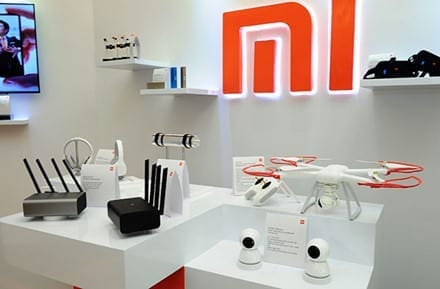
    While the company is best known for phones, it’s invested in dozens of startups and now offers air purifiers, drones, speakers, TV set-top boxes and robot vacuum cleaners. Its Mi Home outlets resemble Apple stores with their white walls and spare space, but on display is the wider range of appliances that Xiaomi’s invested in over the years. It operates about 50 locations across China currently.

    Apple has about 40 stores across mainland China, most of which are in large cities, but its iPhones are also sold through about 40,000 locations such as outlets controlled by wireless carriers and spots within electronics chains.

    Xiaomi’s not just relying on offline retail to jazz up its phone sales. The company is close to using its own “Pinecone” processors and could introduce the chipset within a month, the Wall Street Journal has reported. In so doing, it would join Apple, Samsung Electronics Co. and Huawei in employing their own processors, which can heighten the user experience by making hardware and software work together more efficiently.

  • Apple beats Xiaomi in China; Oppo takes lead

    Apple beats Xiaomi in China; Oppo takes lead

    Apple has finally halted the dream run of Xiaomi in China, the largest smartphone market in the world, edging the Chinese phone giant from the fourth slot by shipping nearly 45 million iPhones to the Communist nation, a report by market research firm IDC said.

    OPPO, Huawei, and Vivo lead other smartphone brands in China in 2016, latest International Data Corporation (IDC) Quarterly Mobile Phone Tracker report said.

    “Xiaomi was China’s hottest phone brand in 2014 and 2015, but it couldn’t maintain the momentum in 2016,” tech news portal CNET quoted IDC data as saying.

    Shipping 41.5 million smartphones, Xiaomi once known as ‘the Apple of China’ was the No. 5 brand in China last year. Apple, which took the fourth slot shipped 44.9 million iPhones to China (vs.58.4 million in 2015), the world’s largest phone market, it said.

    “The big winner was Oppo, which shipped 78.4 million phones more than double the 35.4 million it shipped in 2015. Huawei came in at second, shipping 76 million phones, while Vivo managed to almost double its shipments, going from 35 million in 2015 to 69 million last year,” it said.

    “2016 was the first time ever that Apple saw a YoY decline in the Chinese market. Even though the new black coloured iPhones caught the attention of consumers, overall, the new launches did not create as much of a frenzy compared to the past,” the IDC report said.

    “Despite the decline, IDC does not believe Chinese vendors have actually eaten away Apple’s market share. Most Apple users are expected to be holding out for the new iPhone that will be launched this year, and that will help the brand to see a growth in 2017.”

    “Apple’s 10-year anniversary iPhone will also likely attract some of the high-end Android users in China to convert to an iPhone,” it said.

    Chinese market grew by 9 per cent last year.

    “Most brands are now using a combination of channels to increase their shipments. Xiaomi, previously focused on online channels, has opened more Mi Home stores to drive offline growth. Apple has also been aggressive in increasing its offline retail presence,” it said.

    The top three Chinese brands grabbed a total of 48 per cent of the Chinese market last year.

    Jin Di, a research manager with IDC China, said another reason behind the success of Chinese brands was their willingness to share profits with distribution partners.

    Apple dropped from third in 2015 to fourth in 2016, as shipments to China plunged 23.2 per cent to 44.9 million units.

    Xiaomi was top in 2015, but fell to the bottom of the top-five vendors, with a 36 per cent plunge in sales in China.

    Total smartphone shipment volume in China rose 8.7 per cent to 467.3 million handsets last year.

    The IDC forecast that the volume in 2017 will continue to grow as consumers replace old phones, but that the growth will be slower than 2016.

    Worldwide, the top five smartphone vendors in terms of shipments last year were Samsung, Apple, Huawei, OPPO and Vivo.

  • Hugo Barra leaves Xiaomi to join Facebook

    Hugo Barra leaves Xiaomi to join Facebook

    Hugo Barra, the international head at Xiaomi, is returning to Silicon Valley to head Facebook’s VR efforts, after spending three and half years in Beijing leading the Chinese smartphone maker’s global division.

    The announcement was made by Facebook head Mark Zuckerberg via his Facebook page last Wednesday.

    “I’m excited that Hugo Barra is joining Facebook to lead all of our virtual reality efforts, including our Oculus team,” Zuckerberg said in an announcement made in virtual reality.

    Barra will spearhead virtual reality efforts as Facebook’s VP of virtual reality. His relationship with Zuckerberg goes back years to when he broke ground on the Android operating system.

    More recently he worked at Xiaomi’s Beijing office as VP of International, serving as the face of the company and taking active part in product launches. Barra joined Xiaomi in 2013 from Google, where he worked as head of product management for Android, to oversee the company’s international expansion.

    Barra’s appointment comes over a month and a half after former Oculus CEO Brendan Iribe stepped down from his position in order to assume a leadership position within the company’s VR group.

    Telstra’s Cynthia Whelan to chair Foxtel

    Telstra has appointed group executive of new businesses Cynthia Whelan as the new chairman of Foxtel, the Australian incumbent’s 50/50 pay-TV joint venture with News Corporation.

    Whelan replaces Robert Nason, who retired from Telstra in 2015 and has been Foxtel chairman since June 2012. She has been a member of the Foxtel board since September last year.

    “Cynthia Whelan is an ideal chairman for Foxtel and will provide suitable leadership for the organization as it navigates a period of intense competition and technological evolution. She has significant experience in Australia and overseas in senior management and director roles,” Telstra CEO Andrew Penn said.

    Telstra’s partnership with News Corp over Foxtel allows Telstra to appoint the pay-TV firm’s chairman, while News Corp has the management control.

    Whelan will assume her new role on February 17. Telstra CFO Warwick Bray is also on the Foxtel board and the company will soon appointed a third director to replace Nason, the telco said in a statement.

  • Xiaomi to expand retail footprint, device ecosystem in India

    Xiaomi to expand retail footprint, device ecosystem in India

    Founded in 2010 in China, Xiaomi entered the Indian market in mid 2014. Since then, the company has aggressively launched its value for money smartphones and accessories. As per the latest numbers shared by IDC, Xiaomi has become the third-largest smartphone brand across the top 30 cities in India. In 2016, Xiaomi India passed $1 billion in annual revenue for the first time. The company claims India to be its primary global market and will continue to customize and make products for India.

    Donovan Sung, Director of Product Management, International, Xiaomi Global, explains, “We look very carefully at the different market segments in India and what our users are asking for. Redmi note 3 hit two very important price segments of Rs 9,999 and Rs 11,999. We have seen that those price points are extremely important in India and so we focus a lot on these segments. We have changed the price segment under Rs 10,000. And our current strategy for high end products is to launch one flagships product in India every year. India is by far a key market for us, outsider China.”

    About 75 per cent of the Xiaomi smartphones sold in India, are made in India. Under its ‘Mission of innovation’, the company believes that innovations and products should not be restricted to people with lot of money and the products should not be sold at a premium. Sung adds, “We are open about the fact that all our products are sold near cost. That means we have low cost in everything we do – the channel structure. That is why we started selling online. We don’t spend a lot of money on marketing. Even though we are experimenting with TV ads in China as well as in India, offline ads, but we are not splurging on it maybe like some other companies would. We are keeping it very low in single digit percentage of our revenue.”

    Besides online, Xiaomi started selling its devices at around 7500 retail points and is looking at expanding its offline reach as well. He further adds, “We expanded in China pretty aggressively and this year will expand in India this year. We have a lot more to share on that. But the way we will do offline in many ways will be similar to the way we do online. It will be a very high efficiency channel for us as we have a very interesting approach for offline, which we have already been trying in China, and we are going to adopt that strategy in India as well”, says Sung.

    Earlier this month, Lei Jun, Xiaomi’s chief executive said in a letter to its employees, ‘Our e-commerce strategy has also faced some challenges. E-commerce now makes up just over 10 per cent of overall retail in China, and the online smartphone market only makes up 20 per cent of the overall smartphone market. Xiaomi has great ambitions, and we are not satisfied with just being an e-commerce smartphone brand, so we have to upgrade our retail model, and incorporate offline retail for a new retail strategy.’ The company upgraded its Mi Home outlets into full-fledged retail stores aims open 200 more Mi Home stores in 2017, and open a total of 1,000 stores over the next three years.

    Apart from smartphones and accessories, Xiaomi is also looking at expanding its product ecosystem in India. Last year, just before Diwali, Xiaomi launched its air-purifier for the Indian market, which received great response. “We have even started launching our ecosystem products in India. In 2017, we plan to bring many more ecosystem products in India. We have a range of different connected devices – TV, Ninebots, toys, air purifiers, etc. and would seriously consider getting all of these things to India,” says Sung.

  • When Xiaomi is dying for expansion

    When Xiaomi is dying for expansion

    Never mind smartphones – Chinese tech giant Xiaomi is now eyeing anything and everything as it broadens its investment portfolio.

    With the mobile handset market increasingly crowded globally, and offering diminishing returns, a new Xiaomi expansion strategy has been created: moving into new markets which offer growth potential.

    Co-founder Liu De has told Wired magazine he plans to extend the company’s business model of investing in companies and giving them access to its designers, marketing might and supply chain, to branch into other industries and different products. Xiaomi usually buys a 10 to 20 per cent stake in such companies, insisting on the rights to brand and market products made by these businesses.

    “We’re using our entire platform to lift these companies to the next level,” De told Wired.

    Four of the companies Xiaomi has invested in have already achieved market capitalisation greater than US$1 billion and the portfolio of companies have now collectively sold more than 50 million connected devices.

    The star product is the Mi Air Purifier, one of the most popular models in China.

    Xiaomi believes its investment approach will turn it into a so-called “Everything Company.”

    “It’s a unique model that I haven’t seen before and that I think is only viable for a company that comes from China,” Hugo Barra, the company’s outgoing global VP, said.

  • Chinese government clamping down on app stores

    Chinese government clamping down on app stores

    China’s government has issued an order for all app stores on the mainland to be registered.

    In a notice on its website, the Cyberspace Administration of China says its offices should ensure that records are kept on the country’s many app stores.

    “Many apps have been found to spread illegal information, violate user rights or contain security risks,” says the post.

    Unlike in the west, China’s app store market is very fragmented with as many as 150 vying for customers, including market leaders Google Play and Apple’s App Store.

    Registration is necessary, it says, to ensure it is clear who takes responsibility if apps, or app stores, are found to engage in illegal practices.

    Three weeks ago, Apple removed the English- and Chinese-language news apps of The New York Times from its China app store. The US tech giant says the government had told it the apps violated local regulations.

    Google’s store for apps using its Android operating system is blocked in China, with third-party stores taking its place. Most of China’s biggest app stores are controlled by internet and smartphone companies such as Alibaba, Baidu, Qihoo 360, Tencent and Xiaomi, as reported.

    It says Chinese laws are often intentionally broad and open-ended to allow regulators discretion in enforcing them. Concrete steps like the new order for registrations can indicate how laws will be carried out in practice.

  • LeEco Cuts 60 Jobs In Hong Kong

    LeEco Cuts 60 Jobs In Hong Kong

     LeEco may be one of the best-known Chinese smartphone vendors globally after Lenovo, Huawei and Xiaomi, but the company has been in severe financial stress in recent times. The Beijing-based firm recently ventured out of China to establish a global footprint, and towards that end, have entered quite a few new markets over the past couple of years, including India and the U.S.

    However, even as LeEco was marching ahead with its global ambitions, its holding company, Leishi Internet Information and Technology Corp, was struggling financially, with its shares recently halted from trading at the Shenzhen Stock exchange. LeEco itself has been facing a severe cash crunch, with the company’s CEO, Mr. Jia Yueting, even admitting that the expansion efforts “have gone too far”.

    With its finances starting to become a major issue, LeEco was recently rumored to have laid off 1,400 of its employees globally, with the bulk of the job cuts coming in India. While about 200 people at LeEco’s sports video-streaming subsidiary, LeSports, lost their jobs in China as part of an organizational restructuring, almost a thousand LeEco employees were reported to have been laid off in India, mostly in the company’s sales and retail divisions. Reports out of Hong Kong now suggests that the company is also laying off as many as 60 of its employees in its Hong Kong office, although, its existing businesses and membership services will all reportedly continue to function as usual.

    Even in the midst of all this doom and gloom, though, there is a glimmer of hope for LeEco if a recent interview by a senior company executive is anything to go by. According to the president of LeEco’s smart TV business, Mr. Liang Jun, the company has received a fresh round of funding from strategic investors, although, he’s refused to give out any specifics about the reported investments until now. Meanwhile, even though the company’s finances are in a mess right now, reports indicate that at least three LeEco devices with model numbers LE X920, LE X850 and LE X622 are all set to be launched in the coming months. Right now, there’s no timeframe for the launch, but it should happen sooner rather than later if everything goes well from here for the struggling company.