Retail News CRM

Tag: delivery

  • Meal Temple Group invests in Myanmar with Freshgora

    Meal Temple Group invests in Myanmar with Freshgora

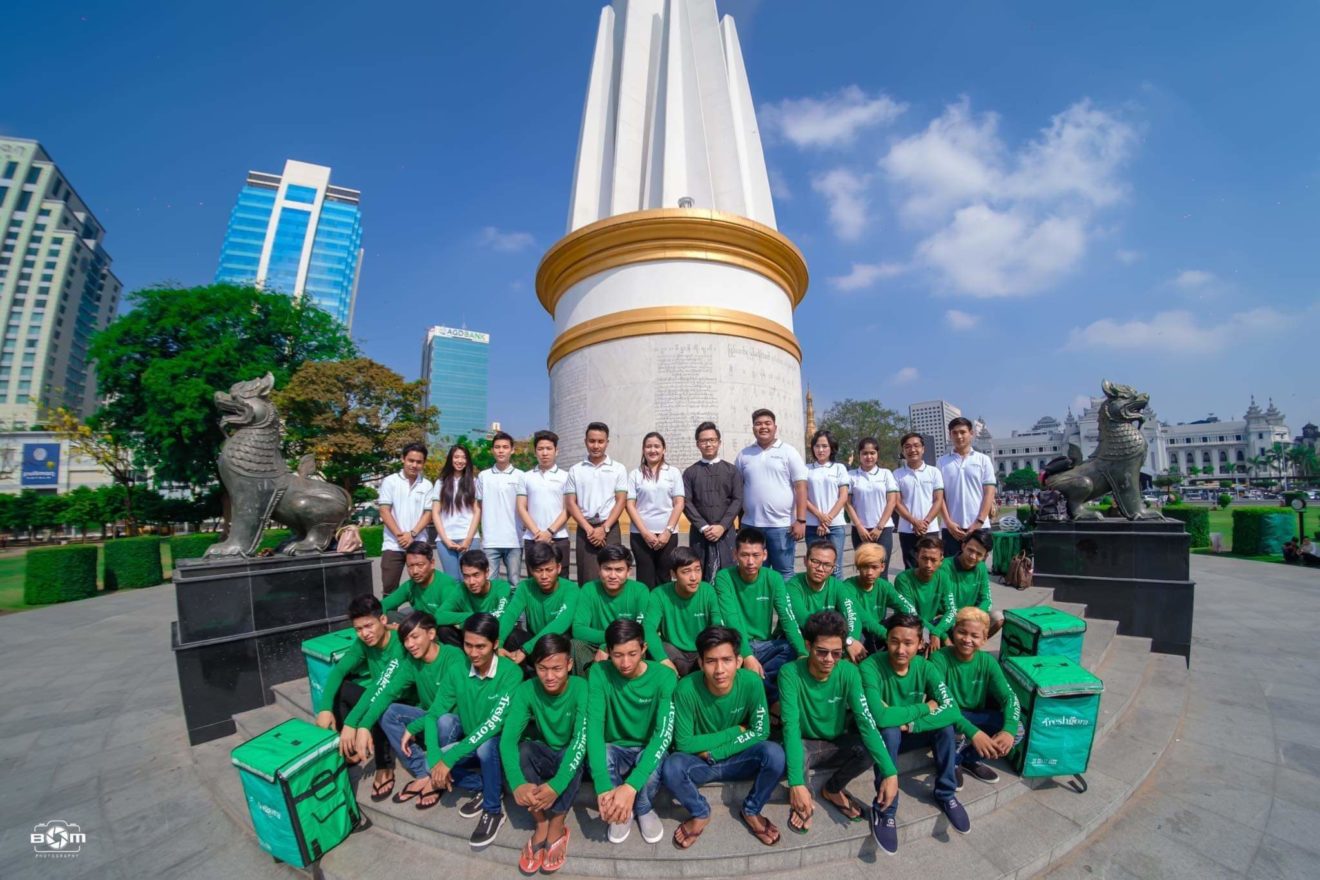
    Meal Temple Group, the leading startup in food delivery and logistics in Cambodia and Laos is continuing its expansion in the region by partnering FreshGora.com in Myanmar, after raising seed stage funds less than a year ago. Freshgora.com is a local startup based in Yangon, Myanmar, offering many on demand services through its online based mobile application and website. Meal Temple Group is the leading food delivery service in Cambodia and Laos, expanding its logistics offer to local businesses as well and offering its customers more new services.

    Both companies just entered an agreement to address the market in Myanmar and expand its operations nationally. With more than 55 million people, including more than 6 million in the Yangon
    metropolitan area, Myanmar is one of the fastest growing markets in South-East Asia. Freshgora.com, is a young startup from Yangon, that started less than a year ago, and already achieved to get over the rate of more than 100 deliveries a day in Yangon, offering food deliveries from restaurants and local markets in less than one hour through its own fleet of drivers. Sharing common vision, challenges and opportunities as Meal Temple Group in Cambodia or Laos, Daniel Htut, the founder, and its team, will benefit from Maxime Rosburger, Meal Temple Group’s founder,
    and their 5 years experience in the market.

    Daniel Htut says “We are really excited to partner with Meal Temple Group and offer our customers in Myanmar more services, support and perks, and be guided by Maxime and his team on how to sustain our growth in the market. After only 8 months, we are already tackling the largest local players, with a clean approach on technology, user experience and interface as well as customer
    service. We are also really inspired by Meal Temple Group’s vision on electric vehicles and social impact ambition.”

    The local entity will continue to operate as Freshgora, adding more services along the way, and working together with Meal Temple Group for an on demand super app for frontier markets of Asia in the long run. Meal Temple Group is looking to address more than 100 million people in frontier markets of Asia by the end of the year, and grow its technology to a super app model.

  • Amazon introducing 30 minute drone delivery

    Amazon introducing 30 minute drone delivery

    Amazon expects to offer customers drone delivery in under 30 minutes ‘within months’.

    The e-commerce giant unveiled the latest Prime Air drone design at its re:MARS Conference in Las Vegas last week.

    Jeff Wilke, CEO of global consumer at Amazon said in a blogpost that the company has been working hard at building “fully electric drones that can fly up to 15 miles and deliver packages under five pounds to customers in less than 30 minutes”.

    “With the help of our world-class fulfillment and delivery network, we expect to scale Prime Air both quickly and efficiently, delivering packages via drone to customers within months,” Wilke said.

    The Prime Air drone features a hybrid design and can do vertical takeoffs and landings.

    Wilke said that Prime Air is one of many sustainability initiatives to help achieve Shipment Zero, the company’s vision to make all Amazon shipments net zero carbon, with 50 per cent of all shipments net zero by 2030.

    “When it comes to emissions and energy efficiency, an electric drone, charged using sustainable means, traveling to drop off a package is a vast improvement over a car on the road,” Wilke said.

  • Tokopedia expands delivery promise Same Day Delivery

    Tokopedia expands delivery promise Same Day Delivery

    Indonesian e-commerce company Tokopedia is expanding its one-day delivery guarantee to almost all of its products as it prepares to battle Amazon and other foreign rivals.

    Backed by Alibaba Group and SoftBank, Tokopedia’s greatest strength might lie in the fact it is a 100-per-cent Indonesian focused company, unlike its rivals – and shareholder – which are simultaneously trying to build share in many different markets simultaneously.

    “We focus on Indonesia,” Tokopedia founder and CEO William Tanuwijaya said in an interview in Tokyo. “Our mission is really to solve the Indonesian customer problem. And we see the room for growth is still tremendous.”

    Online shopping in Indonesia is expected to grow by more than 400 percent within the next five or so years, to US$53 billion. That sort of growth is attracting Amazon, which opened in Singapore two years ago and subsequently launched in Australia, along with existing Indonesian rivals including Alibaba-backed Lazada and Shopee.

    Tokopedia already offers same-day or one-day delivery for about 65 percent of the products it sells. Expanding that to almost its entire catalog would be made possible by alliances with 11 logistics companies covering the most populous of the country’s 17,000 islands.

    The company is a marketplace, linking more than 5 million sellers with the nation’s largest database of online shoppers. It has no inventory of its own.

    Tanuwijaya admitted getting more than 90 per cent of goods delivered within 24 hours was a goal that might take two years or more to achieve.

  • DHL Starting drone deliveries in China

    DHL Starting drone deliveries in China

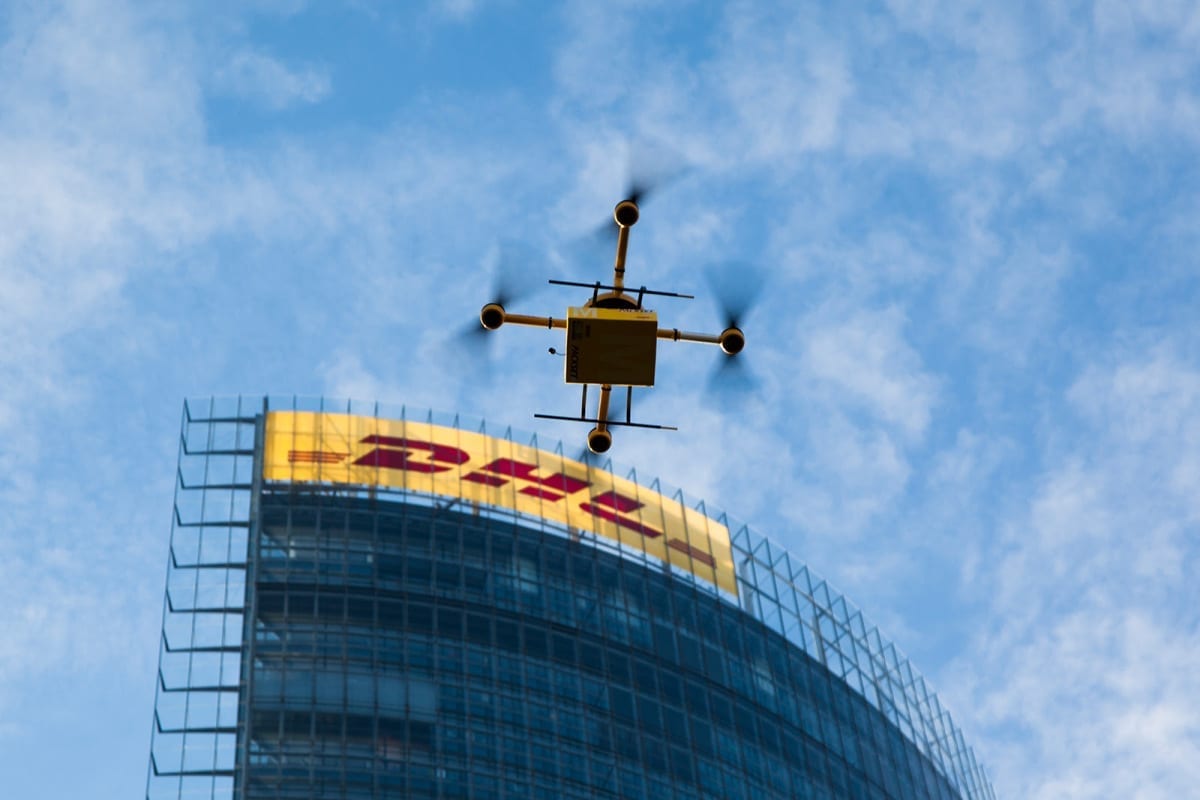
    DHL China is to start delivering goods by drones, cutting the delivery time on a route in Guangzhou from 40 minutes to just eight.

    The international express delivery-service provider has entered into a strategic partnership with autonomous aerial-vehicle firm Ehang to jointly launch a fully automated smart drone-delivery solution to tackle last-mile delivery challenges in Chinese urban areas.

    Using the most advanced Unmanned Aerial Vehicle (UAV) in Ehang’s newly-launched Falcon series, the new intelligent drone delivery solution overcomes the complex road conditions and traffic congestion common to urban areas. It reduces one-way delivery time from 40 minutes to eight minutes and can save costs of up to 80 per cent per delivery, with reduced energy consumption and carbon footprint compared with road transportation.

    “We are delighted to be partnering with Ehang to set a new innovation milestone with this new fully-automated and intelligent drone logistics solution,” said DHL Express China CEO Wu Dongming, “which combines the strength of the world’s largest international express company together with one of the leading UAV companies in the world. This is an exciting time for the logistics sector, with continued growth of the Chinese economy and cross-border trade, particularly in South China and the Greater Bay Area, which is home to an increasing number of SMEs and startups. This means there is a tremendous volume of logistics needs, which in turn creates new opportunities for implementing innovative solutions that can continuously drive growth with greater efficiency, sustainability and lower cost.”

    The new customised route, which has been exclusively created for a DHL customer, covers a distance of approximately 8km between the customer premises and the DHL service center in Liaobu, Dongguan, Guangdong Province.

    “Together with DHL we are very glad to bring the first smart drone delivery service route to China in Guangzhou; this marks a new beginning in building air logistics for smart cities,” said founder & CEO of Ehang Hu Huazhi. “Riding on today’s launch, we expect smart drone delivery as an innovative logistics solution to be expanded and realised in more areas, and we look forward to working with DHL in building the eco-system for a multi-dimensional urban air transport system.”

    The EHang Falcon smart drone, with eight propellers on four arms, is designed with multiple redundant systems for full backup, and smart and secure flight control modules. Its high performance features include vertical take-off and landing, high accuracy GPS and visual identification, smart flight path planning, fully-automated flight and real-time network connection and scheduling. As a fully-automated and intelligent solution, the drones, which can carry up to 5 kg of cargo per flight, take off and land atop intelligent cabinets that were specifically developed for the fully autonomous loading and offloading of the shipment. The intelligent cabinets seamlessly connect with automated processes including sorting, scanning and storage of express mail, and will feature high-tech functions such as facial recognition and ID scanning.

    This smart drone delivery solution will enhance DHL’s delivery capabilities and create a new customer experience in the logistics sector that opens up even more opportunities for sustainable growth and greater economic contribution. Given the growing prominence of B2C business operations and delivery in China, employing drones in express delivery services offers an innovative solution for meeting the increasing demands for time-sensitive delivery, particularly for last mile delivery in urban areas.

    Building on the launch of its first fully automated, intelligent drone delivery solution in China, DHL will continue to identify new routes that can be developed for clients in need of tailored customer services and logistics solutions and will work closely with EHang to create a second generation of drones in the near future that will further improve capacity and range in drone-operated express delivery.

  • Foodpanda kicking off delivering groceries in Hong Kong

    Foodpanda kicking off delivering groceries in Hong Kong

    Foodpanda Hong Kong is adding grocery deliveries to its services from late next month.

    The food-delivery service, pitched in a head-to-head battle with Deliveroo in Hong Kong, is finalising a collaboration with about 100 stores across Hong Kong to source products such as dry groceries, frozen meat and wine for customers ordering online or by app, promising order fulfilment within 30 minutes.

    Foodpanda Hong Kong CEO Arun Makhija said in an interview with the South China Morning Post that the company wants to offer both its customers and its 2000-strong fleet of drivers opportunities beyond delivering restaurant meals.

    Foodpanda has been in Hong Kong for five years and Makhija says the business’ growth remains “exceptional”.

  • Global food e-commerce sales forecasted to Triple

    Global food e-commerce sales forecasted to Triple

    A new report has forecasted global food e-commerce sales to nearly triple through 2023, rising to US$321 billion and accounting for nearly 5 percent of total e-commerce revenues.

    The Global Food E-Commerce report, released by market research firm Packaged Facts, projects the Asia Pacific region will account for the majority of absolute growth, primarily due to the rapidly expanding Chinese market.

    China dominates regional e-grocery activity in part because of the country’s large urban population and rapidly expanding the middle class. In addition, much of China’s large population has access to high-tech devices and the ability to shop online, due to the country’s position at the forefront of technological development and electronics.

    Last year, more than 75 percent of global food e-commerce sales were concentrated in the top five markets: China, the US, Japan, the UK, and South Korea. In each of these countries, e-grocery spending is highest in large urban centers, where many retailers have focused their marketing efforts for home delivery or click-and-collect services.

    The report states that through 2023, demand growth in these countries will be driven by five key factors: increasing comfort among existing online shoppers in making routine grocery purchases online; growing use of subscriptions and memberships with online retailers; greater penetration of broadband internet in rural and remote areas; greater acceptance of (and investment in) home delivery, click-and-collect, and drive order fulfillment formats in an increasingly omnichannel retail environment; and improvements to data security that ease consumer fears about having their personal information stolen while shopping online.

  • Tigers delivers global B2B and B2C supply chain solutions for Rapha

    Tigers delivers global B2B and B2C supply chain solutions for Rapha

    Tigers is expanding its partnership with Rapha on both B2B and B2C delivery solutions as global e-commerce demand continues to grow for the cycling sportswear brand. Tigers UK is providing fulfillment services for Rapha, including distribution within the UK, the European Union, and Korea from its new Thurrock-based facility near London Gateway.

    Other markets in Asia will be served from Tigers’ Hong Kong warehouse, where the enterprise and e-commerce specialist is headquartered.

    Rapha was established in 2004 in London, UK, to address a need for stylish, high-performance cycling clothing, and continues to push the boundaries of innovation in cycle wear.

    “As e-commerce continues to grow globally, we are happy to welcome exciting brands such as Rapha to our portfolio, and to help them provide the highest-quality service to their customers around the world,” said Shahar Ayash, Managing Director – UK and Europe, Tigers.

    “Rapha not only produces sportswear clothing, they are also passionate cycling advocates with the aim to make road cycling the most popular sport in the world – and we are happy to support them in their mission.”

    Rapha is using Tigers’ Cloud-based SmartHub:Connect (SH:C) platform, which was launched last year and provides customers with end-to-end visibility of the global supply chain.

    “Customer experience is a core part of the logistics function today, and technology is a major lever in supporting this,” said Alex Bezer, Director of Technology, Rapha.

    “It was important to us that we found a partner who delivered on this promise, which Tigers put at the core of their proposition, with the guarantee of full visibility through the global supply chain and logistics cycle using SH:C.”

    SH:C is a single freight, e-commerce, and logistics platform with a built-in virtual warehouse solution.

    “Digital technology is the future of the logistics and supply chain industry, and Rapha is demonstrating how SH:C simplifies e-commerce, fulfillment, and distribution for organizations, especially for those with a global marketplace,” said Ayash.

  • Honestbee Stops Food Deliveries in Singapore

    Honestbee Stops Food Deliveries in Singapore

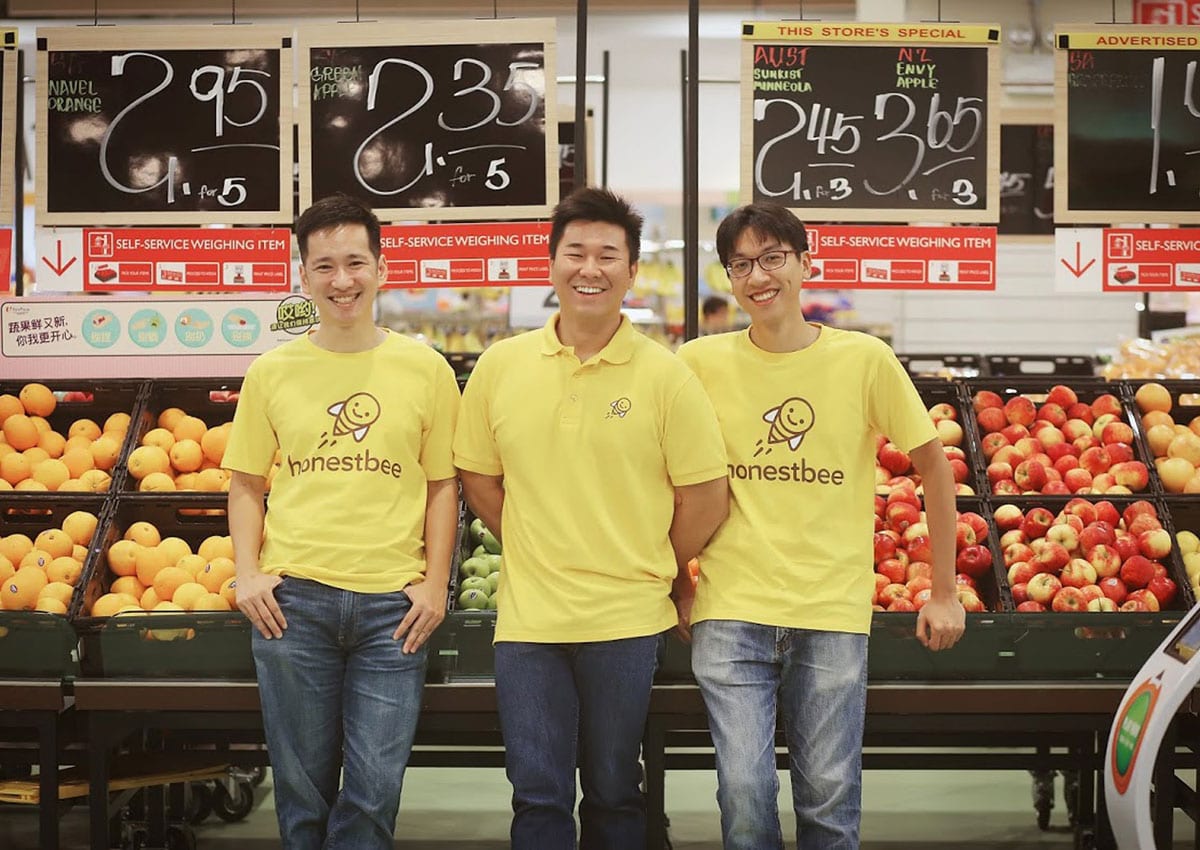
    Honestbee Singapore is to halt food deliveries from Monday.

    The company said in a statement it would also suspend laundry services on the same date.

    The changes come as part of an in-depth strategic review of the business launched after the departure of cofounder and CEO Joel Sng who was replaced by cornerstone investor Brian Koo at the beginning of the month.

    “The decision was made to optimise the business structure, and to drive better focus and alignment with Honestbee’s current strategic priorities,” the company said in a statement.

    The decision brings to an end the roles of some 400 ‘delivery bees’ many of them part timers.

    “They have played a key role, and have been a critical part of the Honestbee family,” said the company. “During this transition, Honestbee remains committed to assist all delivery bees. The headcount in Singapore remains unaffected.”

    Honestbee says it will continue to operate the grocery-delivery service, and its physical space – Habitat by Honestbee.

    “The newly-appointed executive team is working on future plans to stay relevant and sustainable in today’s rapidly changing business environment. This will help to put Honestbee in the best possible position to support the business in Singapore and other geographies going forward.”

  • Coles reshaping 200 stores around convenience

    Coles reshaping 200 stores around convenience

    Coles is ramping up its convenience strategy, with a plan to grow sales on the back of “food-for-now” and “food-for-later” products. As part of this strategy, the brand will convert around 200 Coles supermarkets to a more premium, convenience-focused format, as shift 200 lower-volume stores to a more value-centric format, while adding around 75 new product lines to its existing range for ready-to-eat meals – such as breakfast foods, curries, soups, roast vegetables and stir-fry kits.

    According to the report, Coles chief executive Stephen Cain sees an opportunity through this strategy to grow another billion dollars in sales over the next five years.

    “It’s high growth and it mainly happens outside supermarkets at the moment,” Cain told.

    “Some of it will come from other players in the convenience market, but because it’s value-added it’s also growing the market as well.”

    Cain previously told analysts that the brand was changing rapidly in the space, but was still lagging behind the competition.

    “We are growing our baskets, and we are growing our transactions. We believe that we can do a better job with the convenience customers, and we’re setting up the business to do that going forward,” Cain said.

    Coles’ focus on convenience is not surprising, given the number of partnerships it has forged with third parties, since splitting from former-parent company Wesfarmers in late 2018, to ensure customers can get its products how they want when they want.

    Deals with online marketplace eBay and meal-delivery service Uber Eats are other incentives for Coles to improve its food-for-now and food-for-later offerings by allowing several pillars of the business to utilize the expanded range.

    “Making life easier for our customers means enabling our customers to fulfill their shopping needs ‘anytime, anywhere’,” a Coles spokesperson said.

    “We know our customers’ needs are changing rapidly and we are evolving our offer accordingly.”

    The convenience market is growing rapidly in Asia Pacific, with the region having been named the “largest and fastest-growing” convenience market in the world in a report by GlobalData.

    According to GlobalData retail analyst Honor Strachen, the changes being seen in the region’s convenience offers, such as those outlined by Coles, have been improving store sales and profitability at a time that retail space is becoming more expensive, and margins are increasingly under pressure from inflation and discounting.

  • Online food store Grain Expanding Rapidly

    Online food store Grain Expanding Rapidly

    Singapore-based online food store Grain has raised US$10 million in series B funding. The cash will be used to accelerate growth in Singapore, and expand into Thailand.

    To do that, the company will be cooperating with Thailand’s Boonrawd Brewery group’s subsidiary Singha Corporation.

    Singha will help Grain gain clearer insights into the target audience in Bangkok, and develop better products and services.

    “Grain will work with Singha by using Singha’s extensive F&B network across the country, including logistics and distribution, to bring delightful innovations to consumers,” said Bhurit Bhirombhakdi, chairman of the executive board at Singha Ventures.

    The collaboration between the two companies aims to help online food store Grain expand in Southeast Asia and realize its regional vision.

    “We want to disrupt the F&B landscape and evolve with consumer preferences, but also have solid fundamentals,” said Yi Sung Yong, Grain’s co-founder and CEO.

  • EBay still dominates online shopping in Australia

    EBay still dominates online shopping in Australia

    Australian consumers largely prefer to use international online marketplaces, despite increasing investment by local retailers in the space, according to new data from discounts platform CupoNation.

    According to the data, four out of the top five most visited retail websites in Australia were dominated by international and domestic offers by US-based retailers eBay and Amazon.

    EBay Australia was the most used retail website in Australia during the period between January and March 2019, with 194.9 million users, while its global site brought in another 36.6 million users.

    Amazon’s global site outpaced its local offering, with the US site enjoying 58.1 million users in Australia over the period, compared with 35.5 million who utilised the Australian variant.

    Sitting in between these four online-only offerings, hardware chain Bunnings brought in the most users of any Australian-owned retailer – with 41.26 million users utilising its online platform, 65 per cent of which utilised mobile to do so.

    “We want to rush slowly into this,” Bunnings managing director Michael Schneider previously told, regarding the hardware chain’s comparatively late adoption of online retail.

    “There’s no hard date or obligation… We just want to be a great place customers choose to shop at, and we recognise that customers have more choice than ever before, but selling online is just one string in a bow.”

    The next most visited websites were Woolworths, which saw 33.7 million users over the period, Coles, which saw 22.5 million, Jb Hi-Fi (29.1 million), Kmart (22.4 million), and Kogan (20.9 million).

    CupoNation collected this data through SimilarWeb and Alexa tools, compiling traffic information from the period between January and March 2019. The number of visits represented in the data is not tied to unique users, meaning a user can have use a site multiple times and it will count as multiple visits.

  • EBay orders Shipped Faster

    EBay orders Shipped Faster

    New data from Juniper Research predicts consumer interaction with chatbots in retail will reach 22 billion by 2023.

    The figure represents a sharp increase over an estimated 2.6 billion interactions this year.

    According to the new research report “AI in Retail: Segment Analysis, Vendor Positioning & Market Forecasts 2019-2023”, chatbots in retail will enable effectively automated customer interactions for both online and offline vendors.

    A crucial enabler of this development will be improvements in NLP (Natural Language Processing), which will dramatically reduce the failure rate of chatbot interactions, by making them more natural and valuable for customers.

    Juniper anticipates that retailers who do not adopt chatbots will face strong challenges from more technologically-adept disruptors, who will use chatbots as an extension to the crucial omnichannel retail experience.

    The research also found that chatbots used for customer service have a strong potential to reduce costs; with deployments realizing annual savings for retailers of US$439 million globally by 2023, up from just $7 million this year.

    These potential savings will act as a key “pull” factor, given the margin pressure that many retailers are presently feeling.

    “By embracing automated customer service with chatbots, retailers can act in a more flexible and efficient way,” explained research author Nick Maynard. “The wider retail market means that chatbots are no longer a luxury, they are essential.”

    Meanwhile, sales resulting from interaction with chatbots in retail will reach $112 billion by 2023, up from $7.3 billion this year; representing an annual growth rate of 98 percent.

    The research found these sales will largely be a result of migration from other channels, rather than a new revenue stream. Accordingly, the research emphasized that while retailers must adopt chatbots for ease of use (and to reduce consumer churn), their return on investment will come from efficiencies, rather than net income.

  • Meituan launches global delivery platform

    Meituan launches global delivery platform

    Chinese e-commerce platform Meituan has officially launched its “Meituan Delivery” global-delivery platform in order to extend service to more industries and more customers.

    Meituan Delivery will open its technology platform, delivery network and value chains to ecosystem partners, enabling them to improve operating efficiency, reduce logistics cost and drive the growth of the real economy.

    “Meituan will open its delivery network to more customers and extend the network to various industries,” said Meituan senior VP and president of the company’s at-home business group Wang Puzhong. “The extension and opening of Meituan’s delivery network will help establish a more flexible delivery platform by customizing services for different industries, upgrading our delivery dispatch system, and improving delivery infrastructure.”

    Meituan’s global on-demand delivery platform is serving more than 3.6 million merchants and 400 million consumers nationwide, covering more than 2800 cities and counties with nearly 10,000 delivery stations and warehouses and more than 600,000 daily active riders. Meituan’s daily food delivery orders exceeded 25 million on April 20.

    “With the opening of our delivery platform, Meituan will leverage our delivery resources to better fulfill diversified needs of users and merchants, while integrating delivery resources to improve the overall urban logistics efficiency,” said Meituan Delivery GM Wei Wei.

    Meituan started to build its own delivery network in 2015 and launched its Premium Delivery service to meet the surging needs for efficient on-demand food delivery. In 2016, Speedy Delivery service was introduced to diversify its delivery services. Meituan launched its first autonomous delivery vehicle “Xiaodai” in 2018.

    Meituan’s delivery platform relies on its “Super Brain” – the real-time intelligent dispatch system that enables Meituan to complete a delivery within 30 minutes on average. The dispatch system can perform about 2.9 billion route planning algorithm operations per hour during daily peak times, and calculate optimized delivery routes in an average of 0.55 milliseconds, according to Sun Zhizhao, CTO of Meituan Delivery.

    In addition, Meituan has developed four delivery models – point-to-point shuttle delivery, galaxy network delivery, integrated warehouse inventory delivery, and smart terminal delivery – to serve convenience stores, super markets, retail stores, and office buildings, which can meet the different needs of merchants, improve delivery efficiency and reduce logistics costs.

  • DHL eCommerce Solutions names Samuel Conroy as MD in Vietnam

    DHL eCommerce Solutions names Samuel Conroy as MD in Vietnam

    DHL eCommerce Solutions, a division of Deutsche Post DHL Group, has named Samuel Conroy as managing director for Vietnam. Prior to joining DHL, Conroy held senior general management roles in various Southeast Asian countries and was most recently the CEO of the Middle East Cluster for Damco Logistics.

    “Samuel brings with him a wealth of knowledge in the logistics business as well as general management experience gained from working across different markets in both country and regional capacities,” said Kiattichai Pitpreecha, CEO, DHL eCommerce Solutions Southeast Asia. “His enthusiasm and strategic hands-on leadership approach will be crucial to exceeding customer expectations and delivering profitable growth.”

    Conroy’s extensive general management experience has been supplemented with previous project management and functional implementation successes across a broad logistics environment. He previously also served as the director of the Australian Chamber of Commerce in Vietnam.

    “Vietnam currently has one of the fastest growing e-commerce markets in the world,” said Conroy. “With more than half of Vietnam’s population already using the internet and more than 50 million smartphone subscribers, we must fully utilize our e-commerce capabilities across the DHL divisions to help our customers create a strong base of operations and overcome infrastructure challenges to capitalize on that speed of growth.”

  • Online fashion retailers Starting to Limit Free Deliveries

    Online fashion retailers Starting to Limit Free Deliveries

    Zalando, Europe’s largest online-only fashion retailer, has said it will begin to charge delivery for smaller orders across more markets in response to shrinking order size.

    The e-commerce business initially enjoyed rapid growth due to its free delivery and returns, but the rise of mobile commerce has changed customer behaviour, with the size of orders getting smaller, driving up logistics costs.

    Zalando has already introduced a minimum order value to qualify for free delivery in Italy, Spain, Britain and Ireland, which has had no effect on customer satisfaction, according to the company’s finance chief David Schroeder.

    The initiative now will be extended to Denmark, Sweden, Finland and Norway at the end of May.

    The move echoes H&M’s announcement last month that it would reintroduce delivery fees for its loyalty club members to cut down on similar logistics costs and restore profitability.

    “We have a lot of logistics around the customers that shop online,” H&M head of customer loyalty Samuel Holst told.

    “For the plus level, deliveries will remain free for all purchases, but for the base level there will be a cap. You will need to shop for a certain amount to get free delivery.”

    While many retailers have invested significant sums in designing their websites and ad campaigns for mobile, these changes suggest that more work is needed to adapt retail businesses to the smartphone era.