Retail News CRM

Tag: DHL

  • DHL Express partners blu for parcel pickup service

    DHL Express partners blu for parcel pickup service

    DHL Express and Singapore-based retail logistics company blu have partnered to offer all DHL Express customers the option to directly collect their shipments from DHL Service Points, which include blu’s island wide network of over 55 bluPort Parcel Terminals in Singapore.

    Provided at no additional cost, this service is now officially available island wide, and aims to offer greater flexibility and convenience to recipients of home-bound parcels.

    Under this partnership, DHL customers have the flexibility to direct their residential-bound parcels to a bluPort Terminal or any other DHL Service Point for collection at their convenience. Recipients will receive an email or SMS with a link to the DHL Express On Demand Delivery platform when their parcels are picked up in the origin country. They can manage their delivery options on this platform and request for their parcels to be directed to a bluPort Terminal.

    When shoppers select the option to collect parcels from DHL Service Points, the parcels bound for bluPorts are handed over to blu. blu is responsible for managing same-day delivery into the respective bluPorts. Following this, SMS notifications are sent to the parcel recipients to inform them of their personalized bluCode as well as collection expiry time. Shoppers will have 48 hours to collect their parcels from the bluPorts, with an automatic extension of 24 hours thereafter, if the parcel remains uncollected.

    “The rise of e-commerce has established new shopping habits and expectations, as with the speed and convenience of parcel delivery. Singapore is no exception – especially as the country pushes to grow e-commerce receipts significantly by 2020. Through this partnership with blu, we hope to give our customers the freedom to choose where and when they receive their parcels. We will continue to enhance such options by expanding our network with trusted partners like blu, and innovating our service and offerings.” said Lyndon Morgan, Vice President of Operations, DHL Express Singapore.

    “Our partnership with DHL Express further reaffirms the shift towards a seamless shopping experience for today’s shoppers, many of whom are time strapped and simply cannot afford the luxury of time to wait for a parcel to arrive,” said Mr Prashant Dadlani, founder of blu. “We look forward to growing blu’s network of bluPorts further together with DHL Express as a trusted partner.”

    blu’s network of bluPorts has been in operation since October 2016, offering the first same day self-collection option in Singapore. blu’s partnership with DHL Express aims to eliminate the frustration and unpredictability of waiting times for the arrival of many more parcels, putting the consumers in greater control of their inbound parcels.

  • DHL leverages IoT to slash trucking time across India by up to 50%

    DHL leverages IoT to slash trucking time across India by up to 50%

    Deutsche Post DHLGroup (DPDHL),  the world’s leading mail and logistics company, today announced the launch of DHL SmarTrucking to provide an innovative trucking solution across an extensive line-haul express road network in India.

    DHL SmarTrucking is the company’s first official move to accelerate the development of technology-enabled logistics solutions around the world, under the newly formed board department, corporate incubations, which was launched in April this year. The company has also appointed Neeraj Bansal as CEO of DHL SmarTrucking, who will be responsible for leading the company’s growth in India.

    “India is an incredibly important market for Deutsche Post DHL Group. Presently, road freight comprises the majority of the total freight movement and is the largest transportation segment in India,” said Juergen Gerdes, Board member for corporate incubations, Deutsche Post DHL Group. “With greater efficiency from DHL SmarTrucking, we expect to transport 100,000 tonnes of cargo and cover a distance of approximately 4 million kilometres across India daily.”

    TechLog cuts transit time, reduces driver workload

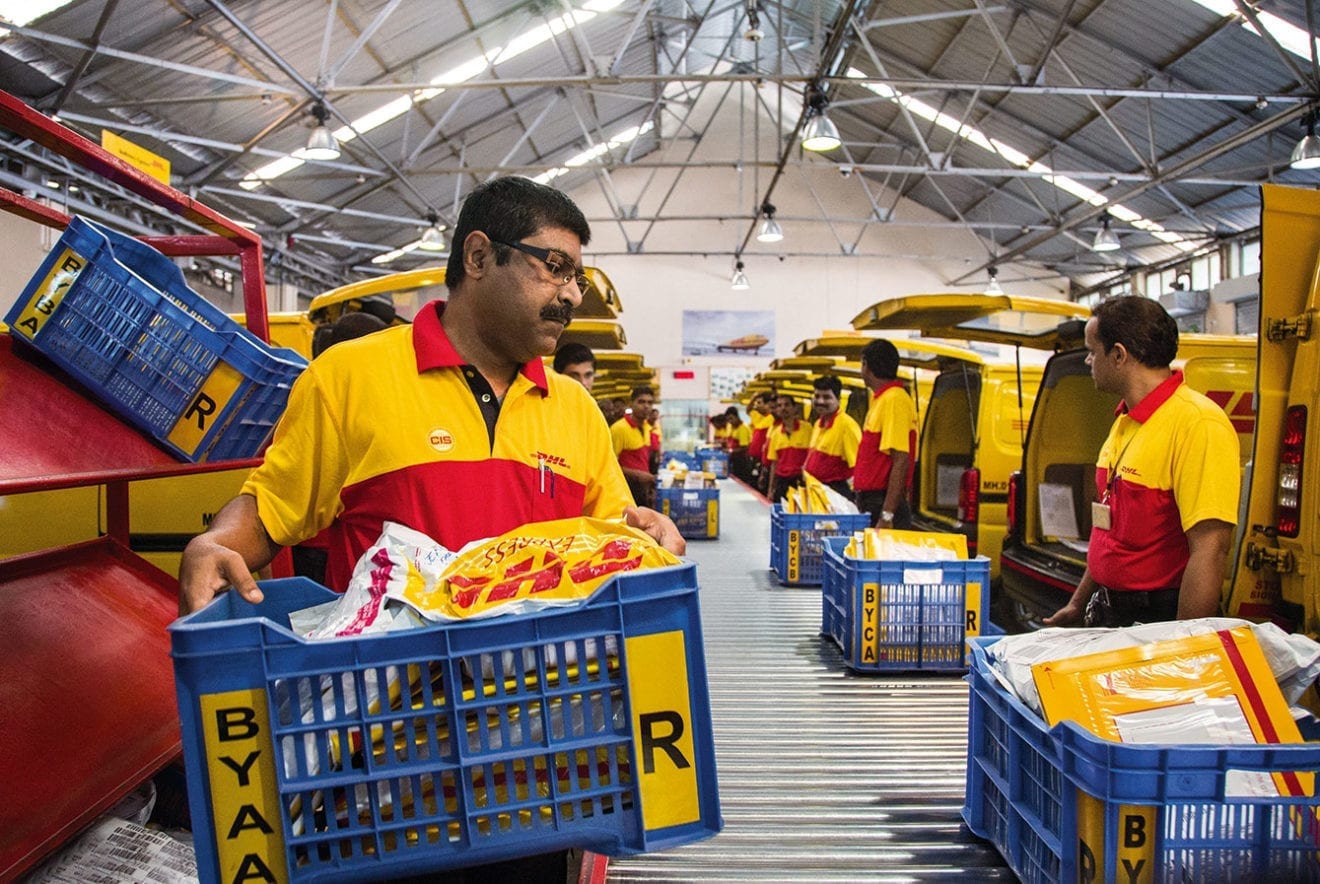
    DHL SmarTrucking’s ‘TechLog’ is logistics made smarter through the use of new and emerging technologies. Following a successful, three-month pilot that covered over 2,770,000 kilometres, DHL SmarTrucking leverages Internet of Things (IoT) technology and data-driven insights for route customisation.

    This reduces transit times by up to 50 percent compared to the traditional trucking industry and provides over 95 percent reliability with ease of use, end-to-end consignment visibility, temperature-controlled capabilities and real-time tracking.

    IoT-enabled sensors, monitored through the company’s centralized control tower, provide real-time temperature and consignment tracking. Information starts and status updates are also sent to customers and DHL SmarTrucking’s operations teams through the customer portal and external  and internal mobile applications.

    Utilising an innovative and agile model, drivers are rotated at predetermined stops located across the country, with the original driver returning to the point of origin with another truckload

    “This transportation model not only helps optimise efficiency but also reduces fatigue among drivers who spend less time on the road, enabling them to go home to their families every two or three days,” said Malcolm Monteiro, CEO, DHL eCommerce India. “Additionally, with the demand for temperature-controlled transportation estimated to grow at 15 percent per annum from 2016 to 2020, DHL SmarTrucking allows our customers in India to scale up and streamline their business operations to meet consumers’ needs.”

    “DHL SmarTrucking’s emphasis on TechLog will change the game for customers in India,” said Neeraj Bansal, CEO, DHL SmarTrucking. “Leveraging the potential of the infrastructural transformation in India’s logistics ecosystem and our innovations through DHL SmarTrucking, we can help Indian businesses reach customers and markets in a faster and more secure manner.”

  • DHL conferred Best Logistics Service Provider – Express at the 2018 Asian Freight, Logistics and Supply Chain Awards

    DHL conferred Best Logistics Service Provider – Express at the 2018 Asian Freight, Logistics and Supply Chain Awards

    DHL affirmed its position as the world’s leading logistics company when it was conferred Best Logistics Service Provider — Express for the 29th time at last night’s 30th Asian Freight, Logistics and Supply Chain Awards (AFLAS). The award was presented to DHL at a ceremony held yesterday in Shanghai, China.

    The awards come as DHL continues to invest significantly in the Asia Pacific region, in order to constantly improve its offerings in integrated logistics and boost customer satisfaction. The AFLAS are the only Asian logistics awards to be decided by customer votes alone, giving them a well-earned reputation as an authority on customer sentiment in the logistics industry.

    “We are humbled to be named the Best Logistics Service Provider — Express for the 29th time. We believe our customers see the real value we bring to them as we continue to invest in our people and infrastructure to deliver quality service such as the expansion of our Delhi Gateway and Central Asia Hub. These awards clearly demonstrate the trust our customers have in us — we have worked hard to earn their trust, and will continue to outperform the competition to exceed customers’ expectations,” said Ken Lee, CEO, DHL Express Asia Pacific.

    Wu Dong Ming, CEO of DHL Express China, said, “Winning this award is testament to the strength of our extensive international network and we are honored by the win. As we continue building on our achievements, we remain focused on our customers. We are constantly enhancing our infrastructure and air connectivity to deliver the best quality and customer experience every day.”

    The AFLAS Awards is organized by Asia Cargo News to honor companies in the logistics industry that exemplify excellence in leadership, as well as consistency in service quality, innovation, customer relationship management and reliability. Over 15,000 readers and e-news subscribers of Asia Cargo News were asked to nominate who they viewed as the best service providers.

  • DHL Hong Kong Air Trade Leading Index Q2 2018

    DHL Hong Kong Air Trade Leading Index Q2 2018

    The DHL Hong Kong Air Trade Leading Index has published its results for Q2 2018.

    Highlights of the DTI Q2 2018 include:

    • The overall trade outlook for Q2 2018 had a slight downward adjustment

    amid concerns over escalating trade conflict between the United States and

    China. Despite this, the latest DTI survey found that there are limited concerns

    about air trade and overall outlook for air trade is more positive, compared to

    the same period last year.

    • Outlook on air imports remains optimistic despite a modest dip from the

    previous quarter.

    • Air exports index dropped and is predicted to encounter challenges. Market demand has gained strength and turned positive in the Americas, but is countered by issues in Asia Pacific and Europe. • The Hong Kong government is planning to use its financial surplus to improve residents’ livelihoods. It is generally believed that this development will boost air import demand

    The DHL Hong Kong Air Trade Leading Index report is available at u.hkpc.org/dti_eng.

    The first indicator of its kind in Hong Kong, commissioned by DHL Express Hong Kong and compiled by the Hong Kong Productivity Council, the DHL Hong Kong Air Trade Leading Index aims to provide a forward looking perspective on overall air export and import trade volumes by analyzing key attributes of business demand.

  • DHL expands airfreight operation in response to Asian demand

    DHL expands airfreight operation in response to Asian demand

    DHL Global Forwarding is expanding its round-the-world freighter operation to meet demand growth on Asian and transpacific trades.

    The forwarding giant said that it would a deploy a second dedicated Boeing 747-400F — ACMI-leased through Atlas Air — to connect the US, Europe and Asia, following on from the launch of a first flight last year.

    The 100 tonne capacity flight will operate Shanghai Pudong to Cincinnati, from where it returns to Incheon, South Korea. Afterwards it will connect Korea to Wuxi, China continuing to Frankfurt-Hahn in Germany, and then back to Shanghai-Pudong Airport.

    Meanwhile, the operation launched last year will be re-routed to offer twice weekly departures from Wuxi to Frankfurt-Hahn.

    “The division is thus responding to strong growth in demand for air freight, chiefly for outbound services ex Asia and on the conventional transpacific route, fueled by almost all industries,” the forwarder said.

    DHL Global Forwarding chief executive Tim Scharwath said: “Demand is currently exceeding supply mainly due to the large economies performing strongly.

    “On major trade lanes volumes are high, but capacities are low – a trend that will continue. To increase our operational efficiency and to offer our customers the best-possible solution, we thus decided to create further capacities we have direct control over.”

    The forwarder said that increasing demand for airfreight capacities on Asian routes is fueled by all major industries, but specifically China’s electronics, electric motors, electrical and mechanical appliances as well as medical equipment companies are bolstering demand.

    China’s main export destinations are South Korea and Germany which are served by the new charter as well, but due to well-preforming global trade volumes are also increasing from the US and Europe.

    The positive development of world trade and its continuation is also clearly shown by the DHL Global Trade Barometer.

    The index recently increased to 66 points in March from 64 points in January. With an index value clearly above 50, the DHL Global Trade Barometer signals solid further growth for global trade for the next three months.

    “The gap between the well-performing world trade with a high demand for cargo space on the one hand, and at the same time a difficult capacity situation on the other side, has encouraged us in our decision to further deploy self-controlled capacity to the market,” added Scharwath.

    Last year a spate of freight forwarders began operating airfreight flights as they looked to meet a demand surge. Others expanded their block space agreements with airlines to meet the demand growth.

  • DHL expands e-commerce fulfillment internationally

    DHL expands e-commerce fulfillment internationally

    DHL Parcel and DHL eCommerce are now offering online retailers a global solution for their e-commerce fulfillment needs with a global fulfillment platform and new fulfillment centers in the UK, Americas and Southeast Asia,emphasizing once again Deutsche Post DHL Group’s aspiration to become one of the leading global providers in e-commerce logistics. Through DHL’s unique family of divisions Deutsche Post DHL Group is the most international company worldwide, present across 220 countries and territories and online retailers are able to leverage the Group’s strong global footprint for their e-commerce retail strategy.

    Today’s e-commerce market is placing aggressive demands on the retailer to provide fast fulfillment and delivery, and doing so without increasing costs. This is simply not possible for most merchants because they lack capital or the ability to manage the complexity. DHL has built a new IT platform that provides seamless access to a network of fulfillment centers and is closely integrated with DHL’s shipping capabilities to allow our customers to meet their fulfillment and shipping requirements in a much more efficient fashion. DHL is investing in this platform as well as in expanding its fulfillment centers in key international markets, enabling retailers to reach their consumers worldwide.

    “Without seamless and reliable logistics processes, the current e-commerce boom would be inconceivable. The physical storage of ordered goods, their picking and packaging, the global shipping and delivery to the end-user’s front door or desired address — we now offer all of this in even more markets and from one single source,” says Jürgen Gerdes, CEO of the Post – eCommerce – Parcel division at Deutsche Post DHL Group. “By further internationalizing our fulfillment portfolio we will be able to do even more to help online retailers tap into new regions and benefit from the global e-commerce boom.”

    With existing fulfillment centers in the U.S., Mexico, Colombia, Hong Kong, India, Australia, Germany, and now in the United Kingdom and Southeast Asia, DHL already covers major e-commerce markets with its own presence and will expand these further in the future. Situated near London on an area of about 6,500 square meters, the latest addition to the fulfillment network in the English town of Radlett, offers great potential for same-day processing for the Greater London area due to the center’s good transport links. Apart from the center in Radlett, DHL is already working on the expansion of its fulfillment centers across other European markets, like the Netherlands, Poland or Switzerland.

    The new IT platform allows DHL to provide online retailers with access to all of these important e-commerce regions from a single source. This ensures simple and secure data synchronization as well as an easy connection to new business locations or regions since a reintegration is no longer required. “Online retailers don’t have to look for new logistics partners anymore if they want to expand their international reach,” Gerdes says. By directly integrating the new DHL solution into the webshop of the relevant retailer, the business can access different reporting options in real time and view current order data, for example, or the stock of individual products.

    More and more retailers and companies recognize the increasing importance of smooth fulfillment processes because traditional approaches that are aligned with individual sales channels have long since failed to satisfy the purchasing habits and expectations of modern consumers. Today’s consumers not only want to be able to shop at any time and in any place, but also want to have their goods delivered at any time and in any place. Without the behind-the-scenes logistics processes that effectively orchestrate the movement of goods through multiple sales channels, and a highly fragmented fulfillment landscape hassle a free shopping experience would not be possible for the consumer.

  • DHL adds second around-the-world flight connecting Asia

    DHL adds second around-the-world flight connecting Asia

    DHL Global Forwarding, the leading international provider of air, sea and road freight services, today announced the launch of its second around-the-world scheduled flight, to connect Asia, Europe and the US. This is in response to the strong growth in demand for air freight capacity, chiefly for outbound services from Asia and on the popular transpacific route. The Boeing 747-400F freighter will operate a South Korea-China-Europe-China service, in addition to transpacific east- and westbound flights that includes Shanghai, China, and Cincinnati, USA.

    With a capacity of more than 100 tons per flight, the bi-weekly scheduled flights provide significant and reliable capacity on the transpacific route from Shanghai, China to Cincinnati, USA from where it continues to Incheon, South Korea. Following which, it will connect Incheon, South Korea with Wuxi, China and continue on to Frankfurt-Hahn in West Germany, before returning to Shanghai, China. The service will depart twice per week at each airport.

    “We have been seeing an increasing demand for air freight capacities on Asian routes. China remains the largest global trading partner of South Korea , Germany and the USA, with China becoming the second nation to top US$600 billion in trade with the USA in 2017. China is Germany’s largest source of import at US$120 billion and its third largest export market at US$105 billion. For South Korea, China is its top import and export country, accounting for close to 25% of its global trade in 2017 , said Kelvin Leung, CEO of DHL Global Forwarding Asia Pacific.

    ” To facilitate timely and safe movement of goods between the countries, efficient and reliable logistics infrastructure and services are key . The new scheduled flights will streamline the transportation process, thereby optimizing our customers’ supply chains and improving their products’ time to market in today’s highly competitive business environment”, Leung added.

    Results from the latest DHL Global Trade Barometer indicate that overall trade index for China recently increased by 2 points from January 2018, and the overall trade index in South Korea remaining well over 50 points at 69, signaling a positive growth for both markets in Q2 2018 which will continue to fuel demand for air freight services.

  • Shopee teams up with DHL eCommerce in Thailand to offer a seamless delivery experience

    Shopee teams up with DHL eCommerce in Thailand to offer a seamless delivery experience

    DHL eCommerce, a division of the world’s leading logistics company, Deutsche Post DHL Group, is partnering with Shopee, the leading e-commerce platform in Southeast Asia and Taiwan, to offer greater convenience and choice to Shopee users in Thailand. Sellers on Shopee can now access over 500 DHL ServicePoints across Thailand to drop off their parcels and have them delivered to their shoppers across Thailand. Alternatively, sellers can also arrange a pickup from DHL for door-to-door delivery service to their buyers.

    “We are thrilled to be partnering Shopee to offer greater ease, choice and control over  the online delivery experience. Shoppers’ expectations are growing with regards to their entire purchasing experience — they expect a great and seamless experience from the time they click to purchase until the goods are received. A recent report states that 60% of consumers purchased from one online merchant over another because delivery options were more convenient for their needs, highlighting the pivotal role of delivery in the overall online shopping experience[1] ,” says Kiattichai Pitpreecha, Managing Director, Southeast Asia, DHL eCommerce. 

    “Shopee is excited to work with DHL eCommerce and we are confident that our users will benefit from the suite of services and features offered by DHL. We aim to become the online shopping destination of choice in all our markets and will continue to explore synergies between the two companies to make both buying and selling on Shopee as easy and seamless as possible,” says Terence Pang, Chief Operating Officer of Shopee.

    DHL’s domestic delivery network in Thailand offers high quality delivery service and a range of other services, such as easy IT and API integration, end-to-end tracking, delivery insurance, cash on delivery and more, tailored for the booming e-commerce industry. This enables sellers and leading brands on Shopee to efficiently reach out to customers across the country. Shoppers on the other hand will benefit from the consistent quality and convenience of delivery options. DHL eCommerce will also be growing its ServicePoint footprint in Thailand to over a thousand in the coming months to offer increased touchpoints with users.

    To mark the start of the partnership, Shopee and DHL will be extending a limited period free shipping promotion. Shopee sellers can enjoy free shipping nationwide (terms and conditions apply) from now until 30 June 2018 when they select DHL as the logistics provide for their shipments.

  • DHL Global Forwarding launches Helpdesk in Berlin

    DHL Global Forwarding launches Helpdesk in Berlin

    DHL Global Forwarding, the air and ocean freight specialist of Deutsche Post DHL Group, has launched a helpdesk in Berlin that is custom-tailored to the needs of start-ups. The logistics professionals working at the DHL Start-Up Helpdesk assist dynamic start-up entrepreneurs and expanding start-up companies in the areas of logistics and supply chain development to enable them to achieve success both in and beyond Germany.

    “Our customer base of start-ups with global operations is growing rapidly at our branch in Berlin. Understandably, they have a greater need for advice and services, particularly in the initial stages,” explains Joachim Hermansky, Vice President Customer Service Germany at DHL Global Forwarding. “That is precisely why we trained up a young team that acts as a link between companies going global and traditional handling departments. They understand both worlds and that allows them to provide swift and flexible support.”

    The Start-Up Helpdesk at DHL Global Forwarding helps young companies enter the international business market. The digital world and e-commerce accelerate and simplify cross-border expansion for entrepreneurs. However, what requirements need to be met if products and goods are to be offered in other countries, and perhaps even outside the European Union, with immediate effect? The same applies to the procurement of products or materials and components for their own business when it is essential to deliver or receive the goods on time, and with the correct shipping and customs documents. That is where the Start-Up Helpdesk’s work begins. Have the goods been properly packaged? What transport mode is the best to be used? What customs requirements need to be met for imports and exports? What shipping documents need to be furnished? Have the goods been properly insured? These and many other questions suddenly become relevant in order to successfully develop and manage a business’s supply chains. The start-up team at DHL Global Forwarding is the right port of call for all these issues. DHL’s global network makes it possible to find the right transport services and solutions in no time and, if necessary, to contact experts able to deal with issues relating to all aspects of customs, regulations and transport routes.

  • DHL Vietnam appoints Drew Duncan as Managing Director

    DHL Vietnam appoints Drew Duncan as Managing Director

    DHL Supply Chain, the global market leader for contract logistics solutions, today announced the appointment of Drew Duncan as Managing Director of DHL Supply Chain Vietnam. In his new role, Drew will manage the strategic development of DHL Supply Chain Vietnam, steering growth in warehouse management, transportation management and value added supply chain services.

    Drew has more than 13 years’ experience in the logistics industry and has spent six years with DHL Supply Chain Thailand. Prior to this appointment, Drew was the Vice President — Retail, managing a combined workforce of over 6,000 personnel, 30 distribution centers and a fleet in excess of 3,000 vehicles. Drew is a pioneering leader of change, and has employed many globally tested supply chain innovations in our local operations, yielding significant improvements in cost and service for our customers.

    Kevin Burrell, CEO, DHL Supply Chain Thailand Cluster (Thailand, Vietnam, Cambodia and Myanmar), said: “Vietnam’s economy is growing rapidly, and this dynamic environment demands a leader who drives constant improvement across all areas of our business. We are pleased to announce the appointment of Drew Duncan as Managing Director of our operations in Vietnam. Having worked in Southeast Asia for half of his career, Drew has a keen understanding of regional and local culture. With his illustrious track record and rich experience working within DHL, we are confident of fulfilling our promise of being the leading enabler for our customers in the country and contributing to improving our consumers’ daily lives. We have huge ambitions for our business in Vietnam, and look forward to capitalizing new opportunities under Drew’s stewardship”.

    DHL aims to provide a one-stop service for logistics supply chain integration to global standards, supporting local and international customers in various sectors — Retail, Consumer, Technology, Automotive, Life Sciences, Chemical, Engineering and Manufacturing. Its diverse expertise enables speedy operational set-up for customers from all sectors using DHL’s multi-user warehouses and transport networks. DHL Supply Chain sees a real opportunity in Vietnam to help its customers grow successfully and constantly improve safety, quality and cost management through innovation and market differentiated services.

  • DHL aims to link Indian businesses with ASEAN economic community

    DHL aims to link Indian businesses with ASEAN economic community

    Global logistics group Deutsche Post DHL Group is working to link Indian companies with businesses in the ASEAN Economic Community (AEC) to strengthen India’s economic relations with Southeast Asian markets.

    “India is a key market for us. We will help our clients there to work their way into the AEC, which will in turn be a springboard to the Far East markets in line with New Delhi’s ‘Act East’ policy,” said Alfred Goh, President, Global Fast Growing Enterprise and Regional Head, Customer Solutions and Innovation Asia Pacific, DHL.

    In 2000-2017, there was over USD 514.7 billion of ASEAN investment flow into India. In 2015-16, India’s exports to ASEAN were valued at USD 25 billion, with imports at USD 40.6 billion.

    “We want to capitalise on our presence in these high-growth markets with a combined population of 1.8 billion people, and partner businesses on growing cross-border commerce and trade,” he said.

    DHL is already investing millions of dollars in India,  increasing logistics hubs and warehouses, keeping up with projected demand for its services following the successful implementation of the goods and services tax (GST).
    “Having been part of the GST process development from an early stage, we now have a very good understanding of the new single tax regime, which India-bound foreign investors are trying to learn,” he said.

    “DHL is well versed in the business cultures of both India and Southeast Asia. We know the tax incentives, options and business locations in ASEAN,” pointed out Goh. India is industrialising, with an emphasis on export-oriented manufacturing, observed Goh, adding that ASEAN is also seeing development zones for global trade and commerce that would fit with Indian businesses’ regional operations.

    He highlighted India’s continued port and airport development that will support exports, and that future shipment volumes will be transshipped into the regional markets through breakbulk. India’s population of 1.3 billion and ASEAN’s 638 million make the two territories the largest trading zones with bilateral and multi-lateral commitments under various India-ASEAN economic pacts such as the ASEAN-India Free Trade Area (AIFTA), which came into effect in 2010.
    It drove further growth in two-way trade between India and ASEAN – as of 2012, this figure stood at USD 79.86 billion, surpassing its initial USD 70 billion target.
    With India’s “Act East” policy and the Indian and ASEAN governments goals of connecting the South and Southeast Asian markets, the existence of a platform will allow India companies to have easier access to the Southeast Asian zones.

    The newly set-up Global Center of Excellence (GCOE) in Iskandar Malaysia by DHL and Iskandar Investment Berhad will provide supply chain consultancy services, and support businesses to design logistics solutions specific to key industries including automotive, energy, engineering & manufacturing, life sciences & healthcare and technology. This GCOE can connect companies in India with the government and key stakeholders to strengthen the value proposition in operating in countries like Iskandar Malaysia which will drive bilateral trade further, he said, citing examples of India-ASEAN connectivity. (

  • How DHL Aims to Remake Logistics with AI

    How DHL Aims to Remake Logistics with AI

    What do semi-autonomous truck platoons, chat-bots, and fraud detection cameras have in common? They’re all part of a big plan that DHL unveiled yesterday to remake itself with artificial intelligence.

    DHL is investing millions to take advantage of recent advances in machine learning that could help it optimize its sprawling $60-billion delivery service, which touches nearly every country in the world and involves 500,000 workers.

    According to Ben Gesing, a project manager in DHL’s Innovation and Trend Research division, the Germany company is pursuing a multi-pronged strategy to utilize a variety of emergent AI technologies and techniques to help it cut costs, increase efficiency, and improve service levels across the company.

    “In terms of data creation, processing storage and accessibility, the technology conditions for AI are very favorable,” Gesing tells Datanami. “Broadly speaking we think the future of AI and logistics is filled with potential.”

    Here are some of the AI projects that DHL is currently working on:

    Autonomous Vehicles – DHL is working on autonomous vehicles on three fronts, including the development of intelligent robotic workers in its own warehouses and air freight centers; the use of semi-autonomous trucks in the line-haul business; and “follow-me” robots used for last-mile route delivery in urban settings.

    One of the more interesting uses of AI is the development of truck platoons in Europe, where anywhere from one to four autonomous semi-trucks follow a lead truck with a human driver down the road. By synchronizing acceleration, braking, and steering among the trucks, the platoon can boost freight capacity while minimizing costs, all without handing total control over to the AI program. DHL will be involved with testing a truck platooning in the UK next year with the British Transportation Research Laboratory and truck manufacturer DAF Trucks.

    Chat Bots – DHL is looking into using autonomous customer service representatives by using deep learning-based natural language processing (NLP) technology, such as Amazon‘s Alexa, to automate some of the easier interactions between customers and DHL’s customer service representatives.

    “Automating some of the low-level queries with chat bots can really increase the value of each interaction between customer and [human] agents by letting them focus on more high-level queries,” Gesing says. “That basically increases our throughput by a multiplier, not just a marginal increase.”

    Computer Vision – DHL is exploring the use of deep learning-based computer vision algorithms for at least two use cases, including fraud detection and optimizing the loading of planes and trucks.

    Some people try to defraud DHL by re-using shipping labels, which Gesing says could be automatically detected using cameras hooked up to fraud-detection algorithms. Similarly, computer vision could boost DHL’s capability to detect the size of packages so they can be stacked better.

    “It doesn’t seem that interesting if you’re not in the logistics industry, but understanding how to best use your space and really optimizing the volume and capacity inside an aircraft or a truck” is important, Gesing says. “We’re getting better and better tools and technology to do that using AI-based vision technology.”

    Resilience 360 – DHL plans to infuse this cloud-based risk management tool with AI capabilities that will give its customers an early warning that something is amiss in their supply chains. This product uses sentiment analysis to monitor 8 million sources of data on the Internet, including social media, for anything that could signal a disruption, including unhappy customers and even labor unrest.

    “For a lot of our B2B or automotive or manufacturing customers, they have very vast supplier networks,” Gesing says. “We proactive identify risky parts of the supply chain so our customers can plan downstream more effectively.”

    DHL Global Trade Barometer –DHL feeds this this recently introduced tool with import/export data and data about containerized air and ocean freight, giving it a view into 75 percent of the world’s daily trade. It uses AI techniques to provide a three-month forecast on the direction of global trade.

    “We have data scientists all over the world, internally and partners with external companies, to do different kinds of optimization of our network, things like predicting demand and capacity needed, or predicting delays in airfreight either by trade lane, by airline carrier, or by day of the week or day of the month,” Gesign says. “It gives us a directional assessment of where global trade is headed…to really get out ahead of our current daily operations to plan more effectively.”

    Big Data to AI

    Over the past several years, DHL has invested in exploiting recent innovations in areas like big data, augmented reality, and Internet of Things. In 2013, DHL published a Trend Radar report on big data, and yesterday it published another report called Artificial Intelligence in Logistics with support from its partner IBM, which you can download here.

    AI is viewed as a big component of DHL’s digital transformation strategy, says Gesing, who works in DHL’s corporate innovation lab in Troisdorf, Germany, one of three innovation labs the company runs (the other is in Singapore, while the one in the United States is currently under development). “AI and machine learning are the extension of big data analytics,” Gesing says.

    DHL’s board views AI strategically, but the innovation centers aren’t the only places where work on AI is being done. “We have a very broad digitalization strategy that comes from our corporate board,” Gesing says. “AI is inherently part of that. But really the best teams are the ones making productive use of this are really empowered to go learn and test and use this stuff.”

    DHL isn’t doing a lot of core research into AI, because much of that work has already been done. Instead, it’s utilizing technology that has already been placed into the public domain by companies like Google, Amazon, Microsoft, IBM, and Facebook.

    “Pretty much anyone who’s doing AI is benefiting from all these great open source tools and platform from all the tech giants,” Gesing says.
  • DHL expands e-commerce fulfilment internationally

    DHL expands e-commerce fulfilment internationally

    DHL Parcel and DHL eCommerce are now offering online retailers a global solution for their e-commerce fulfilment needs with a global fulfilment platform and new fulfilment centers in the UK, Americas and South-east Asia.

    Today’s e-commerce market is placing aggressive demands on the retailer to provide fast fulfilment and delivery, and doing so without increasing costs. This is simply not possible for most merchants because they lack capital or the ability to manage the complexity.

    DHL has built a new IT platform that provides access to a network of fulfilment centres and is closely integrated with DHL’s shipping capabilities to allow our customers to meet their fulfilment and shipping requirements in a much more efficient fashion.

    DHL is investing in this platform as well as in expanding its fulfilment centres in key international markets, enabling retailers to reach their consumers worldwide.

    “Without seamless and reliable logistics processes, the current e-commerce boom would be inconceivable. The physical storage of ordered goods, their picking and packaging, the global shipping and delivery to the end-user’s front door or desired address – we now offer all of this in even more markets and from one single source,” says Jürgen Gerdes, CEO of the Post – eCommerce – Parcel division at Deutsche Post DHL Group.

    “By further internationalizing our fulfilment portfolio we will be able to do even more to help online retailers tap into new regions and benefit from the global e-commerce boom.”

    With existing fulfilment centres in the U.S., Mexico, Colombia, Hong Kong, India, Australia, Germany, and now in the United Kingdom and South-east Asia, DHL already covers major e-commerce markets with its own presence and will expand these further in the future.

    Situated near London on an area of about 6,500 square meters, the latest addition to the fulfilment network in the UK town of Radlett, offers great potential for same-day processing for the Greater London area due to the centre’s good transport links.

    Apart from the centre in Radlett, DHL is already working on the expansion of its fulfilment centres across other European markets, like the Netherlands, Poland or Switzerland.

    The new IT platform allows DHL to provide online retailers with access to all of these e-commerce regions from a single source. This ensures simple and secure data synchronization as well as an easy connection to new business locations or regions since a reintegration is no longer required.

    “Online retailers don’t have to look for new logistics partners any more if they want to expand their international reach,” Gerdes says.

    By directly integrating the new DHL solution into the webshop of the relevant retailer, the business can access different reporting options in real time and view current order data, for example, or the stock of individual products.

    More and more retailers and companies recognize the increasing importance of smooth fulfilment processes because traditional approaches that are aligned with individual sales channels have long since failed to satisfy the purchasing habits and expectations of modern consumers.

  • DHL forecasts solid growth

    DHL forecasts solid growth

    Launched in January 2018, the DHL Global Trade Barometer uses large amounts of logistics data to forecast demand for the next three months. In its second report, the barometer increased to 66 points, up from 64 points in January.

    According to DHL, an index value above 50 signals solid positive growth for global trade, while the increase from the initial forecast in January indicates that growth is gaining momentum.

    Compared to the findings in January, the improved global index is mainly driven by an increasingly positive outlook for South Korean and trade in the USA. In contrast, the prospects for German trade eased after the strong peak seen in 2017.

    India continues to show the highest index value of all seven countries for the overall trade predictions, while the UK, after a modest decline since January, scores the same level as China at the lower end of the country ranking.

    The outlook for global airfreight, according to DHL, remains positive despite dropping slightly by one point compared to January. With 70 points, airfreight remains robust as air trade growth in China and the USA is expected to accelerate.

    Meanwhile, the outlook for global ocean trade improved to 63 points in March from 60 points in January. This growth is also driven by the USA and China, together with a strong increase in South Korea, offsetting a slightly reduced growth outlook for UK and German oceanfreight.

    The DHL Global Barometer is published four times a year. The next release date is June 27, 2018.

  • DHL eCommerce service turns page with bookstore

    DHL eCommerce service turns page with bookstore

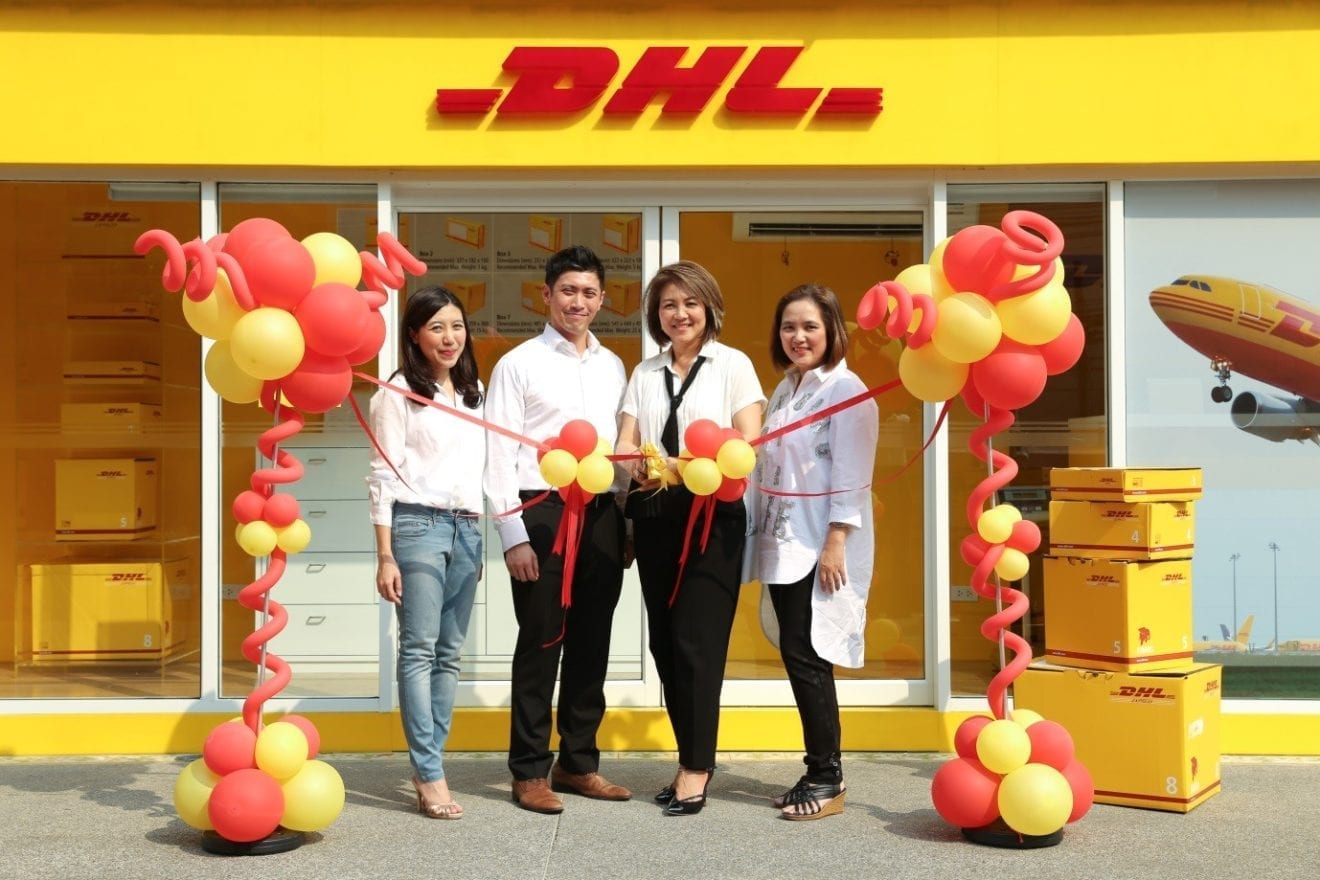
    A delivery service launched by DHL eCommerce that makes use of shops as drop-off points has received a boost with the participation of nationwide retailer SE-ED Book Center.The logistics operator yesterday said the operator of the bookstore chain was joining its domestic delivery service known as e ServicePoints, tapping demand in the fast-growing e-commerce sector.

    The collaboration announced yesterday between DHL eCommerce and SE-ED Book Center means that the book retailers’ outlets nationwide will become part of the ServicePoints network. Until now, the participating shops had been small operators. DHL eCommerce started the service nine months ago.

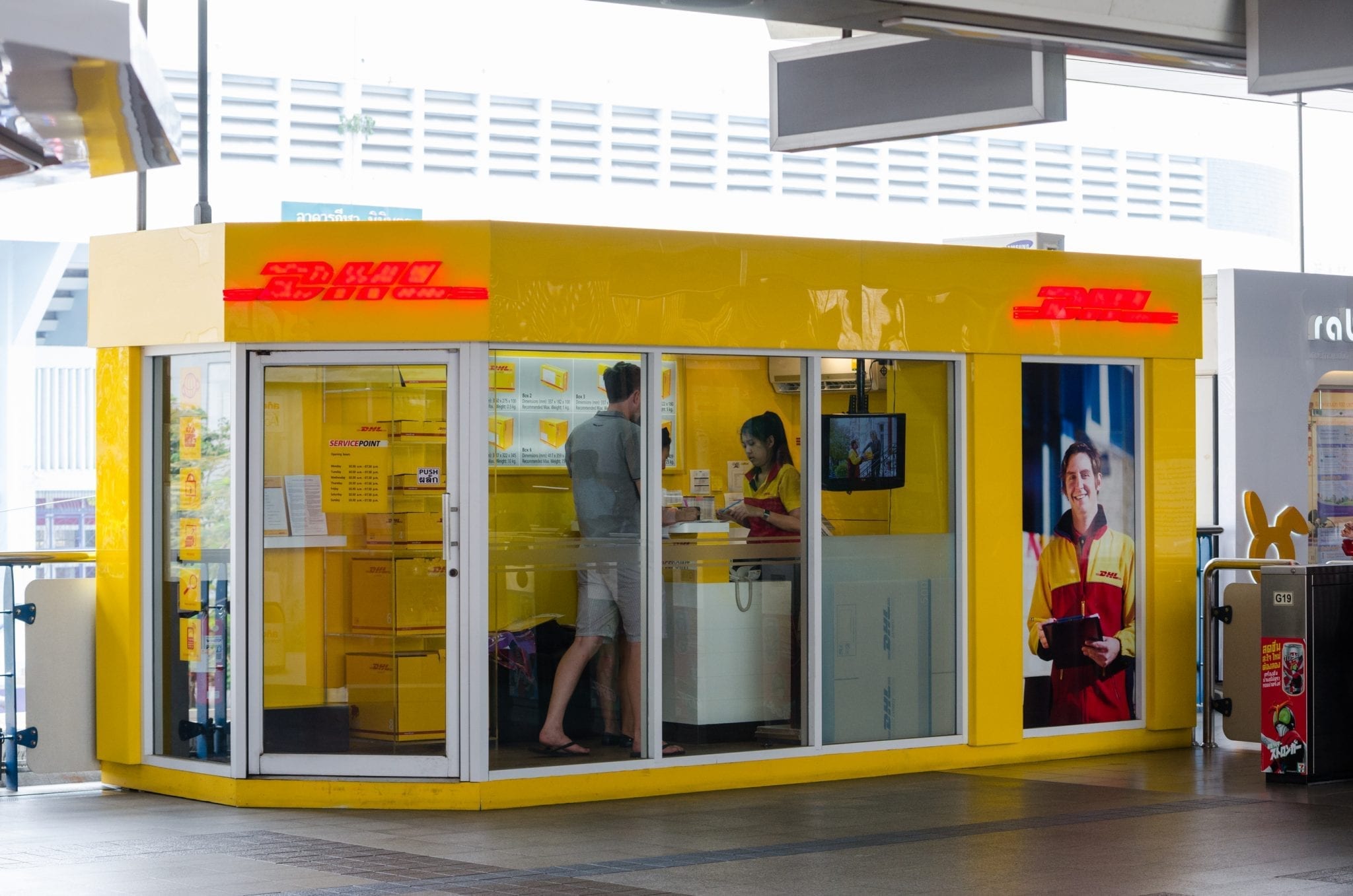
    Under the service, registered and walk-in customers can drop off their parcels at ServicePoints for nationwide delivery. Soon, shoppers will also be able collect their e-commerce orders from these ServicePoints

    Kiattichai Pitpreecha, managing director of DHL eCommerce Thailand and Southeast Asia, said that the ServicePoints service is designed to offer a convenient domestic logistics service for small online merchants that typically need to send out five to 10 products a day. For such deliveries, the customers are usually nearby.

    “Thailand’s e-commerce sector is the second largest in Southeast Asia and has 22 to 25 per cent growth per year,” Kiattichai said.

    “This pattern of growth is expected to continue over the next five years. The Thailand 4.0 initiatives also are encouraging a lot more small and medium-sized enterprises (SMEs) to turn to e-commerce. Therefore, there are a lot of demand for domestic delivery services. We want to offer Thai merchants and consumers a quality choice for logistics with an easy and convenient service.”

    There are around 100,000 small online merchants on the four main e-marketplaces in the country, Lazada, 11Street, Shoppee, and JD.com.

    Through the partnership, ServicePoints will be available at 150 SE-ED Book Center shops in Bangkok and across the country. The service rollout will reach all 394 branches by end of this year.

    DHL eCommerce plans to expand the DHL ServicePoint network to more than 1,000 locations by the end of 2018, before increasing this number to 3,000 in 2019.

    “ServicePoints is a shop-within-a-shop concept that facilitates the need for people to drop products for delivery at a retail shop,” said Kiattichai.

    “The parcels can be processed within seconds and customers will receive immediate shipment confirmation via SMS or email. The process at the ServicePoint is quick and hassle free, with no need to stand in long queues. The DHL ServicePoint network aims to serve the growing SME and C2C markets’ unmet demands.”

    In addition, consumers will soon be able to use SE-ED Book Center outlets as an alternative delivery address for their domestic e-commerce orders.

    “We will continue to offer more access points, more payment options and an integrated service delivering the quality to enable easier and simpler access to the rapidly growing Thai e-commerce ecosystem,” added Kiattichai.

    He expected that over the next 12 months, some 25 to 30 per cent of all parcels handled by DHL eCommerce will be delivered via ServicePoints. This would represent an increase from 5 per cent for previous nine-month operation.

    “The total volume of parcels we delivered in 2017 increased by four times from 2016. We expect the same growth for this year,” Kiattichai said.