Retail News CRM

Tag: Hyundai

  • Hyundai forms joint venture for Algerian assembly plant

    Hyundai forms joint venture for Algerian assembly plant

    Hyundai Motor and Algerian car maker Global Group signed a deal on Monday to establish a joint venture to produce commercial cars in Algeria. The joint venture will operate a factory that assembles knock down kits in Batna, Algeria. The assembly facility is scheduled to start operations in 2020.

    In the early stage, the factory will assemble 6,500 cars a year and gradually increase production. Medium and large trucks like the Mighty and Xcient, as well as the Hyundai County bus, will be assembled at the facility.

    According to the Korean automaker, the commercial vehicle market in Algeria has been expanding. Last year demand for commercial cars in the country was around 8,000 units, but that has increased to 12,000 units this year. By 2025, the automaker projects demand will reach 22,000.

  • Genesis starts by-the-month car subscriptions

    Genesis starts by-the-month car subscriptions

    Hyundai Motor luxury brand Genesis is starting a car subscription service, the first such effort by a domestic automaker in Korea. The company Thursday announced its Genesis Spectrum program. Under the program, subscribers can drive Genesis vehicles – including the G70, G80, G80 Sport and G90 – for 1.49 million won ($1,330) per month. The service is in collaboration with domestic rental-car companies and Hyundai Capital’s Deal Car.

    The fleet of available cars includes the 2018 G70 3.3 Sports Supreme, the G80 3.3 Premium Luxury, the 2019 G80 Sports 3.3T Premium Luxury and G90 3.8 Premium Luxury. The provided cars are relatively new, with fewer than 10,000 kilometers (6,213 miles) of accumulated driving, according to the carmaker. For those using the G70, G80 and G80 vehicles, cars can be switched twice a month. The G90 is available to subscribers only for test driving 48 hours a month.

    Subscribers will not have to pay any maintenance costs, including after-sales service and the purchase of replacement parts. They will have to renew their subscription every month, but no fee is charged for early termination of membership. The program offers pick-up and delivery in Seoul as long as the vehicles are reserved three days in advance.

    “Genesis has been researching opportunities our brand could offer customers,” an official at Genesis said. “One of the results of the survey is a subscription program, which is globally emerging as trend.”

    Genesis added that the subscription service will allow the brand to collect data about its customers and drivers, such as preferred models for certain age groups and car replacement cycles.

    While subscription services for cars are a global phenomenon, as fewer people opt for ownership, the concept hasn’t taken off in Korea yet.

    Hyundai Motor’s finance affiliate Hyundai Capital America has already launched a subscription service in the United States called Hyundai PLUS, where subscribers can use the Sonata, Tucson, Santa Fe and other models for a monthly fee. Other carmakers have been offering subscriptions in certain markets. Porsche runs Porsche Passport, Mercedes-Benz has Benz Collection and BMW has Access by BMW.

    Swedish carmaker Volvo recently started Care By Volvo, and has rolled out its “Don’t Buy This Car” campaign to promote the new service.

    “Subscription services are suitable especially for younger people who want to enjoy a diverse range of driving experiences while avoiding the financial burden of buying the car and then maintaining it,” said Kim Pil-soo, an automotive engineering professor at Daelim University.

    The Mini brand launched a subscription service in partnership with connected-car platform Epikar last month in Korea. Its membership fee is 1.79 million won, but it charges more depending on which model the customer wants to drive.

    The Genesis service started Thursday and will run for 10 months.

  • Hyundai sets aside 1.67 trillion won to support its suppliers

    Hyundai sets aside 1.67 trillion won to support its suppliers

    Hyundai Motor Group has introduced a 1.67 trillion won ($1.49 billion) support program for small and midsized auto parts suppliers, the company said Thursday. As auto parts suppliers in Korea tend to be highly dependent on the performance of carmakers, the sluggish performance of Korea’s largest auto group by sales this year has been a major blow to their earnings.

    A report published by the Economic Research Institute run by the Industrial Bank of Korea earlier this year showed that 48 percent of domestic auto parts suppliers supply parts to a single carmaker and their business growth is highly dependent on the growth of that carmaker. Also, while carmakers have extra capital to respond to ups and downs in their earnings, small-sized parts suppliers are more vulnerable to changes in the market.

    Hyundai Motor Group said it will first create a 140 billion won fund for its suppliers and subcontractors. Suppliers will be able to borrow money at low interest rates and use it to stabilize their business or invest in research and development.

    Considering many suppliers lack liquidity due to the massive investment and costs incurred in early stage R&D and parts manufacturing, the group also said it will pay forward some of the cost incurred in those activities. For instance, part of the cost incurred to develop parts used in Hyundai cars will be paid by the carmaker at the beginning of development rather than after the finished product is designed. The auto group estimates its suppliers and subcontractors will receive roughly 1.46 trillion won in investment upfront over the next five years.

    Hyundai Motor, Kia Motors and auto parts affiliate Hyundai Mobis are also creating a 15 billion won fund to provide emergency aid to suppliers.

    There is a special program for suppliers expanding facilities to support the mass production of Nexo, Hyundai’s fuel-cell powered vehicle. The group is planning on injecting up to 44 billion won into suppliers and subcontractors that expand investment into facilities for parts used in the Nexo next year.

  • Hyundai Motor bets 6.7 billion dollars on hydrogen cells

    Hyundai Motor bets 6.7 billion dollars on hydrogen cells

    Hyundai Motor Group said it will invest 7.6 trillion won ($6.7 billion) in fuel-cell electric vehicles (FCEV) by 2030, betting big on hydrogen as the energy source for the future. The group announced what it called its “FCEV Vision 2030” on Tuesday, promising to build production capacity of 500,000 FCEVs yearly by 2030 to take the lead in the fledgling industry. It added that the investment will generate some 51,000 new jobs by 2030.

    As a first step, Hyundai Mobis, the auto parts and software affiliate of Hyundai Motor, held a groundbreaking ceremony for its second fuel cell stack factory in Chungju, North Chungcheong, on Tuesday.

    If the factory is completed in 2022, Hyundai Motor Group’s production capacity for fuel cell stack will expand from its current 3,000 units per year to 40,000 units.

    “Hyundai Motor Group will become the first mover in the new hydrogen society that will arrive soon,” said Chung Eui-sun, Hyundai Motor Group’s executive vice chairman, in a speech at the ceremony in Chungju on Tuesday.

    “The group plans to expand the fuel cell stack production capacity to 700,000 units by 2030, including for the 500,000 FCEVs we plan to make by that year.”
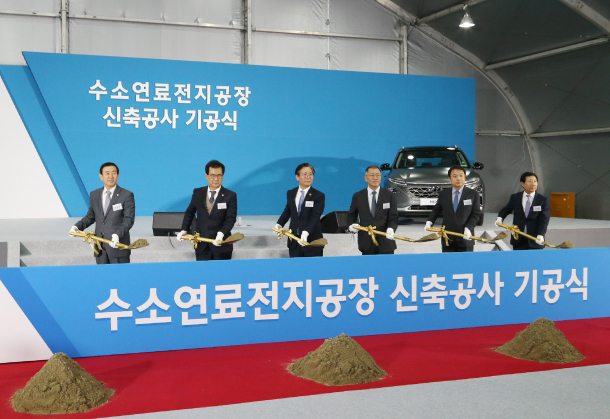
    The ceremony was attended by Minister of Trade, Industry and Energy Sung Yung-mo, Hyundai Motor President Chung Jin-haeng and Hyundai Mobis President Lim Young-deuk.

    Hyundai Mobis’ Chungju plant is focused on producing parts for eco-friendly vehicles like hybrid and electric cars.

    Last year, it constructed a new section dedicated to making fuel cell stacks with a capacity of 3,000 units per year.

    The carmaker forecasts that hydrogen will be used as an energy source in shipbuilding, railways and forklifts in the future and said it would start a business supplying fuel cell modules to other companies. The additional 200,000 units of FCEV modules that are not used in Hyundai Motor’s own FCEVs by 2030 will be sold elsewhere, the carmaker said.

    Executive Vice Chairman Chung said the FCEV industry will become a new growth engine for Korea.

    “Ninety-nine percent of auto parts in FCEVs are made domestically,” Chung said, “which is why its growth will have big ripple effects on other companies related to the industry. Through co-investment with partner companies, [Hyundai Motor] will try to build new growth engine for Korea’s future car industry.”

    Currently, some 130 partner companies are providing parts for fuel cell stacks made by Hyundai Mobis.

    Hyundai Motor has been making hefty investments in FCEVs along with rival Toyota. It was the first carmaker in the world to make a mass-produced FCEV model in 2013 called the Tucson ix35. It launched a hydrogen-powered Nexo SUV early this year.

    Since last year, the carmaker has been chairing the Hydrogen Council, a global lobbying group. Other companies represented on the council include Daimler, BMW and Air Liquide.

    The Korean government plans to supply 16,000 FCEVs and build 310 FCEV charging stations by 2022. There are currently only around 10 stations available to the public in Korea.

    China plans to supply 1 million FCEVs by 2030 and construct 1,000 charging stations. Japan plans to supply 40,000 FCEVs by 2020 and build 160 charging stations.
  • Grandeur is likely to be Korea’s 2018 best-selling car

    Grandeur is likely to be Korea’s 2018 best-selling car

    As a result of its successful attempt to attract younger drivers with a new design and cost effectiveness, Hyundai Motor’s large Grandeur sedan is likely to be the best-selling car in Korea for a second consecutive year. Its hybrid engine largely contributed to the triumph.

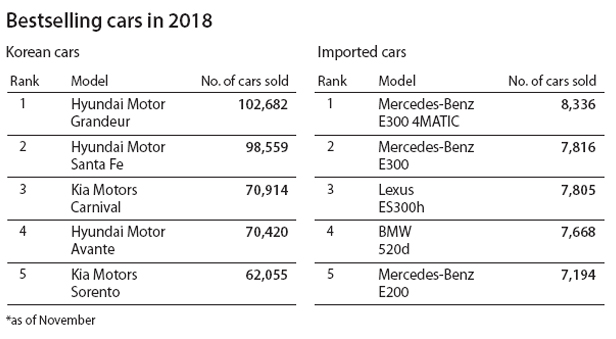
    The Grandeur IG sold a total of 102,682 in Korea units as of the end of November, becoming the first and only model this year to surpass the 100,000 mark.

    The sales figure fell slightly, however, compared to the 123,000 units sold last year during the same period.

    Hyundai Motor said the Grandeur’s hybrid engine towed sales for the model. In November, a total of 2,302 Grandeur Hybrids have been sold, the highest monthly sales since its launch.

    Closely trailing behind in second is Hyundai Motor’s large Santa Fe SUV, which climbed up eight spots from No. 10 last year.

    Last year, the Santa Fe sold a total of 54,334 units in Korea. After launching a fully revamped version early this year and riding on a global trend to prefer SUVs, a total of 98,559 Santa Fes have been sold this year, according to the carmaker.

    With the Grandeur pulling in the younger generation, its midsize Sonata sedan is losing ground.

    The Sonata, which was either the bestseller or runner up for more than five consecutive years, tumbled to the third spot last year among all passenger cars in Korea.

    This year, the midsize sedan tumbled to sixth, selling a little more than 60,000 units.

    The top 10 spots were all taken by either Hyundai Motor or its smaller affiliate Kia Motors.

    The other three Korean carmakers – GM Korea, Renault Samsung Motors and SsangYong Motor – struggled to sell their cars to Korean consumers. Internal issues and a lack of new vehicles has largely contributed to the automaker’s struggle.

    SsangYong Motor’s best-selling model was the small Tivoli SUV, which sold a total of 39,330 units as of the end of November. GM Korea’s best-selling car was the compact Spark, which sold a total of 34,616 units during the same period. For Renault Samsung Motors, which didn’t launch any new passenger car model this year, its best-selling model was the QM6 SUV, which sold a total of 28,180 units as of November.

    It was Mercedes-Benz’s year when it came to imports. The E300 4MATIC line topped the ranks as of the end of November, selling 8,336 units followed by the E300 trim with 7,816 units.

    In the third spot was Lexus’ hybrid ES300h, which sold 7,805 units. BMW’s 520d, which was the most popular import last year, was hurt by the burning engine crisis over the summer and fell to fourth spot with 7,668 units in sales.

  • Hyundai Motor rejects renewed Gwangju plan

    Hyundai Motor rejects renewed Gwangju plan

    Hyundai Motor refused a revised plan that removed a restriction on collective wage bargaining at a proposed plant in Gwangju, further complicating plans for the factory. A council with representatives from the local government and area employers, labor unions and citizens on Wednesday agreed to remove a clause from the agreement that would have suspended collective bargaining for about five years at the new joint venture between the Gwangju city government and Hyundai Motor.

    The new company will be hiring workers for a production plant to be built on 628,000 square meters (155 acres) of land in the Bitgreen National Industrial Complex. The venture is the first in Korea to bring government and private industry together in the formation of a new manufacturing facility.

    Union representatives strongly protested the clause, calling it toxic.

    Rather than pushing the clause, the council decided to offer three alternative proposals to Hyundai Motor. The city and the automaker will continue negotiations.

    “Over time, Hyundai Motor and the labor union have retreated in their demands,” said Lee Byung-hoon, Gwangju vice mayor. “But the suspension of the wage bargaining clause was the biggest issue.”

    After the announcement was made, it was Hyundai that refused the proposal.

    “We cannot help but to point out the repeated revisions and backtracking [done by the Gwangju government],” Hyundai said through a statement.

    In the first meeting held at 10:30 a.m., all nine labor representatives, including Yoon Jong-hae, head of the Federation of Korean Trade Union’s Gwangju office, refused to attend in protest of the wage bargaining ban.

    The agreement between Gwangju city and the Korean automaker had included a clause in which wage negotiations were to be suspended until the cumulative production of compact SUVs reached 350,000 units. As Hyundai Motor guaranteed a minimum of 70,000 units a year, the labor union estimated that it would take about five years before the employees at the new plant would be able to negotiate.

    The meeting resumed at 3 p.m., and Yoon joined, raising the number of attendees to 22 out of a possible 28.

    The plant proposal has been under a tight deadline as an agreement needs to be reached before the National Assembly passes the budget. The ruling Democratic Party has announced that it plans to pass next year’s budget soon.

    Meeting the budget deadline is crucial as the city needs government funding to build the necessary infrastructure, including housing that will cost roughly 300 billion won ($269 million).

    The Gwangju plant project, first proposed in June 2014, has generated significant public interest as it could keep manufacturing jobs in Korea and contribute to the revitalization of the regional economy. It would also help ease the burden of high labor costs.

    The plan is for the Gwangju government and Hyundai Motor to create a new joint-venture company. The new Hyundai Motor plant will have the capacity to produce 100,000 compact SUVs a year.

    One of the key factors in this new job creation model is that employees will receive an annual salary of 35 million won, 38 percent of the 92 million won average salaries of Hyundai Motor workers.

  • Hyundai’s Genesis G70 named Motor Trend’s Car of the Year

    Hyundai’s Genesis G70 named Motor Trend’s Car of the Year

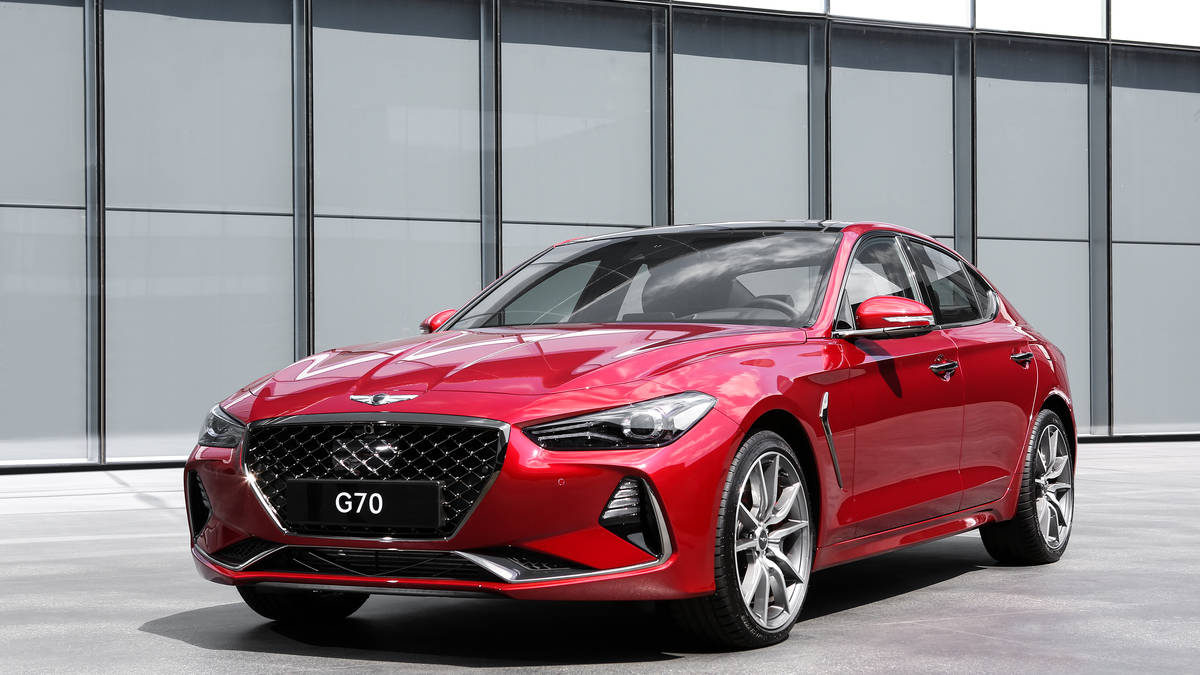
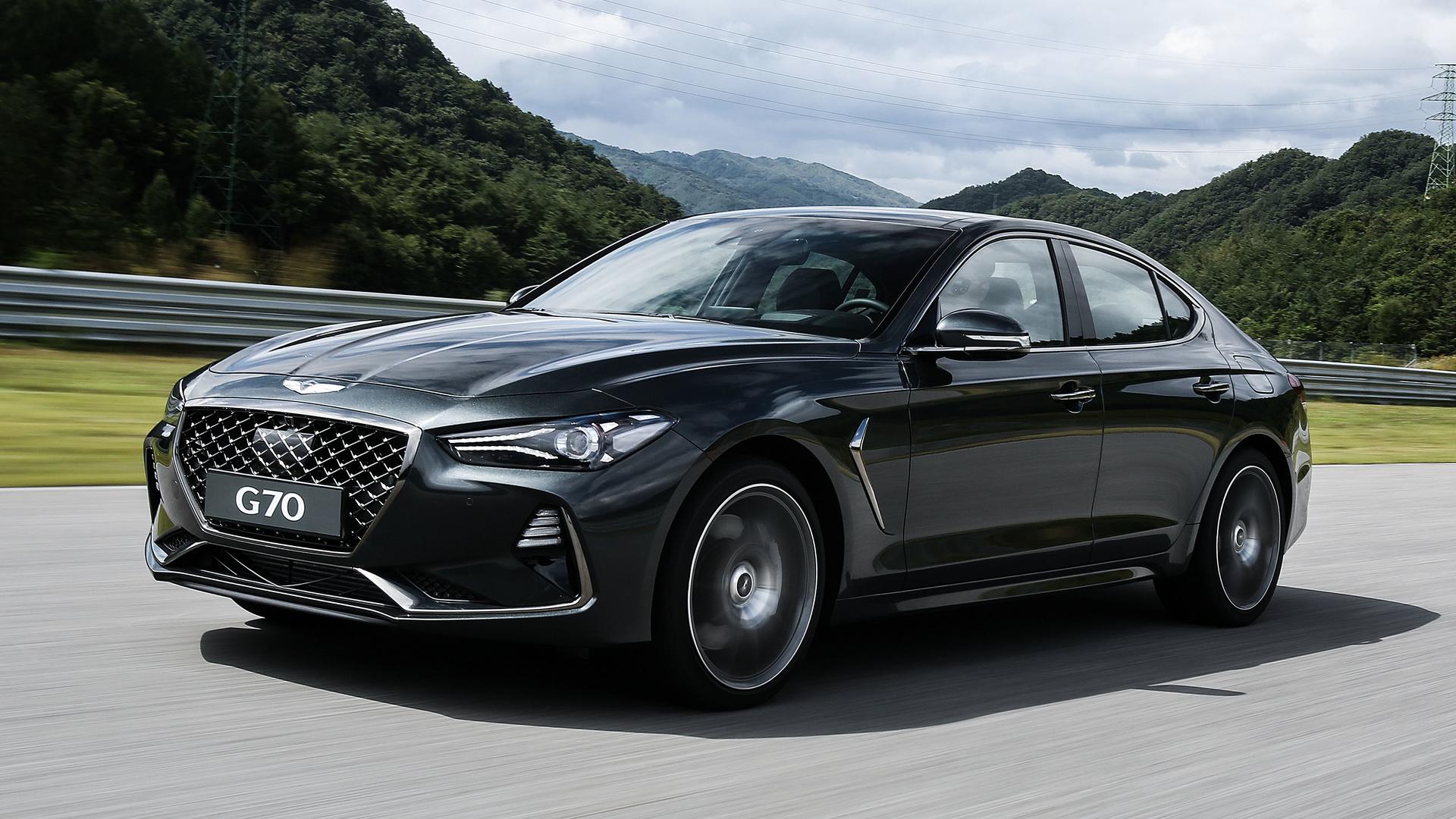
    Hyundai Motor’s luxury Genesis G70 sedan was selected as the Car of the Year by U.S. auto magazine Motor Trend, firmly establishing it as a legitimate alternative to BMW’s long-reigning 3 Series. The G70’s victory was proclaimed in Motor Trend’s January issue with the headline “A Star is Born.” The vehicle competed with 20 other models including the Audi A6, Mercedes-Benz CLS and Lexus ES.

    It is the first time a Korean car has won the award since the media outlet began the Car of the Year award in 1949. Last year, the winner was the Alfa Romeo Giulia, while in 2016, it was the Chevrolet Bolt EV.

    The magazine praised the rapid development that Hyundai Motor has achieved in its quality and brand awareness in such a short time, pointing out that the Korean brand first entered the U.S. market in 1985 selling a “Giugiaro-designed hatchback for the low, low price of $4,995.

    “Fast-forward to the present. How beyond belief is that the same cheap and cheerful automaker – Hyundai – not only has launched a luxury brand but has also built a better BMW 3 Series fighter right out the gate than the Japanese luxury brands have in numerous attempts?” the article read.

    The judging panel, made up of the magazine’s editors and engineering experts from top car brands, praised the sedan’s performance, particularly when equipped with a 3.3-liter engine. Its cousin, Kia Motors’ Stinger, which shares the same platform as the G70, missed the spot last year due to its lack of a sporty suspension.

    As an all-rounder, the Genesis G70 “pulls to infinity and beyond,” said Chris Theodore, a guest judge.

    Hyundai Motor expects its triumph to continue next year with the North American Car of the Year award, which will be announced at the North American International Auto Show in Detroit in January.

    “The Motor Trend’s Car of the Year award is expected to have positive effect in Genesis sales,” a Hyundai Motor spokesman said.

    The Genesis G70 was the first model to be released under Genesis after it was launched independently of the Hyundai brand. Other models – the G90 and G80 – were just partially revamped and renamed versions of existing models under Hyundai.

    The model ranked No. 1 in this year’s J.D. Power survey in quality, pushing aside long-running luxury brands like Porsche and BMW.

    The accolades didn’t translate to sales, however, as it continues to struggle in the U.S. market. The Genesis G70 sold 51 units in October in the United States.

  • Hyundai’s Palisade premiers at LA Auto Show

    Hyundai’s Palisade premiers at LA Auto Show

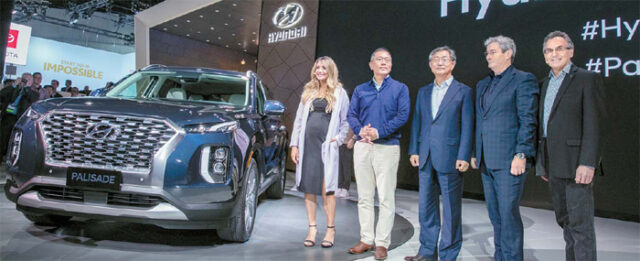
    The Palisade, Hyundai Motor’s latest effort to rework its lineup in the direction of globally-popular SUVs, was premiered at the 2019 LA Auto Show on Wednesday. Chung Eui-sun, Hyundai Motor’s executive vice chairman, was in attendance. The eight-seat vehicle is the biggest model in Hyundai Motor’s SUV lineup, which includes the small Kona, the midsize Tucson and the Santa Fe.

    The vehicle “looks good,” Chung said after the introduction at the LA Convention Center.

    When asked if the Palisade will boost sales in the U.S. market, Chung replied “it remains to be seen” and estimated the carmaker’s sales target next year to be “similar to this year’s or a little more than that.”

    Hyundai Motor, with its sedan-oriented lineup, is seen as being behind the curve with its a-bit-too-late SUV launches. In attending the event in LA, Chung missed the launch of the Genesis G90 in Korea, suggesting that the priority lies with the Palisade.

    With a spacious interior and convenient features throughout the three rows in the back, the Palisade has been developed to suit families.

    “From the driver’s seat to the third row in the back, [the Palisade] suits contemporary customers who have a desire for individual space while also providing comfortable space just like home,” Brian Smith, chief operating officer of Hyundai Motor America, said at the press event Wednesday.

    The car is equipped with a roof air ventilation system, which circulates the air inside the car from the first row to the third row to enhance the air quality. It enables passengers in each row to control the air conditioning on their own. There are USB ports for charging electronic devices in each row as well.

    Two engine types are available: the 2.2-liter diesel and 3.8-liter gasoline. Hyundai Motor started taking preorders in Korea on Thursday and will launch the vehicle officially in December. It will launch in the United States next year.

    The diesel version price starts at 36.2 million won ($32,300) and the gasoline model 34.7 million won.

    Kia Motors, an affiliate of Hyundai Motor, premiered the fully-revamped version of its Soul at the LA Auto Show. It unveiled the electric version of the car as well as the Niro EV.

    The new Soul and the Soul EV will launch in Korea and in global markets in the first quarter of next year.

    Some hefty SUV models from global carmakers were on display at the LA Auto Show. BMW premiered the X7 SUV and Mercedes-Benz unveiled the Maybach GLS, the first SUV model under the premium Maybach label.

    Lincoln, a premium Ford brand, unveiled the seven-seater, three-row Aviator SUV, and Jeep showcased the Gladiator, a midsize pick-up truck.

  • BTS to promote new Hyundai Palisade SUV

    BTS to promote new Hyundai Palisade SUV

    Global K-pop sensation BTS has been chosen as the face of Hyundai Motor’s new large Palisade SUV, which will premiere at the upcoming LA Auto Show. The carmaker said Tuesday that it has appointed the seven-member boy band as the global ambassadors for the vehicle. The group will introduce the car in a video to be shown at the auto show today.

    According to Hyundai Motor, the group’s explanation will focus on the large SUV’s spacious interior and the convenient features found throughout its three rows of seats.

    “Hyundai Motor appointed BTS as the global brand ambassador of the Palisade as the K-pop group was considered the most suitable to introduce the new vehicle that is throwing the gauntlet down in the large SUV market,” the company said in a statement Tuesday.

    “The group will be able to deliver the greatly spacious interior of the Palisade, which is able to accompany seven to eight people.”

    Hyundai Motor said it would live stream the premiere on the automaker’s Facebook page. It will also post a range of videos featuring BTS and the Palisade on its social media accounts.

  • Hyundai AutoEver plans IPO

    Hyundai AutoEver plans IPO

    Hyundai AutoEver, an ICT affiliate of Hyundai Motor Group, plans to go public on the Korean stock market, a move seen as a preliminary step to the group’s restructuring. The company said it submitted an application for preliminary screening to the Korea Exchange on Thursday. NH Investment and Securities will oversee the deal. “In time for the paradigm shift such as the fourth industrial revolution, [the initial public offering (IPO)] is to enhance the company’s competitiveness in digital technology as well as the company’s awareness, in addition to further secure investment for research and development,” the company said.

    Hyundai AutoEver was established in 2000 as a B2B company that develops a range of auto software systems related to connected and cloud services. It posted 1.1 trillion won ($971.4 million) in revenue last year with 52.1 billion won in net profit.

    In addition to fortifying the company’s competitiveness, the IPO is expected to relieve more than one risk at Hyundai Motor Group once it restarts its governance restructuring scheme. The company’s internal trade with other Hyundai affiliates accounted for more than 80 percent of its revenue last year.

    Kim Sang-jo, head of the Fair Trade Commission, has been pushing chaebol to eliminate trade among affiliates.

    Domestic fair trade law regulates family members of chaebol from owning more than 20 percent of the group affiliate’s shares. Hyundai Motor Group Executive Vice Chairman Chung Eui-sun slightly missed the spot by owning a 19 percent stake in Hyundai AutoEver, yet the latest push for an IPO is seen as a move to eliminate any possible risk of controversy.

    The public listing of the company is also expected to help Chung secure more funds required for the future governance restructuring as it will encompass numerous spinoffs and mergers.

    Hyundai Motor Group initially released a restructuring scheme back in March that never got off the ground due to a negative response from the market.

  • Duty-free sales may hit all-time record this year

    Duty-free sales may hit all-time record this year

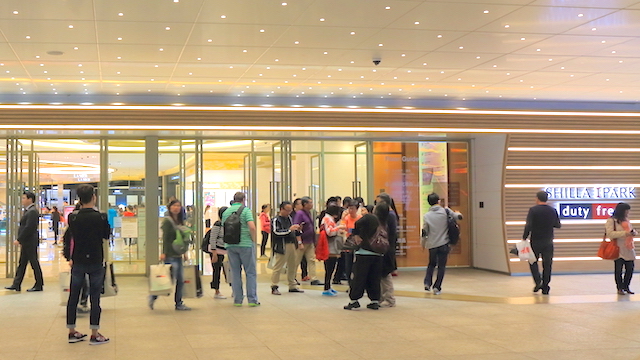
    Korea’s duty-free sales are likely to set a new annual record this year despite Chinese group tour traffic not having fully recovered.  According to the Korea Duty Free Shops Association, duty-free store operators made $1.44 billion in October, a 28.6 percent increase year on year. This takes Korea’s total duty-free revenue between January and October to $14.3 billion, surpassing 2017’s full-year revenue of $12.8 billion.

    “The local duty-free market was 14 trillion won [$12.4 billion] in size last year – some forecast this year will reach a new all-time record of 18 trillion won,” said a source at one of Korea’s largest duty-free store operators.

    The growth is meaningful considering that Chinese group tours are not fully back in the market.

    Industry watchers and analysts attribute the increase in duty-free sales this year to “daigongs,” or individual Chinese merchants that purchase Korean goods and resell them at home.

    Before Chinese group tours were banned in March 2017 after Korea’s deployment of the U.S. Terminal High-Altitude Area Defense antimissile system, they were a major source of revenue for local duty-free stores. As traveling to Korea for Chinese became more difficult, the reselling business began to grow.

    “Revenues are going up this year but we’re still waiting for group tours to come back,” said another source at one of top three duty-free companies.

    Sales increases are generally good news, but industry watchers warn that operating profits will not grow as fast as revenues. Attracting daigongs entails high marketing costs. New duty-free outlets opened in Seoul this year, which means competition to pull in daigongs may become more intense.

    Signs suggest restrictions on group tours from China are easing. Some online tour agencies have started marketing group tour packages to Korea on their websites. Last week, China’s largest online tour agency Ctrip posted Korean tour products on its website, but erased them the same day.

  • New Santa Fe designed for China

    New Santa Fe designed for China

    Hyundai Motor premiered the latest version of its Santa Fe SUV at an international auto exhibition in Guangzhou on Friday in its latest move to try and woo Chinese buyers. It also rolled out a reshuffle of its Chinese business. Vice President Lee Byung-ho was promoted to president of Hyundai Motor and Kia Motors’ China Business Division, the carmaker announced Friday.

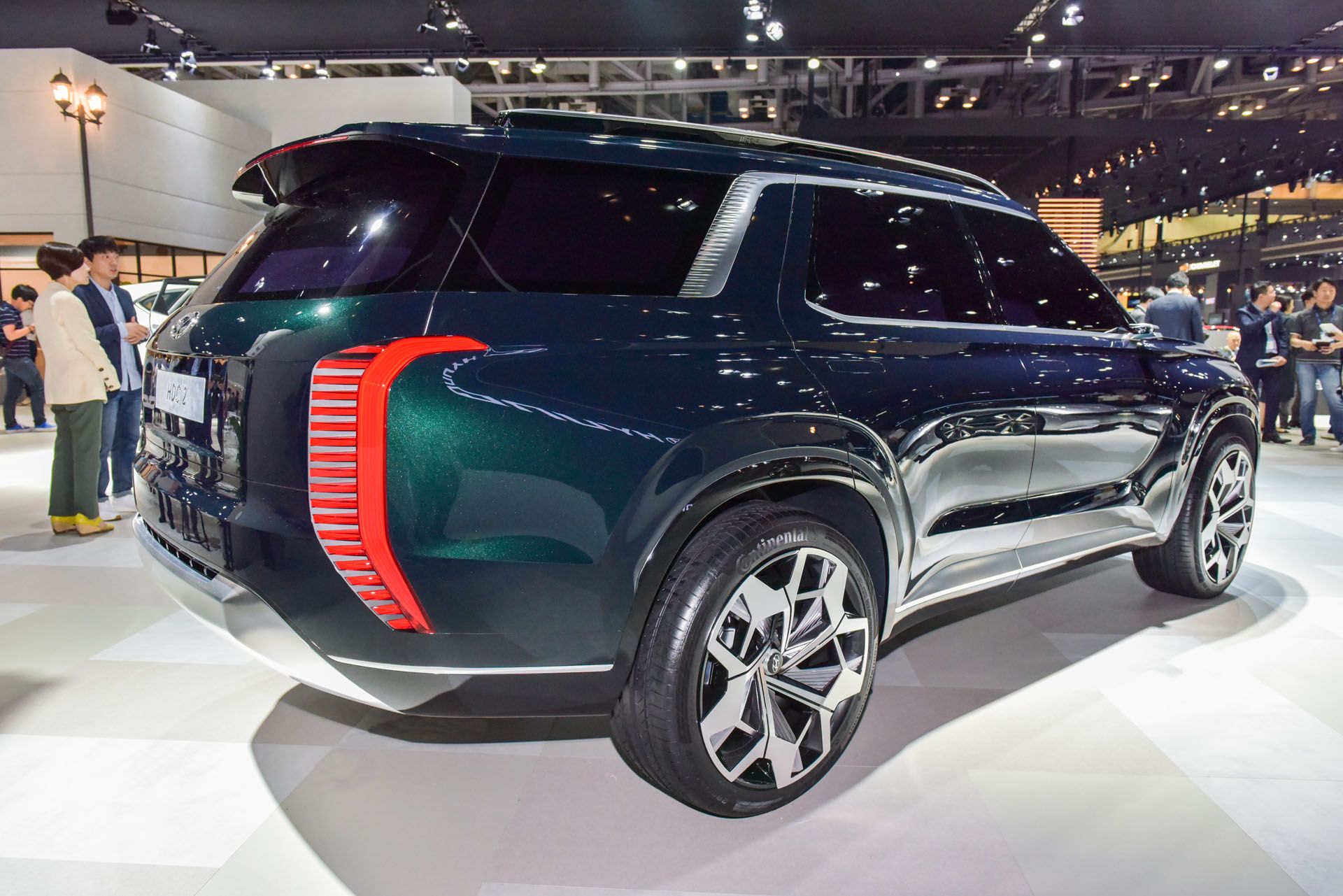
    The automaker showcased the fourth-generation Santa Fe, which has been strategically modified for the Chinese market. The new edition is the most futuristic Santa Fe on the market anywhere in the world, including the models sold in Korea.

    After hitting rock bottom in the past two years due to diplomatic tension over the deployment of the U.S.-led Terminal High Altitude Area Defense antimissile system in Korea, Hyundai Motor has been slow in recovering sales in China. In the third quarter, it sold 177,000 units, a 6.2 percent year-on-year drop.

    Hyundai Motor said it has installed a fingerprint scanner on the door – a global first – allowing owners to lock and unlock the door without a car key. The fingerprint scanner can also turn on the engine and automatically adjust the seat and side mirror to the owner’s liking.

    The new version is also bigger than the latest Santa Fe that launched in Korea in February.

    The length was extended by 160 millimeters (6.3 inches) and the wheelbase by 100 millimeters, enlarging the space for the second and third row passengers. Other smart car technology included in the vehicle is similar to the version available in Korea.

    The car is equipped with a Rear Occupant Alert system that alerts the driver when a passenger is left behind in the back seat through ultrasound detection. It is the first time Hyundai Motor has installed such a system in cars launched in China.

    The Santa Fe is also equipped with Safe Exit Assist, which prevents collisions with oncoming traffic when exiting the vehicle.

    The car is also equipped with voice recognition through a partnership with Chinese IT giant Baidu.

    “The latest Santa Fe stands in the center of Hyundai Motor’s continuous attempts and innovation toward the ever-changing needs of the customer,” said Beijing Hyundai in a statement. “The Santa Fe will bring about changes in the premium SUV market in China with its top-notch safety and smart car features.”

    The car will go on sale starting in the first quarter of next year in China.

    Hyundai Motor set up a 1,820-square-meter (19,590-square-feet) booth at the Guangzhou International Auto Exhibition where its latest lineup of 18 cars, including a concept version of the large Grandmaster SUV and N series vehicles, such as the Veloster N and i20 WRC, were on display.

    It also showed off its hydrogen-powered Nexo SUV.

    The auto exhibition in Guangzhou runs from Saturday to Nov. 25.

  • Hyundai investing in U.S. drone company

    Hyundai investing in U.S. drone company

    Hyundai Motor, Korea’s largest carmaker by sales, said Thursday it has invested in a U.S. unmanned aerial vehicle (UAV) company to jointly develop new products. In the investment, Hyundai Motor and Top Flight Technologies will jointly seek business opportunities in the global high-end aerial drone market, the company said in a statement.

    “In addition to solving the challenges of longer-duration flight for quadcopters, Top Flight is developing the technologies needed to enable new solutions in aerial logistics and mapping which could be useful in Hyundai’s future business,” John Suh, vice president of Hyundai CRADLE in Silicon Valley, said in the statement.

    Hyundai CRADLE is Hyundai Motor’s corporate venture and open innovation business in the United States.

    “Hyundai’s investment in Top Flight confirms its commitment to autonomous vehicles and mobility solutions, whether on the road or in the air. We fully believe that Hyundai’s world-class assembly and automation capabilities will help spur the production and deployment of aerospace-grade UAVs, more efficiently than ever,” Top Flight Chief Executive Long Phan said in the statement.

    The U.S. start-up is unrivaled in the fields of cutting-edge unmanned aerial vehicles equipped with small-sized gasoline engines that can extend flight range by charging a battery, it said. Hyundai didn’t provide how much it has invested in the U.S. start-up.

    The global UAV market is expected to grow from $5.6 billion in 2016 to $12.2 billion in 2019 and to $22.1 billion in 2026, the statement said. As UAVs are mainly used for military purposes, there is big growth potential for the commercial drone market. At present, the drone delivery services market is in the early stages of development. The concept of drone delivery services began with Amazon in December 2013. The U.S. retailer said its drone service is designed to deliver packages to customers as quickly as possible using UAVs.

  • Hyundai to offer connected cars in Europe

    Hyundai to offer connected cars in Europe

    Hyundai Motor is introducing its connected-car system in Europe in partnership with Vodafone next year. The carmaker and affiliate Kia Motors signed a memorandum of understanding with Vodafone at the company’s British headquarters on Monday to roll out the service, Hyundai Motor said.

    Its Blue Link connected-car platform will be available in cars launching in Europe in the latter half of next year. The system will utilize Vodafone’s network. Kia’s Uvo connected-car system will be available in new cars sold in Europe in the first half of 2019.

    The connected-car service will offer real-time traffic information as well as information about nearby parking lots. It will also enable the remote detection of the car’s location as well as anti-theft features.

    Voice-recognition will be available in partnership with Nuance, a U.S. company. In Korea, that service is available in partnership with Kakao.

    Vodafone is one of the leading telecom companies in Europe, with 120 million users on the continent. It is established in 51 countries globally.

    The Blue Link service offered in collaboration with Vodafone will be available in eight European countries, including Britain, Germany, France and Spain. Ultimately, it will be available in 32 European countries.

    Europe is the fifth region where Hyundai Motor has introduced its connected-car service. It is already available in Korea, the United States, Canada and China.

    In July, Hyundai Motor partnered with Chinese IT firm Baidu for the introduction of connected-car services. In the United States, it is working with AT&T, and in Canada it utilizes the Bell network.

    “The latest collaboration will enable European customers to use the high-tech service,” said Suh Jung-sik, senior vice president of Hyundai Motor’s ICT department in a written statement. “The connected-car service will launch from early next year and be expanded in the future.”

  • Korea’s car companies discuss challenges

    Korea’s car companies discuss challenges

    Representatives of Korea’s major automakers and parts makers and industry officials gathered in Seoul Wednesday to discuss ways to breathe new life into the sluggish sector. The chief executives of the big five automakers — Hyundai Motor, Kia Motors, GM Korea, Renault Samsung and Ssangyong Motor — and their local parts makers and industry associations explored ways to tackle daunting challenges facing the industry.

    Korea’s auto industry is going through a hard time after GM Korea shut down its underutilized Gunsan plant in May, and Hyundai and Kia have been posting generally disappointing earnings this year.

    Small and medium-sized companies that make parts for the carmaker were more vulnerable to falling sales, with more than one-third of such Korean auto parts makers posting losses in the first half of this year, data by the think tank Korea Institute for Industrial Economics and Trade showed.

    They are also in the crosshairs as the United States is weighing slapping tariffs on foreign-made autos and auto parts on national security grounds.

    The participants called for the government to boost domestic demand, provide financial assistance to cash-strapped parts makers and lower regulations in emerging sectors, such as autonomous and electric vehicles.

    The automakers said they will seek ways to maintain over 4 million units in domestic car production and raise the number to 4.5 million by 2025.

    Hyundai Motor, the nation’s leading automaker, said it will invest 220 billion won ($193.8 million) over the next two years to develop an advanced lineup of its hydrogen-fuel electric car Nexo, with a goal of releasing over 30,000 units in the domestic market in 2022.

    GM Korea said it will hold trade shows to help its local contractors tap into the global market and supply 70 billion won in subsidies for small- and medium-sized contractors.

    Renault Samsung said it will operate a research and development fund worth 35 billion won by 2020 and form an alliance with Nissan and Mitsubishi to help its contractors make bids overseas.

    Ssangyong Motor promised to expand use of Korean-made parts and support its contractors in India.

    The Ministry of Trade, Industry and Energy said it will join industry efforts to overcome challenges and drive innovation in the sector.

    “If the auto industry and the government work together, we can come up with measures to deal with the hardship,” Industry Minister Sung Yun-mo said during a meeting with them.

    “We will gather opinions to prepare support measures, especially for parts manufacturers.”

    The ministry said it will unveil a comprehensive support package for the auto industry next month, which includes financial and R&D support as well as deregulatory measures.