Retail News CRM

Tag: Hyundai

  • Hyundai to unveil new large SUV Palisade

    Hyundai to unveil new large SUV Palisade

    Hyundai Motor’s new large SUV, set to be unveiled at the Los Angeles Auto Show later this month, will be called the Palisade. According to the carmaker Friday, its new model for the 2020 model year will be revealed on Nov. 28 during a press event at the L.A. motor show.

    The company will start taking preorders for the SUV in the Korean market starting at the end of this month, earlier than other countries. Hyundai Motor America said Thursday the car will be available in the U.S. market in the summer of 2019. Hyundai said the SUV was named after Pacific Palisades in southern California, an affluent neighborhood that boasts a series of coastal cliffs. The carmaker is hoping that the Palisade will live up to its premium-sounding name.

    The three-row SUV will offer seven or eight passenger seats, according to a spokesperson from Hyundai Motor. The major focus in designing the car is enabling everybody inside the car, even those in the third row, can enjoy their own space. In some vehicles with third rows, space is tight.

    The carmaker said its new Palisade will offer the most seating space among competing vehicles in the same segment. It also promised diverse seat adjustment options and an easy-to-use interface for adjusting car settings for passenger convenience.

    “For large SUVs, carmakers need to offer more value than just the basic driving performance,” a Hyundai spokesman said. “The spacious interior and intuitive interface for safety and convenience services offered in the car are its competitive edge.”

    The carmaker is expecting a lot from this vehicle, as it in hopes to make the Palisade its flagship SUV model when families are increasingly lean towards bigger SUVs over sedans. The Palisade will replace the Max Cruze (Santa Fe XL overseas) as Hyundai’s largest SUV.

    Specifications and pricing for the Palisade were not released on Friday.

  • Hyundai, Kia invest big in Grab

    Hyundai, Kia invest big in Grab

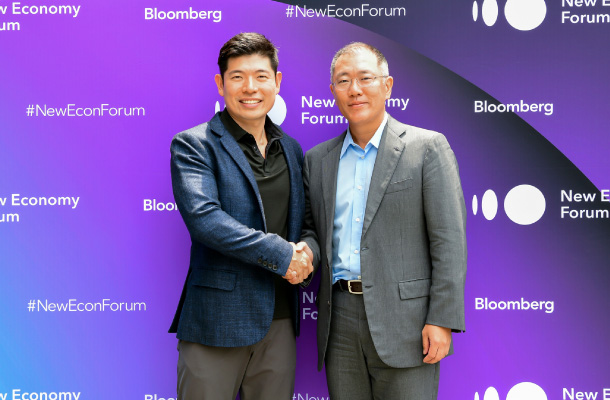
    Hyundai Motor and Kia Motors will jointly invest $250 million into the world’s third-largest ride-hailing operator Grab, eyeing shared mobility services as a way to overcome faltering car sales, the companies said Wednesday.  Hyundai has already injected $25 million into Grab in January, so total investment on the Singapore-based company adds up to $275 million. This is the largest investment made in a single company by the two sister automakers under Hyundai Motor Group, the group said.

    Grab, which has operations in 235 cities in eight countries in Southeast Asia, is the largest ride-hailing service provider in the region, though it is smaller than China’s Didi Chuxing and U.S. company Uber, which have larger operations elsewhere.

    The big bet in Grab comes as the largest auto group in Korea seeks fresh business models for growth. The group said it will make the two carmakers core players in an era where shared mobility is becoming ever more important.

    The three companies will start their collaboration by deploying Hyundai and Kia-made electric cars in Grab’s Singapore business. Hyundai will first supply 200 electric vehicles to the ride-hailing company by early next year. Kia is mulling whether to follow suit soon after.

    The vehicles will be rented out to Grab drivers. This way, Hyundai can introduce its electric cars to Singapore and other Southeast Asian markets once the pilot test in Singapore proves successful.

    “Targeting emerging markets based on strong partnerships with local companies like Grab could be a sustainable way of making profits,” Hyundai said in statement.

    If more people use ride-sharing services and other apps rather than driving their own cars, these large mobility service companies could become the major customers for carmakers in the future, and automakers are already aware of this.

    The three companies will also work on developing car maintenance and repair services as well as car financing services specialized for Grab drivers using the electric cars.

    Going further, they plan to launch electric car models customized for ride-hailing services.

    “Grab is the best partner there is to expand [our] electric car supplies in the Southeast Asian market,” said Chi Young-cho, chief innovation officer at Hyundai Motor Group.

    The latest investment is in line with Hyundai’s aggressive preparation to enter the shared mobility business. It is a relatively late mover into the future mobility business compared to competitors like Germany’s Daimler, which launched its own car-sharing brand Car2Go in 2008.

    The automaker landed a partnership with Sydney-based car sharing start-up Car Next Door with the aim of launching a new app-based mobility service in Australia by 2020. It also holds partnerships with India-based car-sharing company Revv, U.S. mobility service company Migo as well as local last-mile delivery service provider Mesh Korea. In Netherlands, it started its own car-sharing business with 100 Ioniq EVs last month.

  • Hyundai opens center for innovation in Israel

    Hyundai opens center for innovation in Israel

    Hyundai Motor opened an innovation center in Tel Aviv and invested in an Israeli artificial intelligence start-up through the center, the automaker said Tuesday. Hyundai Cradle Tel Aviv is the third such initiative established by the Korean carmaker’s investment arm, the others in Korea and Silicon Valley. The Israel-based center, which officially started operations at the end of last month, is dedicated to finding start-ups with expertise in artificial intelligence and computer vision.

    The Tel Aviv center said Tuesday it invested in allegro.ai, a start-up specializing in deep learning-based computer vision. The automaker said the partnership will improve the quality of Hyundai’s products and speed up its deployment of AI technology.

    “Deep learning-based computer vision is one of the core technologies that can be applied to autonomous driving, to navigate roads and make quick decisions in real time,” said Ruby Chen, head of investment at Hyundai Cradle Tel Aviv. “allegro.ai is clearly an innovation leader in that field.”

    The technologies produced by the Israeli start-up make it easy for companies developing autonomous vehicles and drones to manage and control their data sets safely, said Nir Bar-lev CEO and co-founder of allegro.ai in a statement Tuesday.

    Korea’s largest automaker is planning to establish two more centers, in Berlin and Beijing.

    Selecting China as one of its global bases is a strategic move, as the automaker is seeking ways to expand in the world’s most populous consumer market. Hyundai is considering launching its N brand cars in China.

    On Tuesday, Thomas Schemera, head of the product planning and strategy division at Hyundai Motor, said the company is mulling which of its high-performance branded cars to introduce to the Chinese market during the first China International Import Expo, being held at the National Convention and Exhibition Center in Shanghai.

    Hyundai introduced its fuel-cell vehicle NEXO at the expo with an aim to bolster its presence in the growing eco-friendly car market in China.

    The expo is being held for the first time by the Chinese government to help foreign companies introduce their products and find opportunities for business cooperation.

  • Hyundai Motor sells more than 200,000 Genesis units

    Hyundai Motor sells more than 200,000 Genesis units

    Sales of Hyundai Motor’s premium Genesis marquee surpassed 200,000 units three years after its official launch, industry data showed Sunday. According to the data, total sales of Genesis vehicles reached 206,882 as of the end of October, touching the 200,000 mark for the first time since November 2015, when Hyundai Motor launched the sub-luxury brand.

    With global sales of 555 units of Genesis cars in the first year, 58,916 units were sold in the following year and 78,889 units in 2017.

    For the first 10 months of 2018, Hyundai saw sales of the brand rise 6.1 percent on year to 68,522 units.

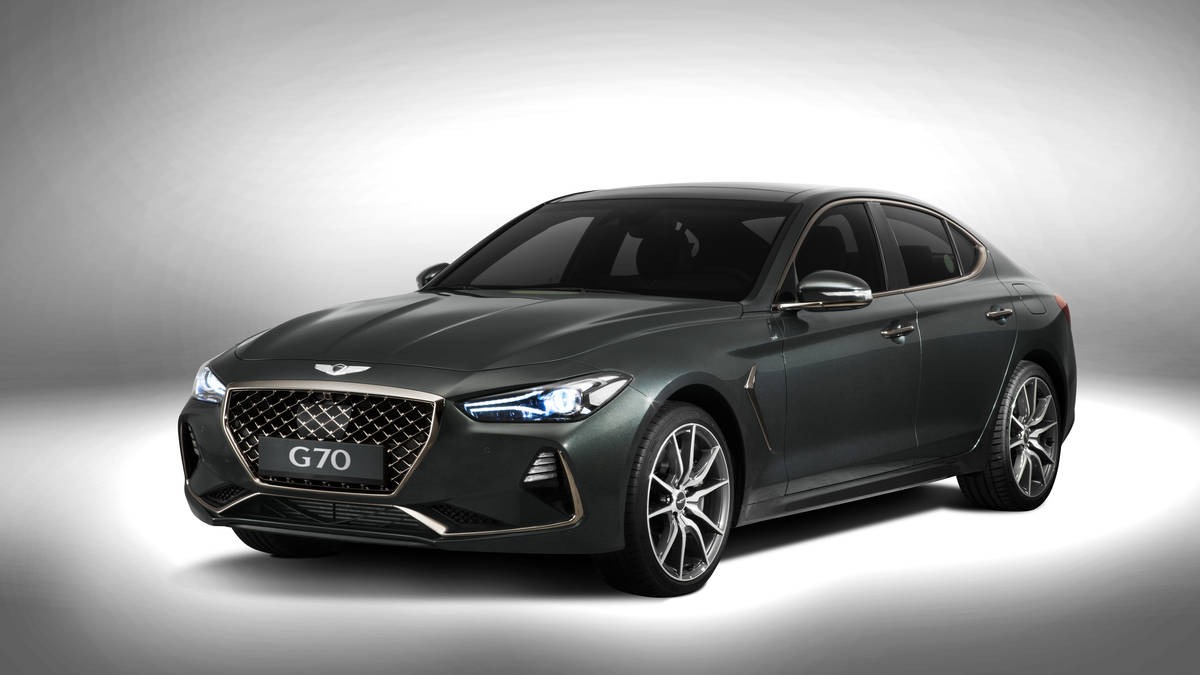
    The executive G80 model was the most popular in the Genesis lineup, with a cumulative 127,283 units sold worldwide, followed by the flagship G90 with 52,417 units sold and the G70 sports sedan with 27,182 units.

    Hyundai Motor said it will strengthen the Genesis lineup by upgrading popular models.

  • First duty-free space in Hyundai Department Store

    First duty-free space in Hyundai Department Store

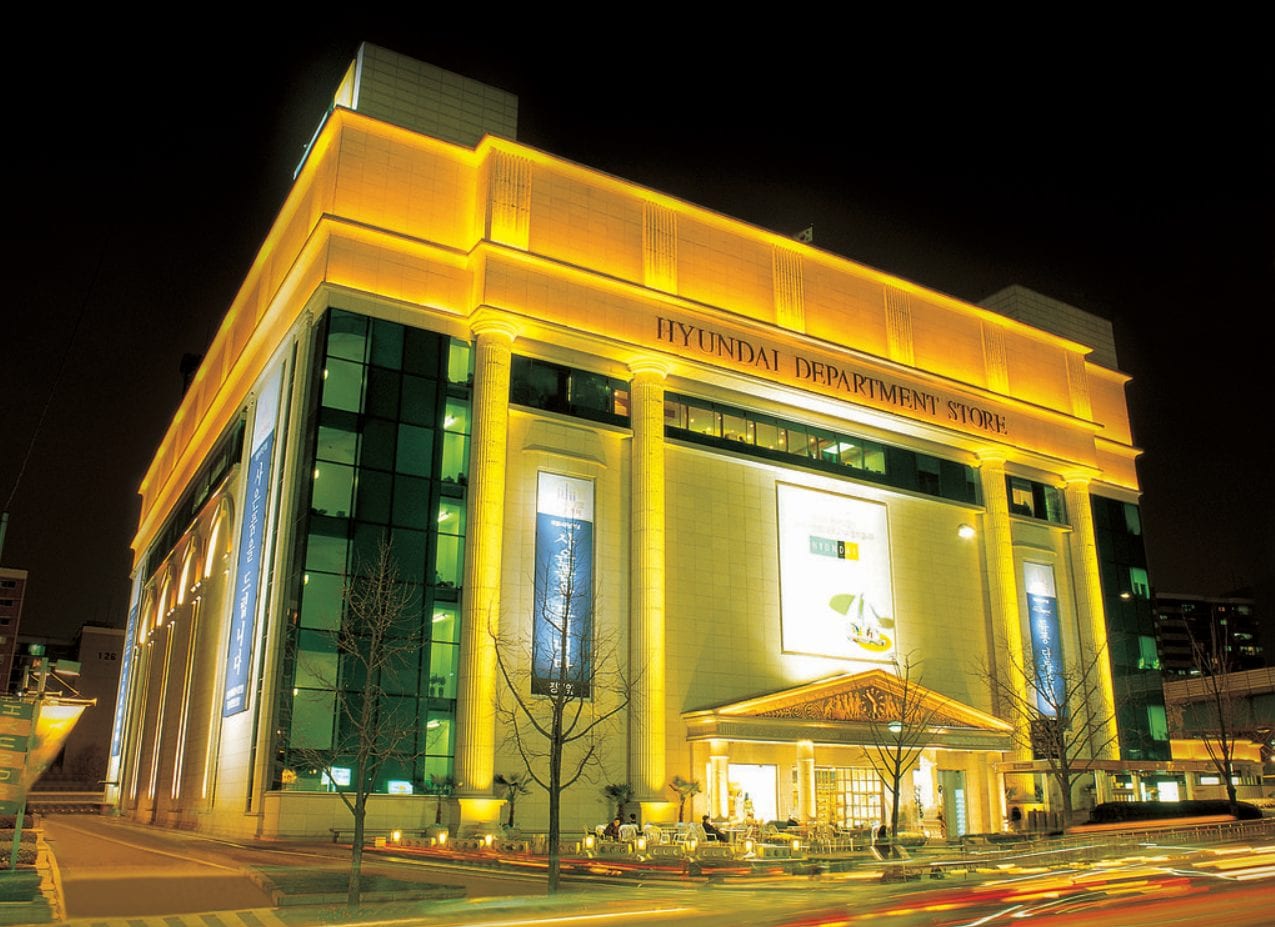
    South Korea’s retail conglomerate Hyundai Department Store Group opens its first duty-free store at its branch in Samseong-dong, southern Seoul, on November 1 as a newcomer into the lucrative duty-free race dominated by two other retail names, Lotte and Shinsegae.

    The new 14,250-square-meter duty-free store will open inside Hyundai Department Store’s Trade Center branch in Samseong-dong, an affluent business district in southern Seoul.

    It will take up three floors at the branch and offer 420 domestic and foreign brands.

    The outlet will be the first to have an official Alexander McQueen store. It will also have a separate foreign fashion zone offering Max Mara and Versace brands.

    Luxury brands will be based on the eight floor, while the ninth floor is reserved for beauty products and fashion stores.

    The 10th floor will have a more various selection of products from character goods to food like red ginseng and dried seaweed that is popular with foreign duty-free shoppers.

    The project is a huge one for Hyundai Department Store, which has been relatively conservative in the last decade regarding business expansions.

    Other department store rivals Lotte and Shinsegae have already established a stable foothold in the duty-free industry.

    In a press conference held at the new store on October 31, Hwang Hae-yeon, president of Hyundai Department Store Duty Free Co., said that it will provide high-quality life-style duty-free store service to consumers by escaping existing business practices and introducing new perspective.

    Hwang said the new store is expected to raise 670 billion won (US$588.2 million) in sales next year and over 1 trillion won in 2020.

    Hyundai Department Store Group will also create a digital-exclusive space to provide differentiated customer experience.

    It will invest 10 billion won to install the country’s largest 37-meter-wide and 36-meter-high light-emitting diode digital signage on the exterior wall of Hyundai Department Store’s Trade Center branch in December.

    The retailer also plans to promote diverse marketing by linking other businesses in retail, fashion, and travel, with its duty-free store to solidify its presence as a comprehensive retailer.

    The new addition will be the fourth duty-free store in the Gangnam area, along with Lotte Duty Free stores in the Lotte World Tower in Songpa District and in COEX and the Shinsegae Duty Free near the Express Bus Terminal.

    Being closer to other duty-free stores has tended to work as an advantage in the past, as tourists, especially those in large groups, can visit all of the different venues in one outing.

    In the past, duty-free stores inside Seoul were mainly clustered the North of the river, but the recent shift toward the Gangnam area suggests that a new duty-free destination could develop in the south of the city.

    Hwang also expressed confidence in the Gangnam location beside COEX as the operation’s “main differentiation point.”

    The venue is located near three high-end hotels, an underground mall, a casino and a convention center that regularly hosts international fairs. SM Town, a well-known destination among K-pop fans that also sells SM Entertainment products, is also nearby.

    The launch of Hyundai’s duty-free store comes at a complicated time: Chinese group tours to Korea – which once accounted for 70 percent of local duty free revenue – haven’t fully recovered after the U.S.-led antimissile system Thaad deployment last year.

    There are mounting concerns that duty-free stores are in fierce competition for commission fees in order to attract Chinese resellers that purchase in bundles.

    “There’s excessive competition in the market now – I want it to normalize and we’re going to try to stay away from [contributing to] it,” said Hwang.

    “There are many challenges, including regulations in China, but things are getting better. Chinese resellers can’t be ignored at the moment but in the long run, our plan is to focus on attracting ordinary tourists.”
  • Hyundai to set up $100 million hydrogen fund in China

    Hyundai to set up $100 million hydrogen fund in China

    Hyundai Motor has partnered with a Chinese institute to set up a $100 million fund for local investments in hydrogen technologies and related industrial infrastructure, the company said Monday. Hyundai Motor and the Beijing-Tsinghua Industrial R&D Institute have kicked off the Hydrogen Energy Fund, with venture capitalists from Asia, Europe and the United States expected to join as investors, Korea’s largest carmaker said in a statement.

    “The fund, once fully set up, will be used in the infrastructure needed for the hydrogen industry and venture startups with core hydrogen technologies,” the statement said.

    Yield Capital, an investment organization under the Chinese institute, will be responsible for raising funds and managing them, it said.

    Hyundai has expanded investments in hydrogen fuel-cell electric vehicles, such as Nexo, while expanding partnerships with global companies to gain a share in the next-generation car markets.

  • Hyundai Motor net profit plummets 67%

    Hyundai Motor net profit plummets 67%

    Hyundai Motor’s operating profit plummeted 76 percent on-year in the third quarter as a recall in the U.S. and sluggish growth in major markets hurt the automaker’s bottom line. Korea’s No. 1 carmaker by sales announced Thursday that it posted 289 billion won in operating profit in the July-Sept. period.

    Its net profit was 306 billion won, down 67.4 percent on-year.

    “To fortify quality control, Hyundai Motor rolled out a recall related to airbags and engines which resulted in a 500 billion won one-time cost realized in the Q3 report,” said a Hyundai Motor official.

    Operating costs totaled 3.4 trillion won in the third quarter, according to the carmaker, which is 8.6 percent more than during the same period last year.

    Despite good sales in Europe and emerging markets like Brazil and Russia, low demand in the U.S. and China dragged down overall sales. It sold 1.12 million units globally in the third quarter, 0.5 percent less than during the same period last year.

    The domestic market got a bost from the new Santa Fe SUV, but a decreased number of operating days at dealerships resulted in Hyundai Motor selling just 171,443 units, a 1.4 percent drop compared to last year. Chinese sales dropped by 3.7 percent on-year, selling 181,000 units. Sales in the U.S. dropped by 4.1 percent on-year to 302,000 units.

    Hyundai Motor expects profitability to improve in the fourth quarter and going into next year with the launch of new SUV models and a reduction in costs.

    “In the fourth quarter, the new Santa Fe SUV and an upgraded Tucson SUV will launch in the U.S.,” said a Hyundai Motor official.

    “The implementation of a new platform starting next year will help reduce costs and raise efficiency as well.”

    Hyundai Motor shares fell by 5.98 percent to 110,000 won on Thursday as of press time.

  • LG Chem to build China facility

    LG Chem to build China facility

    LG Chem said Tuesday that it will invest 2.1 trillion won ($1.8 billion) by 2023 to build electric vehicle batteries in China in the latest move to meet growing demand for batteries for zero-emissions cars. Korea’s top chemical company said it has broken ground on a three-story plant on the 198,300-square-meter (49 acre) site in Nanjing in southeastern China.

    The plant is set to roll out electric vehicle batteries that can power more than 500,000 electric vehicles. The first phase of production is set to begin late next year.

    An electric vehicle equipped with LG Chem batteries can travel about 320 kilometers (198 miles) on a single charge, according to LG Chem.

    LG Chem Vice Chairman and CEO Park Jin-soo said the second plant in China will allow the company to better meet rapidly growing global demand.

    LG Chem has another electric vehicle battery plant in Nanjing. It also operates electric vehicle battery plants in Korea, the United States and Poland.

    The electric vehicle battery market has been on the rise as automakers around the world race to go electric due to tightened regulations on greenhouse gas emissions, which scientists say are to blame for global warming.

    Currently, LG Chem is a key supplier of batteries to U.S. auto giant General Motors, Volvo and Renault, as well as Korea’s largest carmaker, Hyundai Motor, and its smaller affiliate, Kia Motors.

  • Hyundai brings wearable robotics to factories

    Hyundai brings wearable robotics to factories

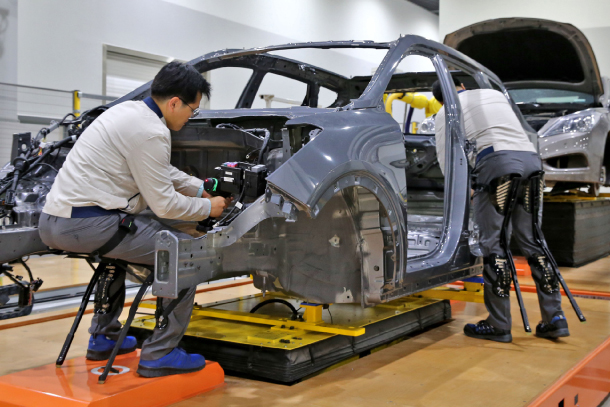
    The Hyundai Motor Group will expand the use of wearable robots at its facilities as it works to make robotics a major source of revenue, the company said Monday. Since September, Korea’s largest automaker has been testing the Hyundai Chairless Exoskeleton (H-CEX) at its North American factory. The H-CEX is an assistive robot for workers who have to stay in a seated position throughout the day. By the end of this year, the carmaker will introduce the Hyundai Vest Exoskeleton (H-VEX) at the same facility.

    The H-CEX, the first wearable developed by Hyundai for use at production sites, reduces the use of waist and lower body muscles by 80 percent, reducing the fatigue that results from being in the same seated position for a long period of time, Hyundai said in statement. The soon-to-be introduced H-VEX exoskeleton is for workers in jobs that require a lot of arm lifting. The machine vest will support the upper body and protect neck and shoulder muscles.

    “By expanding test applications, we hope to prove the technological effectiveness of our wearable robots,” Hyundai said in statement.

    The two exoskeletons were developed by Hyundai’s robotics team, established in May after the company named robotics as one of its five pillars for the future.

    The team is preparing to launch other robots focusing on three main areas: wearables, service robots and mobility robots.

    Hyundai is gearing up to test a hotel robot capable of providing room service and guiding guests. It will be introduced at the Haevichi Hotel & Resort on Jeju Island and at the Rolling Hills Hotel in Hwaseong, Gyeonggi, from the end of this year.

    A car-selling robot with natural language conversation capabilities and artificial intelligence will be prototyped by early next year. By 2020, the automaker plans to introduce a robot that can autonomously charge electric vehicles at charging stations.

    “We believe that robotics could be a solution not only for mobility but also for production in areas suffering from population decline,” a spokesperson for Hyundai said. “We plan to make notable achievements in robotics using technological data we have accumulated while developing autonomous cars.”

    Hyundai is not the only automobile maker bringing exoskeletons to assembly lines. U.S. automaker Ford has tested EksoVest, an upper-body assisting wearable jointly developed with Ekso Bionics. It was introduced at two U.S. factories in November last year. Ford announced in August a plan to bring the robot to 15 plants globally.

    German automakers BMW and Audi are also developing wearable aids for factory workers.

    According to market tracker BIS, the world’s wearable robot market is due to grow by 50 times from $96 million in 2016 to $4.65 billion by 2026.

  • New 2018 Hyundai Santro Launched In India

    New 2018 Hyundai Santro Launched In India

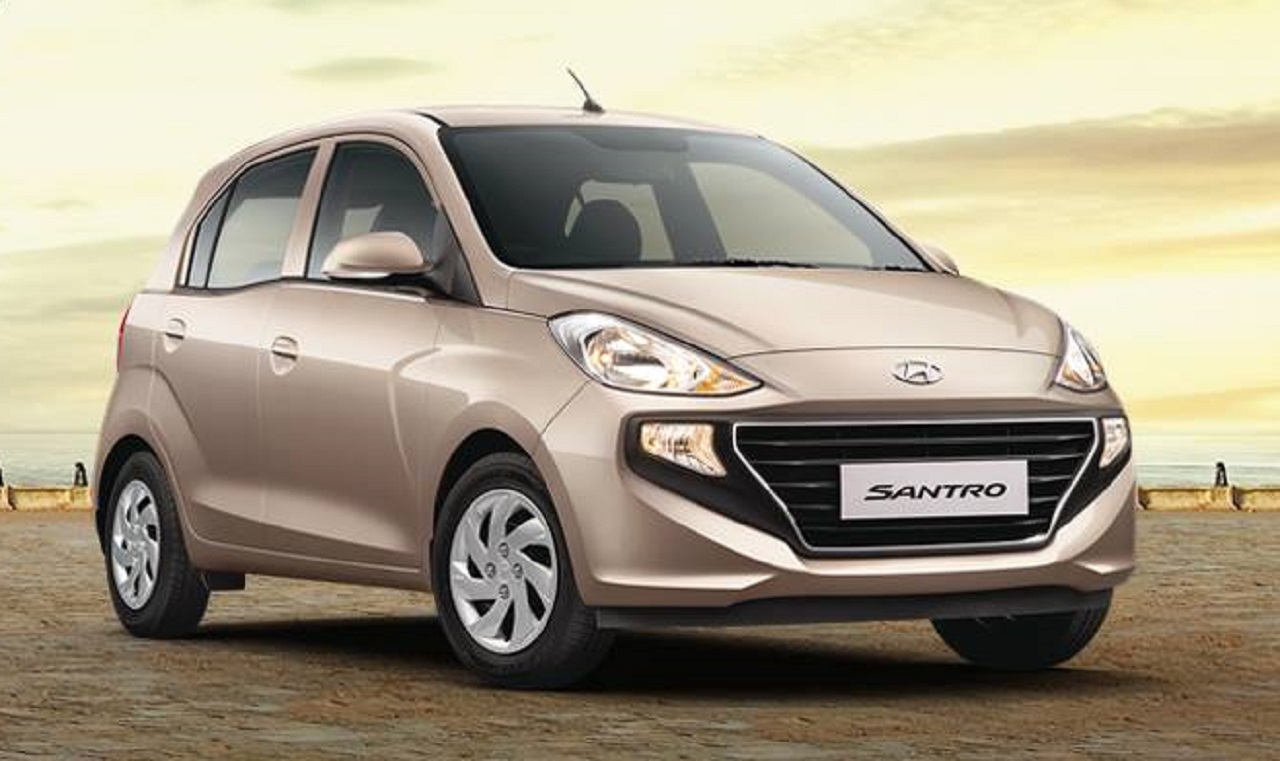
    Hyundai India has launched the all-new 2018 Hyundai Santro in India at a starting price of Rs 3.89 lakh. The new Santro will be available in five variants for the petrol manual version while the petrol automatic and the CNG manual versions gets two variants each. The new Hyundai Santro Prices for the petrol manual range from Rs 3.89-5.45 lakh while the ones for the petrol automatic AMT range from Rs 5.18-5.46 lakh. The new 2018 Hyundai Santro CNG is priced at Rs 5.23-5.64 lakh. The new Hyundai Santro will take on the likes of the Maruti Suzuki Celerio, the Tata Tiago and the Renault Kwid 1-litre apart from the likes of the Maruti Suzuki Wagon R, a new version of which will be launched very soon. The new Hyundai Santro will be slotted in between the Hyundai Eon and the Hyundai Grand i10. Here is a detailed table with all the prices below.

    The Hyundai Santro will be powered by a 1.1-litre, 4-cylinder, naturally aspirated engine, which makes 69 bhp of peak power and 99 Nm of peak torque when powered by petrol. The petrol engine is mated to a 5-speed manual or a new 5-speed AMT gearbox that has been developed by Hyundai in-house. The petrol engine, in both manual and AMT guise are fuel efficient and the Hyundai Santro Mileage is 20.3 kmpl.

    Hyundai Santro Price In India
    Variant Price (ex-showroom, Delhi)
    Santro D-Lite ₹ 3,89,900
    Santro Era ₹ 4,24,900
    Santro Magna ₹ 4,57,900
    Santro Magna AMT ₹ 5,18,900
    Santro Magna CNG ₹ 5,23,900
    Santro Sportz ₹ 4,99,900
    Santro Sportz AMT ₹ 5,46,900
    Santro Sportz CNG ₹ 5,64,900
    Santro Asta ₹ 5,45,900

    There is also a new Hyundai Santro CNG version on offer straight from the factory that makes 59 bhp of peak power and 84 Nm of peak torque. The engine is mated to a 8 kg CNG tank that is mounted in the boot of the Hyundai Santro. The new CNG version of the new Hyundai Santro will offer 30.48 km/kg of fuel economy on CNG fuel. The CNG version also gets duel ECUs to provide a seamless switch between petrol and CNG along with a matrix injector and a filter valve for better performance and more safety respectively.

    The Hyundai Santro gets five variants i.e. D-Lite, Era, Magna, Sportz and the top of the line Asta. The car is available in seven colour options ranging from a bright blue, red or green to the more sombre whites, greys and golds. The new Santro gets no alloy wheels, LED daytime running lights or projector headlamps abut it does get 14-inch wheels as standard along with a set of silver wheelcaps on the higher spec versions while the lower variants will get plain silver wheels with small wheel-hub covers.

    The overall design on the new Santro is quite contemporary. Athough Hyundai claims that the Santro is a tall-boy design, the design is actually a great blend of the conventional Santro tall-boy look and a very typical entry level hatchback. The new Santro also gets a flat back with two mid-set tail lamps. The tail lamps too are conventional and not LED versions. The Santro is also much larger than its predecessor measuring in at 3610 mm in length, 1645 mm in width and 1560 mm in height. The wheelbase on the new Santro is now at 2400 mm and it does offer best in class rear legspace.

    On the inside, the new Hyundai Santro offers a range of features like a 7-inch touchscreen infotainment system that offers mirrolink and Bluetooth connectivity. The infotainment system also offers the likes of Apple CarPlay aad Android Auto. The new Hyundai Santro also gets rear AC vents – another first in class feature, but does not get climate control. The new Hyundai Santro will also offer a single driver side airbag as standard on all models but will offer a secondary passenger side airbag only on the Asta model. While all variants of th Hyundai Santo will get a beige and grey interior, the Diana Green version in the Asta model will get an all-black interior along with colour matched interior trim and colour matched green seatbelts.

    Hyundai Santro Engine Specifications

    Hyundai Santro Petrol CNG
    Engine 1.1-litre petrol 1.1-litre petrol + CNG
    Max Power 68 bhp @ 5500 rpm 58 bhp @ 5500 rpm
    Max Torque 99 Nm @ 4500 rpm 84 Nm @ 4500 rpm
    Transmission 5-Speed MT/AMT 5-Speed MT
    Fuel Efficiency 20.3 kmpl 30.48 km/kg

    Speaking at the world premiere of the all new Hyundai Santro, Mr. Y K Koo, MD & CEO, Hyundai India said, “Today is a Historic moment as we announce the world premiere of the all new Santro. The Hyundai Santro is an iconic and legendary brand in India that has won the hearts of millions of customers for last two decades. The magic of Santro continues with The all new Santro receiving overwhelming response in less than two weeks.”

    The all-new 2018 Hyundai Santro has already received over 23,500 bookings in just 12 days even before individuals had the chance to see the new car in the metal. Although these bookings were exclusively available online, bookings at dealerships have also officially begun today. The introductory pricing will only be applicable for the first 50,000 customers. Considering the fact that Hyundai will only be making about 10,000 units of the new Santro every month, expect waiting periods of a few weeks to follow. Currently, over 30 per cent of all bookings for the new 2018 Hyundai Santro are for the AMT model.

  • What To Expect from the 2018 Hyundai Santro

    What To Expect from the 2018 Hyundai Santro

    Hyundai is all set to launch the new Santro in the country on October 23 and we’ve already told you a lot about the car. The Santro badge is making a comeback into the country and it’s opportune that the new hatchback comes at the same time as the 20th anniversary of the Santro badge in the country. The Hyundai Santro has enjoyed a lot of success in the country and the company would want to add to the popularity of the car with the launch of the all new model. The Santro continues to carry the tall boy stance that it always had and that brings in a lot of tech which adds to the appeal of the car.

    The company has already received an overwhelming response for the Santro as it has already received more than 14,000 bookings for the car till date. The new Santro will also only come with a set of steel 14-inch wheels with wheel covers and there are no alloy wheels on offer – even on the top of the line Asta variant. Although we can’t show you what the car looks like just yet, we have spent a fair amount of time in the car and we told you all about it in our first drive report

    The 2018 Hyundai Santro is likely to come in 4 variants – Era, Magna, Asta and Sportz. We expect the Sportz and the Asta model to get a 7-inch touchscreen infotainment setup that will support Bluetooth, mirror link and inbuilt navigation. More importantly though, the infotainment setup will also – for the first time in class – support Apple CarPlay and Android Auto.

    The Santro will replace the Eon in the company’s line-up in India and will be the company’s entry level hatchback in the country. This will see it take on cars like the Maruti Suzuki Celerio, Renault Kwid, Tata Tiago among others and this means that the pricing will be around the ₹ 4 lakh bracket. However, it is very likely that the company will undercut its rivals and the base variant will be closer to the ₹ 3.85 lakh mark. The introductory prices are applicable on the first 50,000 units and Hyundai has made sure that there’ll be no changes in the prices for the first 50,000 customers.

    The 2018 Hyundai Santro has grown in dimensions. It’s 45 mm longer now and has a wheelbase of 3610 mm. The company claims that it is a tall-boy design as the Santro has always been, but the overall angular proportions will deceive that at the first glance. On the outside, expect nothing more than what you get in an entry segment car. Essentially, fancy fitments like LED DRLs and alloy wheels won’t be offered on the Santro. It will have halogen headlamps as standard and the Santro will ride on 14-inch steel wheels.

    Hyundai is offering the Santro with a 1.1-litre, four-cylinder petrol engine. The engine develops 68 bhp and 99 Nm of peak torque and will be mated to a five-speed gearbox as standard. Though, the Santro will be the first Hyundai to get the option of an AMT gearbox. There will be also a CNG option on offer where the engine will develop 59 bhp and deliver a fuel economy of 20.3 kmpl.

  • New Hyundai Santro Bookings Cross 14,000 Units

    New Hyundai Santro Bookings Cross 14,000 Units

    The Hyundai Santro is back with a bang. And as if to proclaim that this nameplate still commands the kind of strength it used to, the small car has already garnered over 14,000 bookings. Sources have shared with carandbike that the small car has notched up 14,208 bookings within the first 9 days of pre-bookings having been opened for a token of ₹ 11,000, on October 10 2018. This is even though the variants and prices are not known, and customers have shown a preference for the top spec (Asta) manual variant followed by the top spec (Sportz) AMT version.

    These are pan-India bookings, but sources have shared with carandbike that a large chunk of the bookings are from the southern states, with Tamil Nadu, Andhra Pradesh, Telengana, Karnataka and Kerala accounting for just under half the total bookings so far. The above figure does not include bookings taken on Dussehra (celebrated on October 18 in Western India, October 19 in North India), and so the overall number is expected to shoot up with Dussehra bookings and then more so over this weekend too. Bookings are only open online, and not at dealerships since there is no car in showrooms as yet that people can see. But a number of dealers have shared with carandbike that many potential customers have been visiting their showrooms, and then making the bookings online with their help.

    The Hyundai Santro has bagged over 14,000 bookings in just 9 days

    Hyundai had opened online pre-bookings for the Santro the day after it unveiled the car to media at its Chennai plant. At the time, the Hyundai India MD, YK Koo had also announced a price protection for the first 50,000 customers. and had pretty much guaranteed that the prices announced at launch will be hiked soon after. At that preview we had the chance to see and drive the car, and have told you plenty about it. What we have been unable to do is share our pictures and videos. And while that remains embargoed until launch day – i.e. October 23 2018 – a lot of leaked pictures have already emerged that show the car’s exterior and interior in fairly good detail.

    The 2018 Hyundai Santro will get a 6.5-inch touchscreen infotainment system

    We know there will be a base version – most likely the Era variant, followed by the Magna variant, the fairly well-loaded Sportz trim and the top spec Asta. All variants will sport a driver-side airbag and ABS (anti-lock braking) as standard equipment. The Asta will have dual airbags standard. The Sportz will also get the 7-inch touchscreen with Apple CarPlay, Android Auto, MirrorLink and Voice Commands. The car’s cabin will be finished in a dual-tone palette of beige and black. On the outside, buyers will have 7 colours to choose from, though only the green will get a special interior package in its Asta trim.

    Under the hood, the new Hyundai Santro features a 1.1-litre four-cylinder petrol engine that comes from the company’s Epsilon engine family. The motor is capable of churning out a maximum of 68 bhp and develop a peak torque of 99 Nm, and Hyundai says that it’s already BS-VI ready. Additionally, the 2018 Santro will also come with a factory fitted CNG kit, which can hold up to 8 kg of gas, and offer a reduced power output of 58 bhp, while developing the same 99 Nm of peak torque. Transmission duties are taken care of by a 5-speed manual gearbox in both the versions, however, the petrol trim also gets an optional 5-speed automated manual transmission (AMT) unit. The AMT unit is developed by Hyundai in-house and uses an electric actuator instead of a hydraulic, which is controlled by a separate electric unit. The petrol engine offers a mileage of 20.3 kmpl, while the fuel efficiency of the CNG version is yet to be revealed.

  • Hyundai Motor considers eco-friendly engine for its N brand

    Hyundai Motor considers eco-friendly engine for its N brand

    Hyundai Motor is planning to build a driving center in Korea as early as next year in its ambition to have its high-performance division compete with BMW’s M and Mercedes-Benz’s AMG models.

    “I am considering building a driving academy where customers are invited to experience high-performance cars,” Thomas Schemera, head of Hyundai Motor’s high-performance division said at the Paris Motor Show on Thursday. “I believe interacting with customers and listening to their feedback are important.”

    Schemera also added that the first center is most likely to be built in Korea before the automaker expands to other parts of the world like the United States or Europe.

    Schemera, formerly in charge of BMW’s M series, was appointed executive vice president of Hyundai Motor to head its high-performance vehicle and motorsport division in March.

    Hyundai Motor’s N series is a latecomer in the industry, as its initiative of launching a high-performance lineup only became official in 2015. BMW’s M series, one of Hyundai’s strongest competitors in high-performance motoring, began in the 1970s.

    Yet, Hyundai’s N series sales figures are quite impressive so far. Since its launch in Europe in the second half of 2017, the first model – the i30 N – sold 3,771 units this year through August. This is already 35 percent above the initial sales target for this year, which was 2,957 units.

    The second in the series – the Veloster N – is doing well, too. Since its launch in July in Korea, it sold 525 units in its first two months. Globally, it sold 4,122 units this year as of August, again surpassing its initial goal of 3,300 units.

    The Veloster N team is planning for a U.S. launch before the end of this year. The third in the series – the i30 Fastback N – premiered at the Paris Motor Show, now underway.

    Hyundai Motor’s ambitions in high-performance cars is helping elevate Hyundai’s brand image in general, according to Schemera.

    “The i30 sales had been on a downturn, but they started to rebound after the launch of the i30 N,” he said. “Not only other N models but also other Hyundai cars in Europe will likely see improved sales.”

    Ahead for the N series, Schemera hinted there would be an eco-friendly engine for its lineup, perhaps an HEV, PHEV or even a hydrogen engine.

  • Hyundai Motor hydrogen trucks are going to Europe

    Hyundai Motor hydrogen trucks are going to Europe

    Hyundai Motor’s hydrogen-powered truck will take to the streets of Europe, where the hydrogen infrastructure is better than in Korea and subsidies for hydrogen cars more generous.

    The nation’s No.1 carmaker announced Thursday that it signed a memorandum of understanding with Swiss hydrogen energy company H2 Energy to supply 1,000 large hydrogen trucks from 2019 to 2023.

    They will include both refrigerated and unrefrigerated cargo trucks. H2 Energy will lease the trucks to local gas station companies and grocery franchises.

    Under the partnership, Hyundai Motor and H2 Energy will try to expand the use of hydrogen-powered trucks not only in Switzerland but all over Europe.

    “The MOU with H2 Energy allowed Hyundai Motor’s hydrogen trucks to advance into the European eco-friendly commercial vehicle market,” said Lee In-cheol, executive vice president of Hyundai Motor’s commercial car team.

    The hydrogen-powered trucks being sent to Europe from next year are based on Hyundai Motor’s flagship large-sized Xcient truck. The development is near completion, Hyundai Motor says, to meet local transportation regulations.

    The trucks will have 190 kW fuel-cell batteries.

    They are expected to have a range of 400 kilometers (259 miles) per charge, which will take about 7 minutes.

    In terms of safety features, they will have forward collision avoidance and lane departure warning systems.

    Hyundai Motor explained that it is initiating its hydrogen truck business in Europe rather than Korea due to better infrastructure and state support as well as rising demand.

    State support comes in various ways in European countries. Germany, for example, offers subsidies, while the Netherlands and Norway give tax incentives to people who purchase eco-friendly vehicles.

    Switzerland, the first market for Hyundai Motor’s hydrogen-powered Xcients, has eliminated tolls on 3.5-ton or heavier trucks that run on eco-friendly engines. Trucks powered by diesel engines, in contrast, have to pay heavy tolls.

    The carmaker plans to launch a midsized truck fueled by hydrogen in the near future that could be used for road cleaning or collecting garbage.

  • India is Hyundai’s land of opportunity

    India is Hyundai’s land of opportunity

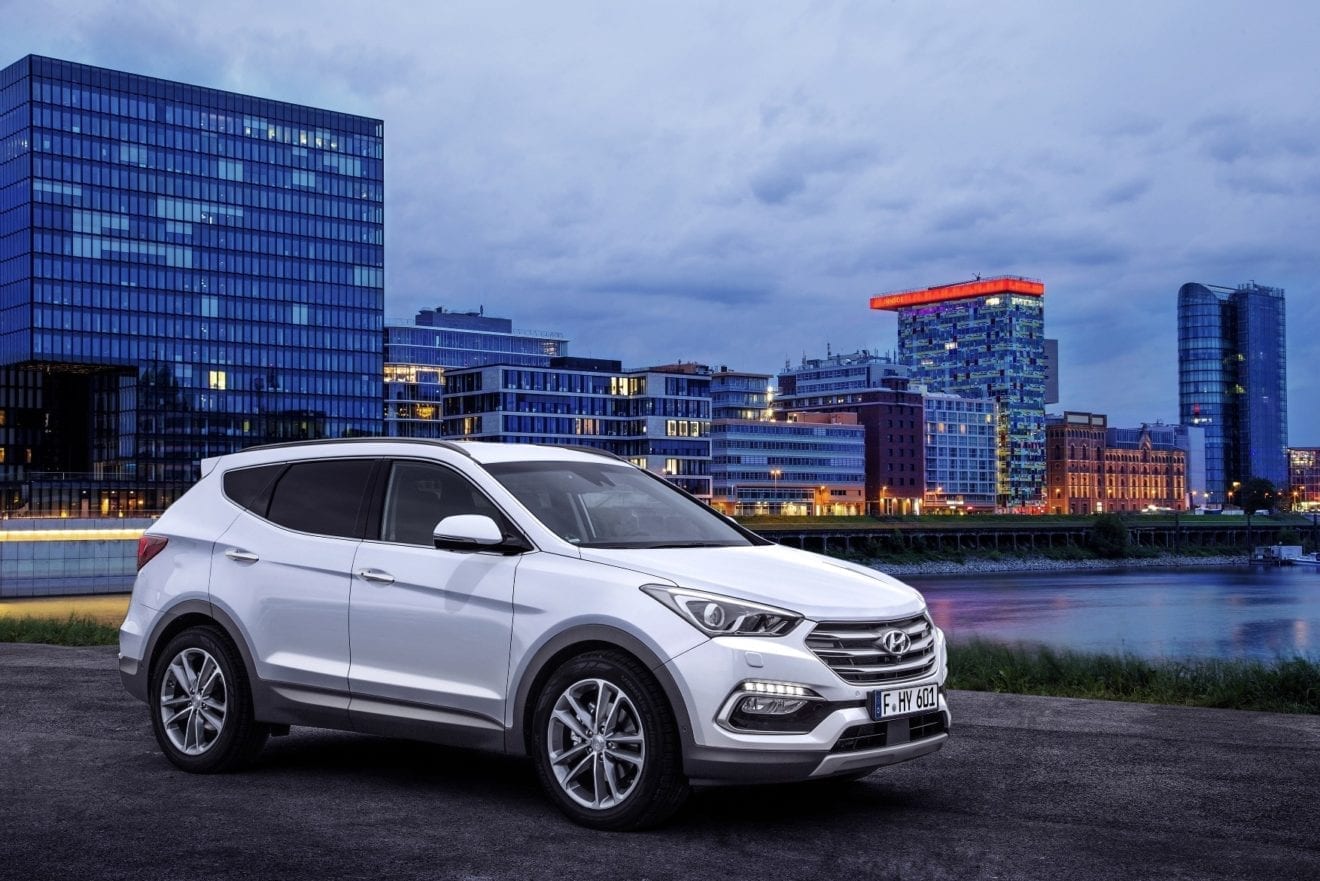
    Hyundai Motor is still working hard to woo Indian consumers as the world’s second-most populous country emerges as one of the fastest growing markets in the global auto industry.

    Hyundai Motor Vice Chairman Chung Eui-sun made a speech at the first Move Global Mobility Summit on Thursday, presenting the automaker’s plan to pursue future mobility and its dedication to the Indian market.

    The summit is a two-day state-run event taking place in New Delhi under the theme “Shared, Connected and Zero Emissions Mobility.” More than 1,200 attendees, including the CEOs of auto giants and start-ups, will participate in discussions centering on future mobility.

    “Hyundai Motor will actively pursue to become a smart mobility solution provider from a manufacturer,” Chung said in his speech.

    “I am certain that innovation in mobility will improve not only people’s lives but also improve environment and energy issues at the same time. It will also act as a means to connect the urban with the suburban and a person with another person,” he added.

    Chung also unveiled plans to launch a total of four eco-friendly vehicles in India in the near future, three of which will be electric models and the fourth a hydrogen-powered Nexo.

    Hyundai Motor, the world’s fifth-largest automaker, has seen huge potential in India’s auto market for some time.

    India is currently the world’s fourth-largest auto market, posting a year-on-year sales growth rate of 9.5 percent according to 2017 market data.

    Hyundai Motor established its Indian office in 1996 and has been using the regional office as an export hub, sending cars made there to more than 90 countries.

    Hyundai Motor is currently the No. 2 player in India. It sold some 320,000 units this year as of July, posting a year-on-year growth rate of 7.5 percent. The i20 hatchback and small SUV Creta are the most popular models.

    Most recently, the automaker has made a hefty investment in local car-sharing start-up Revv.

    Hyundai’s smaller affiliate Kia Motors belatedly entered the Indian market in 2017 by starting the construction of a local factory with a $1.3 billion investment. It will start sales of its models from next year.

    At the forum, Hyundai Motor summed up its strategies in pursuing future mobility with three keywords – clean mobility, freedom in mobility and connected mobility.

    “India has been taking significant steps toward the future it has long dreamt of,” Chung said. “[The country] will play a leading role not only in the manufacturing industry but also in ICT in the face of the fourth industrial revolution as well,” he added.

    According to Hyundai Motor, Chung attended a tea meeting with Indian Prime Minister Narendra Modi and 50 other global companies CEOs after making the speech on Thursday.

    The CEOs of Maruti Suzuki, Mahindra & Mahindra, Tata, Toyota, Ford, Mercedes-Benz, Uber and SoftBank all attended the summit.