Retail News CRM

Tag: International

  • Louis Vuitton sues Belle International For Copycatting

    Louis Vuitton sues Belle International For Copycatting

    French luxury retailer says Hong Kong company’s shoe designs too similar to its own to be coincidental.

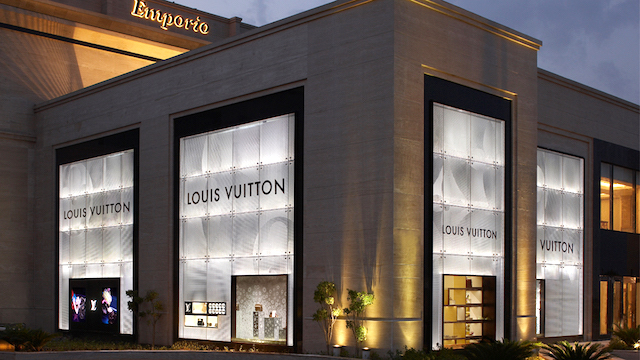
    Luxury fashion house Louis Vuitton is suing two Belle International subsidiaries for copyright infringement.

    The Chinese footwear brands are being taken to court over the design over a pair of trainers valued at HK$8950 (US$1140).

    A High Court document described the case accusing Hong Kong-registered firms Belle International (China) and Best Able Footwear of retailing sneakers substantially similar to its LV Archlight trainers. Louis Vuitton has demanded the firms cease all infringements and hand over or destroy the alleged copies.

    The trial date has yet to be scheduled.

  • Vietjet expands international network

    Vietjet expands international network

    Low-cost carrier Vietjet on Tuesday announced its operation plan for the Hong Kong market and the launch of a new route linking Phú Quốc and Hong Kong, one of Asia’s most well-known destinations.

    The Phú Quốc – Hong Kong route will operate return flights with a frequency of four flights per week, starting from April 19. With a flight time of two hours and 45 minutes per leg, the flight will depart Phú Quốc at 10:50am and land in Hong Kong at 2:35pm (local time) while the return flight will depart from Hong Kong at 3:40pm and arrive in Phú Quốc at 5:25pm (all local times).

    “After nearly three years of operating our HCM City-Hong Kong route, Vietjet has gained the love and trust of Hong Kong residents, business people and international tourists, and has contributed positively to the promotion of air travel and trade between Việt Nam and Hong Kong as well as across the region,” said Lưu Đức Khánh, Vietjet’s managing director.

    Khánh said the airline has thus far transported more than 300,000 passengers on this route, which includes a significant number of transit passengers who boarded in Hong Kong.

    The director said the new direct route between Phú Quốc and Hong Kong, the first direct flight connecting the two destinations, will enhance the flying experience and reduce travel time for passengers, as well as offer flight opportunities for millions of people.

    Victor Liu, deputy director of the General of Civil Aviation Authority in Hong Kong, said that Việt Nam and Hong Kong have enjoyed very good and long-standing economic and social relations.

    “With the addition of the direct passenger services between Hong Kong and Phú Quốc, it will no doubt further enrich the bilateral links between Hong Kong and Việt Nam,” he said.

    Known as “the Pearl Island”, Phú Quốc is the biggest island in Việt Nam. As one of the most talked-about tourism destinations in Asia with beautiful beaches and friendly local people, Phú Quốc in the southern province of Kiên Giang has attracted strong levels of investment in hotels and resorts in recent years and has become one of the most popular holiday destinations in the country.

    Adding to the island’s appeal, international travellers are exempt from visas for visits of 30 days or less.

  • Avon 2018 sales dip, culls sales reps globally

    Avon 2018 sales dip, culls sales reps globally

    Avon reported its fiscal 2018 results earlier in the month, saying revenues declined as the beauty giant continued to cull it sales representatives across the globe. The London-headquartered company said total revenue decreased 2% for the twelve months, while like-for-like revenues decreased 3% in constant dollars. The number of Active Representatives declined 5% with decreases reported in all segments, said Avon, with Ending Representatives declining 8% with decreases reported in all segments.

    On a positive note, Avon’s average order increased 10%, while on a like-for-like basis, average orders increased 2%, primarily driven by increases in South Latin America, North Latin America and Asia Pacific, said Avon in a press release.

    Avon reinforced the positives of its “Open Up Avon” strategic plans, addressing falling levels of its representatives.

    “We are in the initial stages of our turn-around plan with fourth-quarter results showing sequential improvement in revenue trends in 4 of our top 5 markets, as well as some early signs of progress against our core strategies,” said Avon’s CEO, Jan Zijderveld.

    “As we look over the course of 2018, we are seeing tangible signs of increased productivity by our Representatives, with sequential increases in Average Representative Sales, Net Price Per Unit and e-commerce.”

    Avon made several cost-reducing decisions in 2018, including the announced sale of its China manufacturing facility. The cosmetic giant more recently announced its intention to reduce the global workforce by an additional 10% in 2019, on top of its already completed 8% reduction in 2018.

    “We have begun to identify repeatable business models in training and recruiting, while reducing our cost structure and taking steps to simplify our business infrastructure,” added Zijderveld.

    Avon reported a diluted loss per share of $0.10. Like-for-like diluted earnings per share was $0.01, compared with $0.06 for 2017.

  • Puma reports strong sales, profitability in 2018

    Puma reports strong sales, profitability in 2018

    Sportswear giant Puma reported strong annual results in 2018, as the German company witnessed double-digit growth across all geographic zones and product divisions. For the year ending December 31, 2018, the Herzogenaurach-based company said sales increase by 17.6% currency adjusted to €4,648 million (+12.4% reported) with double-digit growth in all regions.

    Asia-Pacific, despite being the smallest of Puma’s three regions after the Americas (+16.9%) and market leader EMEA (+11.4%), was the strongest in growth terms for 2018, up 28.8% to €1,235.5 million. APAC was mainly driven by high growth in China and Korea, while sales in Japan increased at a more moderate mid to high single-digit rate.

    In product terms, Puma highlighted the success of new sneaker styles Thunder, RS-0 and RS-X in 2018, as part of the company’s debut into the “chunky shoe” category.

    Puma also spent 2018 re-entering the basketball category after 20 years, and signed supermodel Adriana Lima as its women’s training ambassador.

    Net earnings increased by 38 % from €135.8 million to €187.4 million, and earnings per share lifted from €9.09 to €12.54.

    “We are very happy with how our business developed in 2018. Sales rose organically by 17.6% to €4,648 million and the operating result (Ebit) improved by 37.9% % to €337 million, which shows our strong momentum,” said Bjørn Gulden, Chief executive officer of Puma.

    “The double-digit growth in all regions is a proof that the we have strengthened the Puma brand globally and the double-digit growth in all product divisions shows that we have enhanced our product portfolio,” added Gulden.

    In 2019, Puma said it expects currency adjusted sales to grow around 10% and operating results to increase to a range between €395 million and €415 million.

    “We still have a lot to improve, but we feel we are moving our brand and company in a good direction,” said Gulden.

  • Takeover bid lodged for struggling Laura Ashley

    Takeover bid lodged for struggling Laura Ashley

    US investment company Flacks is considering making a bid for Malaysian-owned, British fashion retailer Laura Ashley. The firm is in the “very preliminary stages” of a takeover bid for the brand. Any possible takeover offer will be limited to 2.748p in cash per share, resulting in an overall valuation for the retailer at around £20 million (US$26.38 million), according to an announcement by the firm confirming the details.

    If Flacks buys Laura Ashley, it is expected to primarily focus on the US market and other non-European markets.

    “As far as I am concerned, there is no takeover bid because there has been no approach whatsoever,” Laura Ashley chairman Andrew Khoo told investors on Monday, a day prior to Flacks’ announcement. “If and when an approach is made, the board will discharge its duties as always and assess it on its relative merits.

    “I would, however, like to state for the record that as major shareholders of Laura Ashley, we have no intention of divesting our controlling stake,” he continued. “Whilst I understand why potential parties would think we are significantly undervalued, I have complete confidence that we will be able to grow profitably and in a sustainable manner so as to create long-term value for our shareholders.”

    A recent report issued by the firm warned that its full-year profits would “fall short of market expectations” following announced plans to close around 30 of its remaining 120 stores to control costs in the firm’s competitive and sluggish market. The firm filed a £1.5 million ($1.98 million) loss in the final half of last year.

    Laura Ashley’s Australian business collapsed late last year, but in December Khoo said he believed the brand’s future lied in Asia, where he was planning expansion.

  • Newest Esprit stores reveals new concept

    Newest Esprit stores reveals new concept

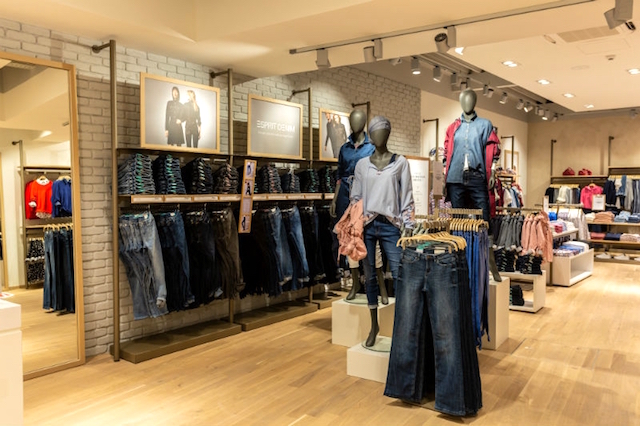
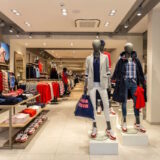
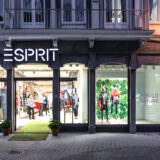
    Two new Esprit stores opened in Europe this month give an insight into the new direction of the embattled brand as it rebuilds. In the historic centre of Liege in Belgium a new 400sqm boutique stocks only womenswear. According to an understated news release issued in Germany, the “modern and bright store design creates a pleasant and warm atmosphere”.

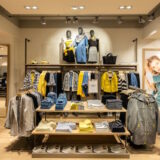
    A standout feature is a denim wall standing in front of a brick wall painted in light grey. The floor comprises terrazzo tiles and oak parquet.

    The new store also reflects a growing focus on Esprit’s e-commerce offer, with a click & collect area for customers to pick up items they have ordered online.

    The second of the Esprit stores to open in Europe this month is an outlet store at Wolfsburg in Germany.

    The 400sqm store is described by Esprit as “an important location” in its outlet portfolio. It offers both women’s and men’s apparel.

    Michael Ernst, centre manager of Designer Outlets Wolfsburg, says customers have been asking for an Esprit store at the centre for several years.

    “We are delighted to be able to fulfil this wish now. The new store offers an attractive range of fashion at excellent value.”

    Designer Outlets Wolfsburg is the first inner-city outlet centre in Germany, home to more than 70 designer and lifestyle brands.

    After ongoing losses, Esprit last year launched a massive overhaul of its business with a new management team at the helm, promising changes to product, its retail network and its e-commerce offer.

    The company is due to release its interim results this week.

  • H&M launches collection with artist Nathalie Lete

    H&M launches collection with artist Nathalie Lete

    H&M has unveiled a collaboration with Paris-based artist Nathalie Lete on a children’s clothing and accessories capsule collection. The collection, which will be available online and in selected stores worldwide from March 7, features several of Lete’s fantasy-land-inspired artworks as prints.

    The H&M collaboration is a childrenswear collection for babies and children with a wide range of t-shirts, jackets, jeans, dresses, jumpsuits, shorts and swimsuits. The colourful animal and floral prints created by artist Nathalie Lete start with paintings in acrylics by hand, which are then artfully arranged together to create an imaginative story. For this collaboration, Lete brought a tropical jungle to life with chameleons and tigers, along with her iconic representation of flowers with cats, birds and rabbits.

    “In my work, I create a fantasy land for myself,” said Lete. “A land that I want to share with other people to make them dream. It’s all about flowers, animals, birds, naivety and colors. I want to create a cocoon that brings happiness and harmony all around. The relationships between the different elements tells stories, stories that create a beautiful atmosphere. I ‘m happy to share my world through this collaboration, all around the world, together with H&M.”

    “Natalie Lete and her work is something we have admired for a long time, and we are thrilled to be collaborating with her for this kids’ collection,” said H&M kids’ division designer Jennifer Helmer.

    “The collection is playful and inviting and the pieces truly makes you feel like you’re in a botanical dream. We cannot wait to share this collection with our youngest fans.”

  • Gold prices rise on trade talk optimism; Fed stance limits gains

    Gold prices rise on trade talk optimism; Fed stance limits gains

    Gold prices edged higher on Friday as optimism over U.S.-China trade talks pressured the dollar, but signs of the U.S. Federal Reserve raising interest rates again this year capped gains. Spot gold inched 0.1 percent higher to $1,324.59 per ounce at 0408 GMT. The metal was headed for a second straight weekly rise, up almost 0.3 percent. The precious metal had hit a 10-month high on Thursday, but later erased the gains.

    U.S. gold futures were subdued at $1,327.7 per ounce.

    “On a day-to-day basis, gold is a function of changing currency markets and the U.S. dollar. Medium outlook is a lot more to do with geopolitical issues and yields,” said Kyle Rodda, a market analyst with IG Markets.

    The dollar index against a basket of six major currencies was set to decline about 0.3 percent this week, which could be its biggest weekly fall in a month..

    “The fact that gold was overbought-driven very much by a new yield environment and tensions around the world has helped keep gold prices elevated,” Rodda said.

    Gold had hit a 10-month high of $1,346.73 on Wednesday, but minutes from the Fed’s January policy meeting indicated there might in fact be a rate hike this year, erasing gains in gold.

    “Dovish signals from U.S. Federal Open Market Committee officials for the shorter term have kept global equities steady whilst applying bearish pressures on the non-interest bearing asset,” Phillip Futures said in a note.

    Higher interest rates reduce investor interest in non-yielding bullion.

    Markets were looking for further indications of progress on trade talks with U.S. and Chinese negotiators resuming high-level talks on Thursday to hash out a deal that could end their trade war, just over a week before a U.S.-imposed deadline.

    The United States and China have started to outline commitments in principle on the stickiest issues in their trade dispute, marking the most significant progress yet toward ending a seven-month trade war, according to sources familiar with the negotiations, Reuters reported exclusively.

    Indicative of investor sentiment toward bullion, holdings of SPDR Gold Trust, the world’s largest gold-backed exchange-traded fund, fell 0.63 percent to 789.51 tonnes on Thursday.

    Meanwhile, palladium was up 0.3 percent to $1,473.00 per ounce, having surpassed the key $1,500 level for the first time on Feb. 20.

    The autocatalyst metal was on track for a third straight week of gains, up nearly 3 percent. Platinum gained 0.6 percent to $824, and was set for its best week since early January.

    Silver was little changed at $15.81 per ounce. It was on course to snap two consecutive weekly losses.

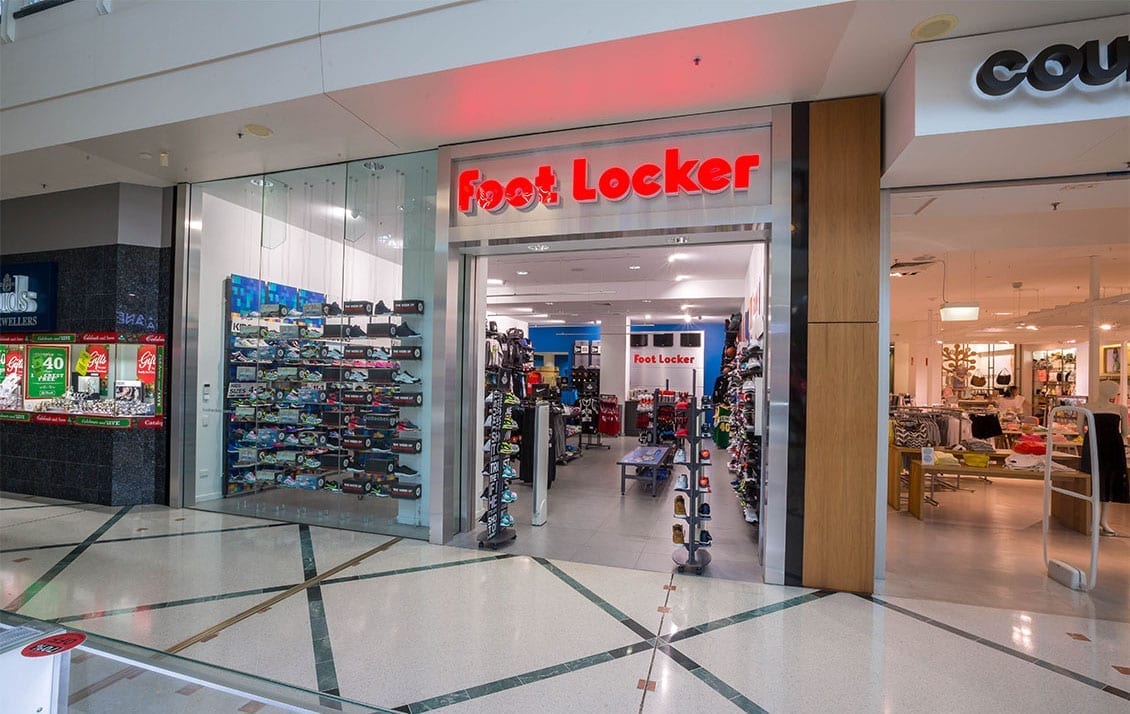
  • Foot Locker boosts capital expansion

    Foot Locker boosts capital expansion

    Foot Locker has announced a US$275 million capital expenditure program for this year, with Asia singled out as a target market. The investment is $75 million more than the US-headquartered sports-shoe and apparel retailer allowed for last year. “The capital spending planned for this year reflects increased investments in the company’s store fleet in all existing regions, including Asia, and in its digital initiatives,” the company said in a statement.

    “In addition, the company will continue to spend capital to build out its supply chain and other infrastructure capabilities.”

    Chairman and CEO Richard Johnson said Foot Locker sees “exciting opportunities” to invest in the business this year. The capital commitment followed decisions to launch a share buy-back program and to pay a dividend to shareholders.

    “Taken together, these actions demonstrate that our board is confident that Foot Locker can simultaneously deliver strong financial results, invest in the long-term growth of the business, and provide meaningful returns to our shareholders,” he said.

    Foot Locker currently operates 3221 stores in 27 countries in North America, Europe, Asia, Australia and New Zealand.

    In Singapore, Foot Locker opened three stores last year, in Jem Mall, Century Square and Suntec City.

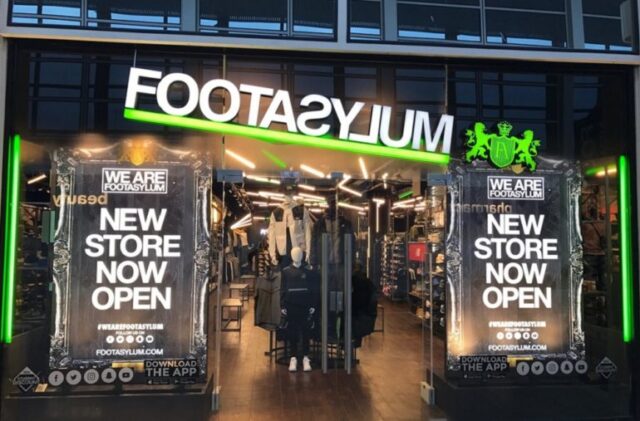
  • Footasylum shares soar after JD Sports takes stake

    Footasylum shares soar after JD Sports takes stake

    Shares in Footasylum soared after British retailer JD Sports said it had acquired an 8.3 percent stake and could buy nearly 30 percent of its smaller rival. JD, which has used a number of corporate acquisitions to assemble its network of more than 2,400 stores over the past two decades, said that it “confirms it is not intending to make an offer for Footasylum” under merger regulations.

    But investors drove shares in the company, which is listed on the secondary market of the London Stock Exchange, rose 58.6 percent to 46 pence in the first hour of trading.

    Footasylum, started by JD Sports co-founder David Makin in 2005, was forced to cut prices at its 60 stores after a disappointing run up to Christmas which saw British consumers rein in spending.

    It now competes with JD Sports, Sports Direct and Asos among others, which are all feeling the impact of sluggish British consumer spending amid squeezed household incomes and uncertainty ahead of Britain’s impending exit from the European Union.

    Makin and fellow JD Sports founder John Wardle were bought out by the company’s current majority owners Pentland Group in 2005 and later resigned as directors.

    Footasylum said in January its full-year core earnings would come in at the lower end of analysts’ estimates.

    JD Sports shares were up about 1 percent at 454.03 pence.

  • Ikea to launch ‘intelligent curtain’

    Ikea to launch ‘intelligent curtain’

    Ikea has developed an ‘intelligent curtain’ capable of purifying air. The invention, coated with sunlight-activated minerals that break down airborne pollutants, has been developed in collaboration with several European and Asian universities. “By enabling a curtain to purify the air, we are creating an affordable and space-saving air purifying solution that also makes the home more beautiful,” said Ikea product developer Mauricio Affonso.

    The Gunrid intelligent curtain will be sold in stores next year and is expected to sell well in areas particularly affected by air pollution.

    According to the World Health Organisation, 91 per cent of humanity lives in areas affected by significant air pollution, which kills around 7 million people every year.

    “Gunrid is the first product to use the technology,” said Ikea’s head of sustainability Lena Pripp-Kovac, “but the development will give us opportunities for future applications on other textiles.”

    “We know that there is no single solution to solve air pollution. We work long term for positive change, to enable people to live healthier and more sustainable lives”, she said.

  • Life after Karl Lagerfeld

    Life after Karl Lagerfeld

    Chanel has named Virginie Viard, Karl Lagerfeld’s closest collaborator for more than 30 years, as its new creative director, the French fashion house said in a statement following the death of the legendary designer. The move muffled speculation over whether Chanel might seek out another big name to replace Lagerfeld, who was 85 years old. Potential successors often cited by industry observers over the years included Hedi Slimane, now ensconced at Celine, as well as Phoebe Philo, the designer he replaced there, and Alber Elbaz, formerly of Lanvin.

    Those designers would likely have sought to bring their own vision to one of the world’s biggest luxury brands, with $9.6 billion in sales in 2017. Instead, Chanel’s owners, the billionaire Wertheimer family, emphasised continuity in appointing Viard, who the brand said in a statement had been “entrusted by chief executive Alain Wertheimer with the creative work for the collections, so that the legacy of Gabrielle Chanel and Karl Lagerfeld can live on.” The decision is in character for the Wertheimers, who waited 12 years after Gabrielle Chanel died in 1971 before appointing Lagerfeld in 1983.

    Viard, who has been called “Karl’s secret weapon,” joined Chanel as an intern in haute-couture embroidery in 1987, four years after Lagerfeld became creative director of the brand. (She was recommended for the job by a chamberlain of Prince Rainier of Monaco.) After working together at Chanel, Viard joined Lagerfeld at Chloé in 1992 — where he was also the head designer — and worked there for five years before returning to Chanel and working her way up to become director of the company’s fashion design studio.

    “Virginie is the most important person, not only for me but also for the atelier, for everything,” Lagerfeld said in a Netflix documentary released in 2018. “She is my right arm and even if I don’t see her, we are on the phone all the time.”

    Still, Viard remained largely in the shadow of her larger-than-life boss. “I hate being in the spotlight,” she said last year.

    In recent seasons, she began taking a bow with Lagerfeld at the end of each Chanel show, including the Chanel Métiers d’Art show in New York in December 2018, which marked the designer’s final runway appearance. At the end of Chanel’s haute couture show in January 2019, Viard stepped out solo to take a bow, raising concerns about Lagerfeld’s health and prompting the brand to issue a press release.

    Other fashion houses have tapped studio heads who have demonstrated their ability to channel a departed designer’s vision after their deaths, most notably Sarah Burton, the late Alexander McQueen’s right-hand, who was named creative director of the London-based fashion house after McQueen’s suicide in 2010.

    LVMH-owned Italian house Fendi, where Lagerfeld was the artistic director of women’s ready-to-wear and couture collections, has yet to announce a succession plan, saying it intends to take its time to pay the designer the homage he deserves. Fendi is to present Lagerfeld’s last collection on Thursday in Milan.

  • Karl Lagerfeld dies at 85

    Karl Lagerfeld dies at 85

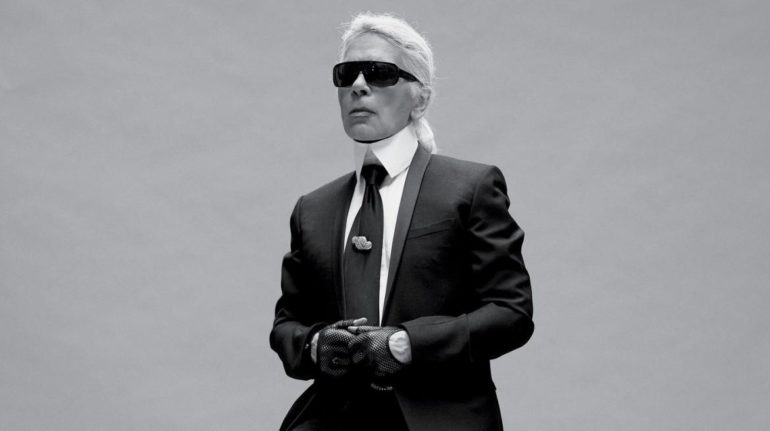
    Karl Lagerfeld, arguably the world’s most iconic designer and undoubtedly the most prolific, has died in Paris. He was 85. In a seven-decade career as fashion’s ultimate free agent, Lagerfeld created collections simultaneously for the celebrated houses of Chanel and Fendi, in addition to his signature label, at a pace without rival in the luxury industry.

    Virginie Viard, director of Chanel’s design studio and Lagerfeld’s closest collaborator for more than 30 years, will take the creative reins at the storied brand’s fashion business. A succession plan has yet to be announced at Fendi.

    For Lagerfeld, to design was to breathe, “so if I can’t breathe, I’m in trouble,” he often quipped to journalists who were astonished by his inexhaustible work ethic and his insistence that he would never retire.

    In fact, his creative output seemed only to become more bountiful in his golden years, a period during which his extravagant runway productions at the Grand Palais in Paris achieved a staggering level of theatrical opulence. At a cost of millions of dollars per season, the events surpassed the mundane boundaries of a fashion show to become something more like large-scale performance art — media spectacles where Lagerfeld, as both gifted designer and visual provocateur, could best demonstrate his ability to interweave the superficialities of fashion with matters of great depth, while also parading seemingly endless ways to keep Chanel’s classic tweeds looking modern and fresh.

    His Autumn/Winter 2017 collection featured a 115-foot-tall mechanical rocket ship that simulated blast off. For Fall 2014, he built a Chanel shopping centre, its superstore-like aisles bursting with more than 500 different products that included a Chanel-logo chainsaw, doormats, candy, and ketchup. For Fall 2010, he imported enough snow and ice from Sweden to create a 265-ton indoor iceberg. Backdrops of a man-made beach with rippling waves (Spring 2019), a scale rendering of the Eiffel Tower (Fall 2017 Couture), a French brasserie with uniformed bartenders (Fall 2015) and an enormous model of a passenger ship (Cruise 2019) suggested no idea was too fantastical, nor expense too decadent.

    His incredible longevity and success as a designer, and, following his logic, the fortunes of the companies for which he worked, owed at least partly to Lagerfeld’s intentional detachment from the business side of fashion. He claimed never to discuss sales figures or budgets with management. “I am a hired gun, even in my own business,” he said in a BBC interview, noting that his contracts with Chanel and Fendi allowed him to do whatever he wanted on the side. “I work my own marionette in a way, my own puppet,” he told The New York Times. “It’s something I control.” That extraordinarily rare freedom from the restraints of financial responsibility enabled him to continually make clothes that inspired consumers to dream.

    “We created a product nobody needs, but people want,” he said. “If you need an ugly old car, it can wait, but if you want a new fashion item, it cannot wait.”

    As designers half his age complained of burnout from fashion’s maddening pace, Lagerfeld made himself even busier by dabbling in a constant stream of publishing, photography, film and design projects, including a rule-breaking “fast fashion” collaboration with the mass retailer H&M in 2004 that predated the industry obsession with disruption by more than a decade. Ignoring the traditional expectations of a luxury player, he also designed hotel rooms, video games, motorcycle helmets, a BMW, and a cosmetics range inspired by his also-famous cat, Choupette, and directed an ad campaign for Magnum ice cream bars that featured a life size sculpture of model Baptiste Giabiconi rendered in chocolate. More than most of his sober-minded peers at fashion’s pinnacle, he relished his iconic status both within the industry and in popular culture. Despite all this extra-curricular output, though, he was driven by one thing in fashion, he said, which was to make his designs better than they were the season before.

    As most profiles of Lagerfeld have noted, another thing that drove him was a desire to know everything. He filled his numerous homes, in Paris, Biarritz, and Saint-Tropez among others, with stacks of history books and biographies, iPods loaded with various types of music, and museum-worthy collections of artwork and furniture that he would, unceremoniously, dispose of every few years, once a new period or style captured his attention. With his vast memory and a rapid-fire way of working and speaking, he could summon details and themes on command, exploit them ruthlessly in a collection, and then immediately move on to the next thing. He once said he had a “Google mind.”

    “Whatever it is, good or bad, it influences fashion,” Lagerfeld said. “You can see that in fashion quicker than in any other thing going on. Fashion is something that reflects our lives and times with the shortest release, because, cars, design and architecture take years to realise.”

    Lagerfeld was, in many ways, a self-drawn caricature of what a powerful designer should look and sound like, a stylistic god who was worldly and intellectual, commanding and capricious. His bitchy quips (“sweatpants are a sign of defeat,” “trendy is the last stage before tacky,” “I think tattoos are horrible — it’s like living in a Pucci dress full-time,” and many, many nasty digs at celebrities he considered fat or unattractive) became as much a part of the Lagerfeld mystique as were his signature white powdered ponytail and dark sunglasses, or his habit of drinking only Coca-Cola (later, Diet Coke or Coke Zero). But his penchant for flamboyance, combined with occasionally reckless comments in recent years, also resulted in backlash for Chanel. His critiques of Angela Merkel drew particular outrage, as when he evoked the Holocaust on a French talk show in 2017 while protesting Germany’s open-door policy toward Muslim refugees fleeing the Syrian civil war. In any event, there had never been any serious repercussions for the designer nor attempts to unseat him, likely as a result of his outsize stature in the industry and his long history of accomplishments.

    He was best known for his work, since 1983, as artistic director at Chanel, which became one of the most profitable and admired luxury brands in the world under his tenure. While the company remains privately held by brothers Alain and Gérard Wertheimer, Chanel took the unusual step of releasing its annual results for the first time last year, stating its sales of $9.6 billion were larger than those of Gucci and approaching those of Louis Vuitton. Chanel’s sales for 2017 were up 11 percent, driving operating profit of $2.69 billion. Chanel said it had decided to reveal its financial strength in response to speculation that the company could be a takeover target, and to demonstrate it was determined to remain independent.

    When Lagerfeld was first approached by the Wertheimer family, which had created the Chanel fragrance business and its blockbuster No. 5 scent in the 1920s, and took control the fashion house after World War II, it had been more than a decade since the death of its founder, Gabrielle “Coco” Chanel. Chanel’s hallmark tweed bouclé jackets and dresses, once viewed as liberating, by then seemed old-fashioned and bourgeois, and the company was in need of new direction. Lagerfeld was already well-known for the soft and poetic party dresses he had been making at Chloé in the 1970s, which was during the dynamic growth of European ready-to-wear movement for easy-to-wear and less precious clothes. At the same time, Lagerfeld, since he first arrived in Paris, had harboured a burning desire to work in high fashion as a couturier, and Chanel’s established atelier offered that chance.

    “People tend to forget that once upon a time, Chanel was old hat,” Lagerfeld said. “It was only Parisian doctors’ wives who still wore it.” But it was Lagerfeld’s belief that the image could be changed with a sense of humour and a lack of nostalgia, in order to make customers forget everything that had come before.

    “Because fashion is about today,” Lagerfeld said in a 2007 New Yorker profile. “You can take an idea from the past, but, if you do it the way it was, no one wants it.”

    Lagerfeld described his first collections for Chanel as reflecting a modern and “chic-sexy” approach, with longer and thinner proportions, unlike Coco’s boxy-proportioned precedent. For his spring 1984 ready-to-wear show, he re-imagined classic suits and dresses with matching hats — all in denim, and for fall that year he added a hockey uniform worn with pearls and a skiing outfit in gaudy, glittering silver and red. His transformation of the brand would combine elements of the alluring (softly tailored pantsuits and charming white camellias affixed to tweed suits) with the shocking (oversize logos, micro-miniskirts, sequinned running shoes, heels moulded to look like pistols). The phenomenal transformation of Chanel became an industry model for how to turn an aging fashion house into a status symbol as its sales continued to soar. Lagerfeld’s role was so secure there he was contractually considered its “designer for life.”

    “Why should I stop working?” he mused to anyone who dared broach the subject of retirement. “If I do, I’ll die and it’ll be all finished.”

    Karl Lagerfeld was born Karl-Otto Lagerfeldt in Germany, and raised in the countryside near Hamburg, on Sept. 10, 1933, according to most recent biographies and some of his relatives, although Lagerfeld had for many years claimed he had been born in 1938 or 1935. In her 2006 book, “The Beautiful Fall,” which chronicled the heady decadence of fashion in the 1970s, the writer Alicia Drake argued that Lagerfeld had inflated many details of his childhood as part of a self-invention as a German aristocrat upon his arrival in the Paris demimonde. Lagerfeld sued the writer for invasion of privacy, but his case was thrown out of court.

    Lagerfeld, who changed the spelling of his name for commercial reasons, himself frequently joked about the discrepancy of his age, saying his mother, Elisabeth, a trim, stylish violinist who was highly critical of her son in his childhood, had chosen the date because it was easier to write. (As recently as 2013, Lagerfeld told Paris Match that he was born in 1935.) Further confusing matters, his father, Christian Ludwig Otto Lagerfeldt, was the wealthy managing director of a company that distributed condensed milk from the United States, and had moved the family to the countryside to shelter them from the hardships of the war years under Hitler, leaving little reliable evidence from the early years of Karl, an older sister, Martha Christiane, and a half-sister, Thea, from Lagerfeldt’s previous marriage.

    In the end, Lagerfeld described his childhood as a misery. He was a gifted scholar and loved to sketch, thinking he would pursue a career in illustration, but he had few friends and his mother often complained about his looks, telling him he should not smoke because his hands were unattractive, and that his nose was so large he should order curtains for his nostrils. Nevertheless, his parents supported his artistic ambition and sent him to Paris, where Lagerfeld found immediate success in fashion. In 1954, he won a design contest, called the International Woolmark Prize, based on the sketch of a coat he submitted that was produced for the competition by the designer Pierre Balmain. Of particular note, a young Yves Saint Laurent also won that year in the dress category, foreshadowing what would become a lifelong rivalry between the two designers.

    In their younger years, Lagerfeld and Saint Laurent were close friends. Whereas Saint Laurent was the tortured, fragile artiste who ascended to the coveted role of couturier at Christian Dior following Dior’s sudden death in 1957, Lagerfeld was a pragmatic mercenary. After working for three years for Balmain, who had hired him as an assistant, Lagerfeld designed collections for Patou, Chloé, Krizia, Charles Jourdan, Mario Valentino, and, beginning in 1965, Fendi, the Italian fur company where he contributed designs for an astounding 50 years. Fendi’s sales were estimated by analysts at $1.3 billion in 2017, while the company, acquired by LVMH in 2001, has experienced a major street style moment over the last year with its logo-driven FF Reloaded collection. (In January, Silvia Venturini Fendi, creative director of accessories and menswear, paid tribute to Lagerfeld’s contributions to the house with a fall men’s collection inspired by him, including styles he designed.)

    By the 1980s, Lagerfeld was widely known to the public, even as he was just beginning to design under his own name (Saint Laurent had started a signature company that popularised the French concept of ready-to-wear in the 1960s). Lagerfeld’s own label, called at different times Lagerfeld Gallery or Karl Lagerfeld Paris, has existed on and off as a licensing venture through various partnerships, including a high-profile venture with Tommy Hilfiger in 2004 and most recently with G-III Apparel Group in the United States since 2016, though it has always been perceived as a side project for the designer.

    Still, Lagerfeld was the more disciplined of the two when it came to image and self-control; he was cast as an aristocratic German designer in one of Andy Warhol’s more obscure films, the 1973 “L’Amour,” playing up his persona as the ringleader in the absurdist circus of fashion. His personal iconography included tightly fitted blazers over starched white shirts with startlingly tall collars, and skinny jeans – a complete look he perfected in the 1990s, only after undertaking a dramatic diet. He said he lost 92 pounds in order to fit into the prevailing silhouette of the day, a modern rock-and-roll style orchestrated by Hedi Slimane, who was then at Dior Homme. Lagerfeld became so recognisable for this look that he started using his own likeness as a logo on T-shirts, handbags and furry key chains for Fendi.

    While his competition with Saint Laurent intensified throughout their lives, until Saint Laurent’s death in 2008, Lagerfeld’s ultimate success with Chanel gave him immense confidence and enabled him to pursue opportunities that no other designer would dare touch. His 2004 collection for the Swedish retailer H&M was especially risky, given the fate of other luxury brands like Halston that had lost their credibility after making a mass play. Lagerfeld described the one-off collaboration, which included slim blazers and T-shirts emblazoned with a cartoon logo of his face, as “mass elitism, which has long been my dream… It’s the future of modernity.”

    The collection was an enormous hit, selling out in many markets, unleashing all manner of unorthodox designer crossovers to follow, and further fuelling Lagerfeld’s fame. He was also the subject of at least three documentaries, “Lagerfeld Confidential” (2007), “Un Roi seul” (2007), and “Karl Lagerfeld se dessine” (2013), and several books, including a compilation of his quotations, “The World According to Karl,” from Flammarion (2013), and “The Karl Lagerfeld Diet,” a weight-loss book he published with his physician, Jean-Claude Houdret (2002). For many years, Lagerfeld ran his own publishing imprint, 7L, photographed his own advertising campaigns, and directed short films that imagined the life of Coco Chanel and highlighted connections from Chanel’s history to his own work.

    At Chanel, Lagerfeld was given the artistic license and financial resources to acquire the best talent, including his longtime collaborators Virginie Viard, the creative studio director and tipped as a likely internal candidate to succeed him as Chanel’s designer, and Eric Pfrunder, Chanel’s director of image. At Lagerfeld’s urging, the company also embarked on a campaign to acquire many specialised French craft ateliers, like Lesage for embroidery, Lemarié for feathers and artificial flowers, Maison Michel for millinery, and Causse for glove making. Those resources were celebrated with lavish Métiers d’Art fashion shows held in far-flung destinations, including in Edinburgh, Shanghai, Hamburg, and most recently at the Metropolitan Museum of Art in New York City in December, while Chanel’s cruise collections have been staged from Dubai to Havana, Cuba, reflecting Lagerfeld’s approach to making Chanel’s interlocking “CC” mark recognisable around the world.

    “Logos are the Esperanto of marketing, luxury, and business today,” he said.

    Lagerfeld often said that his only love in life was his work. But he showed his softer side near the end of his life by casting his godson, Hudson Kroenig, the older son of the model Brad Kroenig, in his runway shows. He also gleefully promoted his lavishly spoiled cat, a gift from Kroenig, in interviews and on social media. He once said he wished he could marry Choupette, in what was presumably a humorous jab at his own cartoon-like image.

    “There is no secret to life,” Lagerfeld said. “The only secret is work. Get your act together, and also, perhaps, have a decent life. Don’t drink. Don’t smoke. Don’t take drugs. All that helps.”

  • Zara campaign featuring model with freckles sparks debate in China

    Zara campaign featuring model with freckles sparks debate in China

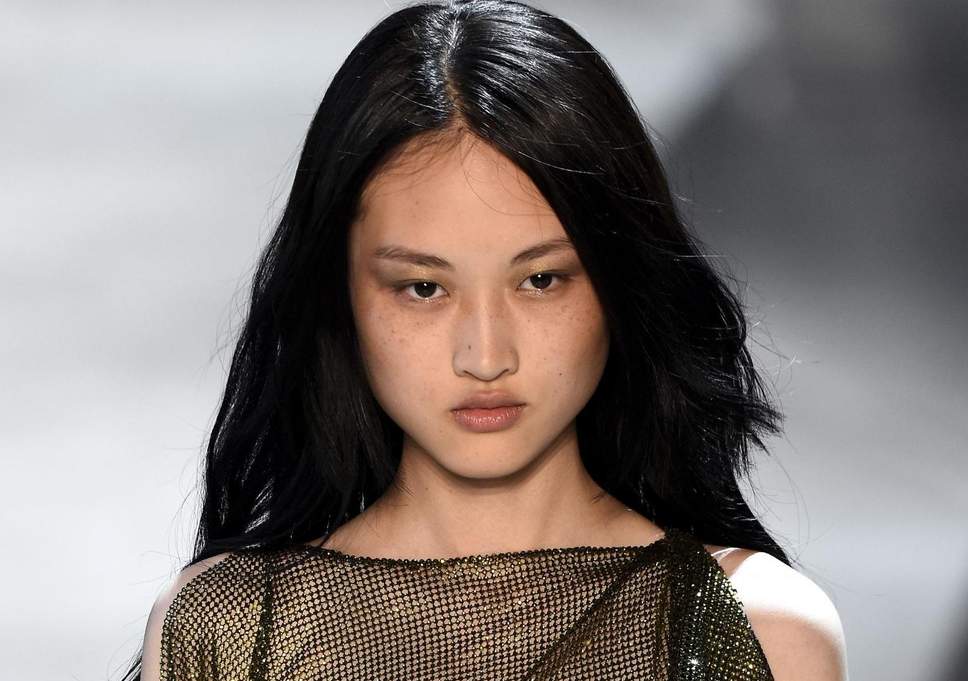
    Spanish fashion retailer Zara appears to have inadvertently sparked off a social media furore over the appearance of freckled Chinese model Jing Wen in one of its recent ads. In China, spots on the face are generally considered blemishes and are associated with disease and old age. Freckles are somewhat rare. In a country where racial homogeneity is a touchstone for beauty, outliers – the bushy eyebrowed, the wavy haired – are unlikely to be considered attractive. In the fashion industry, however, it’s these outliers who tend to have the unique, striking looks that brands prefer for their ambassadors.

    Despite hating her freckles as a child, Guangzhou model Jing Wen eventually learned to accept and capitalise on her point of difference. As a model for such brands as Calvin Klein and H&M, her face has even been called “iconic” by China’s media. Even so, her recent work with Zara has produced an outcry among local netizens who claim the use of the model intentionally “uglifies” the Chinese people.

    A BBC report on the freckled Chinese model quoted some disgruntled users of the Weibo microblog as voicing their anger over the images. “Such pictures featuring an Asian model with freckles and an expressionless pie-shaped face mislead Westerners’ impressions about Asian women,” said one user, “and can lead to racism against Asian women.”

    A spokesperson for Zara interviewed by Pear Video website commented that the advertisements were targeted at their global market, and not specifically at China.

    “The aesthetics of the Spanish people are different,” they said, adding “our models are all photographed purely, the pictures aren’t changed, and they’re not modified.”

    Zara’s response has provoked considerable debate within China on the issue, with some claiming the model has been bullied only by her fellow Chinese, and that more should be done to help China’s people embrace beauty in diversity. Others have called into question the false patriotism of those too eager to mount an attack on foreign brands.

  • The personal care company start using refillable containers

    The personal care company start using refillable containers

    On a trip to Thailand in 2017, serial entrepreneur Brian Bushell went diving for the first time and expected that the water would be pristine. Instead, it was filled with trash. “We were about to dive off the back of the boat, and all of the sudden we’re surrounded by junk plastic containers,” he says. That night, he went back to his hotel room and looked at the products he had sitting on the bathroom counter. “I realized that I was part of the problem.”

    Bushell, who had recently left Baked by Melissa, the chain of successful New York City-area cupcake bakeries he co-founded, started researching the challenge of plastic waste.

    “We learned that a third of all the single-use plastic products in landfills are personal care products,” he says. “So we decided that personal care was really an important nut to crack.”

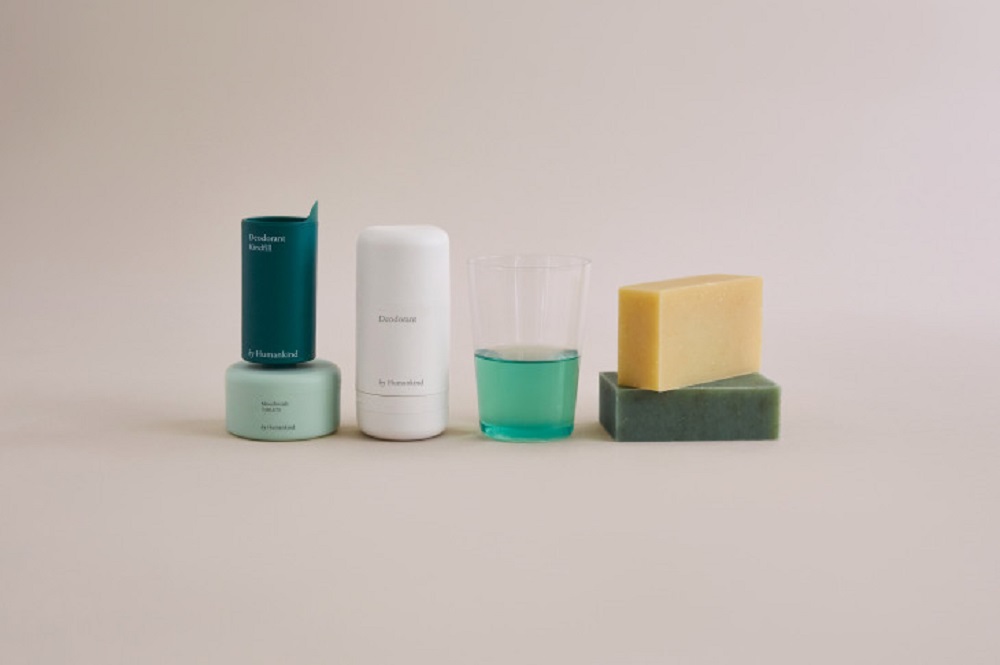
    With co-founder Joshua Goodman, he started working on By Humankind, a new line of personal care products that launched today. Each product eliminates single-use packaging.

    A new type of deodorant, made from natural ingredients that the company says are formulated to kill bacteria more quickly than other natural products, comes in a reusable container the first time you order. (The reusable container is plastic; the founders say they believe that plastic is not inherently bad, but it needs to be designed in a way that it doesn’t immediately land in the trash.)

    In the next order, the product shows up in a paper pod that pops into the original package and then twists out like a typical deodorant. The company’s mouthwash comes in tablets that customers drop in water, eliminating the need for a plastic bottle. Its shampoo comes in a bar form wrapped in paper instead of liquid in a bottle.

    Unlike Loop, a new experiment from major brands that will sell products like deodorant in packaging that is sent back to manufacturers for reuse, the startup thought that it made more sense to make packaging that consumers would keep and reuse themselves.

    “We didn’t think that customers were going to want to do the work to send it back,” Bushell says. “And there’s also an additional cost in that reverse or return logistics.”

    With the first three products, available online, the startup has calculated that in a year, an average American consumer can keep five pounds of plastic out of the environment. The company will also donate $1 for ocean plastic cleanup for each first purchase of a product. It plans to continue adding new personal care products.

    “Our whole thesis is, what if you could help save the world from single-use plastic just by getting ready in the morning?” he says. “And so anything that’s within that morning routine is within our target.”