Retail News CRM

Tag: Korea

  • Gaisanos,Korea’s Woori Bank team up on banking

    Gaisanos,Korea’s Woori Bank team up on banking

    THE GAISANO family has taken in Woori Bank of South Korea as a strategic partner in thrift bank subsidiary Wealth Development Bank Corp. to brace for stiffer competition in the banking system.

    Cebu-based Vicsal Development Corp. (Vicsal), the parent firm of Wealth Development, announced an “investment agreement” with Woori Bank, creating a “strategic alliance” between the foreign bank and one of the country’s leading thrift banks.

    The joint venture combines the global and technical resources of Woori Bank and Viscal. However, the press statement did not disclose how much economic interest the South Korean partner would get in this venture.

    “It is a strategic initiative in response to the liberalization of the country’s banking sector,” WealthBank chair Edward Gaisano said.

    Gaisano added that the deal was expected to increase the net worth of the thrift bank by threefold, strengthen its balance sheet as well as deepen its market reach and product offerings.

    WealthBank claims to be one of the country’s fastest growing independent thrift banks, expanding from just one branch in 2002 to 16 across the country today. The bank has close to P7 billion in assets.

    Under the partnership, WealthBank plans to ride on the world-class facilities and expertise of Woori Bank. It also targets to serve 1.2 million Korean tourists who visit the Philippines yearly as well as the 100,000-strong Korean expatriate community in the country.

    The partnership also seeks to allow WealthBank to cater to overseas Filipino workers in South Korea, as well as local and Korean small and medium enterprises.

    Woori Bank is the oldest and one of the largest banks in Korea. It has the largest Korean bank overseas network with a footprint in 18 countries.

    “This partnership with Woori Bank will unlock the huge potential of WealthBank with the expected synergy. We are excited about the joint venture as it further underscores our commitment to growth through collaboration with world-class companies,” Gaisano said.

    Vicsal has recently strengthened its strategic alliances through joint ventures with other leading global companies such as Ayala Land, Megaworld Corp. and Hong Kong Land.

    Retail unit, Metro Retail Stores Group Inc. (MRSGI) recently debuted on the Philippine Stock Exchange.

    Aside from banking and retailing, Vicsal is also into real estate development through the Taft Property Venture Development Corp. and in financial management through AB Capital. Vicsal is also the majority owner of Filipino Fund Inc., a closed-end mutual fund listed on the local bourse.

  • Korean retailers suffer from warm winter

    Korean retailers suffer from warm winter

    The unusually warm weather has hurt Korean retailers sales of everything from winter coats to snow boots, while boosting sales of outdoor sportswear and camping gear, store executives say.

    December was the warmest month on record in South Korea as an unusually strong El Nino effect has been heating up the globe. The change has carved a chunk out of retailers who rely on the weather for clothing sales. Annual ice fishing festivals were cancelled across the nation.

    E-Mart, the nation’s leading discount store chain, said winter clothing sales fell 11.4 per cent in December from a year ago, while heaters and heating pads tumbled 31.3 per cent. Scarves, gloves and other cold-weather accessories also took a hit from the mild weather.

    In contrast, outdoor sportswear and gear enjoyed unusually high popularity.

    Sales of sporting gear sales jumped last month, with camping equipment rising 45 per cent on-year.

    “Sales of winter clothing tumbled due to the unusually high temperature in December, while meat and home meal replacement related to camping and outdoor activities rose,” said Choi Hun-hak, a marketing manager at E-Mart.

    “We will prepare discount events for winter-related items as the warmer-than-usual winter is expected to continue in January.”

    The Korea Meteorological Administration has forecast mild weather throughout the winter.

    At Lotte Mart, the nation’s second largest discount chain, sales of winter clothing and snow removal equipment decreased 21.6 per cent and 23.9 per cent, respectively.

    Sales of winter-related items at major department stores have also failed to take off this winter, in a stark contrast from the last season’s down padding frenzy.

    Lotte Department Store said winter clothing and fur coat sales slipped 5.4 per cent and 8.8 per cent, respectively, in December compared with a year earlier.

    Instead, light padding jumpers and down vests have fared relatively better than usual, while golf wear showed double-digit growth as the ground remain unfrozen most of the time.

    “Clothing sales, which are highly dependent on weather, are struggling due to the unexpected warm weather,” said Yoon Young-hoo, a men’s sportswear manager at Lotte Department Store.

    “Although golf and outdoor sportswear are usually popular in the spring and fall seasons, they are posting robust sales during the peak winter season.”

  • Gaisano bank takes in Korean partner

    Gaisano bank takes in Korean partner

    The Gaisano family has enlisted Woori Bank of South Korea as a strategic partner in thrift bank subsidiary Wealth Development Bank Corp. to boost the banking unit amid a competitive local banking landscape.

    Cebu-based Vicsal Development Corp. (Vicsal), parent firm of Wealth Development, announced the forging of an investment agreement with Woori Bank, creating a strategic alliance between the South Korean bank and one of the country’s leading thrift banks.

    The joint venture combines the global and technical resources of Woori Bank and Viscal. However, the statement did not disclose how much economic interest the South Korean partner would get in this venture.

    “It is a strategic initiative in response to the liberalization of the country’s banking sector,” WealthBank chair Edward Gaisano said.

    Gaisano said the deal was expected to increase the net worth of the thrift bank by threefold, strengthen its balance sheet and deepen its market reach and product offerings.

    WealthBank claims to be one of the country’s fastest growing independent thrift banks, expanding from just one branch in 2002 to 16 across the country today. The bank has close to P7 billion in assets.

    Under the partnership, WealthBank plans to ride on the world-class facilities and expertise of Woori Bank. It also targets to serve 1.2 million Korean tourists who visit the Philippines yearly and the 100,000-strong Korean expatriate community in the country.

    The partnership also seeks to allow WealthBank to cater to overseas Filipino workers in South Korea, as well as local and Korean small and medium enterprises.

    “This partnership with Woori Bank will unlock the huge potential of WealthBank. We are excited about the joint venture as it further underscores our commitment to growth through collaboration with world-class companies,” Gaisano said.

    Vicsal recently strengthened its strategic alliances through joint ventures with other leading global companies such as Ayala Land, Megaworld Corp. and Hong Kong Land.

    Retail unit, Metro Retail Stores Group Inc. (MRSGI), recently debuted on the Philippine Stock Exchange.

    The Cebu-based Gaisanos trace their roots to an entrepreneurial family with a long retailing heritage dating back to the 1930s. From one of the many branches of the Gaisano family sprang the lineage of Victor, who decided to go on his own and, with wife Sally, opened his first store in Colon, Cebu, in 1982. This marked the beginning of MRSGI, which didn’t use the storied surname as part of a deliberate strategy to carve its distinct identity and avoid mix-up with similar businesses operated by relatives.

    Aside from banking and retailing, Vicsal is also into real estate development through the Taft Property Venture Development Corp. and in financial management through AB Capital. Vicsal is also the majority owner of Filipino Fund Inc., a closed-end mutual fund listed on the local bourse.

    Viscal and its various businesses are now run by the second generation Gaisanos: Margaret, Jack, Edward and Frank.

  • Government stuck in past in retail shop payment systems

    Government stuck in past in retail shop payment systems

    Mr. Park, a 50-year-old manager of a coffee shop in Yeouido, western Seoul, recently bought an integrated circuit (IC) card reader for 400,000 won ($343). Last summer, the country’s financial authority required shops to use them so customers could pay with credit cards with an IC chip embedded in them.

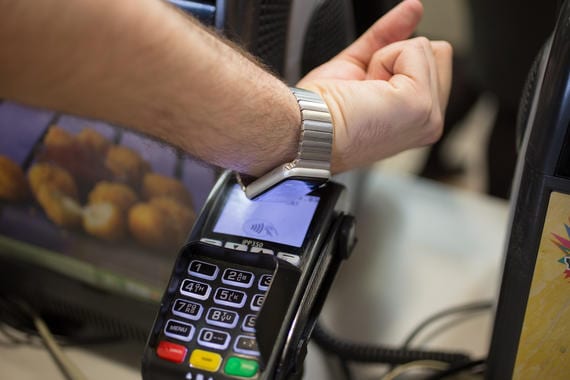
    However, as more locals use the Samsung Pay mobile payment system, IC card readers are fast becoming dinosaurs. The card reader that Park bought recently does not have ability to process Near Field Communication (NFC) payment system. If Apple decides to expand its mobile payment system in Korea, shops will have to buy new card readers with NFC capabilities.

    “I don’t understand why the government told us to buy the new card reader so early in the transitional process,” Park said. “They could have waited until the different mobile payment systems were established.”

    Many industry insiders are critical of the financial authority forcing shop owners to buy IC card readers in July. They say the government is behind in the latest technological trends.

    The government’s decision came after an information leakage scandal last February. Financial authorities believed that it was safer to use cards with IC chips compared to traditional magnetic strips, which are thought to be more vulnerable to financial crimes, including card duplication.

    Due to the government’s decision, approximately 2.47 million credit card company affiliates, or 95 percent of the total 2.6 million stores, were forced to buy the new card reader. The credit card companies chipped in 100 billion won to support their affiliated stores.

    Unfortunately, Samsung Pay, which Samsung Electronics introduced in August, turned the market upside down. Samsung Pay can work with cards that have magnetic strips and allows its customers to secure their identities with fingerprint recognition authentication.

    Samsung Pay users have grown significantly thanks to its ease and safety. Samsung Pay does not require stores to have IC card readers.

    “We did not consider Samsung Pay prior to commercializing IC card readers,” said a representative for the Financial Supervisory Service (FSS). “We intended to adapt the magnetic payment system just in case IC chips run into trouble.”

    IC card readers currently cannot process NFC. The payment system enables a portable device such as a smartphone to establish radio communication with the card readers nearby. Currently, Google’s Android Pay and Apple’s Apple Pay are using this system. Samsung Pay has NFC payment systems in its smartphones as well.

    The financial authority failed to include NFC payment systems in the new IC card readers because there was discord between the major credit card companies. Hana and BC agreed to adapt the system while others were unwilling due to extra charges the companies would have to pay mobile service providers.

    Some industry insiders argue that a lack of government’s efforts further complicated this situation. “Financial authorities failed to ease or mediate the tension between credit card companies,” said a representative for a credit card company.

    Many worry that store owners will have to pay another 100,000 won or so for a new card reader if NFC gets popular.

    Moreover, Kakao Bank and K-Bank – the first two Internet banks in Korea – are expected to open next year and shake up the existing payments market. They would not require any type of credit card readers in transactions. Customers could pay directly using their registered banking accounts, which would save them transaction fees as well.

    Experts recommend the government consider upgrading the existing card readers to enable mobile transactions.

    “As the credit card industry develops rapidly, we also need to adapt to new technologies such as NFC as fast as possible,” said Kim Jong-hyun, a senior researcher at Woori Finance Research Institute.

    “As of now, more people use traditional plastic credit cards, and we need to prioritize them in our policies,” said a representative at the FSS.

    BY LEE TAE-KYUNG [[email protected]]

  • $316m ShillaI’Park Duty Free targets $578m

    $316m ShillaI’Park Duty Free targets $578m

    Just over half the floor area (16,500sq m) of the new $316m 30,400sq m ShillaI’Park Duty Free store complex opened in downtown Seoul this month, initially covering floors three to six at the I’Park Mall in the Yongsan District.

    The December 24 ‘soft launch’ by the HDC Shilla Duty Free joint venture, delivered 60% of the planned retail space, with the remainder due to open at the 16 March ’grand’ unveiling – including the seventh floor and an additional 13,900sq m balance of floor space.

    The HDC Shilla Duty Free Shop is a joint venture between Hotel Shilla and Hyundai Development, which was formed to win the downtown duty free license, and it now features more than 400 brands – including luxury offerings – along with ‘K-Discovery Duty Free’ and ‘the largest K-wave store’.

    The two partners are sharing the $316m cost of developing the project. [Significantly, this is also the first new downtown duty license to be issued by the Korea Customs Service in Seoul since the year 2000].

    By the grand opening next March it expects to be offering in excess of 600 brands as South Korea’s ‘largest urban duty free location’ [and also as the long-time major challenger to Lotte Duty Free’s sales dominance in South Korea’s downtown duty free sector].

    It is also expected to generate revenue of KRW670.8bn/$578m in 2016, and produce an operating profit of KRW57.7bn/$49.7m, according to bullish predictions by KDB Daewoo Securities Research.

    THE WORLD’S SECOND-LARGEST DOWNTOWN DFS

    According to detailed information already provided to TRBusiness by Hotel Shilla, the total duty free floor space is only slightly smaller than the world’s largest downtown duty free complex at Hainan Duty Free in Haitang Bay.

    However, this new complex is designed to be multi-recreational in purpose. Plans for the HDC Shilla complex also include a 1,700-room hotel, several restaurants and concert halls.

    The joint venture has already opened luxury branded shops for Salvatore Ferragamo, Valextra, Vivienne Westwood and Bally, along with luxury stores offering multiple luxury brands in their respective product categories of fashion and accessories, watches, cosmetics and other products.

    There is also a special emphasis on cosmetics brands, which are popular as a major draw with Mainland Chinese tourists.

    One of the huge benefits offered by the new complex – and a key component in its selection for the downtown duty free license in the first place – is its plentiful parking spaces for tour buses – an extremely rare luxury commodity in Seoul today. The store location is also a hub for provincial tours by KTX trains.

    In a statement, the company said: “In the first phase, there are around 100 bus parking lots in the building and outside of the building. From the bus parking lot, tourists can directly reach the entrance of the duty free store by exclusive escalators, ‘Crystal Gate’. Next year (2016), the bus parking lot will accommodate up to 400 buses based on the demand of tourists.”

    HDC Shilla’s Co-President, Changhoon Yang and Gilhan Lee said: “We will do our best to make Shilla I’Park duty free the world’s best duty free store and to make Seoul a global shopping destination. We will take the lead to promote the nation’s tourism industry.”

    The company adds that its ambition is that Shilla-I’Park will become the centre of the Korean-Wave tourism that promotes Korean-made cosmetics and fashion goods, provincial tourism and co-prosperity along with regional economies in Korea.

    This promise to boost sales and the profile of domestic goods and services should come as a politically popular message for the present Korean Government – especially President Park Geun-hye – who is reported (by the Yonhap News Agency) to have been openly critical of recent duty free customs law revisions. Particularly so, with regard to the downward revision of downtown duty free license terms from 10 to five years.

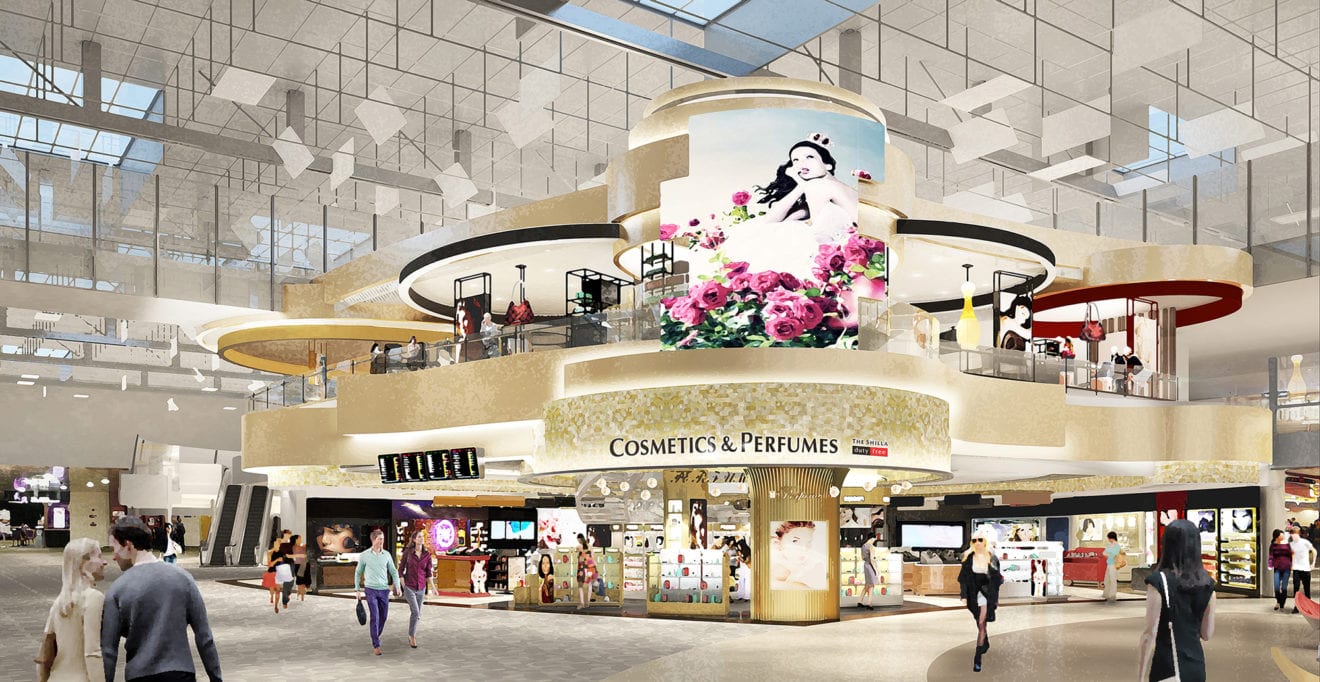
    Meanwhile, the Shilla-I’Park partnership claims that the new store is also equipped ‘with the largest cosmetics section’ covering a floor area of 6,300sq m featuring all of the Korean-made cosmetics brands and global brands popular amongst Chinese tourists.
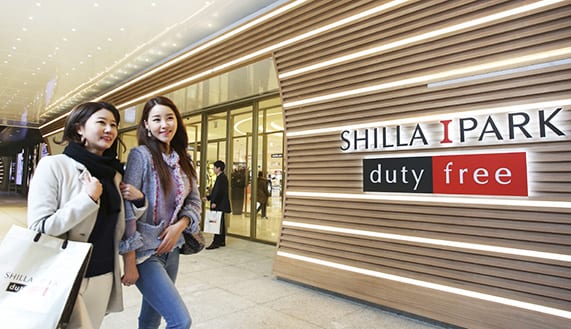
    HDC Shilla Duty Freec

    The new store entrance. (Photo credit: Shilla Duty Free).

    AIMING FOR 90% OF SALES GOAL – BEFORE FULL MARCH OPENING

    It also points out that it houses the biggest ‘K-cosmetics’ and ‘K-Bag’ store areas specialising in Korean-made cosmetics, fashion goods and accessories, comprising more than 270 cosmetics, fashion and accessory brands.

    In addition, the third and fourth floors feature luxury fashion and global cosmetics branded stores, with a special ‘Luxury cosmetics zone’ on floor three dedicated to imported cosmetics and high-end timepieces.

    HDC-Shilla said: “We have most of [the] cosmetics and luxury watch brands loved by Chinese visitors and have raised the portion of K-cosmetics that recently showed a large increase in sales, so we are expecting to achieve about 90% of our sales goal – even before the grand opening.”

    Meanwhile, the ‘K-Discovery Travel Package’ will be introduced in collaboration with each local government, Korail, travel agencies and the duty free store to boost provincial tours of Korea.

    The retailer adds: “In addition, I’Park mall will be upgraded to provide diverse tour contents and new shopping facilities to support [the] Shilla I’Park duty free store. In collaboration with character contents, the mall will be the tourist destination, by providing various attractions consistently.”
  • Used phone chain launches in Seoul subway stations

    Used phone chain launches in Seoul subway stations

    Stores purchasing used cell phones are set to open at Seoul subway stations.

    Seoul Metro, which manages lines No.1 to No.4, says it will open stores that buy used mobile phones at 12 subway stations including Seoul Station, in a bid to stop wasting resources and promote reusing and recycling.

    The new businesses will pay rent to Seoul Metro as well as a commission per phone of at least 7660 won (US$6.50) including VAT. During the contract period of two years, which is the standard agreement period per store, it is expected that 28,800 phones will be purchased.

    Seoul Metro has stipulated the businesses will only be permitted to purchase used phones, and the contract will be invalidated if other forms of business are conducted or the location of the store is changed.

    Clauses forbidding the sale of other items at the store, and limiting the opening hours to within the subway’s hours of operation will be added to the contract.

    However, due to the strict conditions, Seoul Metro is having a hard time attracting investors for the new business.

    Seoul Metro officials emphasised they are starting the venture to strengthen their management efficiency and enhance the convenience of customers. The additional business could be a countermeasure to overcome the organisation’s chronic deficit.

    The selected stations are Dongdaemun Station, Seoul Station, Chungjeongno Station, Sindorim Station, Sillim Station, Seolleung Station, Wangsimni Station, Jongno 3(sam)-ga Station, Oksu Station, Express Bus Terminal Station, Mia Sageori Station and Sadang Station.

  • Study reveals Asian dining spending trends

    Study reveals Asian dining spending trends

    One in three millennials in Asia are eating at fine dining restaurants at least once a month – more often than those aged over 30.

    The surprise finding is one of a list of revelations uncovered by a MasterCard survey of Asian dining trends away from home. It featured consumers in 17 Asia Pacific markets: Australia, Bangladesh, China, Hong Kong, India, Indonesia, Japan, Malaysia, Myanmar, New Zealand, Philippines, Singapore, South Korea, Sri Lanka, Taiwan, Thailand and Vietnam.

    The most frequent fine-diners in Asia Pacific are millennials (18-29 year olds) from China – on average they visit more expensive establishments two or three times a month. This is higher than the average for millennials across the region and higher than any other age group.

    When choosing where to eat, consumers in Asia Pacific still prefer to rely on word of mouth and recommendations from friends and family (50 per cent). This was applicable for all consumers, regardless of age group, with even millennials trusting word of mouth recommendations (52 per cent) more than online reviews (38 per cent).

    This is despite the fact that more than a third of millennials (36 per cent) post comments and reviews of their dining experiences online. This is especially true of Chinese (61 per cent) and Thai (52 per cent) millennials, where more than half of the young people polled regularly post reviews after a meal.

    Beyond millennials, people in Thailand (39 per cent) and China (30 per cent) are also the most likely to spend more on dining over the next six months with around one in three indicating they plan to eat at more expensive establishments.

    But while consumers may be enjoying fine dining, they are still cost conscious. Sixty-four per cent of consumers in Asia Pacific regularly check for discounts or dining deals from coupon websites, mobile applications or credit card promotions. Sixty-eight per cent of millennials regularly look out for deals before choosing a place to eat.

    Eric Schneider, regional head, Asia Pacific, with MasterCard Advisors, said Asia has always had a strong dining out culture and so it is not surprising that affluent millennials in the region are ‘foodies,’ with many sharing their dining experiences on social media and posting reviews online.

    “While the survey has shown that people are increasingly moving from the hawker centres and into restaurants, young people are still cost conscious, taking a practical and savvy approach by looking for discounts and deals. Young people also still rely on word of mouth recommendations, despite many posting online reviews of dining spots. As Asia’s economies continue to grow, and with technology and social media revolutionizing the dining experience, people will increasingly demand top quality experiences when dining out,” he said.

    Other findings from the survey included:

    • Overall, consumers in Asia Pacific are not looking to make any significant changes to their dining out plans with 61 per cent of all consumers indicating they will look to eat out at the same frequency in the next six months. Twenty per cent plan to eat out more and 19 per cent plan to eat out less in the next six months.
    • The most popular dining option for consumers in Asia Pacific are mid-range restaurants and cafes, followed by fast food outlets and then hawker centres and food courts.
    • Consumers in the Philippines (44 per cent) are looking to tighten their belts with close to one in two planning to eat at less expensive venues in the next six months. Forty-nine per cent also plan to eat out less regularly.
    • A significant proportion of older consumers are going online to check for dining discounts whether on coupon websites/applications or credit card promotions. More than one-third of consumers aged 55 years old and above (36 per cent) indicated they regularly do so before deciding on a dining option.
    • Consumers in China (58 per cent), Taiwan (44 per cent) and Thailand (44 per cent) are the most likely to book dining deals on coupon sites or coupon applications; while consumers in Bangladesh (1 per cent) and Indonesia (11 per cent) were least likely to do so.
    • Diners in Thailand (60 per cent) and China (57 per cent) are most likely to post comments or reviews on social networking sites like Facebook and Twitter with about one in two respondents in these markets reporting that they regularly post comments online following their dining experience.

    The results are based on interviews with 8698 individuals aged 18 to 64 years-old.

  • Seoul shares edge up on pharmaceutical, retail gains

    Seoul shares edge up on pharmaceutical, retail gains

    South Korean stocks rose marginally high on Tuesday, propped up by rallies in pharmaceutical and retail companies. The local currency lost against the greenback.

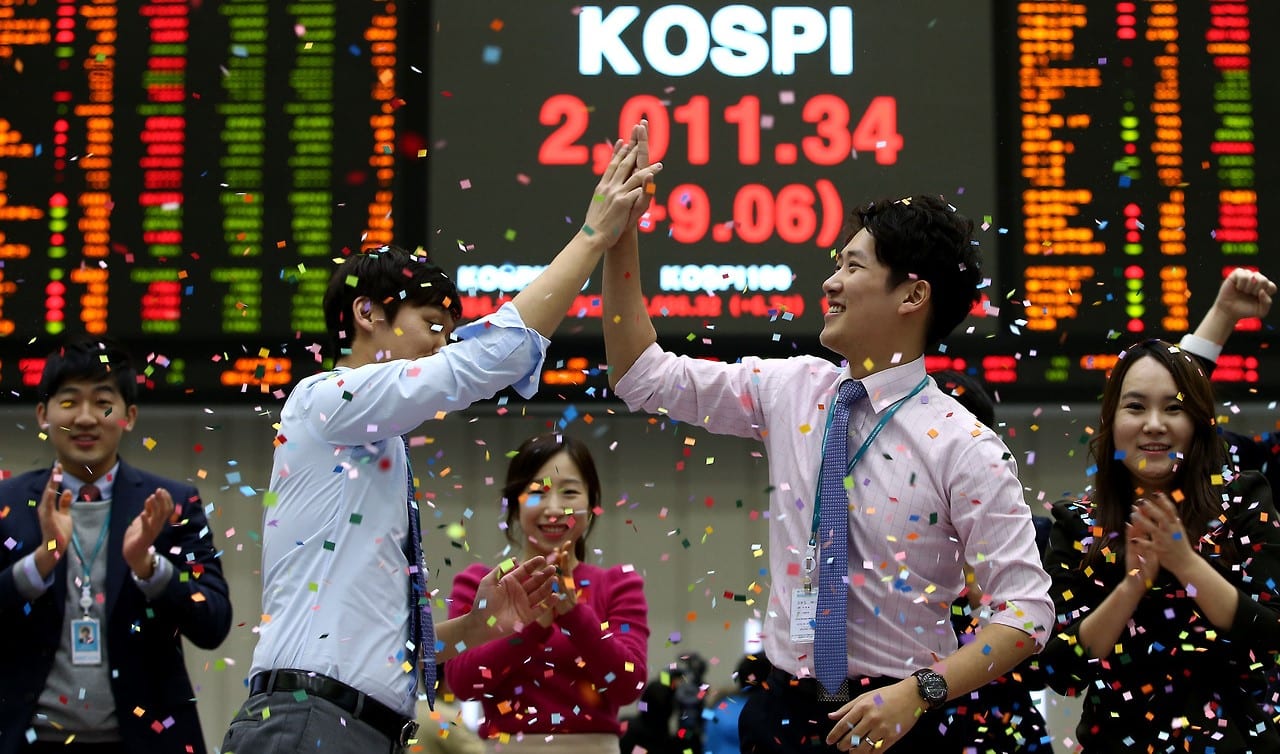
    The benchmark Korea Composite Stock Price Index (KOSPI) added 2.25 points, or 0.11 percent, to end at 1,966.31. Trade volume was thin at 394.49 million shares worth 3.76 trillion won (US$3.21 billion), with winners beating losers 461 to 368.

    The market started lower and moved in and out of positive terrain. Propping up the market are individual investors who picked up about 265 billion won worth of shares, while institutions and foreign investors remained net sellers.

    “The mood remained subdued in the KOSPI market as investors locked in taking profits from gains prompted ahead of the ex-dividend date when shares lose the right to receive dividends,” said Kim Hyung-rae, a KDB Daewoo Securities analyst.

    Large-cap shares ended mixed, with pharmaceutical companies leading the upward move.

    No. 1 drug maker Hanmi Pharm jumped 14.46 percent to 736,000 won, while Green Cross gained 4.91 percent to 181,500 won. Furniture maker Hansem surged 6.73 percent to 238,000 won.

    Banking and steel issues weighed on the market. The Industrial Bank of Korea shed 5.26 percent to 12,600 won, while steelmaker POSCO fell 3.69 percent to 169,500 won.

    Telecom giant SK Telecom plunged 6.52 percent to 215,000 won following media reports over the SK Group chairman’s planned divorce with his long-estranged wife, which prompted uncertainty over its corporate governance.

    The local currency ended at 1,169.6 won against the greenback, down 4.2 won from Monday’s close.


  • Estee Lauder settles Have & Be Korea deal

    Estee Lauder settles Have & Be Korea deal

    Estee Lauder has completed the acquisition of Have & Be Korea, the parent of skin care brands Dr Jart+ and Do The Right Thing.

    The New York-listed global beauty powerhouse has not revealed terms of the deal, which gives it an important brand in the fast-growing Korean beauty industry.

    Launched online in 2005 by ChinWook Lee, Dr Jart+ is a Seoul-based, global high-growth skin care brand featuring quality and innovative products designed to address specific skin care needs. The brand’s unique fusion of dermatological science and art – as reflected in the

    brand name, which is inspired by the phrase “Doctor Joins Art” – appeals to a broad range of consumers, especially millennials. Dr Jart+ is sold in many countries around the world, primarily in Asia and the US, through various department stores, specialty-multi and eCommerce channels including Sephora.

    The Estee Lauder Companies’ investment also includes an interest in Do The Right Thing (DTRT), a men’s-focused skin care brand that fuses Korean innovation with a bold New York style. Founded by Mr Lee in 2012, DTRT’s line of cleansers, lotions, moisturisers and serums are sold in Korea through various channels and in the US through Sephora and Birchbox Man.

    Estee Lauder is one of the world’s leading manufacturers and marketers of quality skin care, makeup, fragrance and hair care products. The company’s products are sold in over 150

    countries and territories under brand names including: Estee Lauder, Aramis, Clinique, Prescriptives, Lab Series, Origins, Tommy Hilfiger, Mac, Kiton, La Mer, Bobbi Brown, Donna Karan New York, DKNY, Aveda, Jo Malone London, Bumble and bumble, Michael Kors, Darphin, Tom Ford, Smashbox, Ermenegildo Zegna, Aerin, Marni, Tory Burch, Le Labo, Editions de Parfums Frederic Malle and Glamglow.

  • Lotte celebrates topping-out of Korea’s tallest building

    Lotte celebrates topping-out of Korea’s tallest building

    South Korea’s retail giant Lotte Group held a symbolic topping-out ceremony Tuesday afternoon to mark the approaching completion of the Lotte World Tower, the tallest building in the country located in Jamsil, southeastern Seoul.

    Lotte Corp. placed the last crossbeam on the top floor of the 123-story skyscraper amid much fanfare with some 200 high officials in attendance, including Lotte chairman Shin Dong-bin and Seoul City mayor Park Won-soon.

    The Lotte World Tower currently stands at 508 meters as the world’s fifth tallest building in the world. It will reach 555 meters in height once the spire is placed and the interior construction is concluded next year.

    “Offering panoramic views of Seoul, the Lotte World Tower will be able to attract some 2 million tourists every year,” said the Lotte chairman in his congratulatory speech.

    Mindful of public concerns about safety, Shin emphasized that Lotte would “work to ensure that the tower becomes a safe location that can welcome all visitors” and to “successfully wrap up the remaining construction procedures.”

    The supertall skyscraper stands at the center of Lotte’s 3.8 trillion won ($32 billion) project envisioned by Lotte founder Shin Kyuk-ho to build an unparalleled legacy for the company in Jamsil.

    Located adjacent to the tower is the Lotte World Mall, a mega shopping complex featuring shops, restaurants, a movie theater and aquarium. The tower is set to house a six-star hotel, office space and an observatory once it is completed next year.

    “The Lotte World Tower has been constructed in line with my father’s wish to establish a landmark building in Korea,” said the Lotte chairman, also the eldest son of the Lotte founder.

    “The tower will become a structure beloved by people from all over the world.”


  • Hotel Lotte set to submit IPO application next week

    Hotel Lotte set to submit IPO application next week

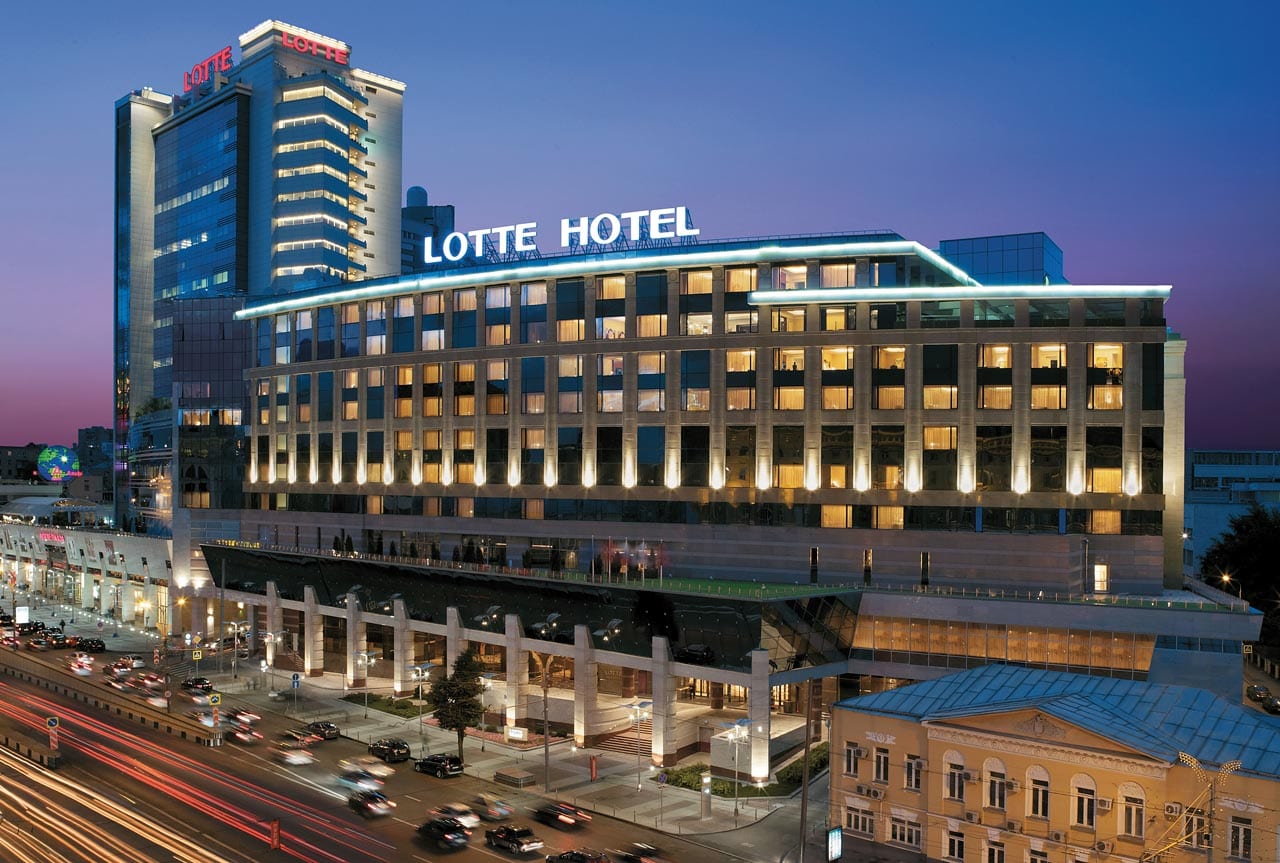
    Hotel Lotte plans to submit the application to the Korea Exchange (KRX) on Monday for a preliminary regulatory review of its initial public offering (IPO), after clearing uncertainties surrounding the conglomerate’s management and other issues.

    The listing of Hotel Lotte is one of the reform pledges that Lotte Group Chairman Shin Dong-bin has made to assuage public disgust over a bitter family feud for control of the retail-focused conglomerate, which has sprawling businesses both in South Korea and Japan.

    Earlier this month, Lotte said its Japanese shareholders support the current leadership despite the ongoing succession feud. Japan-based Lotte Holdings is the largest shareholder of Hotel Lotte with a 19.1 percent stake.

    The KRX earlier said it is considering simplifying the screening process to facilitate its listing, using a “fast-track” system that cuts the review period to about a month.

    To take advantage of the speedy process, applicants should have over 400 billion won in equity capital and 700 billion won of annual sales for three years, along with other requirements.

    “If Hotel Lotte submits the application, we would be able to confirm the result by January,” a KRX official said, asking for anonymity.

    Hotel Lotte is pushing for the IPO despite the group losing one of its two duty-free stores in Seoul last month.

    Lotte kept a location in Myeongdong, a popular shopping district in downtown, but lost the operational license for another at Lotte World Tower in southeastern Seoul.

    The conglomerate earlier said Hotel Lotte is expected to have a market capitalization of around 10 trillion won ($8.6 billion) when it is publicly traded, but market watchers say losing one of its duty-free stores in Seoul in the recent competition could lead to that re-evaluation of its market value.

  • IKEA Celebrates 1st Bumper Year in Korea

    IKEA Celebrates 1st Bumper Year in Korea

    Swedish furniture giant IKEA will open five more stores here by 2020, IKEA Korea retail manager Andre Schmidtgall told reporters Wednesday.

    Speaking on the first anniversary of the first IKEA store on the southern outskirts of Seoul, Schmidtgall said the decision was prompted by its better-than-expected performance.

    The store in Gwangmyeong, Gyeonggi Province is IKEA’s second largest in the world. Some 6.7 million customers visited over the past year and sales reached W308 billion (US$1=W1,179).

    “Korea is a great market with huge potential, with a growing customer interest in home furnishing,” Schmidtgall said.

    IKEA plans to invest W1.2 trillion by 2020 to open the five additional stores in Goyang north of Seoul, Gangdong in the eastern part of the capital, as well as Daejeon and Busan. The new stores are expected to create 3,500 jobs. The store in Gwangmyeong employs 913 Korean workers.

    The next store will open in Goyang in 2017 on an even bigger scale.

    Schmidtgall played down concerns that IKEA harms regional businesses. “The actual numbers do not show that,” he said.

    The Korea Distribution Association analyzed credit card transactions from December 2014 to August this year and found that revenues at stores within a 10 km radius of the IKEA Gwangmyeong store in fact rose between 7.5 and 27.4 percent.

    Schmidtgall pointed out that the Gwangmyeong store is the only IKEA outlet in the world to offer part of its underground floor space to small businesses.

  • Hanwha Galleria to open Seoul downtown duty-free store next week

    Hanwha Galleria to open Seoul downtown duty-free store next week

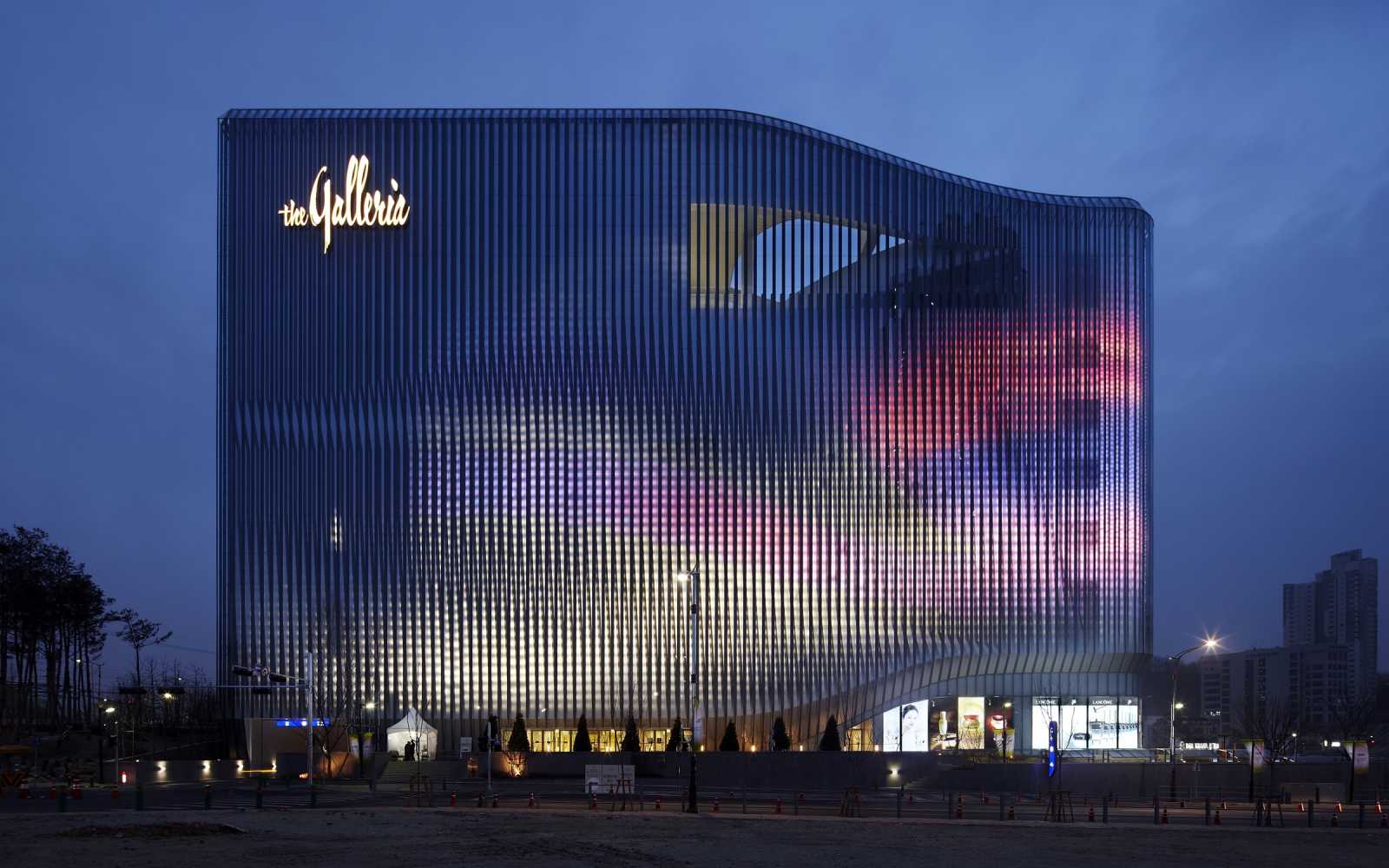
    Korean department retailer Hanwha Galleria is to partially open its first duty-free store at the 63 City Building in downtown Seoul next week, Hanwha Galleria Duty Free merchandising division representative Ji Su Kim told DFNIonline.

    Kim, was unable to reveal further details, but a YonHap News Agency report indicated Hanwha Galleria plans to open 60% of the proposed space in the gold-tinted skyscraper, one of Seoul’s best known landmarks in Yeouido on December 28. Hanwha Galleria and HDC Shilla Duty Free, a joint-venture between Hotel Shilla and Hyundai Development Co were awarded the main downtown duty-free licences in Seoul by the Korea Customs Service in July following a hotly contested tender.

    The report said the pre-opening would showcase 369 brands, including cosmetics, watches and jewellery with nearly half of them Korean brands. The new duty-free shopping space will be located in the first lower level floor of the main 63 building and floors one to three of the annex building. With a total floor area of 10,072sq m, shoppers will have a  one-stop experience in a modern and comfortable space, according to the company.

    Once the entire store is complete, it is hoped the luxury boutiques and cosmetics stores in the first lower level floor and the watches and jewellery section of the first floor will feature global luxury brands.  The second floor will be filled with Korean cosmetics brands showcasing the best of “K-beauty”. This floor will also feature sections for fashion, accessories, tobacco and liquor. The third floor will be home to “K-Special Hall”, an exclusive concept to Galleria Duty Free. This unites more than 100 of Korea’s top brands and small and medium-sized enterprises.

    Shoppers looking to take a break from shopping can enjoy views of the Han River at “Studio Rue”, a media complex café located on the fourth floor, and browse a selection of Hallyu content products and purchase refreshments.

    Meanwhile, Hanwha Galleria, whose Hanwha Timeworld subsidiary runs the duty-free concession at Jeju International airport, is believed to have made little progress in terms of attracting global luxury brands.

    Hanwha Galleria CEO Hwang Yong-deuk said during a briefing. “Although we want to have luxury brands in the stores they are not yet considering opening new shops, thinking they have enough shops in South Korea.”

    The company added it would continue negotiations to house global brands when the Lotte World Tower store closes this month after the Korean powerhouse lost its licence to travel-retail newcomer Doosan Group.

    It also vowed to continue expanding its duty-free business and revealed it is targeting sales of $429.6m million in the new store next year.

    Stay close to DFNIonline and future editions of DFNI for more on the Hanwha Galleria duty-free expansion project.

  • Korea’s jobless rate stays pat at 3.1% in November

    Korea’s jobless rate stays pat at 3.1% in November

    South Korea’s unemployment rate stayed pat in November compared with the month before as gains in the manufacturing and hospitality sectors were offset by losses in the agrofisheries and retail segments, a government report showed Wednesday.

    According to the report by Statistics Korea, the rate stood at 3.1 percent last month, unchanged from October and the year before. The seasonally adjusted unemployment rate for last month reached 3.4 percent, also flat from the 3.4 percent figure tallied for the previous month. The number of newly created jobs, however, dropped to 285,000 last month, from 348,000 new positions offered in October.

    “Manufacturing continued to fuel growth, along with the hospitality sector, and communication and information technology services, but sharp losses in agrofisheries and to a lesser extent retail affected the job market last month,” said Sim Won-bo, head of the agency’s employment statistics division.

    He said agrofisheries shed 168,000 positions last month from 124,000 jobs lost the month before, while sluggish economic conditions hurt small-time retailer jobs in the country. The official said the loss in agrofisheries was mainly due to rainy weather.

    The manufacturing sector created 190,000 more jobs, with the hospitality sector and communication and information technology services adding a combined 182,000 positions.

    The unemployment rate for people between the ages of 15 and 29 reached 8.1 percent in November, up from the 7.4 percent reading a month earlier, which was the lowest level reported since May 2013.

    The statistical office said the jobless rate for young people usually goes up toward the end of the year as there is a rush to seek employment. The jobless rate among young people has always been higher than the national average.

    The latest report then showed the employment rate for people between 15 and 64, which is used by the Organization for Economic Cooperation and Development to measure employment, stood at 66.3 percent last month, up from 66.2 percent the month before.

    The so-called labor underutilization indicator dipped to 10.3 percent last month from 10.5 percent in October, according to the report.

    The indicator is based on guidelines made by the International Labor Organization and reflects the number of people who are underemployed and those who currently hold part-time jobs but want full-time work. It also counts unemployed people who have given up looking for work not by choice but due to other circumstances.

    The finance ministry said unseasonable weather conditions adversely affected jobs created last month. “The amount of rainfall directly impacted hiring in certain sectors,” it said. “If agrofisheries are not calculated, more than 400,000 jobs were created.” Total precipitation hit 127.8 millimeters, the second highest reading since November 1973.

    The ministry added that while the jobless rate for young people rose, the employment rate edged up 1 percentage point on-year to 41.8 percent, which is a positive development. For the future, it said exports may remain weak but a rise in domestic demand will help create new positions in the coming months.

  • Apple Korea faces antitrust probe

    Apple Korea faces antitrust probe

    Apple Korea has found itself under the spotlight in South Korea over its repair contracts.

    South Korea’s antitrust watchdog Fair Trade Commission (FTC) said today it is checking possible unfair provisions in contracts signed between Apple Korea and local electronic repair companies.

    The FTC did not elaborate on details but said it confirmed there were unfair clauses that favored the electronics giant.

    “The probe was launched by the commission based on suspicions, with investigators processing all the information gathered,” FTC chief Jeong Jae-chan said.

    He predicted that results of the review will be made public soon. He said because many consumers used iPhones in the country, the investigation should generate considerable interest.

    The latest examination follows the corporate regulator’s recent order that eight local repair companies and mobile operators must change their customer service rules that unfairly restrict the rights of consumers.

    Repair firms, such as UBase Inc., Peach Valley and Beyond Tech Co, along with mobile operators SK Telecom and KT, were ordered to make changes earlier in the year.

    An FTC official said that while the ruling against repair firms involved businesses and consumers, the latest ongoing actions target business-to-business arrangements.

    Besides Apple, the FTC said it plans to release repair information by all mobile phone manufacturers within the year, so consumers can personally check how companies fix gadgets.

    Information will be provided by the Korea Consumer Agency on Samsung Electronics, LG Electronics and Apple, with data to go into such matters as costs, how repairs are made, the time it takes to fix broken devices and related procedures that must be followed, it added.