Retail News CRM

Tag: luxe

  • Kering invests in resale platform Vestiaire Collective

    Kering invests in resale platform Vestiaire Collective

    French luxury group Kering has taken a 5 percent stake in Vestiaire Collective, a leading platform for second-hand clothes and handbags, betting that the booming resale market will help it woo younger and more environmentally conscious shoppers.

    The purchase is part of a 178 million euro (US$215 million) financing round announced on Monday which valued Vestiaire Collective at more than US$1 billion, the companies said.

    U.S. investment firm Tiger Global Management also invested in the platform, while existing shareholders including Vogue publisher Conde Nast and French private equity firm Eurazeo put more money in.

    The pre-owned fashion market has enjoyed rapid growth over the last three years, with a further acceleration during the coronavirus pandemic, thanks to younger shoppers’ heightened focus on sustainability and also homebound consumers looking for good deals on second-hand clothes.

    “There is a real shift happening that is going to shape the future of the fashion industry, and as a leader, in the sector, we want to shape that trend,” Kering’s digital chief Gregory Boutte told reporters.

    The proportion of secondhand pieces in closets is predicted to grow from 21% in 2021 to 27% in 2023, with the value of the sector estimated to be worth over $60 billion by 2025, the companies said in a statement. Paris-based Vestiaire Collective said its transaction volume doubled in 2020.

    Luxury groups have traditionally been wary of secondhand sellers, which weaken their control over the distribution and pricing of their brands and, according to critics, can help spread counterfeit goods. But that is changing, and Kering’s star brand Gucci last year announced a partnership with U.S.-based resale platform The RealReal.

  • Baozun buys Full Jet to boost luxury e-commerce offer

    Baozun buys Full Jet to boost luxury e-commerce offer

    Baozun, the leading brand e-commerce service partner that helps brands execute their e-commerce strategies in China, today announced that it has entered into a share purchase agreement with all the shareholders of Full Jet Limited (“Full Jet”), to acquire a 100% equity interest in Full Jet. The acquisition is subject to customary closing conditions and is expected to be completed on or around February 10, 2021.

    The final enterprise value of Full Jet represents a 12.5x multiple of Full Jet’s 2020 EBITDA, with total consideration consisting of a 50% initial cash payment and deferred payments in cash or equity over the following three years, subject to an annual performance target completion result. In addition, an incentive program is granted to key members of Full Jet’s management team, which is also subject to the annual performance target completion result during the same period.

    Full Jet is a strategic and brand-focused industry expert that specializes in developing go-to-market strategies for high-end and luxury brands entering the Chinese market. Its key business coverage includes brand development, strategic consulting, e-commerce operations, and marketing. Full Jet has successfully leveraged its in-depth knowledge of China’s e-commerce market to support many leading international premium and luxury brand partners and groups. Full Jet has global offices in Paris, Hong Kong, and Shanghai, China.

    According to a recent report issued by independent third parties, China’s personal luxury market was estimated to grow by over 45% in 2020, within which online e-commerce has grown tremendously. In September 2020, Baozun upgraded its luxury group to a tier-1 business unit to better leverage its analytic data, insights, and resources to capture the emerging demand. The Company believes that this strategic acquisition of Full Jet strengthens the Company’s expertise in business development, strategic consulting, and brand management, and expands its geographic touchpoints with premium and luxury brands globally.

    Mr. Vincent Qiu, Chairman and Chief Executive Officer of Baozun commented, “We are excited about the acquisition of Full Jet. Baozun and Full Jet share the ambition of helping international luxury and premium brand partners enter China’s fast-growing e-commerce sector. We are confident that our proven track record of capabilities with deep luxury insights and solid infrastructure, combined with Full Jet’s expertise in brand and business development, will provide a compelling value proposition for international labels looking for more strategic and empowered services like us. By capitalizing on the strengths of both parties, we expect to unlock the potential for the future growth of premium and luxury sectors, and we believe such initiatives will become strong growth drivers for Baozun in generating RMB20 billion in annual GMV within the next three to five years.”

    Ms. Sandrine Zerbib, Founder and Managing Partner of Full Jet added, “We are looking forward to beginning a new journey with Baozun. This acquisition opens doors to tremendous new opportunities for both of us. We are impressed with the vision and execution of Vincent and his team that has made Baozun the undisputable leader in China’s rapidly growing market for e-commerce operations and services.

  • Italian fashion brand Kampos launches in Korea

    Italian fashion brand Kampos launches in Korea

    Kampos, the ultimate Italian brand promoting luxury with integrity, is expanding overseas by entering the South Korean market.

    The brand has recently signed a partnership with a local distributor, Sanghyun Yu, based in the capital, Seoul, and has already established Kampos South Korea Ltd. As part of the strategy, the brand has just launched its South Korean website.

    When we ask the reason of this expansion to Alessandro Vergano, Founder & CEO of Kampos he declares: ”This international move is more than a business decision; it is a strategic and meaningful move to strengthen our sustainable mission. We are determined to transform the way of consumption by challenging the luxury industry’s norms, inspiring change, and reducing marine waste.” He adds: ”Sharing our message at an international has become obvious as we understand the need to reach further international customer profiles outside Europe. We believe South Korea is full of opportunities and we are thrilled to collaborate with Sanghyun Yu”.

    Sanghyun Yu is a well-recognized local distributor in South Korea with strong expertise in the market and luxury goods. ”I am extremely excited to be part of the Kampos journey. I believe in sustainability as the next big trend in South Korea. The younger generation wants to shop and hear about sustainable luxury brands. Today, there is a big market gap as we don’t give them access to those international changemakers. I’m determined to turn this gap into an opportunity by supporting Kampos”.

  • Prada CEO sees massive revenue growth during next years

    Prada CEO sees massive revenue growth during next years

    Italian luxury group Prada sees revenues rising to 5 billion euros ($6.1 billion) in four to five years, its chief executive said on Thursday.

    “We will reach five billion euros in a matter of four to five years. COVID-19 has given a strong shock to the whole system, we will see a strong acceleration when it will be over,” Patrizio Bertelli said in an interview with Italian daily Il Sole 24 Ore.

    “We have not grown as much as we would have liked so far, but we are the group that has best maintained its identity,” he added.

    The Hong-Kong listed group said it would close 2020 with an operating profit. Net revenues in 2019 were 3.226 billion euros.

    The fallout from the COVID-19 crisis triggered a 40% decline in Prada’s revenues in the first half of last year, leading to a 196 million euros operating loss.

    In the interview, Bertelli said there could be positive signs for the luxury sector as a whole from March, when lockdowns in many European countries may end.

    The executive, founder of the brand with wife Miuccia, said the company was not interested in acquiring other brands but would press ahead with buying production plants instead, investing 100 million euros per year in sites and shops in coming years.

    “Made in Italy’ production will be more and more important,” he said, noting 80% of Prada’s current production is based in Italy.

  • How LVMH plans to reshape Tiffany

    How LVMH plans to reshape Tiffany

    French luxury goods group LVMH LVMH.PA plans to overhaul Tiffany & Co’s vast merchandise lineup to focus more on gold and precious gems while going more upmarket with its silver bangles after closing the $15.8 billion takeover of the U.S. jeweller this month.

    Six sources including two people with inside knowledge of Tiffany’s operations told Reuters the owner of Louis Vuitton would also likely revamp the appearance of the jeweler’s stores and boost its presence in Europe and Asia.

    More than a third of Tiffany’s 320 shops are in the United States and two sources described some of them as out-of-date, shoddy and in need of refurbishing.

    “LVMH can give Tiffany the kind of time and money needed to make some big investments in the product range and in stores worldwide, and wait for those to pay off in the medium term,” one of the sources said.

    At a town hall in New York for Tiffany’s 14,000 employees on Jan. 8 – a day after LVMH installed a new leadership team – the group’s new bosses laid out their initial plans to focus on high-end, sparkling jewelry, said one person who attended it. The group is also considering building out Tiffany’s lineup in watches, another source familiar with its thinking said.

    Unlike such rivals as Richemont-owned CFR.S Cartier and Van Cleef & Arpels, as well as fellow LVMH brand Bulgari, Tiffany’s products range from $150 silver pendants to diamond necklaces priced in the tens of millions.

    Silver jewelry has gross margins of around 90% and offers a perfect entry point for younger, less wealthy shoppers, but top industry names also need the medium- to the high range – with a price tag above $100,000 – to create an aura of exclusivity, experts say.

    In a video message to employees during the town hall, LVMH boss Bernard Arnault, who is also France’s richest man, said he wanted to elevate Tiffany’s standing, even if that took time.

    “We will also prioritize Tiffany’s long-term desirability over short-term constraints,” Arnault said, according to a person who attended. At one point brandishing one of Tiffany’s signature robin’s egg blue boxes, Arnault underscored the label could count on cash-rich LVMH’s resources.

    The world’s biggest luxury goods group, also home to Moet Chandon champagne, was shaken by the COVID-19 pandemic and sales in airport stores plunged, but its biggest labels have stayed the course.

    The mood among some of Tiffany’s workforce is anxious nonetheless.

    A senior store employee in Europe said the jeweler would benefit as a more sophisticated, exclusive brand under LVMH, but also worried about the group’s reputation as a demanding owner.

    “If a store doesn’t quite work, they just shut it down,” this person said, speaking on condition of anonymity.

    Arnault is known for dropping in on stores unexpectedly – including at a Tiffany store in Seoul after the deal was announced in late 2019, where he pointed out blips such as a cleaning product that had been left out on a stand and a pink Post-It note saying “not available” that had been put up on a product, people familiar with the group said.

    LVMH and Tiffany declined to comment. LVMH is due to report full-year 2020 results later on Tuesday.

    After a bruising court battle midway through the acquisition process, which ended with Tiffany and LVMH renegotiating the price tag slightly downwards, Arnault had soothing words for the U.S. jeweler.

    He told the town hall Tiffany’s resilience in recent months had exceeded LVMH’s expectations, one of those presents said.

    The group had previously called Tiffany’s prospects “dismal” due to poor management during the COVID-19 crisis.

    Tiffany regained some ground through online sales and in China in its last quarter. Jewelry as a whole, one of the fastest-growing luxury sectors in recent years, has resisted more than other areas during the pandemic.

    Tiffany is less exposed than rivals to Asia-Pacific – a major driver for luxury sales – which accounted for 28% of its worldwide sales of $4.4 billion in 2019. Europe stood at 11%.

    LVMH will scrutinize store performance and locations and could use its clout to get better leases or find better showcases freed up by other brands within the group.

    New York-based Tiffany, founded in 1837, achieved world fame with the 1961 movie “Breakfast at Tiffany’s” starring Audrey Hepburn, but a fresh marketing push could help the brand.

    Alexandre Arnault – one of four Arnault children with roles at LVMH and now Tiffany’s executive vice president, in charge of product and communication – told the town hall he would focus on advertising campaigns and luring young customers.

    The 28-year-old helped LVMH acquire luggage maker Rimowa and gave it a hipster edge while CEO there, through collaborations with Dior that made it sexy for the runway.

    The young Arnault will work alongside new CEO Anthony Ledru, who ran Vuitton’s global commercial activities but is also known for rolling out its high-end jewelry line and had a previous stint at Tiffany and also at Cartier.

    He takes over from Alessandro Bogliolo, who had already overseen a multi-year renovation of Tiffany’s flagship New York store on Fifth Avenue, and the purchase of an 80-carat-plus oval diamond to be set in a necklace that will become its most expensive piece of jewelry.

  • Prada cuts ties with Chinese actress after surrogacy controversy

    Prada cuts ties with Chinese actress after surrogacy controversy

    Italian luxury label Prada has ended all cooperation with Chinese actress Zheng Shuang, a week after appointing her as a brand ambassador after she was engulfed in a surrogacy controversy that has enthralled the Chinese public.

    Prada made the announcement late on Tuesday, after coming under heavy criticism on Chinese social media for cooperating with 30-year-old Zheng, whose former partner Zhang Heng has accused her of trying to abandon two young children the couple had through a U.S -based surrogate.

    It is the latest global brand to succumb to public pressure in China, where customers have become increasingly vocal about their expectations for the behavior of companies and celebrities, especially foreign ones.

    “The Prada Group has terminated all cooperation with Ms Zheng Shuang,” the company said on its official Weibo account, without providing further details.

    Prada did not respond to Reuters queries on Wednesday. Zheng and Zhang also did not answer Reuters’ requests for comment.

    China has become an increasingly important market for luxury labels during the global pandemic and its shoppers are expected to account for around half of all global spending on high-end brands in 2020, up from 37 percent in 2019, according to McKinsey & Company.

    Prada has said the group’s China sales jumped 60 percent in June and 66 percent in July.

    “The hit to Prada’s image is huge,” said Huang Shengming, professor of the Communication University of China in Beijing. “Their decision to stop working with Zheng is an effort to cut their losses and it’s the right move.”

    Surrogacy Controversy

    The controversy erupted on Monday after Zheng’s former partner Zhang Heng said on social media that the couple had turned to a surrogate to birth two children in the United States and released voice recordings of a woman he said was Zheng lamenting that the children could not be aborted.

    Zhang said he was stranded in the United States because he had to take care of the two children born in 2019 and 2020.

    Zheng quickly became the target of public criticism, with Weibo users calling her “irresponsible” and “vicious”. The controversy has over the past three days been a top trending item on the Twitter-like site, with 600 million views and more than 100,000 comments.

    Thousands of users also left comments on Prada’s Weibo account to question and ridicule the brand for hiring her.

    On Tuesday, the actress said on her Weibo account that she had not violated laws in either China or the United States but did not comment on whether any of the accusations were true.

    “It’s a very sad and private matter for me,” she said.

    Surrogacy is forbidden in China but going abroad to have surrogate children in countries such as the United States has increasingly become an option for some Chinese couples, especially wealthy ones.

    Chinese state media have weighed in on the Zheng controversy. Changan Sword, an online media site backed by the Central Political and Legal Affairs Commission, criticized her for taking advantage of the law and “corrupting human ethics”.

  • Bauhaus leaves all markets except Hong Kong, Macau

    Bauhaus leaves all markets except Hong Kong, Macau

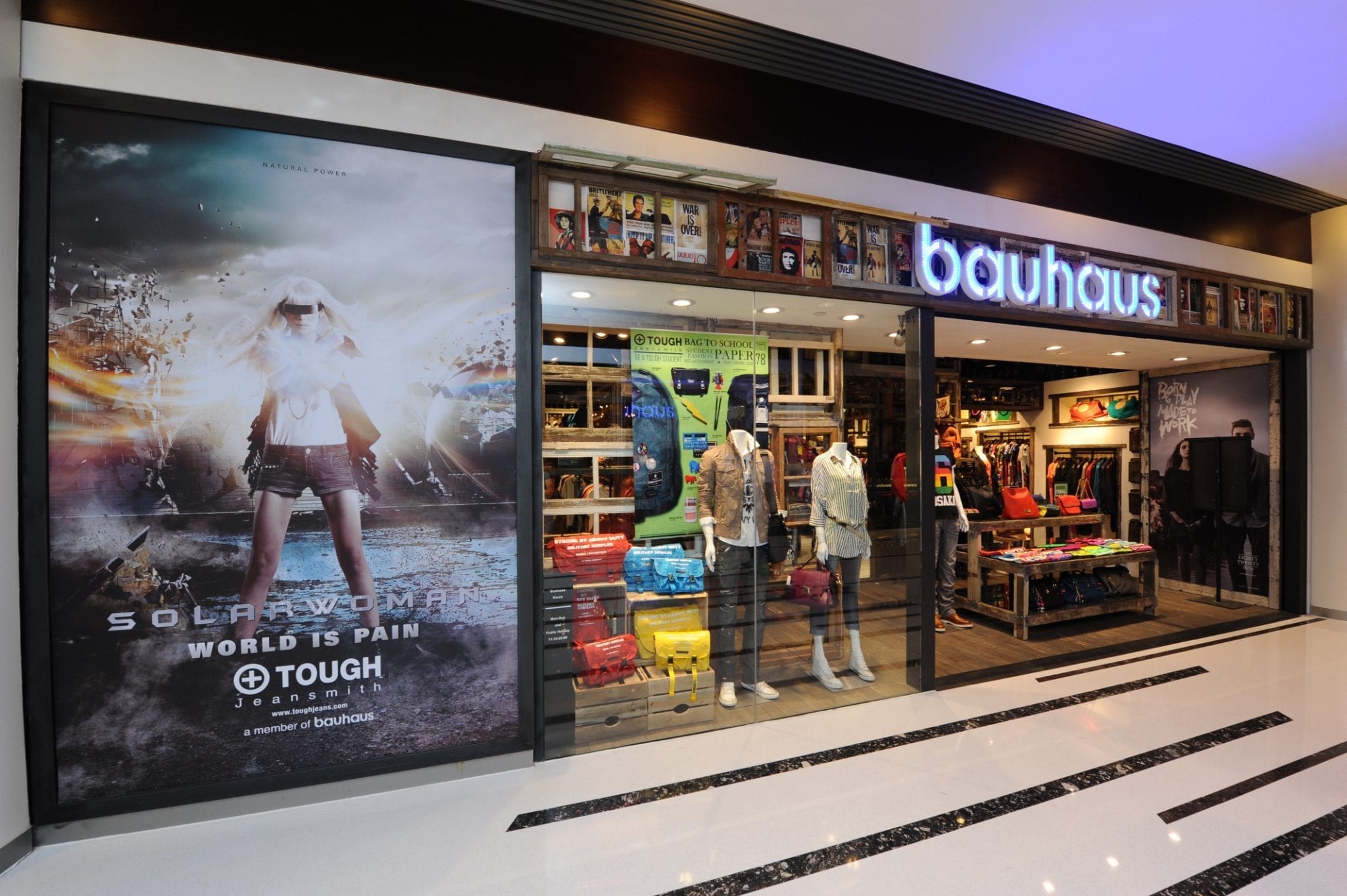
    Local apparel retailer Bauhaus International (0483) has revealed an intention to close all its retail stores outside Hong Kong and Macau by the end of March.

    The group’s loss outside Hong Kong and Macau expanded more than 13 times to HK$78.4 million in 2019 over 2018 before it narrowed to HK$68.6 million this year.

    Most of the Bauhau offline retailing operations beyond Hong Kong and Macau are in the mainland and Taiwan.

    It suffered an annual loss of HK$142.8 million this year compared with a profit of HK$2.76 million in 2019.

    The company will negotiate with landlords of the 14 stores its intends to shut down, and the precise timing of each closure will depend on how the talks go.

    About 50 employees will be laid off as a result of the closing program.

    The retailer is still looking at the possibilities of accessing the non-Hong Kong and Macau markets through centrally-managed online operations run from its Hong Kong headquarters.

    Bauhaus says more realistic economies of scope will result from the closures, which are also seen to be in the best interests of the company and its shareholders.

  • China’s domestic luxury market almost doubled in 2020

    China’s domestic luxury market almost doubled in 2020

    Growth for the mainland Chinese luxury market is expected to climb by 48 percent to reach almost 346 billion yuan (around $52 billion) by the end of the year, according to Bain’s annual China luxury report released today in partnership with Tmall Luxury Division.

    This meteoric growth, driven in part by the repatriation of luxury spending and acceleration of e-commerce adoption as a result of Covid-19 and international travel restrictions, is forecasted to continue through 2025. It stands in stark contrast with the global luxury market, which the report estimates shrank by 23 percent this year due to store closures and low demand.

    To be sure, growth hasn’t occurred evenly. China’s north and northeast regions underperformed in contrast to the south, east and southwest; categories like leather goods and jewellery led the way, followed by ready-to-wear clothing and shoes, beauty and timepieces. It’s also worth noting that repatriation has only managed to offset around half of the heavy losses luxury brands are feeling in Europe and elsewhere; tourist consumption, which has fallen by an estimated 70 percent is far from fully recovered.

    Bain predicts that where global conditions are unlikely to fully recover in the next year or even two, Chinese shoppers will remain cautious about travel for at least a year, making domestic destinations like Hainan key touchpoints for brands. It also noted that shoppers from or younger than the Post-’80s generation continue to drive growth and that online shopping habits adopted mid and post-pandemic are here to stay.

  • Luxury Gift-Giving Ideas in a Crisis Year

    Luxury Gift-Giving Ideas in a Crisis Year

    Gift-giving looks different in a pandemic year, but consumers aren’t eschewing luxuries entirely.

    If you like things you can hold in your hand but still want to get in on the crypto craze, Bitcoin Suisse’s certificates are worth a look: beautifully-crafted paper wallets hold bitcoin, ether, a Swiss franc-backed stablecoin, and others.

    The certificate’s design leans heavily on Bitcoin Suisse’s home: Switzerland’s spiritual mother, Helvetia, adorned by Alprose, features on the front while the reverse depicts crypto valley encircled by 23 stars representing the country’s cantons. The certificates bear a hologram designed to hold security features including nano and micro text, security guilloches, and spectral line patterns.

    Calling Enzo Enea a landscaper is like calling Dom Perignon a drink: the Swiss-based designer has designed greenscapes for the Queen of Bahrain and Prince Charles and worked with Zaha Hadid. He’s just as sought-after in his native Switzerland.

    Enea’s business is booming during the pandemic, as homebound bankers look to upgrade their surroundings. A fixture in design bibles like Monocle and Wallpaper, Enea recently-opened concept store overlooking Zurich’s Sihl river – a stone’s throw from Paradeplatz.

    Outside In embodies the philosophy of meshing the outdoors with interior quarters: the two-story shop includes statement pieces like Oscar Niemeyer’s Rio chaise longue or BassamFellows’ iconic Swiss tractor stool to Serax stoneware-cement tableware.

  • Gucci revives classics to regain edge in crimping luxury market

    Gucci revives classics to regain edge in crimping luxury market

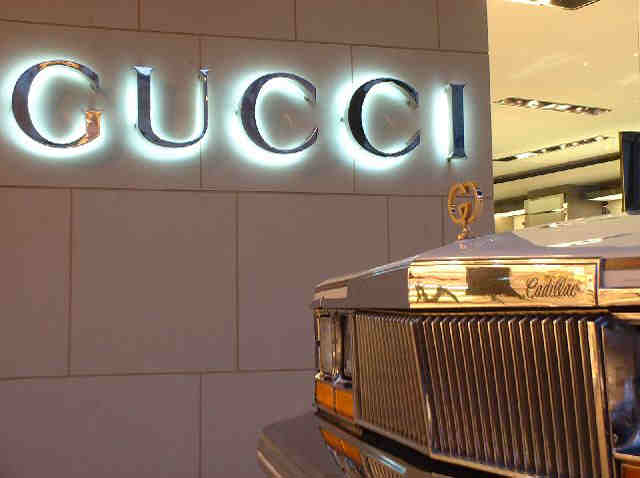
    Gucci is revisiting 1960s handbags and other classics in its latest collection, mixing them with up-to-the-minute sneakers and logoed skateboards, as it seeks to reach a wider audience and reverse a fall in sales after years of stellar growth.

    With traditional fashion shows cancelled because of the coronavirus pandemic, designer Alessandro Michele teamed up with US director Gus Van Sant to shoot a seven-part miniseries to show off his largely season-less, gender-neutral creations.

    Gucci is showing the videos as a virtual fashion film festival, with a new instalment released daily over the course of this week.

    The films, which have a dream-like, retro quality with vintage cars and juke-boxes, follow a woman, played by Italian actress Silvia Calderoni, as she goes about her daily routine in Rome.

    They feature cameo appearances by celebrities close to the fashion house such as singers Billie Eilish and Harry Styles – all wearing Gucci creations, including re-editions of Michele’s designs from his first 2015 collection.

    The former One Direction singer has also created a buzz in the fashion world by appearing on the cover of a December edition of Vogue, clad in a Gucci ball gown.

    Watershed moment

    Behind the scenes, luxury industry watchers say this is a watershed moment for Gucci, the business that drives the bulk of revenue and profits at parent Kering, but which has been losing steam over the past year.

    After a nearly fourfold increase in earnings since Michele took the creative helm, Gucci’s revenues have slowed down, lagging rivals like LVMH’s Louis Vuitton and Hermes. Gucci was the only fashion brand in Kering’s stable to suffer a sales decline in the third quarter.

    Much of the brand’s success up until recently relied on well-heeled, young Chinese shoppers travelling to Europe’s fashion capitals and snapping up Michele’s quirky, flamboyant designs.

    But with international tourism almost frozen due to the pandemic, Gucci can no longer rely on foreign visitors coming to Europe’s shopping streets to boost sales.

    Consultancy Bain, which produces closely-followed forecasts for the luxury industry, said on Wednesday the share of high-end goods purchases by local clients is expected to rise to 80-85 per cent of the total this year from 60 per cent in 2019. Local buyers are still set to account for 65-70 per cent of luxury shopping in 2025.

    Gucci is rejigging its marketing and product line-up to refocus the label and boost its appeal among local and older shoppers in Europe and the United States. The fashion house has, for example, produced “re-edited” versions of its classic handbags such as the 1800-euro Jackie 1961.

    People born from 1981 onwards — Millennials and Generation Z buyers — now make up almost 60 per cent of luxury purchases, Bain said, but brands cannot afford to neglect the remaining 40 per cent.

    That is why on top of tweaking their ranges to include less trend-driven items, most luxury labels are directing their customer service to establish close contact with clients who are not able to go to the stores themselves.

    Gucci is still doing well on many fronts, including an operating margin of 30 per cent in the first half of 2020, down from a record high of 40.6 per cent a year earlier but still far exceeding that of many competitors.

    But analysts say there are some signs of fatigue. Luca Solca of Bernstein said Gucci’s social media traction, while still high, is diminishing. It also seems to have more trouble selling excess inventory at full price.

    “There is no red flag at Gucci, but we see an opportunity to act now in order to avoid bigger issues down the road,” said Solca in a note.

  • Hermes Japan opens a new store in Osaka

    Hermes Japan opens a new store in Osaka

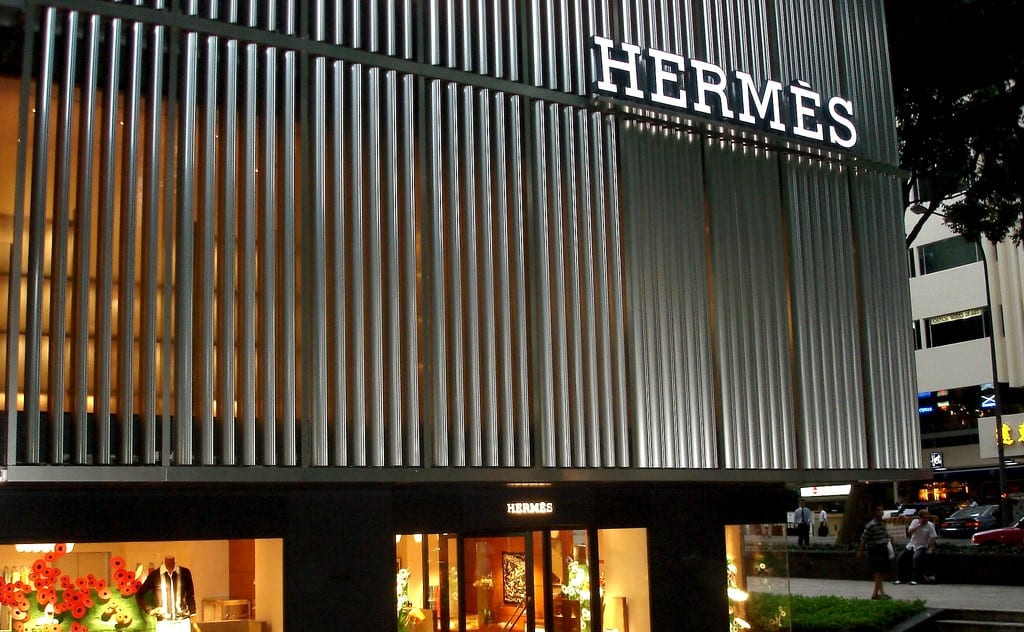
    Luxury fashion house Hermes has opened a new store in Osaka, its fourth store in the city. Located at Parco shopping center, the new Hermes store spans two stories and occupies a 515sqm space.

    Designed by the Parisian architecture agency RDAI, the store facade features floor-to-ceiling undulating glass windows, creating a “water-like effect” on both floors. Meanwhile, the store interior is decorated with ropes hanging from the ceiling, showcasing traditional Japanese craftsmanship with the Kumihimo braiding technique.

    Hermes’ silk collections, including the new double-sized scarves, are displayed at the store’s center while ready-to-wear collections are presented at both sides of the store. Far end of the store is an “intimate salon”, featuring women’s accessories, including shoes, jewelry, and watches.

    The new Hermes Osaka store features a bar and a made-to-measure service on the upper floor.

    “Echoing the annual theme for 2020, Innovation in the Making, this new retail space mirrors Hermes’ tribute to the human hand and to the ingenuity of its artisans,” the company said in a statement.

  • Amazon set to launch luxury stores

    Amazon set to launch luxury stores

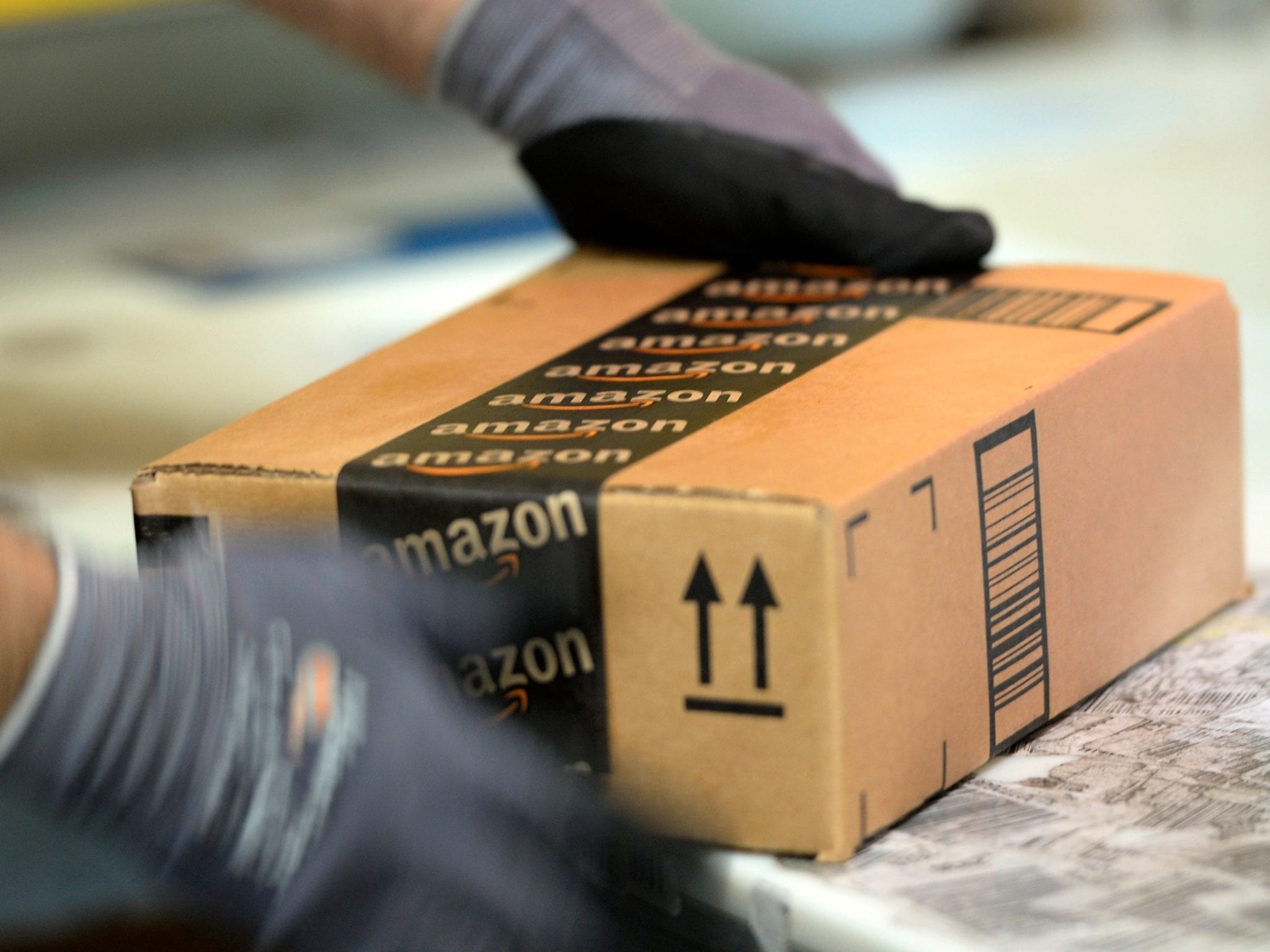
    Amazon has launched an invitation-only luxury fashion and beauty brand portal called Luxury Stores, with Oscar de la Renta as its first partner.

    The company said more brands will launch at Luxury Stores in the coming weeks and seasons. For now, the platform is available only to US Prime members.

    Accessible via the Amazon app, the store features interactive technology allowing customers to have a 360-degree view of products. Featuring a “store-in-store” concept, Luxury Stores allows brands to set their own pricing, selection, inventory, and content.

    “We are always listening to and learning from our customers, and we are inspired by feedback from Prime members who want the ability to shop their favorite luxury brands in Amazon’s store,” said Christine Beauchamp, president of Amazon Fashion.

    “It’s still Day One, and we look forward to growing Luxury Stores, innovating on behalf of our customers, and opening a new door for designers all over the world to access existing and new luxury customers.”

    As the first brand to open a store in Luxury Stores, American fashion house Oscar de la Renta offers a range of ready-to-wear, accessories, and jewelry, including its Fall/Winter 2020  Collection. The brand and Amazon have also launched a video starring Cara Delevingne to promote the campaign.

    “We admire Amazon’s customer-centric focus and look forward to telling our brand’s story in compelling and engaging ways to even more customers through the Luxury Stores experience,” said Alex Bolen, CEO of Oscar de la Renta.

  • LVMH whitdrawing Tiffany deal

    LVMH whitdrawing Tiffany deal

    French luxury-goods group LVMH has dropped its plan to take over Tiffany & Co, prompting the  New York jeweler to announce it will file a lawsuit to enforce the deal.

    The US$16.2 billion takeovers was agreed to before the advent of the Covid-19 pandemic and the jeweler’s share price had dropped well below the price LVMH had agreed to pay.

    However, LVMH’s board is using geopolitical and taxation factors to defend its position with the board issuing a brief statement late Wednesday Asian time after a board meeting confirming it would “not be able to complete the acquisition of Tiffany & Co”.

    The statement referred to a letter from the French European and Foreign Affairs Minister which directed LVMH to “differ” (sic) – thought to mean defer – the acquisition until after January 6 next year in “reaction to the threat of taxes on French products by the US”.

    Tiffany & Co had earlier requested LVMH to extend the closing date for the deal from the current expiry date of November 24 to December 31.

    LVMH’s board, having taken legal advice from advisors to its teams, said it resolved to comply with the merger agreement signed by the two companies in November last year, which stipulated the November 2020 closing date.

    “As it stands, the Group LVMH will therefore not be able to complete the acquisition of Tiffany & Co.”

    Tiffany & Co meanwhile, is alleging that LVMH has deliberately stalled the takeover to force a renegotiation of the price.

    The company will file a lawsuit with the Delaware Court of Chancery Wednesday US time seeking to force LVMH to close the transaction by the November deadline.

    “Tiffany alleges that LVMH has delayed the EU regulatory process to avoid closing before a mandated deadline, and threatened to walk away from the takeover unless the price tag is reduced,” the FT reported, citing “people briefed about the matter”.

    The Tiffany & Co sale has been the subject of considerable ongoing speculation since the impact of Covid-19 on luxury retailing and international travel.

    At one point, analysts were speculating that LVMH might begin acquiring shares on the open market at a price lower than the company had agreed to pay under the merger agreement. However, after a board meeting in June, LVMH issued a statement reiterating it would not buy shares on the market and was sticking to the deal.

    Reuters reported back then, however, that LVMH CEO Bernard Arnault was exploring ways to reopen negotiations in an attempt to reduce the price.

    “While Arnault now has concerns about overpaying for Tiffany, he still believes in the deal’s strategic rationale, according to the sources,” reported Reuters. “Tiffany will give LVMH a bigger share of the lucrative US market and expand its offerings in jewelry, the fastest-growing sector in the luxury goods industry.”

  • Prada opens a new store in Tokyo’s Shibuya district

    Prada opens a new store in Tokyo’s Shibuya district

    Italian luxury fashion house Prada has opened a new boutique in Tokyo’s Shibuya district, featuring the unique evolution of its green-themed interior design.

    Located at the Miyashita Park shopping mall, the store is designed by OMA studio, founded by Rem Koolhaas. With a floor area of about 300sqm, it displays Prada’s full range of clothing, bags, accessories, and footwear for men and women in unisex and thematic versions.

    The store also offers cotton poplin t-shirts featuring original prints exclusive for the store’s opening, including a Prada oval logo reinterpreted by OMA bearing the Prada Miyashita Park store name, and a travel tag print with TYO (Tokyo) symbols.

    The external facade features floor-to-ceiling glass, which allows a view into “a dreamlike, virtual ‘container’ against a dynamic backdrop.”

    The store interior has a black-and-white chequered floor and green walls designed in backlit “sponge” – the ‘air and matter’ hybrid material designed by OMA. A digital wall, which can be assembled and disassembled, is installed to draw attention.

    The brand uses aluminum for all displays and racks to “enhance the minimal aesthetics and contemporary feel of the interiors”.

    Coinciding with the store’s launch, Prada has announced a digital project called “My Shibuya View”, featuring personal films introducing creators and musicians’ favorite spots in Shibuya. Project participants include singer and songwriter Taichi Mukai, model Ruka and actor, model, and musician Yoshi.

  • Dunhill opens new outlet in Macau

    Dunhill opens new outlet in Macau

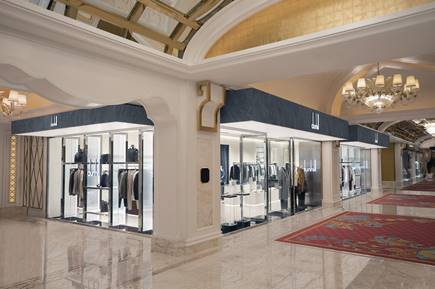
    British luxury menswear label Dunhill has opened a new store at Wynn Palace in Macau.

    The Dunhill Wynn Palace opening is part of the brand’s expansion strategy in Asia, according to the company.

    The store features a contemporary yet elegant design with modern elements such as its signature marble, leather, and metal details.

    Inspired by the Dunhill’s 1950s South Rodeo Drive store, the Wynn Palace store’s facade features the brand’s logo under a grey marble background and floor-to-ceiling glass walls.

    The store also houses a walnut burl cabinet and table inspired by the original furniture from London’s Duke Street and Paris’ Rue de la Paix stores.

    The Dunhill store in Macau offers a selection of luxury menswear by creative director Mark Weston, including ready-to-wear, leather goods, and accessories.