Retail News CRM

Tag: Mobile

  • Ksubaka’s PlaySpots Deliver Friso Gold Engagement Campaign

    Ksubaka’s PlaySpots Deliver Friso Gold Engagement Campaign

    Ksubaka today announced that it has successfully delivered an interactive in-store engagement campaign in CRV, WuMart and MerryMart retail stores in China for Friso Gold.

    The objectives:

    The campaign objectives were to attract in-store shoppers to a Friso Gold interactive experience and communicate to mums that Friso helps prevent heat and constipation in babies because the Friso Gold molecules are smaller and easier to digest.

    Equally as important, was to collect data through an onscreen shopper survey to verify that the Friso Gold Interactive Experience was effectively reaching the target audience and educate new potential customers about the product benefits.

    The campaign experience:

    Ksubaka designed a Friso Gold interactive experience, which was provisioned over-the-air to 231 playSpots across 37 retail stores (comprising a mix of CRV, WuMart and MerryMart) within the Ksubaka media network. The gameplay involved catching as many small Friso molecules as possible within 30 seconds, while avoiding the larger molecules falling from a competitor’s product. Shoppers caught the molecules by moving a baby back and forth on bottom of the screen. To emphasise the difference between small and large molecules, when the baby caught the Friso molecules they smiled and raised their hands in happiness and when they caught the large molecules the frowned and cried. 

    At end of the gameplay, key product messages were reiterated along with a pack shot and the shopper was offered a 1 for 1 discount by scanning a WeChat QR Code to get a coupon. The short survey was then displayed on-screen asking shoppers for a little information on their preferences.   

    The results:

    Working to a set of agreed KPIs, the Ksubaka Friso Gold 31 day campaign delivered:

    • Campaign Exposures – 4.4 million +193% on KPI
    • Shopper Impressions – 6.6 million +200% on KPI
    • Mojo engagement – 82K +64% on KPI (Mojo is a completed shopper brand engagement that ends at the reward screen)
    • Total number of surveys completed 1.3k

    “The Friso Gold campaign is an excellent example of how Ksubaka is able to drive mass consumer engagement at the point of purchase while, at the same time, giving live and meaningful insight for brands,” said Julian Corbett, CEO and founder, Ksubaka.


  • Thailand’s big three cellcos oppose tariff caps

    Thailand’s big three cellcos oppose tariff caps

    Thailand’s three largest mobile operators – AIS, Dtac and True Move – have united to oppose current regulations capping tariffs for 3G and 4G services.

    The operators brought up their opposition a group discussion with regulator NBTC on Monday.

    Revising the regulations would encourage greater competition and stimulate the further development of mobile networks and services, the operators claimed.

    They have argued that existing caps have diminished the development of service packages, distorted price mechanisms and impeded the operation of an open and competitive market.

    Currently the NBTC caps the maximum 3G tariff at 0.82 baht ($0.02) per minute for voice service, 1.33 baht per SMS, 3.32 baht for MMS and 0.28 baht for data services. The equivalent 4G limits are 0.69 baht, 1.15 baht, 3.11 baht and 0.26 baht respectively.

    A representative for Dtac stated that other mobile markets with the same level of development as Thailand do not impose tariff caps, and noted that tariffs in Thailand are among the lowest in the ASEAN region.

  • Hong Kong’s mobile penetration grows to 95%

    Hong Kong’s mobile penetration grows to 95%

    Hong Kong’s mobile subscriber base has reached saturation point, with a population penetration of 95%, according to mobile industry body the GSM Association (GSMA).

    The company’s new report into APAC’s mobile economy, published at Mobile World Congress Shanghai this week, shows that there are around 6.9 million mobile subscribers in Hong Kong.

    While the penetration rate has grown from 90% as calculated in last year’s study, the report notes that there is little room for growth.

    But in terms of the percentage of subscribers to 4G services it is another story, with only around 40% of Hong Kong subscribers having made the switch to the faster technology as of 2015. The GSMA expects this to increase to 71% by 2020.

    The report finds that as of 2015 62% of the APAC population was subscribed to a mobile service. The GSMA predicts that the region will add another 600 million new subscribers by 2020, increasing the penetration rate to nearly 75%.

    Mobile accounted for an estimated 5.4% of APAC’s GDP last year, equivalent to $1.3 trillion in economic value.

    “More than half the world’s mobile subscribers are based in Asia Pacific and the region will be the main engine of global subscriber growth for the remainder of the decade,” said Mats Granryd, GSMA Director General.

    “Rising subscriber penetration, alongside accelerating migration to faster networks and more advanced services, continues to fuel innovation and digitisation across both advanced and emerging markets in this highly diverse region. Mobile is helping Asia build digital societies that allow its citizens to access services, anytime and anywhere – and these mobile-powered digital societies are becoming major drivers of social and economic development.”

  • Nepal preparing to allocate 4G spectrum

    Nepal preparing to allocate 4G spectrum

    Nepal’s Ministry of Information and Communications is reportedly planning to amend spectrum usage policy to allow the nation’s operators to commercially launch 4G services.

    The ministry has decided to adopt a technology neutral policy to allow operators to launch 4G using the 1800-MHz spectrum band.

    The ministry had asked previously asked telecoms regulator NTA to devise a 4G action plan within a week that would involve allocating 4G spectrum by the end of the fiscal year in mid-July, the report states.

    In response the NTA appointed a consultant to determine spectrum prices, and expects to have the action plan and pricing policy ready to present by tomorrow.

    The NTA has repeatedly denied requests from operators including Nepal Telecom and Ncell to allow them to launch 4G services due to confusion over spectrum usage policy. Amending the legislation would clear up this confusion and pave the way for rollouts.

    The ministry has also asked the authority to submit a draft of a new M&A policy for telecom operators and prepare a detailed plan for the proceeds of the Rural Telecom Development Fund.

  • Visa, Amex to launch Apple Pay in HK

    Visa, Amex to launch Apple Pay in HK

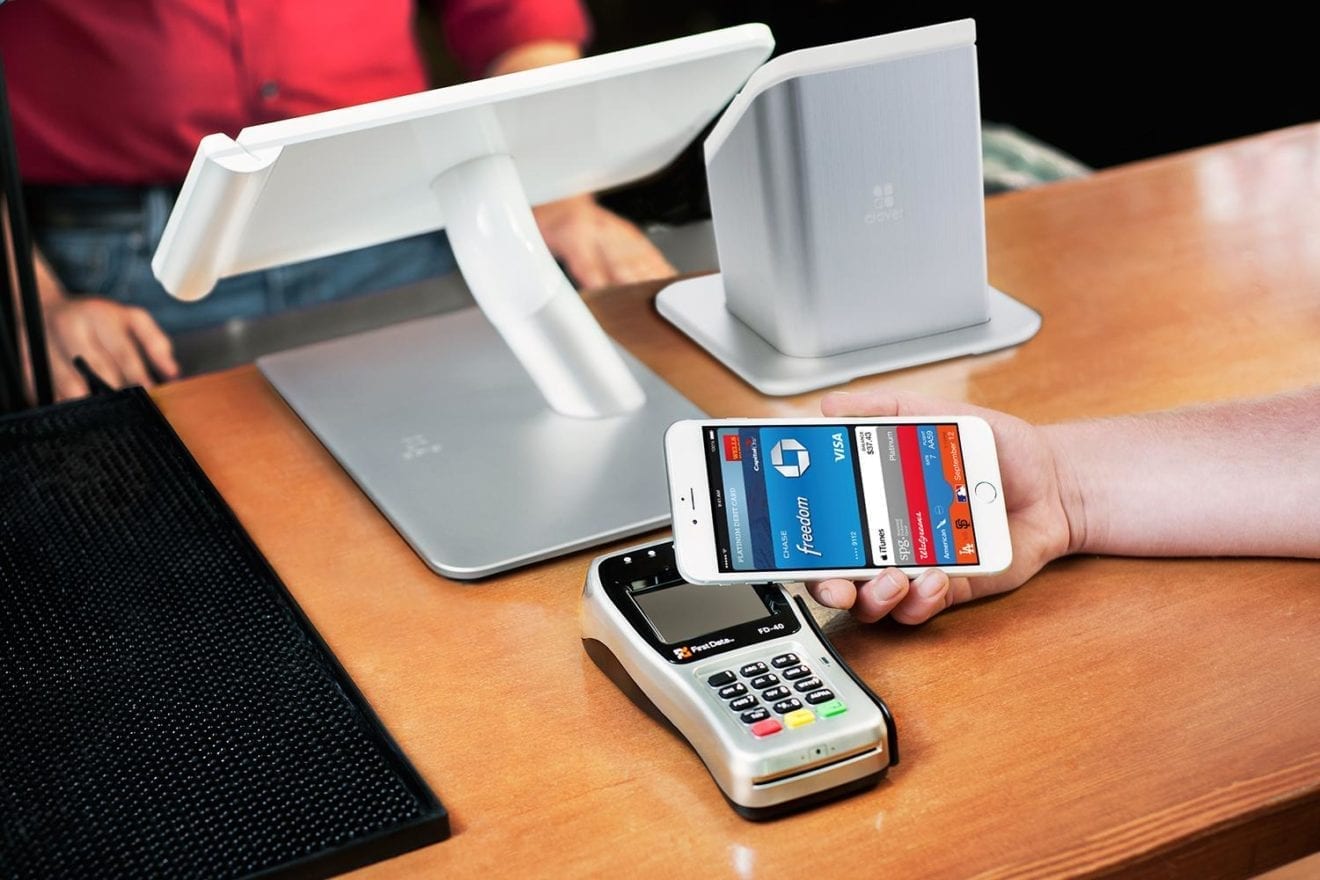
    Visa and American Express have both revealed plans to support mobile payment service Apple Pay in Hong Kong starting this summer.

    Customers in the region with American Express and Visa cards will be able to use Apple Pay to pay for purchases where contactless payments from the credit or charge cards are accepted.

    Apple Pay supports the iPhone 6s, iPhone 6s Plus, iPhone 6, iPhone 6 Plus, iPhone SE and Apple Watch for in-store payments, and these devices plus the iPad Air 2, iPad mini 3, iPad mini 4 and iPad Pro for payments from within apps.

    The platform uses the Visa Token Service to ensure card numbers are not stored on the device or on Apple servers.

    Instead a unique device account number is assigned, encrypted and securely stored in the Secure element on a user’s device device. Each transaction is authorized with a one-time unique dynamic security code. Customers can use Apple’s TouchID fingerprint authentication system to approve payments.

    “Visa is proud to support issuers in Hong Kong who want to launch Apple Pay to bring their customers a more secure and convenient way to pay. In Hong Kong contactless payments have become a necessity for everyday life,” commented Caroline Ada, country manager for Visa Hong Kong and Macau.

    “American Express was the first card issuer to bring Apple Pay to Card Members in the Asia Pacific region. Our customers love the ease and security of Apple Pay in their daily spending, dining and leisure activities,” added American Express VP and general manager for card services for Hong Kong and Taiwan Susanna Lee.

  • Telstra to address rural 4G black spots

    Telstra to address rural 4G black spots

    Australia’s Telstra has revealed plans to roll out 135 small cell 4G base stations in remote communities across the nation as part of the government’s Mobile Black Spot program.

    The operator is also making the investment as part its efforts to expand its 4G footprint to 99% of the Australian population by June next year.

    Telstra has made an A$165 million ($123.1 million) commitment to improve coverage in regional Australia, and will already expand 3G and 4G coverage to 429 other remote communities as part of round one of the black spot program. But the latest small cell roll out will be solely funded by Telstra.

    “When we made our bid under Round One, our core objective was to maximise new coverage to regional communities, which is why we made this additional pledge to further expand mobile data services at our own expense,” Telstra group managing director for networks Mike Wright said.

    “We worked closely with the Federal Government to identify the communities who were eligible for this small cell technology and we are proud to be part of this important initiative which will connect so many more regional communities.”

    While the small cell technology can currently only provide data services, Telstra said it is working on implementing VoLTE technology over the base stations.

  • ASDP Launches Mobile E-Ticketing

    ASDP Launches Mobile E-Ticketing

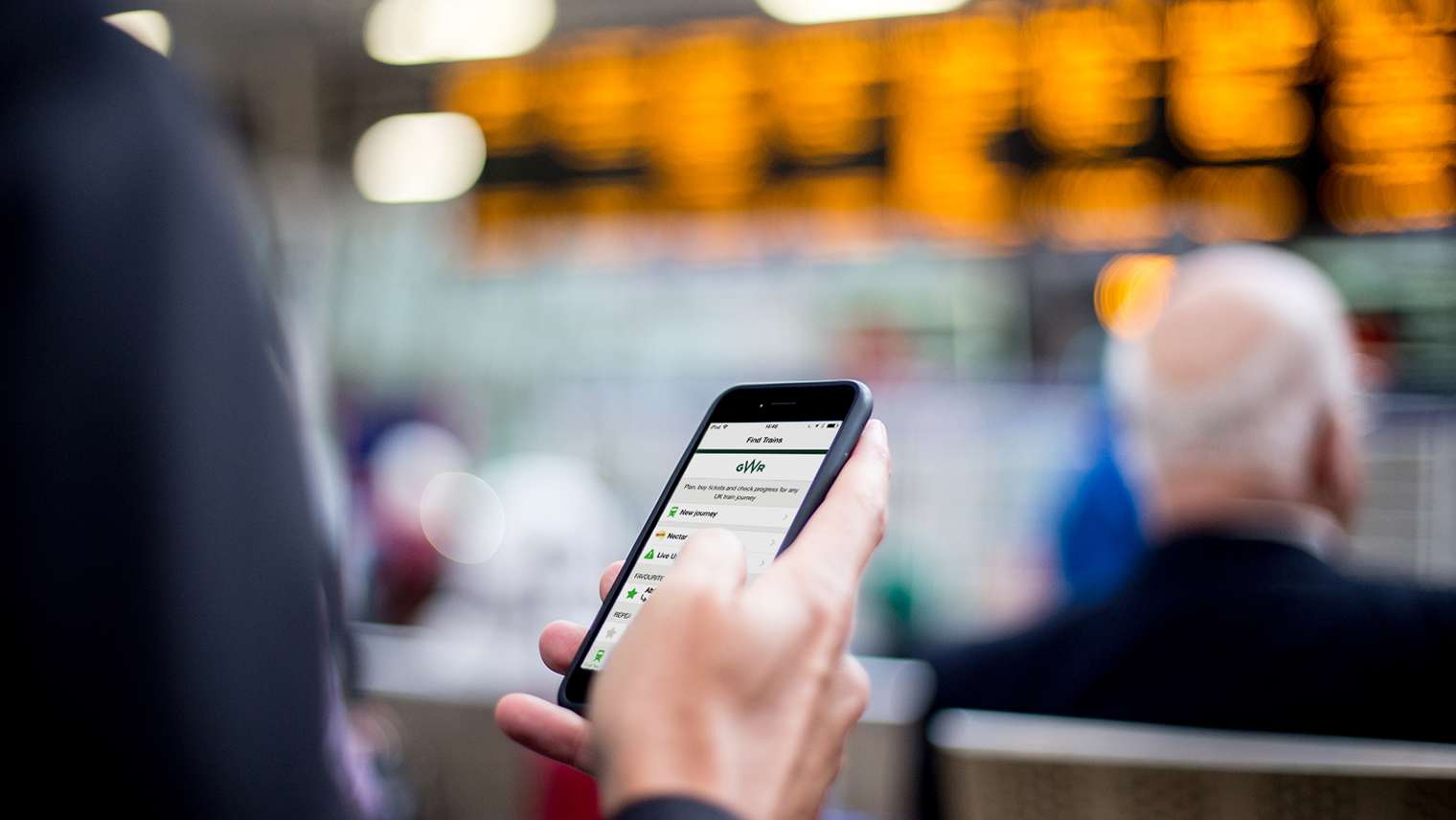
    State-owned ferry operator PT ASDP Indonesia Ferry has launched a mobile e-ticketing service to facilitate passengers when buying ferry tickets during Eid holiday.

    “We launch this mobile e-ticketing service to anticipate the surge in the number of vehicles heading to Merak seaport,” said PT. ASDP President Director Danang S on Friday (17/6).

    He added that the e-ticketing service is applied at di km 43 and km 68 of the rest area on Tangerang-Merak toll road.

    The government also provides the same service during the returning season after Ied Day at Hotel 56 Kalianda, Lampung.

    Danang went on to say that the mobile e-ticketing services gives a one-stop service for the passengers by stopping at rest areas.

    He also predicted that the number of passengers crossing through Merak seaport this year would increase by 8 percent compared to that of the previous year.

  • Nokia identifies top five reasons for mobile churn

    Nokia identifies top five reasons for mobile churn

    Mobile subscribers worldwide are placing more importance on customer service and value as network quality improves, research from Nokia indicates.

    The top five factors motivating the decision to select or leave operators are cost and billing, network quality, customer care and service and device portfolios, a global survey shows.

    Customer care has grown to be about on par with network quality as a deciding factor for whether to stay with a mobile operator, the results suggest.

    Respondents indicated that customer care has 60% more impact on their loyalty than it did just two years ago.

    This is partly also due to the fact that networks are improving in mature markets. Customers in these regions reported a 13 percentage point improvement in their satisfaction with internet connection quality compared to 2014. But in emerging markets there was a slight decline.

    More than two thirds of respondents indicated they would leave an operator over network quality issues, with the speed and consistency of internet connections mattering more than either voice quality or network coverage.

    Respondents using 4G were 38% more likely to be satisfied with their data speed and 24% more likely to be satisfied with data consistency.

    But the report also suggests that 4G adoption remains far from universal. In the past year, only 38% of the respondents signed up for 4G, and almost a third do not know if their operators offer the technology.

    Price remains the most important factor when it comes to customer acquisition and retention, the survey shows.

    But mobile customers – particularly in mature markets – will often choose easy-to-understand terms and conditions over price. Nokia said this suggests that customers want more transparency when it comes to contract terms, rate structures and data fees.

    “We can see the marketing battles to acquire mobile subscribers are fierce. What we don’t see as well is the work operators do every day to retain customers. Our study shows how important that work is – and also how challenging it is as customers, attached to their phones, demand higher levels of service,” Nokia applications and analytics president Bhaskar Gorti said.

  • 1 in 3 POS terminals to be mobile by 2021

    1 in 3 POS terminals to be mobile by 2021

    Smartphone and tablet-based mobile point-of sale (POS) terminals will handle 40% of all retail transaction value by 2021, up from an expected 12% in 2016, a new study from Juniper Research showed.

    The research firm forecasts that the use of mPOS systems will account for more than 1 in 3 POS terminals by 2021, driven by larger retailers adopting mPOS as part of an array of point-of-sale options.

    The new research, “Worldwide mPOS Markets: Devices, Technologies & Growth Opportunities 2016-2021,” found that mPOS will enable retailers to ‘queue bust’ in stores, reducing lines and developing more targeted and situational campaigns as well as offering automatic ordering systems in restaurants.

    “We are seeing several vendors tailor their software to the needs of specific industries, integrating mPOS capabilities as part of broader cloud-based business software,” commented research author James Moar.

    “These additional services can then make use of the sales data directly to manage inventory, monitor staff performance and other functions, which can all add more value to a business and justify a higher margin.”

    The research has also found that mPOS is enabling smaller merchants in emerging markets, particularly across India, Southeast Asia and Latin America, to accept card payments and grow their businesses. Much of the growth in these regions being supplied mostly by local vendors, such as Banamex, Digio, PagSeguroand

  • Alfamart to launch click and collect

    Alfamart to launch click and collect

    Alfamart is going to utilize its 10,000 store network as pickup points for its new online shopping platform Alfacart. Alfacart, the new e-commerce platform will carry one million products from sellers, and is expected to generation IDR1tn (US$70m) transaction. The existing shopping website Alfaonline will be replaced. The advantage of Alfacart over the other e-commerce players lies with its large store network of more than 10,000 throughout Indonesia. The retailer is also expected to be opening another 1,200 stores this year.

    We understand there are some players in the market but the high cost of last mile is still a concern,” said Sumber Alfaria president Hans Prawira, “We have presence in the market very close to shoppers.”

    E-commerce is due to boom in Indonesia

    With the growth in investment and acceptance of internet and mobile shopping, Indonesia is seen as the next frontier after China and India in Asia. The government wants e-commerce to become the backbone of its growing digital economy and leading players like Alibaba are also accelerating their expansion into Indonesia.

    Even though logistics is still a challenge due to underdeveloped infrastructure and the sheer size of the country, it is only a matter of time before we see the boom of e-commerce.

  • KinerjaPay Enters Partnership With Bitcoin Indonesia

    KinerjaPay Enters Partnership With Bitcoin Indonesia

    Customers in Indonesia can now pay online with bitcoin as the country’s leading payment solutions provider KinerjaPay has added the digital currency as one of the payment options on its platform. KinerjaPay, in a recent press release, has announced its partnership with Bitcoin Indonesia to facilitate the Bitcoin option for its merchant partners.

    Apart from offering payment gateway solutions to online merchants, KinerjaPay also operates its own e-commerce portal where people can directly buy goods from the platform itself. By including Bitcoin payments, KinerjaPay has now become the first e-commerce platform in Indonesia to do so. Now customers can convert their bitcoin to Indonesian rupiah on the fly while making a transaction over the payment gateway to pay their bills, transfer money and purchase goods on the internet.

    KinerjaPay and the growth of e-payments in Indonesia

    KinerjaPay is currently one of the fastest growing digital payments platforms in Indonesia. In the past two months, the company has grown by over 300 percent as its user base has increased from around 12000 customers to 50,000. According to the company’s report, this has also led to an increase in the average number of transactions processed per day.

    With over 1500 transactions per day, compared to previous 300 transactions, the company can expect the numbers to grow further with the integration of bitcoin payments. Currently, there are not many online merchants who accept digital currency payments in Indonesia and now the partnership with Bitcoin Indonesia means that the company’s partner merchants will be able to accept bitcoin payments from their customers soon. This will open up a lot of options for bitcoin users in the country.

    In order to make bitcoin payments more popular, KinerjaPay has announced that it will be providing special offers to customers of Bitcoin Indonesia. With these special offers, the company intends to convert at least some of the 150,000 Bitcoin Indonesia customers into theirs as well. In a country where a majority of the population is hesitant to use online payment solutions due to concerns about credit/debit card fraud, KinerjaPay is working hard to build their trust by offering great deals and addressing their concerns. A currency like bitcoin where the user doesn’t have to share his/her bank account or card details will present an attractive option to the masses.

    As a part of its incentives galore, the company is also working on its own branded mining setup, where people can mine digital currency. While speaking about the new developments, the CEO and Chairman of KinerjaPay, Edwin Ng is quoted saying –

    “This partnership enables us to establish relationships with Bitcoin Indonesia’s membership, currently in excess of 150,000 accounts, which we expect will boost the volume of transactions on our platform going forward… We are also working to create a unique bitcoin mining element on our platform, something we believe will be very appealing to our users and will provide KinerjaPay with a real competitive advantage in the e-commerce sector.”

    KinerjaPay is constantly innovating to push the growth of online payments in Indonesia. Partnering with Bitcoin Indonesia is just one among the many which the company intends to follow in order to gain customer confidence and make them change their mind about online payments and digital currency. More developments in the sector can be expected soon.

  • KinerjaPay Establishes Wholly-Owned Subsidiary in Jakarta

    KinerjaPay Establishes Wholly-Owned Subsidiary in Jakarta

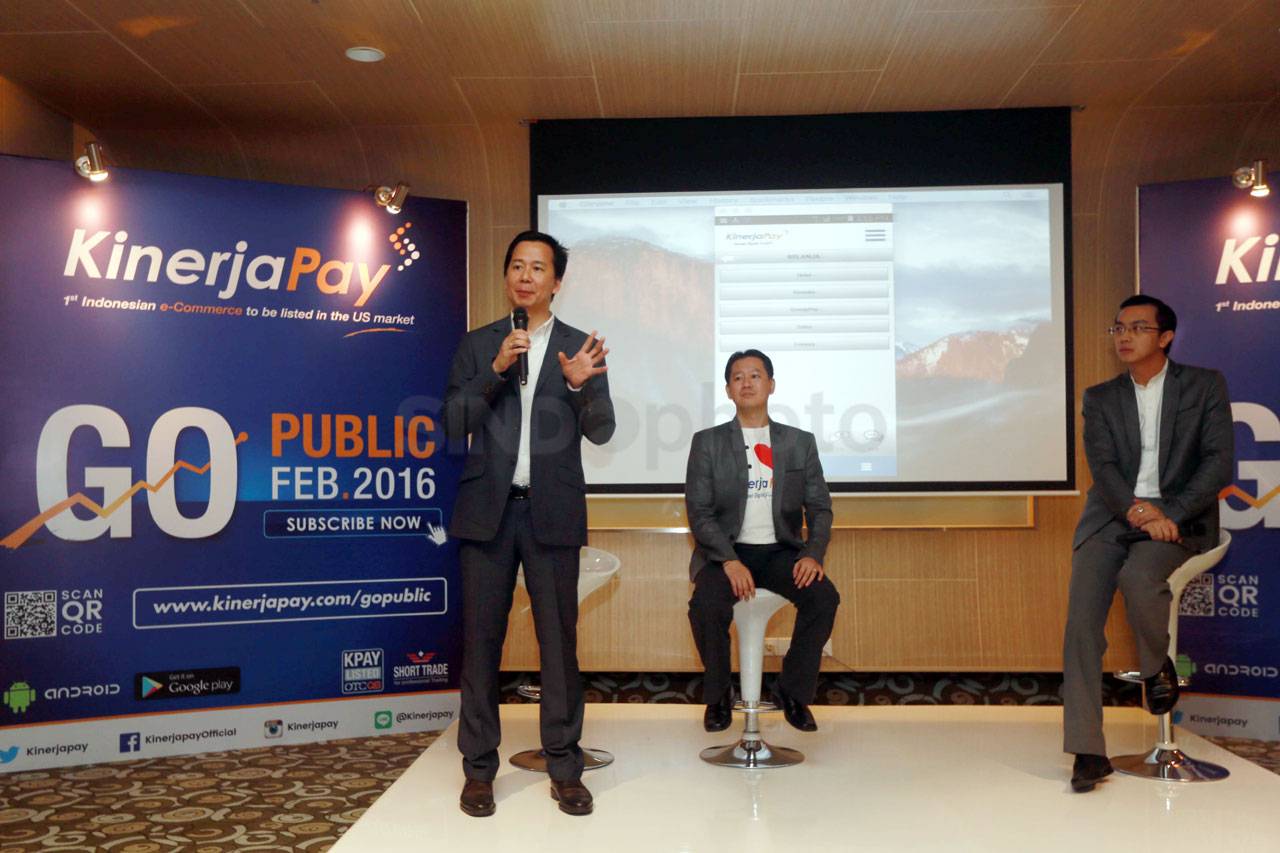
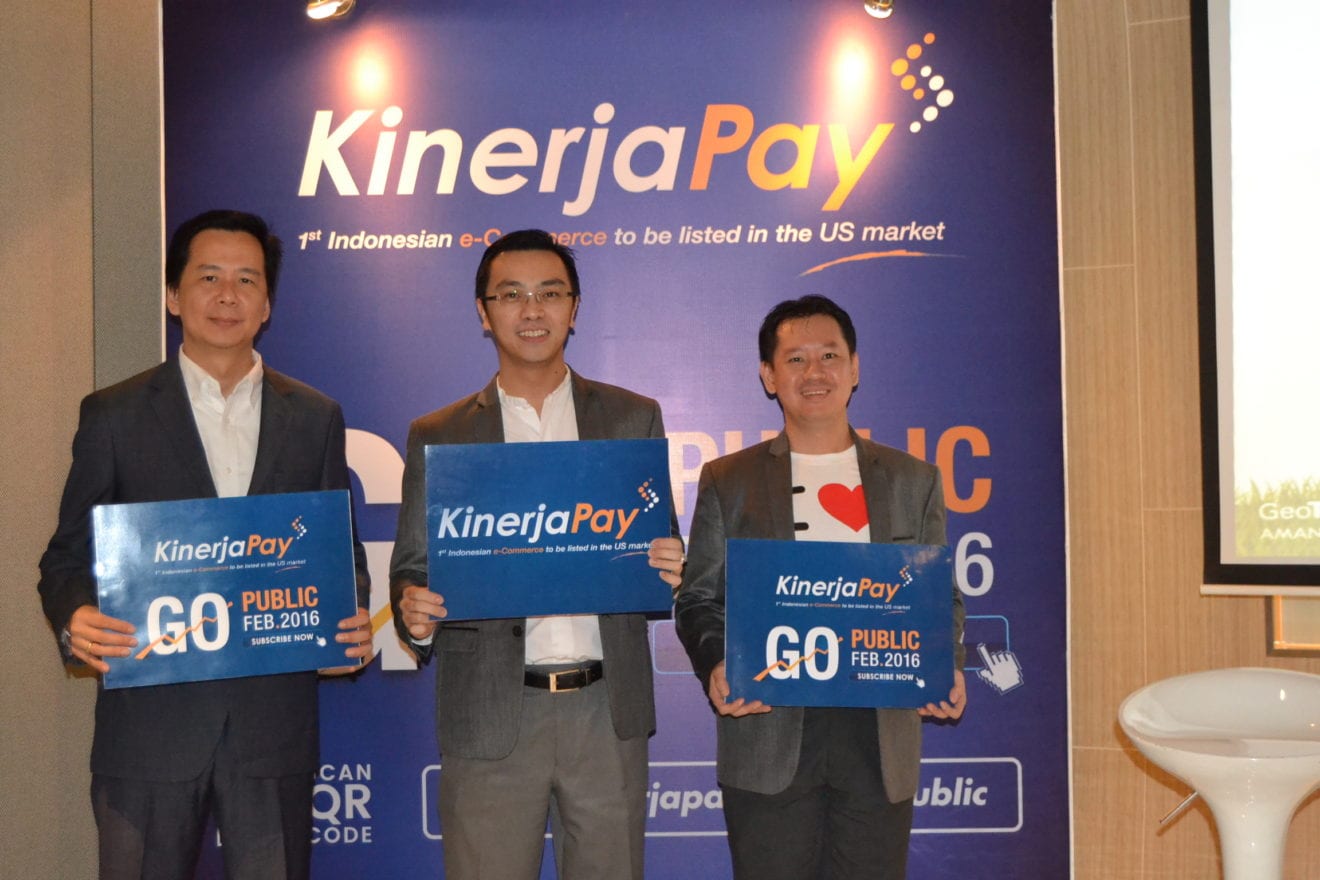
    KinerjaPay, today announced that it established its new wholly-owned subsidiary, PT Kinerja Pay Indonesia, with offices located in Jakarta city, Indonesia. The new Subsidiairy was organized under Indonesian Incorporation Law Article No.34, dated 14 April 2016, and Principal License from Indonesia Investment Coordinating Board (BKPM) No.909/1/IP/PMA/2016 dated 06 April 2016. The Company has also appointed Mr. Deny Rahardjo as Chief Executive Officer (CEO) of PT Kinerja Pay Indonesia.

    Mr. Edwin Ng , Chairman and CEO for KinerjaPay Corp. stated. “We are extremely excited that Mr. Rahardjo accepted his appointment as CEO of our new subsidiary, PT Kinerja Pay. With his extensive experience in Information Technology and Business Management, Mr. Deny Rahardjo is the right person to manage and expand Kinerja Pay’s business operations in Indonesia. With Deny Rahardjo at our helm, we plan to grow our business and become one of the largest mobile payment and eCommerce providers in Indonesia. Since 2015, we have registered more than 35,000 active users with total of 170,000 transactions to date. We fully believe that Mr. Rahardjo, formerly a Microsoft, Polycom, and Telstra Executive in Singapore, will truly revolutionarize eCommerce in Indonesia and enable Kinerja Pay to become the most highly used and popular online payment solution/platform within the next several years, as well as expand its business opportunities throughout the SE Asian marketplace.”

    Mr. Ng further stated that “we chose to establish our initial business operations in Indonesia due to several economic factors, including its population size (est. 260 million according to Worldometers), user demographics, which consists of younger generations, and its ever-growing eCommerce market, which is expected to reach USD $3.8 billion by 2019.”

    With the growing trend of online shopping, Kinerja Pay will offer its users with convenient shopping experience as well as secure payment option. The Company also expects to launch several other applications to complement its mobile eWallet business by entering into other eCommerce verticals such as travel industry, fashion, online games, time-saver application, and many more.

    Notice Regarding Forward-Looking Statements

    This press release may contain forward-looking statements, about KPAY’s expectations, beliefs or intentions regarding, among other things, its product development efforts, business, financial condition, results of operations, strategies or prospects. In addition, from time to time, KPAY or its representatives have made or may make forward-looking statements, orally or in writing. Forward-looking statements can be identified by the use of forward-looking words such as “believe,” “expect,” “intend,” “plan,” “may,” “should” or “anticipate” or their negatives or other variations of these words or other comparable words or by the fact that these statements do not relate strictly to historical or current matters. These forward-looking statements may be included in, but are not limited to, various filings made by KPAY with the U.S. Securities and Exchange Commission, press releases or oral statements made by or with the approval of one of KPAY’s authorized executive officers.

    Forward-looking statements relate to anticipated or expected events, activities, trends or results as of the date they are made. Because forward-looking statements relate to matters that have not yet occurred, these statements are inherently subject to risks and uncertainties that could cause KPAY’s actual results to differ materially from any future results expressed or implied by the forward-looking statements.

    Many factors could cause KPAY ‘s actual activities or results to differ materially from the activities and results anticipated in such forward-looking statements, including, but not limited to, the factors summarized in KPAY ‘s filings with the SEC. In addition, KPAY operates in an industry sector where securities values are highly volatile and may be influenced by economic and other factors beyond its control. KPAY does not undertake any obligation to publicly update these forward-looking statements, whether as a result of new information, future events or otherwise. Please see the risk factors associated with an investment in our securities which are included in our Annual Report on Form 10-K as filed with the U.S. Securities and Exchange Commission on February 11, 2016.

  • Vodafone’s M-Pesa surpasses 25m active users

    Vodafone’s M-Pesa surpasses 25m active users

    Vodafone has announced that its M-Pesa mobile money service now has more than 25 million active customers.

    Across the M-Pesa footprint in Africa, Asia and Europe, active M-Pesa customers increased by 27.1% to 25.4 million for the 12 months ending in March.

    Vodafone offers M-Pesa in 11 countries, having most recently launched in Albania and Ghana. The service debuted in 2007 in Kenya and Tanzania.

    M-Pesa is also available in India, South Africa, Afghanistan, Mozambique, Lethoso, the Democratic Republic of Congo and Romania.

    In India, Vodafone recently launched an M-Pesa smartphone app to allow customers to pay for goods on Ebay, as well as taxi fares and train tickets on India’s national railways.

    Over the past 12 months Vodafone has entered a series of deals with partners to allow for cross-border and cross-service transactions using M-Pesa.

    These include global agreements with the international money transfer hubs TransferTo and MFS, as well as an arrangement to allow direct-money transfer between M-Pesa and users of MTN Mobile Money in seven East African countries.

    “I am delighted and proud that M-Pesa has reached the 25 million active customers milestone,” Vodafone group director of mobile money Michael Joseph said.

    “M-Pesa continues to expand, evolving beyond traditional money transfers to encompass savings and loans, payment of salaries and benefits, settlement of utility bills and school fees and to enable vital health and agricultural solutions.”

  • Telstra commits $38m to address mobile outages

    Telstra commits $38m to address mobile outages

    Australia’s largest operator Telstra has committed A$50 million ($38.3 million) towards improving its network resiliency following a spate of outages, but coverage of its announcement was tainted by another minor outage.

    At an investor presentation in Melbourne, Telstra COO Kate McKenzie revealed that the operator has completed a review into the recent mobile network disruptions.

    The review identified a range of steps to reduce the likelihood of another outage, including increasing redundancy, adding more capacity to the core network, introducing new procedures for key network element restarts and improving resilience in international connectivity.

    In response, Telstra will spend around A$25 million installing real time traffic monitoring and customer impact monitoring equipment.

    The remaining A$25 million will be spent increasing the network’s capacity to handle a large number of re-registrations occurring simultaneously after a disruption.

    “What this means is that in the event of a disconnection, a much larger number of customers will be able to re-register at the same time so any disruption to services will be of a much shorter duration,” she said.

    The review was conducted by Telstra’s specialist teams, experts from Ericsson, Juniper and Cisco, and independent advisor Dave Williams from Tech Mahindra. It follows a series of mobile network outages in a short period with various causes.

    Unfortunately for Telstra, local media coverage of Telstra’s investment announcement has concentrated on the fact that hundreds of Telstra customers were reporting outages affecting mainly internet access just hours after the announcement was made.

    According to the company, the outage affected ADSL broadband in Queensland, lasted less that half an hour and was unconnected to the recent mobile network outages, but this did not stop subscribers from commenting about the irony on social media.

  • Mobiles sold in India must have panic button from 2017

    Mobiles sold in India must have panic button from 2017

    India’s telecoms ministry will mandate that all mobile phones sold in the country from 2017 must include a ‘panic button’ providing easy access to emergency services.

    As part of the new norms phones sold from 2018 will also have to include GPS navigation systems.

    While it is not yet clear what form the panic button system will take, it is likely to allow customers to call emergency services by pressing or holding a single button or pressing the power button several times in a row.

    The regulation also applies to feature phones, and will likely be achieved by holding down a button on the keypad.

    The move forms part of a wider campaign to help ensure the safety of women in the wake of growing reports of violence including rape and molestation. Women’s safety has been a political priority since the high-profile fatal gang rape of a 23 year old student on a Delhi bus in 2012.

    While India currently lacks a central number for calling emergency services, the government is aiming to introduce one this year.

    Manufacturers selling devices in India – including international smartphone giants like Apple and Samsung – will need to be compliant with the new regulations from next year.