Tag: money

  • MoneyGram Inks Deal with Arsema, Expands to Indonesia

    MoneyGram Inks Deal with Arsema, Expands to Indonesia

    MoneyGram recently announced that its Indonesian subsidiary PT MoneyGram Payments System has inked a long-term deal with Indonesian remittance company Arsema. Per the agreement, Arsema would channel MoneyGram’s money transfer services at all post offices of Indonesia. The services would start from Central Java and Bali region.

    MoneyGram strives to provide secure money transfer services to its customers and the deal with Arsema will further help the company in its efforts. This collaboration will also expand MoneyGram’s reach across Indonesia. Also, the aforesaid deal will facilitate operation to serve customers better with faster and more convenient offerings.

    The overall process has become much easier and can be completed in a few simple steps. Customers can now simply visit any MoneyGram agent location and start transferring and receiving funds after filling up and submitting a form and displaying a photo identification proof. The funds can be ready for collection is Depending on agent’s operating hours and regulatory requirements, the transactions can be made within 10 minutes or less.

    Apart from strengthening its presence in high-growth potential markets, MoneyGram has forayed into several unexplored and underdeveloped global markets. The company has also been expanding in markets that offer high growth potential. Per the World Bank report, remittances worth $9.6 billion flowed into Indonesia in Apr 2016. We expect the latest deal to help the company capitalize on the opportunity, which in turn, should add to its top line going forward.
  • Mobile money service launched in Bangladesh

    Mobile money service launched in Bangladesh

    Financial inclusion in Bangladesh just took a stride closer to reality with the launch of a new international remittance receiving service via a partnership between MasterCard, Western Union, bKash and BRAC Bank.

    The new service enables bKash’s registered customers to use their mobile phones to receive remittances from abroad directly into their bKash accounts.

    A subsidiary of BRAC Bank and a joint venture between BRAC Bank and Money in Motion LLC of USA, bkash serves the low income masses of Bangladesh to achieve broader financial inclusion by providing services that are convenient, affordable and reliable.

    With 70% of the population living in rural Bangladesh many of whom have no access to formal financial services, it is also the eight largest receiver of international remittances in the world. Under 15% of Bangladeshis are connected to the prescribed banking system whereas over 68% have mobile phones.

    World Bank South Asia Financial Inclusion Index 2014These phones are not only devices for talking, but can be used for more useful and difficult processing tasks. bKash was conceived primarily to use these mobile devices and the universal telecom networks to extend financial services in a protected manner to the under-served distant population of Bangladesh.

    By using the new service, bKash’s registered customers can receive remittances from every Western Union send market and channel directly into their bKash account, 24 hours a day.

    MasterCard’s Matthew Driver said: “This relationship is another step towards achieving our global commitment to make the financial system accessible to 500 million more people by 2020. Working with companies such as bKash and Western Union is crucial to taking advantage of the latest technology; digitizing money transfers and supporting financial inclusion efforts in the South Asia region and worldwide. The choice, flexibility and convenience of this new bKash service will help to expand financial inclusion to some of the most remote parts of this thriving nation.”

    Western Union’s Jean Claude Farah said international money transfers over mobile phones will accelerate financial inclusion in Bangladesh where there are currently more mobile phones than there are customers with bank accounts.

    In 2011, the Bangladesh Bank, the country’s central bank, issued the Mobile Financial Services (MFS) Guidelines and mandated that the model where MFS must be bank-led but also clearly indicated that partnerships with mobile operators must be forged to reach customers. The first two MFS providers to emerged as leaders early on were BRAC/bKash and Dutch Bangla-Bank/DBBL.

    Like many parts of developing Asia, financial inclusion is part of the government via the central bank’s strategic plan, aimed at ensuring these products meet the needs of the traditionally underserved segments of society. Among the services on priority list include expanding access to financial services to women, poor and rural populations; and formalizing financial services by promoting registered transactions.

  • TransferWise partners with Pay Gate to bring money transfer services to Korea

    TransferWise partners with Pay Gate to bring money transfer services to Korea

    TransferWise, the P2P international money transfer platform, has opened up transfers to South Korea.

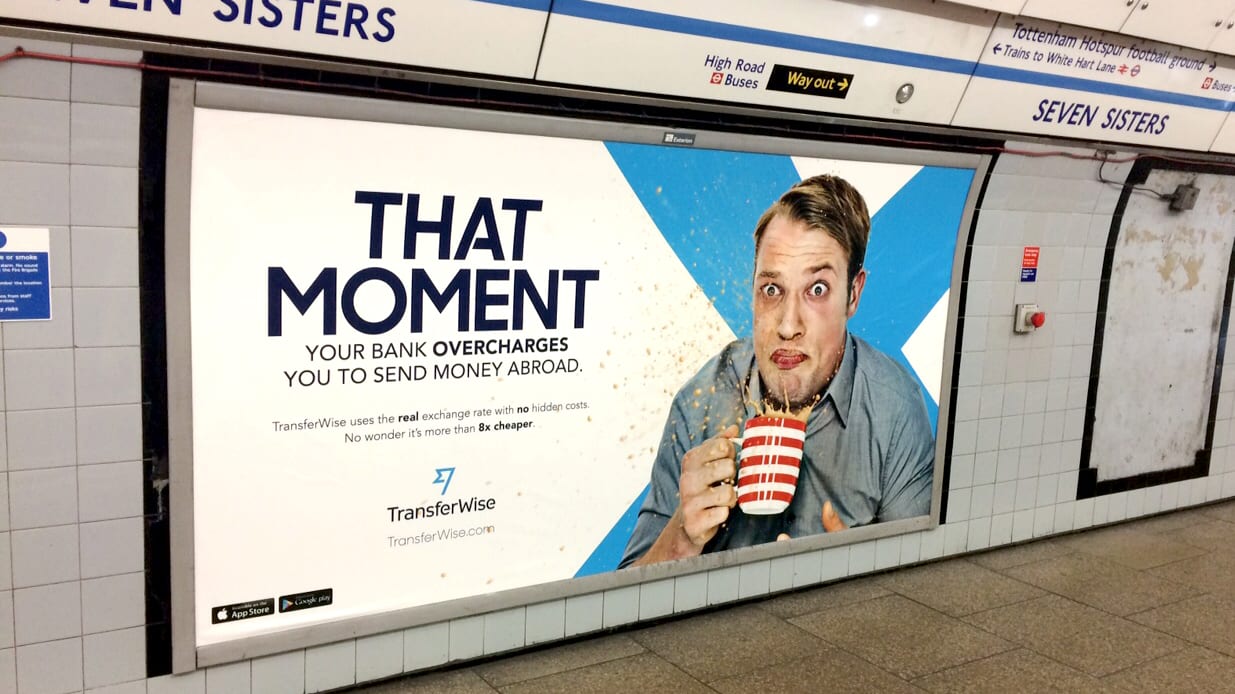
    Until recently, banks and brokers were the only option for consumers needing to send money to the country. But now, thanks to recent changes in regulation, TransferWise has partnered with local firm, PayGate, to bring better, fairer international money transfer to South Korea.Instead of sending the money in Korean Won, banks and brokers send customers’ money in GBP or USD for example, and the receiving bank makes the conversion. This leaves consumers paying two rounds of fees and maybe even two rounds of conversion – and usually they haven’t even been told they’re being charged in this way. But TransferWise sends the money in Korean Won, which means no receiving bank mark-up. The process is also completely transparent. TransferWise charges 1.5% for transfers with a delivery time of the same or next day.

    Taavet Hinrikus, CEO and co-founder of TransferWise, said:
    “Until recently, there was no alternative to banks and brokers when people wanted to send money to South Korea. We’ve heard from consumers that the process was slow and outrageously expensive so we’re hugely excited to launch the route on TransferWise. It’s going to make a huge difference to the seven million Koreans living, working and studying overseas.

    “The steps that the government in South Korea is taking to open up the financial services sector is good news for consumers. There will be more choice and better, fairer services to choose from.”

    So Yeong Park, CEO and co-founder of PayGate, said:
    “It is so glad that we now can serve customers with our 18 years of diverse experience as a Payment Service Provider, for them to make much cheaper, faster, and safer international money transfers to Korea.

    “For the last few years PayGate has been working hard to grow the Korean Fintech Industry and our recent partnership with TransferWise is the result of these efforts. Customers in Korea will see how this alternative finance can positively affect their daily lives.”

    People use TransferWise to transfer more than £500 million globally every month, saving themselves more than £22 million a month in unfair fees and charges.

  • BlackRock’s Laurence Fink sees buying opportunity

    BlackRock’s Laurence Fink sees buying opportunity

    Laurence D Fink, who runs the world’s largest asset manager, said the recent stock market decline presents a buying opportunity because markets are poised to gain over the course of the next year.

    “You can’t walk away from these movements,” Fink, chief executive officer of BlackRock, said Friday in an interview from the World Economic Forum in Davos. “Use these as an opportunity.”

    Fink said while markets have currently capitulated amid slumping oil and inconsistent messages coming from China, he doesn’t expect a bear market in equities. BlackRock, which oversees $US4.6 trillion for clients, saw institutional investors starting to come back into markets on Wednesday, when US stocks briefly fell as much as 3.7 per cent before recovering most of the losses.

    Top investors such as George Soros and Jeffrey Gundlach have advised investors to use short-term market rebounds to sell assets. Soros said Thursday that China’s economy is headed for a hard landing, a slump that will worsen global deflationary pressures, drag down stocks and boost US government bonds. Other investment managers, including Guggenheim Partners’ Scott Minerd and Bridgewater Associates’ Ray Dalio, have warned that the market likely has further to fall.

    Soros, who shorted the Standard & Poor’s 500 Index, said it is still too early to buy equities, while Gundlach said he expects a “protracted decline in the S&P 500”. Dalio cautioned that global markets face risks to the downside as economies near the end of a long-term debt cycle.

    The warnings come as oil prices have plunged and China’s growth has slowed.

    Fink said China needs to expand its international markets faster and allow more foreign investors, which would create a more stable, less volatile market, he said. “What China struggles with is an immature capital market that is heavily dependent on leverage retail,” he said.

    Fink said it would “be horrible” if China devalues its currency because it would have a huge global deflationary impact and would mean the country is moving back to an export-driven economy.

    His views diverge from others, including hedge fund manager Mark Hart and Goldman Sachs Group president Gary Cohn. Hart, who is betting against the yuan, said China should weaken its currency by more than 50 per cent this year. A one-off devaluation would ease pressure on China’s foreign exchange reserves and remove an incentive for capital outflows, he said. Cohn said that China will likely have to devalue its currency in the next six months to address slowing growth.

  • Singapore male youth burn more money shopping online than women

    Singapore male youth burn more money shopping online than women

    About 5 in 10 say they spend more than $100/month. Singapore male youth spend more than women on online purchases, according to Singapore Polytechnic’s survey of 816 youth aged 15 to 35. About 5 in 10 (50.6%) males say they spend more than $100 per month on online purchases, compared to about 4 in 10 (41.3%) women.

    On the other hand, the survey revealed that women shop online more often. About 2 in 10 (20.4%) female respondents browsed for products and services online daily, compared to 14.5% of male respondents.

    More males (29%) also purchase from stores that stock limited edition items, compared to 32.5% of women. Meanwhile, female respondents (47.6%) purchase from online stores they liked or are subscribed to on social media, compared to 32.5% of male respondents.

    For male youth, the most popular purchase categories include apparel, technology, and movies. Meanwhile, young women’s top purchase categories include apparel, beauty, and travel.

    The survey also showed that Singapore youth prefer to keep their online shopping habits private. Almost 6 in 10 (59.5%) indicated that they shop online to purchase items without their friends or family knowing, while 57.9% do so to keep their identity private. Also, more male respondents (61.8%) agreed that they shop online as it gives them privacy, compared to women (54.1%).

    It was also revealed that young shoppers were more receptive to special online deals, peer influence and social media. Celebrity endorsements appeared to be the least effective sales strategy, as only 11.4% of respondents purchased from stores endorsed by their favorite celebrity.

  • Banks exploring plan for money transfers using mobile numbers

    Banks exploring plan for money transfers using mobile numbers

    Monetary Authority of Singapore (MAS) managing director Ravi Menon revealed the initiative yesterday as he underlined the progress that Singapore has made towards becoming a smart financial centre.

    Speaking at the closing of the Sibos banking industry event yesterday evening, he said banks involved in Fast and Secure Transfers (Fast) are studying a “mobile addressing system” for the service, which was launched in March last year to allow near-instant interbank fund transfers and payments.

    “This means you will be able to make payments through Fast as long as you know the payee’s mobile number,” Mr Menon said.

    Also, the Association of Banks in Singapore (ABS) aims to standardise retail point-of-sale (POS) terminals, he added.

    “Our vision is a unified POS – a single terminal, preferably mobile, that can read all kinds of cards.”

    If implemented, the new Fast mobile system would greatly streamline digital transfer services.

    Several apps – including DBS Bank’s PayLah, OCBC’s Pay Anyone and United Overseas Bank’s Mobile Cash – have been rolled out by banks here to allow a user to transfer money to another using a mobile number, but these apps typically still require set-up and account information.

    ABS director Ong-Ang Ai Boon confirmed that five banks, including the three local ones, started initial discussions on the concept last month. “The whole thing is still in a very nascent state,” she said.

    “We are constantly looking for ways to improve productivity and efficiency for both the industry and consumers, but it will take time for us to make sure it is affordable and does not compromise on security.”

    A local bank source told The Straits Times the new service is likely to involve a central registry pegging phone numbers to accounts.

    This would mark a great step forward for Singapore banks, which are already active in digital and mobile initiatives.

    Mr Menon also suggested that the industry go one step further and develop an all-in-one addressing system – which would mean “being able to pay someone through Fast using also the payee’s e-mail address, social network or other proxies”.

    OCBC Singapore e-business head Aditya Gupta noted that Pay Anyone already allows that, although account information is also required of recipients.

    He said: “If the new addressing system can help make payments more seamless, this would be a good way forward.”

    The central bank has committed $225 million over the next five years to boost financial sector technologies, Mr Menon said.

    Another common standard in the works is the unified POS – ABS has made more progress in this area than with the mobile addressing system, Mrs Ong said.

    Meanwhile, achieving seamless data sharing is also a key thrust for ensuring greater cost efficiency for banks and regulators.

    Mr Menon said MAS is considering using application programming interfaces to streamline regulatory data submissions by the industry.

    “Our vision is for data to flow seamlessly in both directions between systems in the financial institutions and MAS,” he stressed.

  • AirAsia makes Tune Money its wholly owned unit

    AirAsia makes Tune Money its wholly owned unit

    AirAsia Bhd is acquiring the remaining 60% interest in financial services provider Tune Money Sdn Bhd as well as its entire issued redeemable preference shares (RPS) for RM6.36mil in cash.

    In a filing with Bursa Malaysia, AirAsia said the payment of about RM0.038 per ordinary 10 sen share and RM150,000 per RPS to vendor Tune Money International Sdn Bhd (TMI) would be financed by the company’s internally generated funds.
    TMI and AirAsia share two common shareholders and directors, namely Tan Sri Tony Fernandes and Datuk Kamarudin Meranun.
    AirAsia said Bank Negara had stated on Sept 30 that it had no objections to the transaction.
    On the rationale for the acquisition, it said this would give additional benefits that could only be realised through full ownership and control of Tune Money.
    “Full ownership would allow greater control and facilitate accelerated decision-making with regards to AirAsia priority items that would help support the company’s business plan and commercial objectives.
    “Additionally, once AirAsia increases its stake in Tune Money to above 50%, Tune Money will no longer be classified as an associate and AirAsia will be able to incorporate Tune Money’s contributions to company revenue, which would improve AirAsia’s top line as well as ancillary revenue,” the low-cost carrier said.
    These, it added, were on top of the existing benefits that AirAsia enjoyed through its ownership of a stake in Tune Money, such as lower merchant discount rate, increasing ancillary spend by incentivising guests with meal and baggage discounts, and accelerating deployment of the BIG Loyalty programme by allowing points accrual from purchases outside the AirAsia ecosystem.
  • Indonesia’s Snapcart Turns The Humble Receipt Into Big Data For Brands And Retailers

    Indonesia’s Snapcart Turns The Humble Receipt Into Big Data For Brands And Retailers

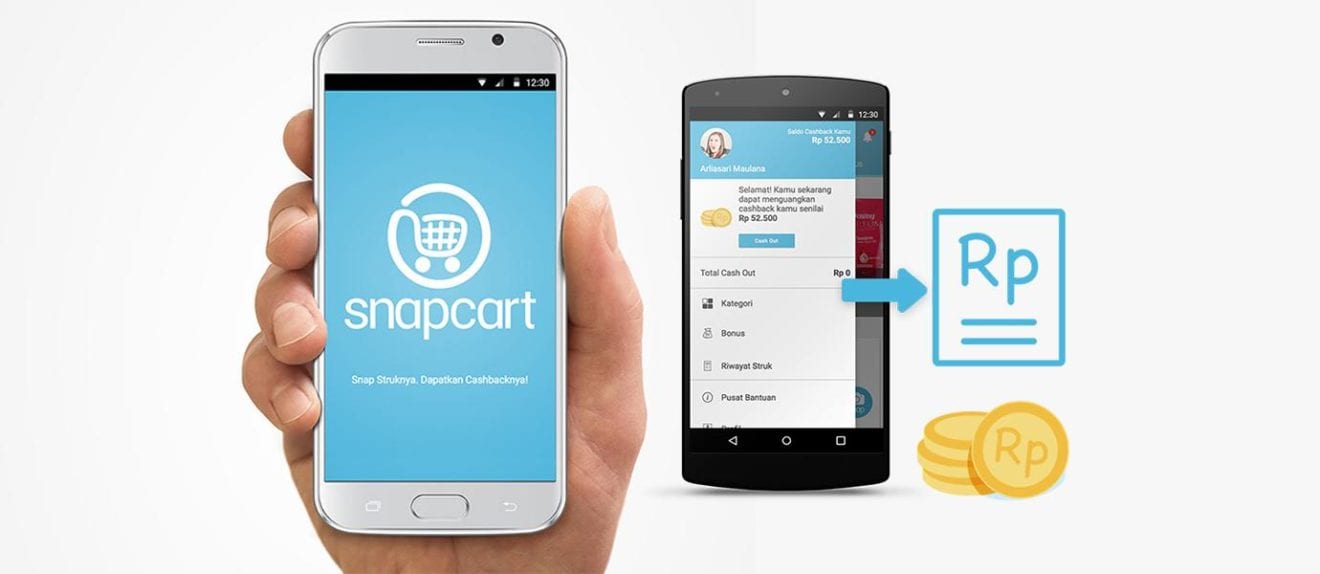
    Smartphones could give retailers and brands unprecedented insight into consumer spending and behavior just by allowing you to photograph your receipt.

    That’s the premise of a new technology startup that launched in Indonesia today. Snapcart is backed by Ardent Capital — the VC firm behind Southeast Asia’s logistics network aCommerceand numerous e-commerce startups — and it aims to turn oft-discarded receipts into data gold mines.

    The theory is simple. Physical retailers and brands know little about consumers and their shopping habits beyond survey-based data and estimates from research firms like Nielsen. Yet, the precious information is contained within a small piece of paper that shoppers typically throw away with little regard: the receipt. Snapcart is incentivizing users to take photos of their receipts and upload them into its app in exchange for cashback and rewards.

    On paper, it’s a win-win — what consumer doesn’t like free stuff? And what brand or advertisers isn’t willing to pay up (incentives) to get fresh insight into their customers?

    The concept isn’t entirely new. Ibotta, a U.S. company backed by over $20 million from investors, provides cash back for access to similar data. Unlike Ibotta, which requires users to photo both their receipt and individual product barcodes for in-store purchases, Snapcart uses artificial intelligence to pull product information right from a receipt, so users take just one photo.

    Jakarta-based Snapcart has launched with two prominent, global brands — Nestlé and L’Oréal — but says it is in talks with another 20 or so partners. Founder Reynazran Royono — formerly with Proctor and Gamble and Boston Consulting — told TechCrunch he came up with the idea when reflecting on his experience as a consultant and a spell at e-commerce firm Berniaga.com, now OLX.co.id. Online retailers have access to a treasure trove of shopper data that physical retailers can only dream of, Royono said, and Snapcart aims to help change things.

    The main challenge looks to be gaining scale among shoppers — Snapcart claims it has 12,000 pre-launch installs of its app. Snapcart said it will initially work with brands, which it is leveraging for marketing and other opportunities for exposure among consumers, and over time it plans to include physical retailers through in-store integrations. It is first focused on grocery items, because they are daily necessities, but will branch out into other verticals over time, Royono explained.

    The company is starting live in Indonesia, Southeast Asia’s biggest country with a population of 250 million and ample opportunity, but Royono said he plans to expand across Southeast Asia towards the end of 2016. Snapcart is currently raising new funding, which he said should give it a good 18 months of runway.

    “Snapcart is the most promising big data business in Southeast Asia we’ve seen so far,” Adrian Vanyl, CEO of Ardent Capital, said in a statement. “For brands, it is data they’ve fantasized about, but never had any practical way to actually collect.”