Retail News CRM

Tag: Property

  • JD.com starts marketing overseas properties to its buyers

    JD.com starts marketing overseas properties to its buyers

    Users of the service may find houses for lease with terms and prices verified as accurate.

    Other new partners include US Century 21 Real Estate and Beijing property search engine Zhuge. More than 1.7 million apartments in 100+ Chinese cities are already listed on the platform.

  • Sunway Malls wins best in Asia award

    Sunway Malls wins best in Asia award

    Sunway Malls has been recognised as one of Malaysia’s best companies to work for in Asia. HR Asia, Asia’s most authoritative publication for senior HR professionals – created the HR Asia Best Companies to Work for in Asia platform, where best practices and inner workings of companies are investigated to understand what distinguishes them from the rest. The Awards covered 12 markets across the region, and culminated with an award ceremony recently to celebrate the winners.

    Sunway Malls’ vision is “to create experiences that enrich lives” and this vision is extended to our external stakeholders and our employees. Sunway has 4 core values as the guiding factors to our vision; Integrity, Humility, Excellence and Togetherness. Through constant innovation and brain storms, the company take into account the employees’ needs and aim to provide to our best of ability.

    Their first mall, Sunway Pyramid is 21 this year. Sunway Carnival, opened in 2007, is undergoing expansion, Sunway Giza is our friendly community mall opened in 2009 whilst their newer malls are Sunway Putra Mall and Sunway Velocity Mall. To date, Sunway has amassed 54 renowned international and national awards.

  • Asian developers find booming Vietnam property market irresistible

    Asian developers find booming Vietnam property market irresistible

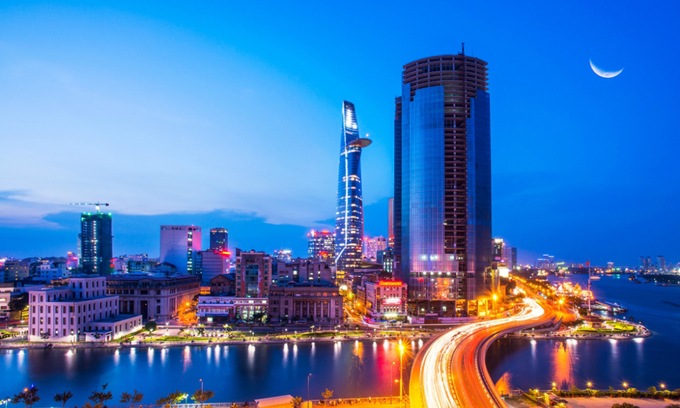
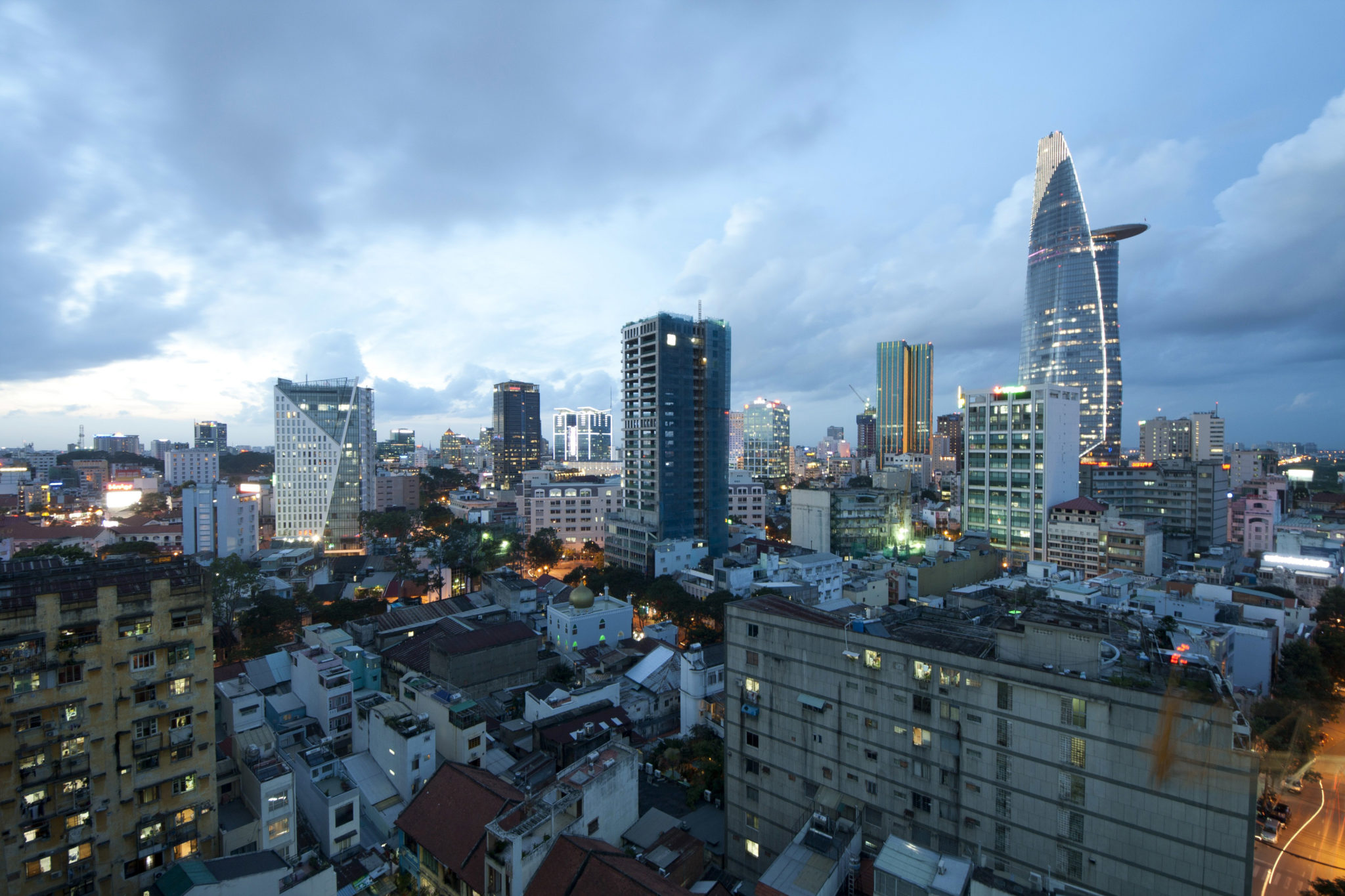
    Asian property developers are looking at Vietnam with great interest, according to industry insiders, both Vietnamese and foreign.

    Pham Lam, the CEO of real estate firm DKRA said that developers from mainland China, Hong Kong, Japan, South Korea, and Malaysia have been “very active” in the Vietnamese market for the last three to five years.

    Last May Singapore giant, CapitaLand, launched its newest mid- and high-priced residential project in Ho Chi Minh City, De La SOL.

    The development, scheduled for completion in the last quarter of 2020, is CapitaLand’s 12th in Vietnam.

    Hong Kong newspaper South China Morning Post quoted the company as saying Vietnam was its third core market after Singapore and China.

    Last year, Japanese investors Nishi Nippon Railroad and Hankyu Realty hooked up with a local property firm to develop a residential project with total investment of $350 million in Ho Chi Minh City.

    Half of the funding came from the two Japanese firms, while the rest was put up by their local partner.

    Japan’s Mitsubishi Corp. has also diversified its portfolio in Vietnam by, in 2016, buying into a property development project in Hanoi, which has total investment of $1.9 billion.

    Chen Lian Pang, CEO of CapitaLand Vietnam, compared HCMC to Shanghai’s Pudong area more than a decade ago when it was undertaking a series of infrastructure works, including the subway and airport terminals, that helped boost property prices when completed.

    HCMC could follow in the Chinese city’s footsteps, he said adding that property prices could increase four to five times in the next 10 years.

    South China Morning Post quoted Kingston Lai, founder and chief executive of the Asia Banker’s Club, as saying that “Today, quality residences in Hanoi’s city center, on average, are sold at only around HK$1,500 ($191.32) per square foot (100 square feet = 9.3 square meters), half of Bangkok’s level.”

    Another reason for the rapid influx of Asian developers is that the imminent growth of the property market is still in its early stages.

    Vietnam is thus considered a new market, which offers more opportunities than those that have reached saturation point, Lam said.

    Since Vietnam’s middle and upper classes are growing rapidly, the appetite for real estate is high, he said.

    Market research firm Nielsen estimated the size of the middle class to reach 44 million by 2020 and 95 million by 2030.

    This segment would be the main target of Asian investors, who are focusing on the high-end of the market, Lam said.

    Another reason is Vietnam’s location, which makes travelling from and to most other Asian countries quick and easy, he said.

    This makes it easier for developers to monitor and make timely decisions to achieve the best performance, he said.

    He expected the wave of Asian investment to continue for the next several years.

    In HCMC, 35,000 luxury apartments have come into the market in the last three years, according to real estate consultancy CBRE.

    This is a major increase from 2012-14 when fewer than 10,000 units hit the market, it said.

  • Property Sector Will Continue to Face Headwinds in 2019

    Property Sector Will Continue to Face Headwinds in 2019

    Indonesia’s property sector will continue to face headwinds next year amid the usual uncertainties associated with an election year, a declining rupiah and rising interest rates, global credit rating agency Moody’s Investors Service said.

    In a report titled “Indonesian Property Developer Chartbook,” Moody’s rated eight of the country’s property developers, Bumi Serpong Damai, Lippo Karawaci, Sentul City, Intiland Development, Alam Sutra Realty, Agung Podomoro Land and Modernland Realty.

    “The chartbook [report] provides updated snapshots of the developers’ business positions, marketing sales trends, revenue, profitability, cash flow, liquidity, leverage and interest coverage ratios, debt maturity profiles, foreign exchange exposure and covenant quality scores,” Jacintha Poh, vice president and senior analyst at Moody’s Investors Service, said in a statement on Tuesday (04/09).

    Moody’s said further rupiah depreciation, along with rising interest rates, will hamper growth in the property sector.

    Bank Indonesia has raised interest rates by 125 basis points since May this year and many observers expect further increases towards the end of the year.

    The rupiah has depreciated by 11 percent against United States dollar so far this year and traded at 14,927 against the greenback on Wednesday, near its lowest point in 20 years.

    Moody’s found that five of the eight property companies did not have sufficient cash as of June 30 this year to repay their short-term debt. These are Agung Podomoro, Modernland Realty, Intiland Development, Sentul City and Lippo Karawaci.

    For example, Agung Podomoro Land had Rp 1.3 trillion ($87 million) in internal cash, while its short-term debt stood at Rp 5.9 trillion as of June 30. Intiland Development had Rp 976 billion, while its short-term debt stood at Rp 4.61 trillion.

    But the global firm noted that some of these companies have replaced short-term debt with longer-term debt, which in the end could improve their cash coverage ratios.

    Higher debt-funded capital expenditure and a surge in the cost of funding will further weaken some developers’ leverage and interest coverage ratios over the next 12 to 18 months, Moody’s said.

    The ratings agency also highlighted that most of the developers will generate operating cash flow over the next 12-18 months, but only Pakuwon Jati, Bumi Serpong Damai and Intiland Development will be able to generate free cash flow – allowing them to expand, reduce debt or pay dividends to shareholders.

    However, Moody ‘s still expects demand for property to recover next year. The increase in new property projects, sales promotions and lower property prices will boost demand and support an improvement in marketing sales.

    Moody’s said in the report that the marketing sales of Bumi Serpong Damai, Alam Sutra Realty and Modernland Realty have exceeded 50 percent of their full-year target in the first half.

  • Vietnam in top 10 countries on belt and road property investment

    Vietnam in top 10 countries on belt and road property investment

    Vietnam is among the top ten major makets that receive the most attention from Chinese belt and road property investors, according to a recent report.

    On August 31, 2018, Uoolu, the leading platform for cross-border real estate transactions in China, released the “Uoolu 2018 Ten Countries on Belt and Road Property Investment Data Report.”

    The “Belt and Road Initiative” was proposed by the Chinese government in 2013 in order to strengthen the relationship with surrounding Asian countries.

    Since then, there has been frequent activity between China and other Asian countries in terms of property investment.

    In the report, Uoolu selected eight countries in Southeast Asia including Vietnam and two countries in the Middle East along the Belt and Road based on the Cooperative Development Index to assess the investment risk in the Belt and Road Initiative region.

    The ten countries were ranked by different criteria such as housing price growth rate and price-to-rent ratio. The data highlights the significant and accessible property markets of the region, as well as the demographics of Chinese investors.

    The primary investors in overseas property are aged between 30 to 49 years old and are mostly from new industries.

    Investors come from IT, and Internet business accounts for 31 percent of investors who are open to mobile technology and new services.

    The new affluent generation has exhibited a short decision-making cycle. 43.56 percent of Chinese investors only take a week to decide on a property investment, and 67 percent invest between $70,000 to $150,000.

  • Vietnam welcome more US, Singapore real estate firms

    Vietnam welcome more US, Singapore real estate firms

    Major U.S. and Singaporean real estate firms have been coming to Vietnam, eyeing its thriving property market, especially the high-end segment.

    Singaporean real estate firm Propnex opened an office in HCMC last month with its eyes firmly fixed on the high-end segment of the country’s property market.

    Propnex has had a 30 percent share of the brokerage market in Singapore over the last five years. It also has offices in Malaysia and Indonesia.

    Last year U.S.-based Electronic Realty Associates (ERA) started operating in Vietnam through its franchise in Singapore. Together with property brokerage EuroCapital, it has incorporated ERA Real Estate Vietnam, whose major market is HCMC.

    ERA Vietnam, which has 800 employees and 600 potential staff and collaborators undergoing training, is also focused on the high-end segment.

    It aims to be one of the top real estate firms in Vietnam within five years with over 50 offices and 5,000 employees.

    Another Singapore firm, Huttons Real Estate Group, came to the country in 2016. For this third largest property company in Singapore, Vietnam is the third overseas market after Malaysia and the Philippines.

    Huttons said it strives to be the number one real estate agency in the country with multiple services including project sale, marketing, leasing, and assets management.

    In 2015, U.S.-based Keller Williams tied up with VinGroup and stated that it would focus on leasing properties and consulting.

    Industry insiders believe the entry of international players will have a positive impact on the real estate market.

    “Since 2015 foreign brokerages have been entering the Vietnamese real estate market, which has been booming,” Nguyen Anh Dao, CEO of real estate firm Viethome Investment said.

    Their arrival would push local ones to improve their standards, which would benefit customers, he said.

    But since foreigners can own up to 30 per cent of the apartments in a project under Vietnam’s housing laws, foreign firms need to have local sales teams to approach Vietnamese customers, he added.

    Employing and training locals is how foreign firms can compete with local businesses, which are getting larger and more professional, he said.

    The high-end segment accounted for the highest proportion of new launches in HCMC in the second quarter of this year — 54 percent — according to real estate consultancy CBRE Vietnam.

    In the last three years 35,000 luxury apartments have come into the market, it added.

  • Real estate giant shakes up market with yet another business

    Real estate giant shakes up market with yet another business

    Vingroup has invested VND2.4 trillion ($103.2 million) for an 80 percent stake in payment intermediary services firm VINID Joint Stock Company, according to a statement on the National Business Registration Portal.

    VINID, incorporated this week, has a charter capital of VND3 trillion ($129 million) and its other two founding shareholders are Hanoi-based VICARE Corporation (19 percent) and a person named Nguyen Minh Hong (1 percent).

    VINID sought to operate in 12 different areas of business, and received a registration certificate from the Hanoi Department of Planning and Investment.

    The payment services business must wait for State Bank of Vietnam permission, but the company has indicated it intends to begin as soon as it gets the green light.

    VINID is running Vingroup’s customer loyalty program, issuing VinID cards to customers of all of Vingroup’s subsidiaries.

    The firm takes care of four million card holders, Pham Nhat Vuong, chairman of Vingroup, told the 2018 annual general meeting held in May.

    The entry into the payments industry is meant to take advantage of Vingroup’s huge range of products, the company stated.

    The entry into payments comes on the heels of a slew of announcements the company has made about new business plans this year.

    In June Vingroup had said it would make electronic goods with the Vsmart brand of smartphones getting priority.

    It has set up VinSmart company with a charter capital of VND3 trillion ($129 million) to produce smart electronic products including phones and carry out R&D into artificial intelligence, automation, and next-generation materials.

    It will build a plant at the Dinh Vu – Cat Hai Economic Zone in the northern port city of Hai Phong.

    In April Vingroup revealed plans to enter the pharmaceutical industry and set up a medical research and production facility in the northern province of Bac Ninh.

    It would invest VND2.2 trillion ($94.6 million) in the first phase of the project, the company said.

    Vingroup is the largest listed company in the Vietnamese stock market with its market capitalization reaching $13.62 billion, the group stated on its website in April.

    Last year it raked in net revenues of VND89.350 trillion ($3.84 billion), a 55.1 percent increase year-on-year.

  • Property market expected to be stable in 2018

    Property market expected to be stable in 2018

    The country’s real estate market in 2018 will maintain mid-term stability, while merger and acquisition in the sector will continue to see strong development.

    This was revealed in the Top 10 Reputable Property Developers, Building Material Companies and Contractors 2018.

    The surveyed top 10 firms said real estate developers would enjoy opportunities of high economic growth rate, newly-signed Comprehensive and Progressive Agreement for Trans-Pacific Partnership trade agreement to attract more foreign investment and approval for establishment of special administrative economic zones.

    However, the survey also said local property developers would face challenges of macro-economic instability in the region, State divestment making capital dispute more severe and virtual money affecting the market and condotel, officetel and hometel segments with potential risks due to lack of clear management policies.

    The firms said special administrative economic zones would continue to be promising lands to lure large real estate projects.

    The estate, construction and building material sectors will be linked to the Fourth Industrial Revolution.

    The survey revealed that in addition to traditional marketing methods, customers were increasingly getting access to property information through internet.

    More than half the surveyed people said they sought information on websites specialising in real estate and on social networks.

    When the requirements of home buyers become stricter, information in the market will become more transparent. Investors and contractors will pay attention to the sustainability and life span of projects and construction buildings.

    According to experts, the quality of estates in 2017 improved due to the pressure of competition. They said property developers were required to improve their ability while enhancing professionalism and quality in projects.

    Last year, the real estate market saw positive changes in all segments. In Hà Nội and HCM City alone, there were 64,263 successful deals. A range of new products, such as condotel, officetel and hometel were developed, making the real estate market more attractive.

    According to report, prestige was one of the top three reasons for customers in choosing a product in the real estate sector.

    Vingroup and Novaland top the list of the 10 most reputable property developers in 2018.Vingroup has been leading the market with diversified products such as apartment buildings, offices, resorts, shophouses, condotel and officetel.

    Novaland, on the other hand, has been a popular brand in the south, with strong financial abilities and large land funds.

    Coteccons Construction Joint Stock Company and Hòa Bình Corporation occupy the first and second positions in the list of top 10 reputable contractors in 2018.

    Hòa Phát Steel Joint Stock Company and Viglacera Corporation Joint Stock Company top the list of the 10 most reputable building material companies in 2018. Both are large-scale companies in the building material sector with hundreds of construction projects every year throughout the country.

    The award ceremony will be organised on April 18 at the Việt Nam National Convention Centre in Hà Nội.

    Read more at https://vietnamnews.vn/economy/424330/property-market-expected-to-be-stable-in-2018.html#EeieWe0sOIEGm5YD.99

  • Property still drives SM’s healthy financials in 2017

    Property still drives SM’s healthy financials in 2017

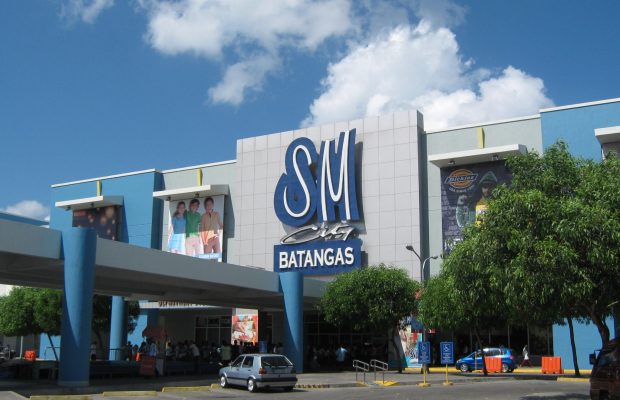
    SM Investments Corporation (SMIC), the conglomerate of Henry Sy Sr, saw its net income increase by 6% to P32.9 billion in 2017, with its property business continuing to contribute most to its earnings.

    SM told the local bourse on Wednesday, February 28, that its consolidated revenues rose by 9% to P396.1 billion in 2017, from P363.4 billion in 2016.

    “Our core businesses continued to deliver strong results in 2017 with recurring net income growth of 9%, driven by overall growth in the economy and our nationwide expansion plans,” SM president Frederic DyBuncio said in a statement.

    The listed conglomerate reported that property accounted for 40% of its total earnings, banks 38%, and retail 22%.

    “Our property and specialty retail businesses delivered particularly strong results,” DyBuncio said.

    Main driver: property

    SM Prime Holdings Incorporated, the conglomerate’s property holding firm, saw its recurring net income grow by 16% in 2017 to P27.6 billion, driven by the increase in rental revenue from malls as well as the strong sales take-up of housing units.

    Consolidated revenues of SM Prime surged by 14% to P90.9 billion in 2017, compared to the level recorded in 2016.

    Revenues of its mall business – which includes rentals, cinema and event ticket sales, and other revenues – increased by 9% to P53.2 billion in 2017, thanks to the rising contribution of rentals from new and expanded malls that were launched in 2016 and 2017.

    SM Prime has 67 shopping malls in the Philippines and 7 in China, as of end-2017.

    The residential group led by SM Development Corporation (SMDC) saw an 18% surge in its consolidated revenues, which ended at P30 billion in 2017.

    “The growth was largely due to higher construction accomplishments of projects launched between 2013 and 2016, namely Shore Residences and Shore 2 Residences in Pasay City, Air Residences in Makati, and Fame Residences in Mandaluyong City as well as continued increase in sales take-up of ready-for-occupancy units,” SM said.

    Meanwhile, BDO Unibank Incorporated posted a net income of P28.1 billion in 2017, from P26.1 billion in 2016.

    Its net interest income grew by 25% to P81.8 billion last year, driven by the 18% growth in gross customer loans to P1.8 trillion.

    China Banking Corporation, meanwhile, saw a 15% net income growth to P7.4 billion in 2017, on the back of sustained growth in core and fee-based businesses.

    China Bank’s net interest income was up 17% to P20 billion in 2017, while gross loans grew 17% to P454 billion on strong demand across all segments.

    Operations under SM Retail Incorporated, which consist of non-food and food stores, saw total revenues grow 7% to P297.4 billion in 2017. Its net income stood at P10.4 billion in 2017.

    “The underlying performance of our retail operations remained good, led by strong growth in our higher margin specialty retailing and with the addition of the successful Miniso variety store chain during the year,” DyBuncio said.

    In 2017, SM’s total assets grew by P100 billion to P960.1 billion.

    SM participated in the rights offerings of BDO and China Bank and invested in the country’s largest integrated supply chain operator, 2GO Group Incorporated, as well as dormitory developer Philippine Urban Living Solutions.

    SM maintains a healthy balance sheet with a conservative gearing ratio of 43% net debt to 57% equity.

    “During 2017, SM made substantial investments in its banks and in new business opportunities, which we expect to contribute to higher earnings growth in future years,” DyBuncio said.


  • Vietnam property sales rise in January

    Vietnam property sales rise in January

    The domestic property market reported more sales in January compared to December 2017, according to the Ministry of Construction’s Housing and Property Market Management Department.

    It said that in January, Hà Nội had 1,650 transactions, an increase of 13.8 per cent and HCM City had 1,900, a rise of 8.6 per cent over December’s figures.

    In Hà Nội, many housing projects have been completed and offered with attractive trade promotion programmes. The offerings are in the high- and mid-end segments and are located in convenient places. There are many kinds of area and payment methods can be flexible, the department said.

    Some projects had many sales in January, including Season Avenue, Hà Đông; An Bình City-Bắc Từ Liêm; Sunshine Riverside Tây Hồ and Romance Plaza, Hà Đông.

    Average offered price of an apartment in January rose 0.14 per cent against the December price. Of which, the price surged 0.17 per cent for high-end apartments, 0.05 per cent for mid-end apartments and 0.56 per cent for affordable apartments.

    Price of house on land had an increase of 0.24 per cent compared with December.

    Liquidity on the HCM City property market also increased in January. High- and mid-end apartment segments reported many sales.

    Customers paid attention to apartments having one or two bedrooms and price at about VNĐ1 billion (US$44,000) per unit, but the supply was low.

    Projects reporting many transactions included New City Thủ Thiêm, District 2; Saigon Intela-Bình Chánh District; and Melosa Garden, District 9.

    Average selling price increased 0.24 per cent for apartments and 0.81 per cent for house and land.

    The price declined 0.05 per cent for high-end apartments, but rose 0.33 per cent for mid-end apartments and 0.53 per cent for affordable apartments.

    The department said that by January 20, the value of the property inventory stood at VNĐ25 trillion, a drop of 19 per cent from the previous month.

    The value of property inventory in January was VNĐ5.27 trillion in Hà Nội, VNĐ19 billion lower than the value in December.

    In HCM City, the property inventory was VNĐ4.62 trillion, a fall of VNĐ47 billion.

    According to the State Bank of Việt Nam’s report, total outstanding loans in the property sector reached VNĐ446.36 trillion in the third quarter of 2017, a quarter-on-quarter increase of 2.1 per cent.

    Resort property

    The department also had a report on development of resort property, the hot spot on the property market.

    In the report, the Ministry of Construction appraised 71 “condotel” and “officetel” projects that have been built nationwide since 2015. .

    Meanwhile, provincial and municipal authorities have given licences to develop many more projects.

    However, many difficulties have arisen over investment, construction, trading and management of operation for those projects, the department said.

    Therefore, the ministry has proposed that the Prime Minister direct ministries to solve them.


  • Premier outlet malls to receive some financing

    Premier outlet malls to receive some financing

    A US$750 million fund to finance premier outlet malls in China has been set up by asset manager Allianz and realty investor TH Real Estate.

    The Eres APAC II – China Outlets fund will be established by the Allianz real-estate investment arm Allianz Real Estate. It aims initially to raise the target commitments ($750 million) to acquire two established outlet malls, Florentia Village Jingjin, between Beijing and Tianjin, and Florentia Village Shanghai.

    In fact, say the asset managers, the fund has identified a pipeline of targets.

    Allianz will be the anchor investor with a 30 per cent share, the balance to be held by institutional investors like TH Real Estate, which will also act as fund manager. RDM Asia, part of Italy’s Fingen Group, will be asset manager.

    It is not the first partnership for Allianz and TH Real Estate, but is their first bid to form an investment fund in China. In 2004, both parties invested in Europe Outlet Mall Fund followed in 2008 by the UK Outlet Mall Fund.

    Three months ago Allianz partnered with Singapore’s Keppel Group to buy Hongkou Soho in Shanghai for $525 million.

    “China is moving toward an economy led by services and domestic consumption,” says Allianz Real Estate Asia-Pacific CEO Rushabh Desai. “Alongside the traditional brick-and-mortar retail formats, outlet malls have been successful in attracting buyers looking for branded products at discounted prices. We look forward to replicating our European outlet mall performance in China.”

  • Capital 21 mall to be largest in Johor Baru

    Capital 21 mall to be largest in Johor Baru

    Being built by Singapore-listed Capital City Group, Johor Baru’s largest mall Capital 21 will have a gross floor area of 1 million sqft (92,903 sqm) when it opens early next year.

    The mall will be part of Project Capital City, which includes a hotel and residential component. More than 60 per cent of the retail units have been sold.

    Capital City CEO Siow Chien Fu says he is bullish about prospects. “Johor Baru is the second-largest city in Malaysia and it still lacks this type of large shopping centre.”

    Capital City will have 690 serviced apartments and 630 hotel-style serviced suites.

    While the serviced suites have not been launched, 28.6 per cent of the units have been sold.

    “People have been talking about an oversupply of housing in Kuala Lumpur for years, but there has still been good take-up. I’m not worried. Johor Baru is big enough and the state is doing a lot of development, like industrial parks,” says Siow.

    Capital City is the company’s first development and veteran architect-turned-developer Siow is confident of its asset-light business strategy. Unlike traditional property developers, Capital World will not own land. Instead, it works with landowners in joint ventures to develop assets.

    Its pipeline of projects includes another integrated development of retail, office, hotel and residential apartments in Johor Baru.

  • Why the investment outlook for Singapore property markets may be grim

    Why the investment outlook for Singapore property markets may be grim

    “The weak external economy did not help. It continued to weigh down on the creation of new businesses here resulting in limited new demand,” Chua said. “Tenants are very price sensitive and in today’s tenant favourable market, landlords maintained a competitive strategy.”

    Another REIT, Suntec REIT, which owns both Singapore office and retail property, was also showing signs of pressure on yields in its latest results.

    “With the expected oversupply of the Singapore office market upon the completion of several new offices, Suntec

    REIT’s properties may face stiffer competition for its tenants as well as downward pressure on rents,” analysts at DBS said in a note on Thursday, noting Suntec REIT owns three office assets in the CBD.

    Retail Battle

    Suntec was also feeling the pressure on the city-state’s retail malls.

    “With Singapore consumers cutting back on discretionary spending and compared to the initial rents signed at Suntec Mall during more buoyant times, rents at Suntec Mall will likely continue to be under pressure,” DBS said, noting the rents were underperforming the manager’s initial target.

    Other analysts were also pointing to pressure on demand for retail space.

    “Amid stiffening competition from online retailing and regional markets, on top of operational challenges such as labour crunch, retailers are expected to continue with their strategy of consolidating and maintaining only profitable outlets,” Tay Huey Ying, head of research for Singapore at JLL, said in a note Thursday. “Expansion by retailers will likely remain confined to tried-and-tested established brand names while entrances of luxury goods, fashion and accessories are likely to remain limited.”

    She also noted that another 169,000 square meters of retail space was expected this year, with another 229,000 next year, which was likely to spur greater competition for tenants.

    There were other signs that yields from retail rents might face continued pressure.

    Aviva’s Coenraads noted he was closely watching the bidding for suburban mall Jurong Point, with the sellers reportedly seeking more than 2 billion Singapore dollars. The Business Times reported earlier this month that two of the three shortlisted bidders have separately offered around S$2.2 billion, which the report estimated would drive the net yield under 4 percent.

    Residential Cooling

    While it may get the lion’s share of the ink, Singapore’s residential sector is actually not nearly as large as its commercial property sector.

    Coenraads noted that the introduction of cooling measures, which he called a “very smart move,” had dampened residential demand. But he didn’t expect a turnaround soon.

    “The question is, at what sort of stage will they start letting go of some of the regulation, and I think basically, we need to see further decreases in prices,” he said. “I think it’s not reflecting yet where the government wants to see prices at this stage.”

  • Cambodia’s property market continues to trend upwards

    Cambodia’s property market continues to trend upwards

    Cambodia’s property market has developed at an increasingly fast pace over recent years which has provided foreign investors with a range of opportunities. Some insight from Simon Griffiths, the senior associate director for CBRE Cambodia, to see what lays ahead for property and foreign investment in 2017.

    2015 saw a spike in foreign direct investment (FDI), and the property sector was a big benefactor of these investments both in terms of headline investments in new development projects, and also from foreign individuals investing in one or numerous condos, SoHo units or strata office.

    2016 saw the physical manifestation of this wave of development investment in the form of large-scale buildings rising out of the ground across Phnom Penh. However, there was also a slowdown in foreign private individual sales and/or investments.
    This led to developers and individual investors to be more cautious in 2016 as everyone took stock of the market.

    Nevertheless, a palpable appetite for further development still existed with developers actively seeking out opportunities away from the ubiquitous condo template by innovating on residential design or looking at new sectors and geographies all together.

    There was evidence that private individual foreigners were still buying real estate in Cambodia late in 2016 and that private investors were particularly attracted to guaranteed yields, developers with strong reputations and new or innovate products/design.  Consequently, FDI in property/real estate remained strong in 2016 but not equal to 2015’s.

    Looking ahead for 2017, it is likely FDI will remain high but not in the same sectors or geographies as experienced in 2015 and 2016.

    If Phnom Penh is a cup, then that cup is brimming with development. That does not mean there will not be further foreign investment in Phnom Penh in 2017, but expect to see foreign investment move towards entertainment, hotels, condo-hotels and retail in 2017 rather than in 2015 and 2016 where the focus was largely on the residential sector.

    For 2017, as a foreign private investor, it is an interesting time. 

    With greater competition, developers shall increasingly offer better guaranteed yields and deals to foreign (and local) buyers.  Against the back-drop of stagnant low interest rates in developed economies, guaranteed yields of five percent and above represent ways to appreciate wealth rather than in real terms losing it as it sits in the bank – but crucially only if the private foreign investors trust the developer and the investment holds its value.

    That brings me to another sector and geography that shall +see significant FDI, and that is Sihanoukville.  Traditionally, only low-scale, low-rise tourism expect big announcements about mega resorts above 1,000 hectares and significant foreign FDI in this province.

    Whether or not all the FDI will be in 2017 is difficult to predict, but it is looking likely the next real estate boom may well be in Sihanoukville.  Expect more tourism, hospitality and entertainment investment but also residential investment, and, interestingly, that residential foreign investment may not just be in condos but also on the ground.

    The details are not known but there is a possibility Sihanoukville may gain a ‘Special Status’ and this special status may permit foreigners to buy land within specially licensed areas within the province.

    Whether this would apply to industrial units such as the Thai Special Economic Zone model or include holiday homes for foreigners is not yet clear, but either or both will lead to significant FDI in the province and be an engine for growth and investment should such a status come to fruition.

  • Malaysia’s property market still resilient despite challenges

    Malaysia’s property market still resilient despite challenges

    The property market remains resilient despite of the challenging economic environment, according to observers.

    Rahim & Co Research director Sulaiman Saheh said although the number of launches and sales performance of developers have been declining, there were projects that were performing well due to the nature of the product, concept, location and marketing strategies.

    “Market fundamental is still resilient and the market has the holding power, in spite of some expectations of rising unit sales,” he said during a presentation at the Rahim & Co property research seminar recently. He said affordability is still a major concern.

    “The market is leaning towards the affordable market segment. Creative products within the affordable segment are going to be well-received,” he said, adding that there is still demand but the buyers were hindered by end-financing woes.

    “We expect a rationalisation of high-end and branded residences as the global economy remains challenging,” said Sulaiman.

    According to Knight Frank in a report on the local real estate market, the outlook for the high-end condominium segment remains lacklustre, impacted by weak sentiment as potential buyers and investors continue to adopt a “wait-and-see” approach. “With the widening gap between supply and demand as well as mismatch in product pricing and affordability in the domestic market, more developers are expanding their target catchment by marketing overseas as the weak ringgit translates into attractive pricing and low-entry level for foreigners.”

    It said the challenging property market environment had led to more strategies with developers adopting “push marketing” to boost sales of selected projects and improve revenue.

    Meanwhile, Knight Frank said the office market in the Klang Valley is expected to remain subdued and face downward pressure.

    “Amid the mismatch between supply and demand, office vacancies are expected to trend upwards due to a strong supply pipeline and lacklustre absorption as more firms cut workforce or freeze hiring to consolidate business operations.

    “Owners of newly-completed office buildings which have yet to achieve significant occupancies may offer more competitive rental package to secure tenants while those of secondary office buildings are expected to be more flexible in negotiations to retain existing tenants.”

    According to Axis REIT Managers Bhd head of investments and Malaysian Institute of Estate Agents immediate past president Siva Shanker, some 5.8 million sq ft of office space is expected to come onstream in the Klang Valley in the second half of 2016.

    He said the market would “start to level out” by 2018 or 2019 and start peaking by 2020 or 2021.

    “With additional office space expected to be completed by end-2016 in addition to the still available space in the Klang Valley, the general market will continue to be a tenant’s market.

    “Landlords or building owners have become more aggressive in marketing to attract tenants,” Siva said at Rahim & Co’s property research seminar recently.

    Knight Frank added that good grade and dual-compliant office space in good location, however, is expected to remain resilient.

    As for the retail market, Knight Frank said the projected sales growth for 2016 had been revised downwards from 4% to 3.5% following the weak performance last year.

    “Consumer spending remains a key challenge in the retail industry with many continuing to hold back on purchases due to growing concerns about rising cost of living and the weaker job prospects.

    “Moving forward, the uncertainties following the recent Brexit referendum are expected to further weigh down market sentiments globally and this will not augur well for the local retail industry. With the scheduled completion of some 3.36 million sq ft of new retail space in the second half of 2016, competition in the retail market will heighten.”