
Tag: healthcare

  • Ayala eyes expansion of healthcare business

    Ayala eyes expansion of healthcare business

    The country’s oldest conglomerate Ayala Corporation plans to expand its investments in the healthcare sector with the roll out of 100 retail clinics under the brand-name FamilyDoc over the next 3 years.

    Ayala Managing Director Paolo Borromeo said in an interview that the conglomerate, through its unit Ayala Healthcare Holdings Incorporated, experimented on developing a smaller primary care clinic in December last year.

    Borromeo said the proposed clinic will house a pharmacy, a diagnostic center, and physicians to handle consultations.

    So far, it has two FamilyDoc clinics located in Las Piñas and Imus, Cavite.

    “If this becomes successful, we plan to build 100 clinics over the next 3 years,” Borromeo said.

    The initial investment for a 100-square meter clinic is from P6 million ($124,879.86) to P7 million ($145,693.17).

    Borromeo said Ayala plans to build this chain of retail clinics in middle income communities across the Philippines.

    Each clinic will have one doctor, two nurses, one pharmacist, and one radio technician.

    Operating hours are between 7 am to 9 pm. The consultation fee is P350 ($7.28) per patient.

    In 2015, the Ayala group entered the affordable retail healthcare space with the acquisition of a 50%-stake in the Generika group.

    Generika is one of the pioneers in the retail distribution of quality generic medicines in the Philippines, with 570 stores nationwide to date.

    The conglomerate entered the health care sector in 2014 through QualiMed, Ayala Land, Incorporated’s chain of hospitals and satellite clinics, in partnership with the Mercado medical group.

    Ayala had said it plans to invest $50 million in healthcare and education business over the next few years to make the most of the growing Philippine population and rising consumer spending.

    Ayala is one of the country’s largest conglomerates, with investments in banking, real estate, telecommunications, water utility, infrastructure, and power generation.

  • Singapore developer plans healthcare hubs in 20 to 40 Chinese cities

    Singapore developer plans healthcare hubs in 20 to 40 Chinese cities

    Less than a year after making its first foray into China’s healthcare sector, Singapore developer Perennial Real Estate Holdings has now set ambitious goals for itself: to set up integrated healthcare hubs in 20 to 40 Chinese cities.

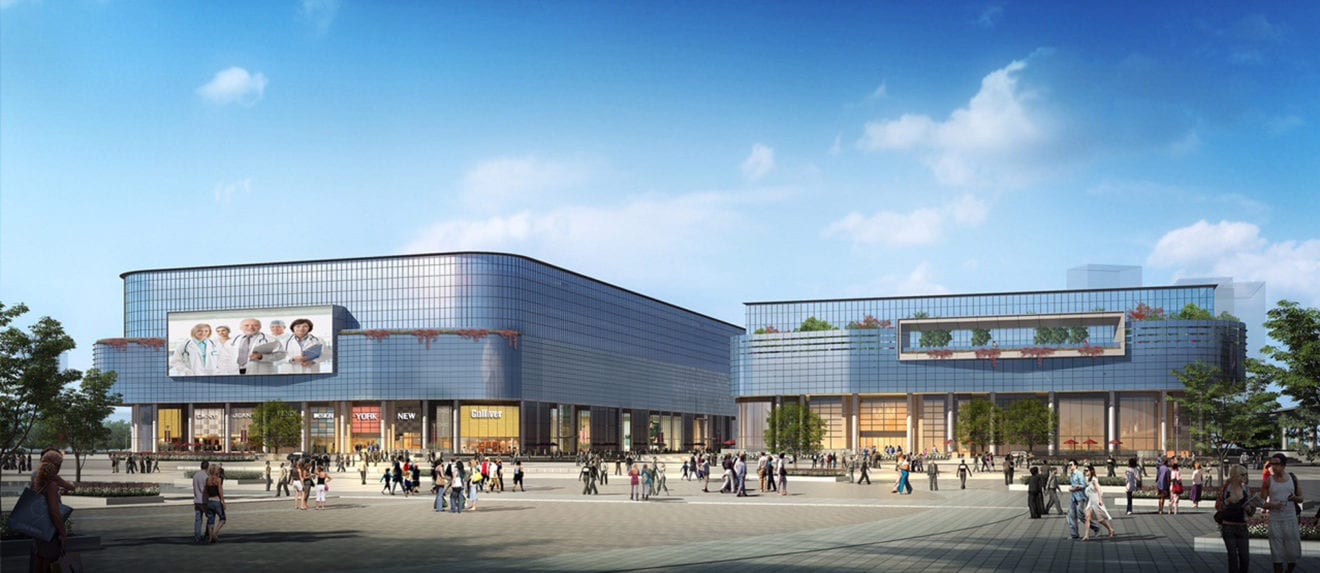
    The concept will be similar to that of the Perennial International Health and Medical Hub in south-western Chengdu city, which is touted as the largest integrated healthcare development in western China with 280,000 sq m of gross floor area.

    Located next to the Chengdu East high-speed rail station, the hub will include eldercare homes, hotels, serviced apartments, commercial offices and retail.

    Perennial chief executive officer Pua Seck Guan said at a briefing yesterday that the company is already in talks over similar projects in several cities.

    He hinted that they are provincial capitals and located in the western regions.

    “The projects should be located around transportation hubs to reach a sizeable population. Also, a capital city can provide sufficient human resources for hospitals,” said Mr Pua, at a media briefing yesterday after Perennial secured key tenants for its Chengdu project.

    Perennial, whose businesses were largely retail, residential, office and hotel till its entry into healthcare last July, entered a joint venture on Thursday with two Chinese firms – Shanghai Summit and Shanghai RST Chinese Medicine – to operate the eldercare segment of its Chengdu hub.

    Yesterday, Singapore healthcare operator Parkway Pantai held a lease-signing ceremony to set up the ParkwayHealth Chengdu Hospital that will occupy 48,000 sq m and provide up to 350 beds.

    It will be the first foreign tertiary hospital in western China and also a first for Parkway Pantai, which is a subsidiary of IHH Healthcare, the world’s second-largest healthcare operator by market capitalisation.

    Parkway Pantai Group CEO Tan See Leng said in his speech that the company is investing 900 million yuan (S$197 million) into the hospital, which is targeted to open next year. He added that the company decided to expand into Chengdu as it is one of the fastest-growing cities in western China and that the location at the Chengdu East rail station is ideal, providing transport to some 148 million people within a two-hour train ride.

    Mr Pua said Perennial and Parkway are working together because they are familiar with each other’s strengths, which is crucial for their first healthcare project and first hospital in China, respectively.

    Now with the key tenants settled, the next step is to ensure that the hub, which is set to complete construction this year, would be able to provide top-notch medical treatment and quality service, said Mr Pua.

    He also outlined potential challenges, such as the need to keep costs low as Perennial has to operate the hub over time, instead of just building and selling properties.

    “Another challenge is to win stakeholders in those cities over to our concept.”

  • Perennial moves into China healthcare

    Perennial moves into China healthcare

    Perennial Real Estate Holdings is diversifying from real-estate business in China by riding on the country’s growing healthcare industry.

    On Thursday, mainboard-listed Perennial entered into a joint venture with Guangdong Boai Medical Group to develop and manage hospital and medical service businesses in the massive market.

    The real-estate developer, which has its headquarters in Singapore, will acquire a 40 per cent stake in the joint venture for 286.7 million yuan (S$62 million). Guangdong Boai Medical Group, a unit of one of China’s largest private hospital and medical services operators, China Boai Medical Group, will hold the remaining 60 per cent stake.

    Perennial chief executive Pua Seck Guan told the media yesterday that the collaboration would see both groups combining their skills and expertise to develop and manage between 30 and 50 hospitals in the next five to seven years.

    Boai, which owns 120 hospitals in China, is well established in the medical field, while Perennial has a portfolio of large-scale integrated developments in Chengdu, Xi’an, Beijing, Zhuhai and Shengyang.

    Mr Pua said: “China is trying to revamp its healthcare business. Last year, it allowed foreigners to own 100 per cent of the medical businesses in some of the provinces.”

    The Chinese government has noted the growing demand in healthcare and has allowed doctors from public hospitals to work in private hospitals, he added.

    With spending in medical services set to surge from US$357 billion (S$481.4 billion) in 2011 to US$1 trillion by 2020, Perennial saw a chance to diversify into healthcare, said Mr Pua. The joint venture with Boai would set the stage for Perennial’s strategic expansion.

    The joint venture will acquire its first operational medical business, Modern Hospital Guangzhou, a leading tumour and cancer hospitals in Guangzhou, from Boai.

    The collaboration will focus on eight core medical fields, comprising oncology, fertility, plastic surgery, aesthetic medicine, orthopaedics, paediatrics, and ear, nose, throat and eye speciality medicine.

    The others are dentistry and cardiology and cardiovascular surgery.

    To meet demand for healthcare services, Perennial Dongzhan Mall, part of the Chengdu East High-Speed Railway Integrated Development, now being built, will be repositioned from a retail mall to a medical and retail integrated hub.

    Dr Wong Weng Hong, who has over 20 years’ experience in setting up, acquiring and managing medical assets here and in China, will develop and scale up Perennial’s new engine of growth, said Mr Pua.

    Perennial’s assets here include Chijmes, TripleOne Somerset, Capitol Singapore and AXA Tower. In China, it has integrated developments with mainly retail, residential, office and hotel components.

    To meet demand for healthcare services, Perennial Dongzhan Mall, part of the Chengdu East High-Speed Railway Integrated Development, now being built, will be repositioned from a retail mall to a medical and retail integrated hub. The development will be renamed Perennial International Health and Medical Hub.

    Mr Pua said: “Within a travel distance of two hours, we can cover a population of 100 million… When a patient comes, they usually bring two to three relatives. Where do they stay? In our projects… we have service apartments and hotels. So it is a good synergy.”

    To meet demand for healthcare services, Perennial Dongzhan Mall, part of the Chengdu East High-Speed Railway Integrated Development, now being built, will be repositioned from a retail mall to a medical and retail integrated hub.