Tag: manila

  • Lumio Solar Raises US$900,000 for Plug-and-Play Solar Appliances

    Lumio Solar Raises US$900,000 for Plug-and-Play Solar Appliances

    Lumio Solar raised US$900,000 in pre-seed funding in August 2026 to build a distribution and service network for solar-powered appliances across the Philippines.

    The investment round was led by 100×100, the Southeast Asia climate venture builder formerly known as Wavemaker Impact, to back the Pampanga-based startup’s rollout of solar fans, lights, freezers, and portable power stations.

    Replacing Rooftop Panels with Standalone Units

    Lumio sells appliances that generate and store their own electricity without requiring roof installation, property ownership, or utility permits. The company targets households, micro, small and medium enterprises, and agribusinesses that are often priced out of rooftop solar. According to Lumio, its equipment cuts operating costs between 10 per cent and 90 per cent compared to standard alternatives while reducing electricity-related emissions by at least 50 per cent.

    Rey Sunglao, founder and chief executive officer of Lumio Solar, leads the venture after more than two decades in Philippine retail and commercial operations, including senior roles at SM Malls Online. Capital from the funding round will go toward widening the startup’s product range, strengthening regional hubs, and establishing localized after-sales repair points.

    The Retail Distribution Hurdle

    The operational test for Lumio lies in logistics and servicing rather than basic hardware manufacturing. Portable power stations from global brands like EcoFlow, Bluetti, and Jackery already sell across Southeast Asia, but they target affluent consumers and outdoor enthusiasts through digital storefronts. Lumio is attempting a traditional retail route, placing inventory and technician support into secondary cities and agricultural areas where power grids remain unstable and diesel generators drive up overhead.

    For independent shopkeepers and food vendors in provincial markets, energy costs represent a daily margin calculation. Commercial rooftop installers such as Solar Philippines, Buskowitz Energy, and Solaric focus heavily on large commercial roofs, industrial compounds, and high-income residential properties. By shrinking the hardware transaction to the size of a single chest freezer or shop fan, Lumio avoids long financing approvals, though it assumes the operational burden of warranty claims and replacement parts across an archipelago.

    Expanding from Central Luzon

    High retail power tariffs in the Philippines have accelerated private generation projects, with national solar capacity projected to expand 17.4 per cent annually through 2050. Lead investor 100×100 launched a US$100 million second fund in 2026 to back 50 climate enterprises across Southeast Asia and India, targeting scalable businesses in high-emission sectors.

    Initial commercial rollouts will concentrate on Central Luzon and Metro Manila before expanding into provincial hubs in the Visayas and Mindanao, where Lumio plans to deploy its first batch of regional service centers.

  • Weak Peso Pushes Philippine Supermarkets Toward Cheaper Stock

    Weak Peso Pushes Philippine Supermarkets Toward Cheaper Stock

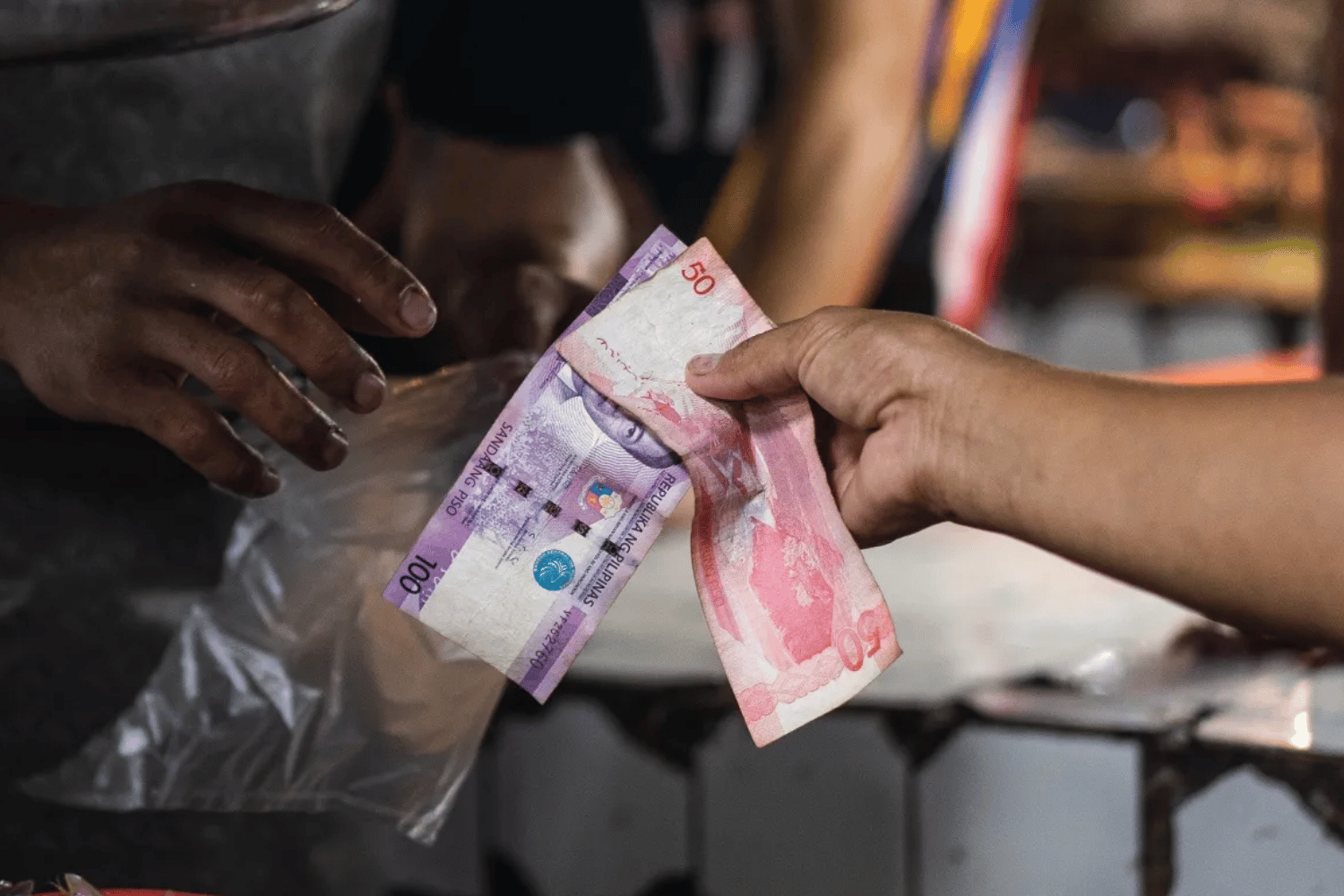
    Philippine manufacturers and retailers face severe cost pressures after the peso slid past 62 per US dollar. The slump drives up import expenses for raw materials, machinery, and store inventory.

    The currency touched an all-time low of 62.265 against the greenback on August 28. That drop amplified imported inflation after domestic headline inflation reached 6.2 percent in July.

    Warnings from the Federation of Philippine Industries indicate that higher landed input costs will cascade through wholesale channels onto retail shelves. Raw materials, intermediate goods, capital equipment, and mineral fuels make up more than 85 percent of total Philippine imports, according to government trade data. Domestic producers must spend more pesos to secure ingredients and packaging. At the same time, higher diesel and electricity charges lift distribution expenses across store networks.

    Supermarket Shelves and Downgraded Goods

    Consumer goods companies also face steeper capital expenditure hurdles. Machinery and equipment account for nearly 28 percent of inbound shipments. Meanwhile, a 25-basis-point interest rate increase by the Bangko Sentral ng Pilipinas has pushed commercial borrowing rates higher.

    If brand owners pass cost increases to retail buyers, store operators will adapt by altering product selections. Grocers may have to stock cheaper, lower-grade alternatives to maintain transaction volumes as household budgets tighten, warned Steven Cua, president of the Philippine Amalgamated Supermarkets Association.

    Retailers across Southeast Asia have confronted similar currency depreciation cycles by shrinking pack sizes and expanding private-label ranges. Remittances from overseas workers normally cushion Philippine consumer spending. However, sustained food and energy inflation threatens to cancel out those remittance gains by eroding baseline purchasing power.

    Input Clearances and Inflation Watch

    To ease cashflow strains on domestic factories, manufacturing lobbies are pressing government agencies to fast-track customs clearance for industrial inputs. Expedited releases would cut storage and port fees that accumulate during administrative delays.

    Market watchers now look to the upcoming official August inflation print. Central bank officials must decide whether further interest rate adjustments are needed to stabilise the peso.

  • Ghost Month Slows Philippine Property Deals and Major Consumer Purchases

    Ghost Month Slows Philippine Property Deals and Major Consumer Purchases

    Philippine consumers are postponing major property purchases and business launches until Ghost Month ends. That pushes transaction volumes into the fourth quarter.

    The seventh lunar month prompts households across the country to delay home handovers, wedding bookings, and commercial openings. Sales inquiries continue. However, buyers hold off on signing binding contracts or moving into finished properties.

    How Cultural Timing Alters Buying Cycles

    This pattern stems from Chinese traditions of ancestor remembrance that remain influential across Southeast Asian commercial centers. Families view big financial commitments as major life transitions. Avoiding perceived risk carries more weight than closing a deal early.

    For retailers and property developers, the slowdown represents delayed demand rather than lost sales. Companies frequently realign marketing budgets and inventory releases. This prevents spending during weeks when buyers intentionally freeze final decisions.

    Aligning Sales Plans with Seasonal Shifts

    Cultural calendars dictate revenue spikes and lulls across other Asian retail sectors as well. Brands routinely adjust operations around the Lunar New Year gift cycle, Ramadan shopping windows, and Christmas retail surges.

    Strategists Josiah Go and Chiqui Escareal-Go will outline consumer decision frameworks for regional operators at the 3rd Marketing Plan Summit on Sept. 22 and 23, focusing on the commercial impact of behavioral timing.

  • Philippine Retailers Seek Abolition of P10,000 Import Tax Exemption

    Philippine Retailers Seek Abolition of P10,000 Import Tax Exemption

    Philippine retail groups are demanding the complete abolition of the country’s 10,000-peso duty-free import threshold ahead of peak holiday shopping.

    The Philippine Retailers Association estimates that 57.4 billion pesos ($1.02 billion) in cross-border parcels entered the country tax-free in 2023 out of a 287 billion peso total e-commerce market. Under current customs regulations, commercial shipments valued below 10,000 pesos avoid all import duties and local taxes, giving offshore digital storefronts a structural pricing edge over domestic brick-and-mortar operators.

    Tax exemptions under fire

    PRA chair Roberto Claudio Sr., founder of sporting goods chain Toby’s Sports, said the association has petitioned the Department of Finance, the Department of Trade and Industry, and Congress to eliminate the exemption for commercial cargo. The group previously favored reducing the threshold value, but Claudio noted that partial cuts fail to curb the influx of untaxed and counterfeit inventory flooding local online marketplaces.

    Domestic retail accounts for 16 percent to 18 percent of Philippine gross domestic product, pays 780 billion pesos in annual taxes, and employs up to 12 million workers. PRA president Alice Liu acknowledged that removing the duty exemption could lift prices on small consumer parcels, but argued the revenue loss and employment risks for domestic operators outweigh individual transaction savings during the critical year-end sales cycle.

    Regional crackdown on cross-border parcels

    The push reflects a broader regulatory shift across Southeast Asia, where finance ministries have steadily dismantled low-value import exemptions to protect domestic supply chains. Indonesia banned direct cross-border trade below $100 on e-commerce platforms and tightened customs clearance on imported apparel, while Malaysia and Thailand introduced value-added taxes on low-value imported goods to close similar digital loopholes.

    Economic managers at the Department of Finance have not yet scheduled formal hearings on the PRA submission, leaving the 10,000-peso de minimis threshold in place as fourth-quarter import volumes begin to climb.

  • Philippines to Drop VAT on Power System Loss Charges by November

    Philippines to Drop VAT on Power System Loss Charges by November

    Philippine authorities plan to eliminate the 12 percent value-added tax on electricity system loss charges from consumer and commercial utility bills as early as November 2026.

    The Energy Regulatory Commission issued Resolution No. 26, which reclassifies transmission and distribution losses as pass-through costs rather than taxable revenue for power generators, grid operators and distribution utilities.

    Energy Regulatory Commission Chairperson Francis Saturnino Juan confirmed during a Department of Energy budget hearing that the Bureau of Internal Revenue is drafting the required revenue memorandum circular. The tax agency plans to release the circular following a mandatory 15-day publication window, clearing distributors to update their billing systems.

    Bureau of Internal Revenue Commissioner Charlito Martin Mendoza stated that the adjustment ensures consumers no longer pay taxes on electricity that never reaches homes or businesses.

    The Seven Billion Peso Cleanup

    Lifting the tax does not remove the underlying system loss charges, which continue to appear on Philippine power bills. Energy Secretary Sharon Garin told lawmakers that eliminating the actual loss charges requires a phased program and significant capital expenditure across regional grids.

    System losses divide into technical and non-technical categories. Non-technical losses cover meter tampering, power theft, defective metering equipment and administrative billing errors. Department of Energy estimates indicate that eliminating non-technical loss allowances will require approximately 7 billion pesos in enforcement, meter replacements, database cleanups and cooperative management overhauls.

    Technical losses occur naturally across cables and transformers during transmission. Fixing them requires electric cooperatives and private utilities to replace ageing lines, upgrade substations and redesign local grid architecture.

    Legislative Limits and Network Audits

    Philippine commercial operators face some of the highest electricity tariffs in Southeast Asia, where utility line items consistently eat into store operating margins and household discretionary spending. While cutting the 12 percent tax offers immediate margin relief, dismantling the base charge faces statutory limits under the Electric Power Industry Reform Act, which permits distribution utilities to recover system losses up to regulatory caps.

    Electric cooperatives will take roughly six months to complete physical grid assessments before regulators can adjust allowable technical loss caps. Garin said the government expects to deliver its formal progress report on technical losses in the first half of 2027.

  • Jollibee Shifts International Spinoff Listing to Hong Kong

    Jollibee Shifts International Spinoff Listing to Hong Kong

    Jollibee Foods will list its overseas business in Hong Kong instead of the United States, carving out its international restaurant operations into an independently traded entity.

    The unit, named Jollibee Foods International (JFCI), will hold all network operations outside the Philippines, while parent firm JFC keeps domestic stores and its listing on the Philippine Stock Exchange.

    Carving Out the Global Assets

    Splitting the operations creates two separate public companies with independent capital allocation and operating targets. Jollibee said Hong Kong provides direct access to Asian and global institutional funds as the chain builds its presence across North America and regional markets outside its home base.

    Hong Kong recorded $22.45 billion in initial public offerings during the first half of the year, a 57 per cent increase from the previous year and the exchange’s strongest first-half performance in five years.

    Richard Chong Woo Shin will lead JFCI as chief executive officer once the corporate separation finishes. Shin currently serves as chief financial and risk officer for Jollibee Group and will retain those duties until the restructuring concludes.

    Shifting Listing Destinations

    Consumer brands across Southeast Asia have long weighed New York listings against regional venues when seeking deeper international liquidity. By picking Hong Kong over a US exchange, Jollibee joins Asian consumer groups that favor regional trading hours and institutional investors familiar with Asian quick-service restaurant networks over the regulatory friction and compliance overhead of American bourses.

    The company is setting up internal governance, financing facilities, and operating systems for JFCI. The deal still requires formal shareholder and regulatory clearances before the company files its listing timetable with the Hong Kong stock exchange.

  • SM Supermalls Revenue Rises 8% to $667M on Record Occupancy

    SM Supermalls Revenue Rises 8% to $667M on Record Occupancy

    SM Supermalls lifted first-half revenue by 8 per cent to US$667 million across the Philippines as mall occupancy reached a record 96 per cent.

    Same-store sales rose 4.8 per cent to 41.8 billion Philippine pesos during the six-month period, driven by steady foot traffic and resilient food spending.

    Vacant floor space dropped to 4 per cent across the network, with the operator attributing most empty units to planned tenant relocations rather than lease cancellations. President Stephen Tan said shoppers have grown more deliberate about where they spend, favouring better quality and experiential formats over basic discount hunting.

    Casual dining led tenant performance, according to executive vice president for marketing Joaquin San Agustin, who noted that trading held steady across nearly all retail categories.

    Shifting space from apparel to leisure

    To keep mall floors full, the group is reallocating square footage away from traditional apparel racks toward sports, entertainment and social concepts. Recent additions include pickleball courts, running hubs, food halls, game parks and combined dining-and-gaming venues.

    “A mall can’t stay the same,” Tan said. “You have to keep introducing new tenants and new experiences to keep customers coming back.”

    Across Southeast Asia, mall operators face a split market. While department stores in older suburban centres lose ground to online shopping, dominant prime developers in the Philippines, Indonesia and Thailand are converting excess retail capacity into recreational destinations to protect dwell times and rental yields.

    Provincial expansion pipeline

    Growth is now concentrated outside the capital. The company opens SM Nuvali in Laguna this November, installing the country’s first direct-view LED cinema screen to replace traditional projection booths.

    Further openings scheduled in the pipeline include new regional developments in Tagum, General Trias, Bohol and Malolos.

  • Philippine Mall Rents Reach P1,783 per Sqm as Retail Real Estate Leads Market

    Philippine Mall Rents Reach P1,783 per Sqm as Retail Real Estate Leads Market

    Philippine retail rents rose 1.4 percent year-on-year to 1,783 pesos per square meter a month in the second quarter of 2026, keeping prime shopping malls ahead of hotels and data centers.

    The property market absorbed 26,000 square meters of new space during the three-month period, according to JLL data, while quarter-on-quarter rents edged up 0.4 percent.

    Foot Traffic and Large Formats

    Physical mall visits remain the core driver of commercial retail space across the country. SM Supermalls logged 1.4 billion total visits in 2025, reaching 153 million in December when holiday crowds averaged 5.5 million visitors per weekend day and 4.6 million on weekdays.

    Operators continue to anchor their portfolios around these consumer flows. SM Mall of Asia spanned about 497,000 square meters of gross floor area by 2025, while competing networks from the Ayala group and grocery operators like Puregold hold steady tenant rosters in key commercial corridors.

    Supply Pipeline and Experiential Shift

    Across Southeast Asia, mall landlords have struggled with digital channel shifts, but Philippine operators have protected yields by converting floorplans toward dining, entertainment and social spaces. Cushman & Wakefield ranked retail ahead of hotels and data centers in the Philippine commercial real estate market in 2025, noting steady leasing demand from international brands entering prime locations.

    The sector faces an influx of new physical inventory before January, with developers scheduled to complete another 160,000 square meters of retail space by the end of 2026.

  • Regatta Opens Refreshed Flagship at SM Mall of Asia

    Regatta Opens Refreshed Flagship at SM Mall of Asia

    Filipino lifestyle apparel brand Regatta opened a refreshed flagship store at SM Mall of Asia in Metro Manila, expanding its footprint inside one of the country’s largest retail centers.

    The store occupies space on the third floor of the South Main Mall, introducing an updated coastal retail layout paired with a new apparel sub-category.

    Inside the unit, merchandise is organized into dedicated product zones. A central accessories display carries lifestyle goods, including fragrances, headwear, drinkware, and towels, while an entire wall shows the retailer’s core polo shirt collection next to a customer lounge section.

    Athletic range expands casual lineup

    Alongside the store launch, Regatta introduced Regatta Sport, a product line targeting daily activewear. The collection includes quarter-zip pullovers, polo dresses, sweat shorts, lightweight nylon shorts, and jackets designed to bridge classic country club styling with functional athletic wear.

    The apparel rollout gives the brand broader coverage across technical fabrics and leisure categories as consumer demand for hybrid sportswear grows across Southeast Asia.

    Mall footprints anchor local brands

    Domestic apparel brands in the Philippines continue to renovate key metro flagships to hold floor space against competing international fast-fashion chains. High-traffic centers such as SM Mall of Asia serve as testing grounds for local operators seeking to expand product categories into lifestyle accessories and performance apparel.

    Regatta will monitor sales performance from the sports range at the South Main Mall location before rolling the inventory across its wider domestic store network in subsequent seasons.

  • Philippine Family Income Reaches 411,350 Pesos as Regional Wealth Gap Widens

    Philippine Family Income Reaches 411,350 Pesos as Regional Wealth Gap Widens

    Average annual family income in the Philippines climbed to 411,350 pesos in 2025, according to preliminary data from the Philippine Statistics Authority’s latest Family Income and Expenditure Survey.

    That nationwide figure works out to roughly 34,300 pesos a month, but earnings remain heavily skewed toward Metro Manila and industrial Luzon.

    Makati posted the highest average income among highly urbanized cities at 796,990 pesos per year, or about 66,400 pesos monthly. That is nearly double the national average and 2.5 times higher than Zamboanga City, which ranked lowest among major urban centers at 309,610 pesos. The next four top-earning cities all sit within Metro Manila: San Juan at 735,960 pesos, Parañaque at 711,310 pesos, Mandaluyong at 676,130 pesos, and Quezon City at 648,150 pesos.

    Metro Manila and Northern Luzon Lead

    Only three administrative regions surpassed the national average in 2025. The National Capital Region led with an average annual family income of 574,370 pesos, followed by Calabarzon at 526,070 pesos and Central Luzon at 447,310 pesos. At the bottom, the Bangsamoro Autonomous Region in Muslim Mindanao recorded 246,050 pesos, trailing Zamboanga Peninsula at 286,340 pesos and Soccsksargen at 292,820 pesos.

    Provincial data shows an even wider spread. Ilocos Norte topped all provinces with an average family income of 619,240 pesos, followed by Batanes, Cavite, Rizal, and Batangas. The bottom five provinces were all located in Mindanao, with Maguindanao del Sur recording just 177,750 pesos.

    Ilocos Norte expanded its household income by nearly 70 per cent between 2021 and 2025, rising from 364,800 pesos to 619,240 pesos. Remittances and business proceeds drove that surge. Overseas cash receipts accounted for 20.2 per cent of provincial family earnings, compared to an 8.5 per cent share nationally, while salaries contributed 39.8 per cent against a national average of 54.6 per cent.

    Uneven Growth Across Island Groups

    Retailers sizing up consumer demand outside Manila face sharply different spending trajectories. While high-income enclaves command basket size, secondary provinces are posting faster percentage gains. Cagayan Valley delivered the fastest regional increase between 2023 and 2025, expanding 25 per cent to 388,220 pesos, while Samar recorded a 54.4 per cent provincial jump to 357,340 pesos.

    Contraction hit other pockets. Sultan Kudarat saw average family income drop 8.2 per cent between 2023 and 2025 to 269,610 pesos. Income composition also split along regional lines: wage labor dominated every region except BARMM, where entrepreneurial activity generated 43.8 per cent of total household revenue.

    The statistics agency will publish the final 2025 expenditure tables and poverty threshold estimates in its complete survey release.

  • Philippine Central Bank Lifts Key Rate to 5% to Tackle Sticky Inflation

    Philippine Central Bank Lifts Key Rate to 5% to Tackle Sticky Inflation

    The Bangko Sentral ng Pilipinas raised its benchmark policy rate by 25 basis points to 5 per cent on Thursday. The decision targets persistent price pressures across consumer staples and fuel.

    Overnight deposit and lending facilities climbed to 4.5 per cent and 5.5 per cent. That brings a third straight quarter of tightening, following rate increases in April and June.

    Headline inflation dropped to 6.2 per cent in July from 6.4 per cent in June, easing for a third consecutive month. Core inflation, which strips out volatile energy and food items, edged down to 4.2 per cent from 4.4 per cent. Both figures remain above the government target corridor of 2 per cent to 4 per cent.

    Pressures across food, fuel and wages

    Monetary officials warned that broader price pressures continue to build across supply networks. Volatile global oil benchmarks, potential crop losses from El Niño, and rising agricultural input costs threaten retail food prices nationwide.

    Labor expenses also sit high on the central bank’s monitoring list. A pending minimum wage increase for Metro Manila remains frozen in court. Even so, authorities noted that higher payroll expenses will filter into consumer prices if businesses pass on the cost.

    Bank of the Philippine Islands lead economist Emilio Neri Jr. Pointed out that monetary tightening cannot fix supply bottlenecks. Extreme weather, elevated fertilizer costs, and currency weakness threaten to drive import bills higher for retail operators and food manufacturers.

    Slower growth tests consumer demand

    Higher borrowing costs arrive at a delicate moment for consumer spending and commercial investment. Philippine gross domestic product expanded by 2.3 per cent in the second quarter, decelerating from 2.8 per cent in the first quarter. Gross capital formation shrank 9.2 per cent year-on-year.

    Across Southeast Asia, central bankers are balancing household purchasing power against softening corporate investment. While regional peers have paused rate adjustments to protect domestic commerce, Manila is prioritizing price stability. The focus is on preventing inflation expectations from taking root in retail checkouts.

    Average inflation will exceed the 4 per cent upper boundary through both 2026 and 2027 before settling near the 3 per cent target in 2028, according to central bank forecasts.

  • Makro Returns to Philippines with Four Greater Manila Outlets

    Makro Returns to Philippines with Four Greater Manila Outlets

    Thai wholesale operator CP Axtra has partnered with Ayala Corporation to bring Makro back to the Philippines across four commercial estates in Greater Manila.

    Under the deal, the joint venture signed lease agreements with Ayala Land for sites in Quezon City, Taguig, Laguna, and Cavite. The cash-and-carry brand returns nearly two decades after its original footprint was sold off and absorbed by rival operators.

    Four Hubs Across Greater Manila

    All four locations sit inside key transport corridors and commercial zones. In Quezon City, Makro will open at Cloverleaf at the intersection of EDSA and the North Luzon Expressway. In Taguig, the retailer will take space inside Ayala Malls Arca South to serve the capital’s southern gateway.

    Two other branches target corridors south of Metro Manila. Broadfield in Biñan, Laguna, puts Makro inside a dedicated commercial and logistics campus. Meanwhile, Evo City in Kawit, Cavite, places the brand in a fast-growing residential and commercial district.

    Rebuilding an Old Partnership

    Makro first entered the Philippine market in March 1996 through a joint venture among Dutch retailer SHV, Ayala, and the SM Group. Ayala sold its 28 percent stake in 2004. SM took full control five years later, converting all existing branches into SM Hypermarkets by 2009.

    Today, the partnership pairs Ayala with CP Axtra, the retail arm of Thailand’s Charoen Pokphand Group, which operates Makro wholesale centres and Lotus’s supermarkets. The Philippine market offers a strong base of small merchants, food service businesses, and bulk-buying households that CP Axtra targets across Southeast Asia.

    Makro Philippines plans to open its first two stores at Cloverleaf and Arca South between the fourth quarter of 2026 and the first quarter of 2027. Openings in Cavite and Laguna will follow.

  • SM Retail Revenue Hits 223.6 Billion Pesos as Network Expands Beyond Manila

    SM Retail Revenue Hits 223.6 Billion Pesos as Network Expands Beyond Manila

    SM Retail posted first-half 2026 revenues of 223.6 billion pesos ($3.7 billion), up 5.6 per cent from a year earlier. Regional consumer spending gathered pace across the Philippines.

    Net income rose 6.0 per cent to 8.9 billion pesos ($270 million). Same-store sales grew 2.9 per cent across a nationwide network of 4,837 stores.

    Food and Speciality Stores Drive Turnover

    Food retail generated roughly 60 per cent of total sales across 2,824 points of sale. It rose 6.1 per cent with same-store gains of 3.3 per cent. SM Store, the group’s 79-location department store chain, grew revenue 3.2 per cent. Speciality store sales expanded 5.9 per cent, even after the operator closed a net 73 outlets to trim marginal locations.

    The company relies on an asset-light format by leasing space within sister developer SM Prime’s commercial properties. Of the 490 physical stores opened over the past year, 80 per cent sit outside Greater Manila. These target provinces where modern retail still represents less than half of household shopping spend.

    Mall Developer Backs Bay Reclamation

    SM Prime lifted first-half revenue 5.3 per cent to 71.7 billion pesos ($1.2 billion). The developer operates 90 malls across the Philippines and nine in mainland China. Rental income provided more than 60 per cent of that total. Revenue from leisure facilities, including cinemas and ice-skating rinks, rose by more than 10 per cent during the same period.

    Expansion into secondary provinces mirrors retail decentralisation across Southeast Asia, where operators such as Central Group in Thailand and Vincom Retail in Vietnam build commercial centers ahead of rising provincial incomes. Remittances from overseas workers feed directly into these regional retail hubs. They underpin Philippine private consumption at 75 per cent of gross domestic product.

    Work continues on Pasay 360, a 360-hectare Manila Bay reclamation joint venture with local authorities. The project will expand the Mall of Asia complex with new commercial, hotel, and residential districts over multiple development phases.

  • Ayala Land Signs Makro Wholesale for Four Mixed-Use Luzon Estates

    Ayala Land Signs Makro Wholesale for Four Mixed-Use Luzon Estates

    Ayala Land Inc. Signed long-term lease agreements with Makro Philippines to open four large-format wholesale stores across its master-planned estates in Luzon.

    The rollout puts the wholesale brand into Cloverleaf in Quezon City, Arca South in Taguig, Broadfield in Laguna, and Evo City in Cavite.

    Lease Terms and Property Footprint

    Under the agreement, Ayala Land retains land ownership across the standalone sites in Broadfield, Evo City, and Cloverleaf. Makro will finance, construct, and operate those three locations. At the 74-hectare Arca South development in Taguig, the retailer will take space directly inside the local Ayala Mall.

    Makro Philippines operates as a joint venture between conglomerate Ayala Corp. And Thailand-based CP Axtra Public Co. Ltd., the wholesale and retail arm of Charoen Pokphand Group. The stores will sell fresh produce, dry groceries, imported lines, and nonfood merchandise to commercial buyers and retail households through physical warehouses and an integrated digital ordering platform.

    Wholesale Expansion Across Growth Corridors

    Wholesale clubs and membership formats across Southeast Asia have accelerated their push beyond central business districts to capture rising suburban grocery spend. CP Axtra has pursued international growth outside Thailand to scale its cash-and-carry model, while Ayala Land gains steady rental yields and anchor foot traffic across its mixed-use land bank.

    Development schedules now shift to site preparations at Broadfield and Evo City as Makro begins construction across the three standalone suburban plots.

  • Doris Magsaysay Ho Becomes First Woman to Win RVR Nation Building Award

    Doris Magsaysay Ho Becomes First Woman to Win RVR Nation Building Award

    Doris Magsaysay Ho has received the Ramon V. Del Rosario Nation Building award in Manila, making her the first woman to win the business honour since its creation in 2010.

    Ho leads the Magsaysay Group of Companies, a Philippine shipping, human resources, and logistics group operating in a sector where Filipino seafarers account for more than 25 percent of the global maritime workforce.

    Workforce Equity in Transport and Logistics

    Women represent only 6 percent of the Philippine seafaring workforce, according to data from UP-CIFAL Philippines, with most concentrated in passenger catering and hospitality rather than technical posts. Under Ho, Magsaysay secured EDGE Assess certification for gender equity after lifting female representation in junior management roles to 45 percent.

    Her group also set up internal support systems for crew members. The company operates Fundamayan for family emergency aid and MATTERS, a dedicated program handling healthcare, financial literacy, and career planning for Filipino crews deployed globally.

    Training Capacity and Regional Board Leadership

    To secure skilled labour for international routes, Magsaysay partnered with Japan’s Mitsui O.S.K. Lines in 2018 to establish the MOL Magsaysay Maritime Academy, a facility built to train up to 1,000 cadets annually.

    For supply chain operators across Southeast Asia, crewing and vessel management remain critical bottlenecks as global fleets push for higher compliance and skilled technical crews. Previous recipients of the award include SM Group founder Henry Sy Sr., Jollibee Foods founder Tony Tan-Caktiong, and Ayala Corporation chairman Jaime Augusto Zobel de Ayala.

    The award is administered by the PHINMA Group, De La Salle University, the Asian Institute of Management, and Junior Chamber International Manila, with candidate evaluations conducted annually.