Tag: Retailer

  • Indonesia’s retail attractiveness rank jumps significantly

    Indonesia’s retail attractiveness rank jumps significantly

    Indonesia has significantly improved its position in the Global Retail Development Index by leaping from 12th position in 2015 to a new high fifth position. China and India are still the countries with the most attractive retail business taking first and second, followed by Malaysia and Kazakhstan.

    The consulting firm AT Kearney created the index in 2001 to measure the attractiveness of the retail sector in developing countries. It includes three main criteria namely population, country risk, and time pressure.

    AT Kearney partner Hana Ben-Shabat said Indonesia’s recent policies of loosening barriers in the retail sector including e-commerce and foreign investment were regarded as positive to investors amid the negative growth average of 2.3 percent in the last three years.

    “Local and international retailers are speeding up expansion plans,” she said on Monday in Jakarta, citing Indomaret, which planned to open 1,600 stores after the 1,560 new stores last year and United Arab Emirates’ Lulu that would invest US$500 million over the next five years.

    As market saturation would increase, Hana continued, existing retailers were experimenting to capture the niche market.

    Matahari Putraprima has launched a premium supermarket Foodmart Primo in June 2015, while Transmart Carrefour has expanded to restaurants, retail chains and entertainment.

    With the increasing usage and number of smartphones, retailers are boosting up their e-commerce. Happy Fresh has recently acquired $12 million to fund its e-commerce expansion, while Alfamart has rebranded its alfaonline.com into alfacart.com by including third-party products.

    More recently, Korea and Japan-based retailer Lotte Group and Indonesia’s Salim Group have announced that they will create a joint-venture to develop an e-commerce and logistics system. Salim and Lotte would hold a 50-50 share of the platform.

    “Now, Indonesians youngsters are paying less physical visit to retail shops. We need to catch on with this new trend,” Salim Group chairman Anthoni Salim told us on Friday.

  • Indonesian online retailer Bhinneka plans IPO to fund expansion

    Indonesian online retailer Bhinneka plans IPO to fund expansion

    Indonesian online retailer PT Bhinneka Mentari Dimensi is planning an initial public offering (IPO) in 2018 to widen its reach, one of its directors said on Thursday, as the e-commerce battleground heats up in Southeast Asia’s biggest economy.

    The e-commerce market in the country of 250 million people is ripe with potential but it is fragmented and comes with complex regulatory and logistical barriers.

    “Our objective to go public is for scaling,” director Andi Boediman said, adding that the company plans to expand its store network and strengthen its supply chain while investing in technology and marketing.

    The company operates online through Bhinneka.com, with customers able to have purchases delivered to their homes or its physical stores, which also serve as retail outlets for the electronic goods specialist.

    Bhinneka is in a good position to attract investors, Boediman told reporters on the sidelines of a conference in Jakarta.

    “We are an online retailer that is focused and reasonably sizeable,” Boediman said, adding that revenue “at least doubled” last year and that he expects a strong performance in 2016.

    Bhinneka decided to pursue an IPO in Indonesia because it can be a dominant player on its home ground, Boediman added. He declined to disclose how much the IPO is expected to raise or the company’s financial figures.

    The company’s domestic rivals include SoftBank-backed Tokopedia, Blibli and Indonesian conglomerate Lippo Group’s MatahariMall.com. Lippo is also considering an IPO for its e-commerce business, a director said in February

    The Indonesian market is still growing while being supported by a large consumer base, said David Rimbo, managing partner for transaction advisory services at Ernst & Young in Indonesia.

    “I think the timing is right for Indonesian players to actually realize basically decent valuations,” he said.

  • Hong Kong Retailers Seek to Keep Strength

    Hong Kong Retailers Seek to Keep Strength

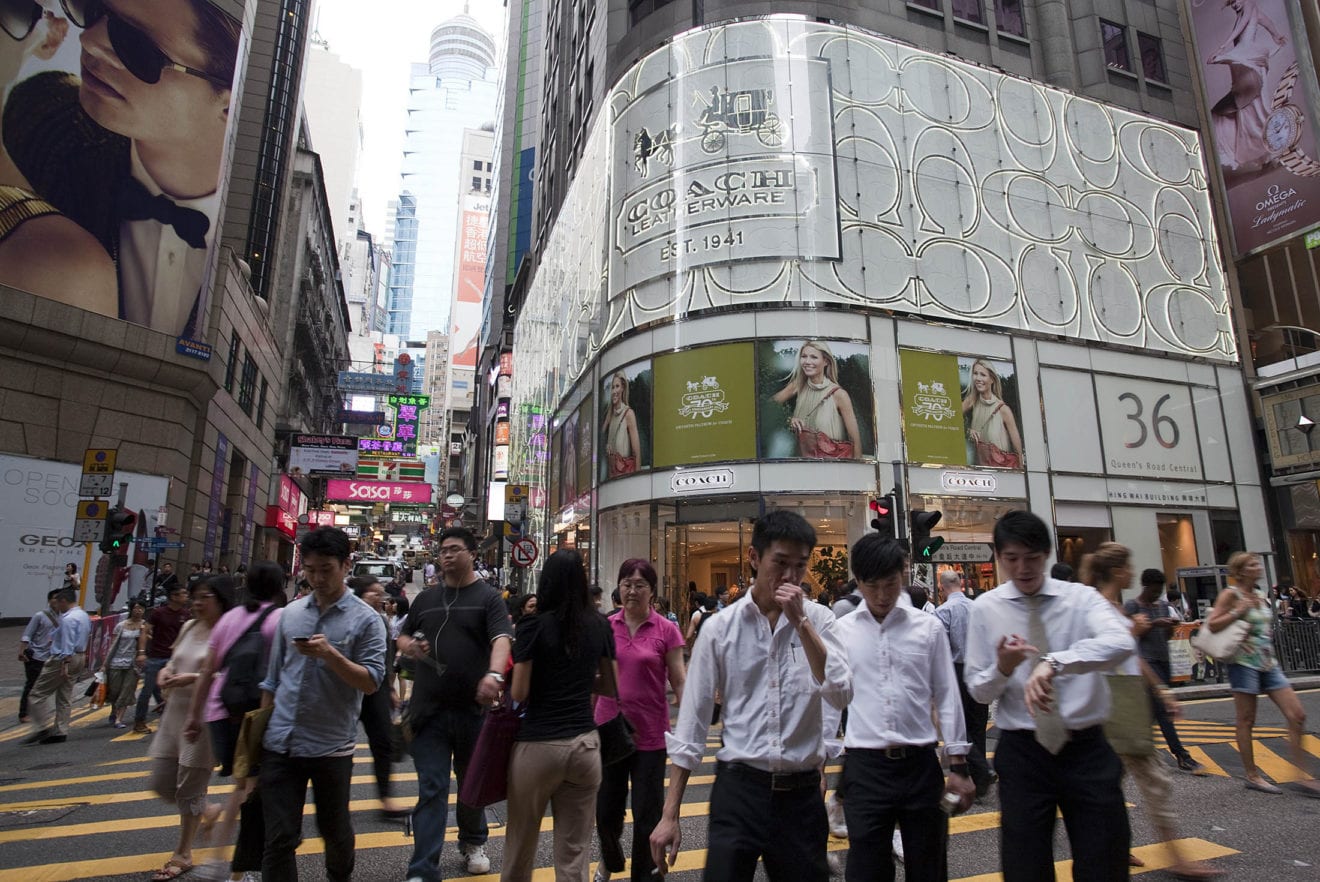
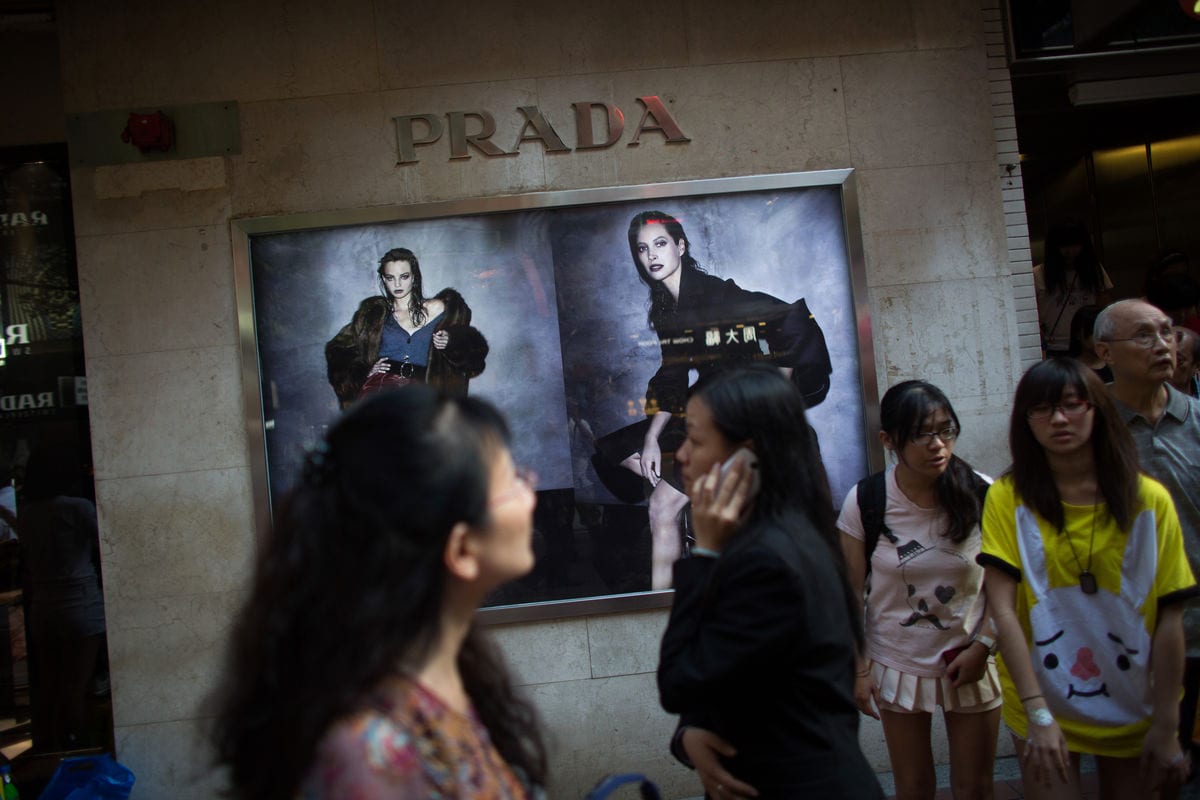
    Hong Kong has been branded as “shopping paradise” to many for a long time, but the city seems to have lost its attractiveness in recent years, as retail sales have been dragged down by a significant drop in tourist numbers.

    Retail sales have declined for 11 consecutive months as of January this year in Hong Kong, while the unemployment rate in the sector is on the rise. Signs of improvement are not in sight at the moment.

    Rents in Russell Street, once the most expensive shopping place in the world, has been slashed by half now. Hong Kong General Chamber of Commerce Chairman Y K Pang says it seems that less cost would benefit shop owners as well as customers, but as of now it appears that is not the case.

    “The competition is really fierce. Other regions are so eager to share a slice of cake from us. No matter how low the cost is, without customers, there is no money to make. So we should welcome all visitors regardless of where they are from.”

    Currently, there are less than 50 mainland cities allowing their residents to visit Hong Kong on an individual basis. Some are suggesting expanding the Individual Visit Scheme to boost Hong Kong’s tourism as well as its retail industry, but C K Chao, Founding Chairman of Federation of Hong Kong brands, has another view.

    “When tax lowers on the mainland, and people are better off, they could buy the same products there without paying more, or even less than in Hong Kong, why would they come? Hong Kong should establish our own brands, so visitors are here to buy watches, jewelry, and clothes made in Hong Kong. ”

    Chao is hoping the government can establish a specialized department to regulate as well as guide the retail sector for further growth.

    At the same time, Dr. Szetu Chi Man with the Institute for Entrepreneurship at Polytechnic University of Hong Kong, says local companies should get fully prepared to embrace technology to expand business.

    “Small companies in Hong Kong still think that they can make money through traditional channels, so they are not ready to use technology yet. I hope the government could help them improve their service to stay competitive in the market. ”

    Raymond Tang is the Managing Director of Kingvic International Limited, a footwear company in Hong Kong. He says manpower is vital to retailers, and more people should have the access to professional training and courses.

    “The turnover rate is high. Many young people take retail jobs before they get a formal one, and they only stay for a couple of months. So we are always short of hands and they have no experience to offer good service.”

    He admits that it is not easy to transform the business model, and Hong Kong should waste no time to act to save the retail sector; otherwise, this “shopping paradise” could soon lose its glamour.


  • China’s cross-border e-commerce boom is a boon for small retailers abroad

    China’s cross-border e-commerce boom is a boon for small retailers abroad

    After years of tepid growth, sales at several Australian vitamins, minerals, and supplements companies suddenly shot up by 20, 30, or even 40% in 2015. For those who know what happened that in China in late 2014 the source of this growth probably isn’t a big mystery: Regulators expanded a tax exemption to cross-border e-commerce.

    The resulting growth in trade has been dramatic, and for firms who have long eyed the big Chinese market but are too small to invest in finding a distribution partner or building a physical presence on their own, the boom of 2015 has delivered a revelation: They, too, can access the mainland market.

    E-commerce has of course been big in China for years, and in 2014 online retail sales totaled nearly US$430 billion, accounting for roughly 10% of all retail sales.  (The same figures for the United States were US$300 billion and 6.4%, respectively.)  Until recently, however, this activity was nearly all domestic – i.e., goods produced in or already shipped to China being sold to Chinese consumers.

    That makes perfect sense in light of the retail explosion of recent years:  China has more than 300,000 pharmacies, more than 2,000 mid-to-high end department stores, and supermarket catchment areas in urban areas are even smaller compared with the United States because of smaller formats and the lack of parking (and, until recently, widespread car ownership). Within this rapidly-developing retail landscape, however, some factors are driving consumers to prefer foreign products, whether bought once in China or ordered from abroad.

    Driving demand

    Food scandals are well-known and heavily publicized, from the baby-killing melamine-laced formula scandal of 2008 to the discovery this year of decades-old “vampire” meat.  In September, fake rice made from tiny pieces of rolled-up paper was even uncovered in Guangdong.  In light of such underhanded tactics, it is understandable that consumers might perceive foreign brands as safer and of higher quality.
    Price pressures pushing up consumer prices is another key issue.  Commercial rents, especially in first-tier cities such as Shanghai and Beijing, rival those in developed nations.  At the end of 2014, rents in Beijing’s Wangfujing averaged $480 per square foot per year vs. $360 for Singapore’s Orchard Road.  Wages, while still lower compared to western economies, are also rising quickly.

    Finally, Chinese consumers are becoming more sophisticated and better able to differentiate between local brands trying to pass themselves off as foreign and the real thing.  With travel increasing and the transparency in commerce that the internet can bring, tastes in products are becoming more global.

    Historic developments

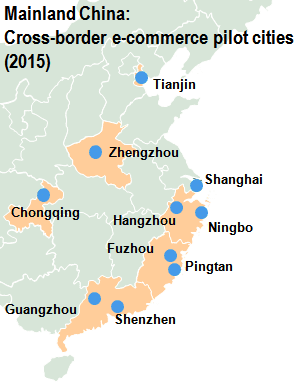
    By as early as 2005, a Chinese consumer could order an album on Amazon and wait a few weeks for it to arrive—though naturally taxes and shipping often added to the price of the CD itself. But it wasn’t until the fourth quarter of 2014 that cross-border e-commerce really exploded.  The impetus was the application of a previously obscure piece of the tax code to cross-border e-commerce, implemented in a number of pilot cities.

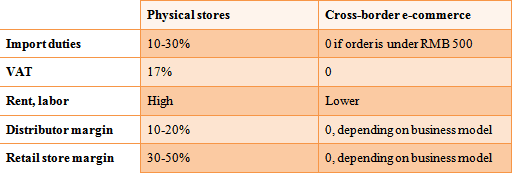
    The personal effects tax originally targeted Chinese travelers who had emigrated abroad and were bringing back gifts – such as small appliances – for relatives.  Small items were exempt, but the tax was set at 10% for nearly everything else.  In late 2014, though, the government proclaimed that this personal effects tax also applied to cross-border e-commerce in certain pilot areas.  The effect was dramatic, as can be seen in the price differentials illustrated below.

    Obviously some costs, such as freight and insurance, are incurred whether selling through physical stores or cross-border e-commerce.  However, the price differential can be observed in following key areas, demonstrated with VMS products as an example:
    The nuts and bolts

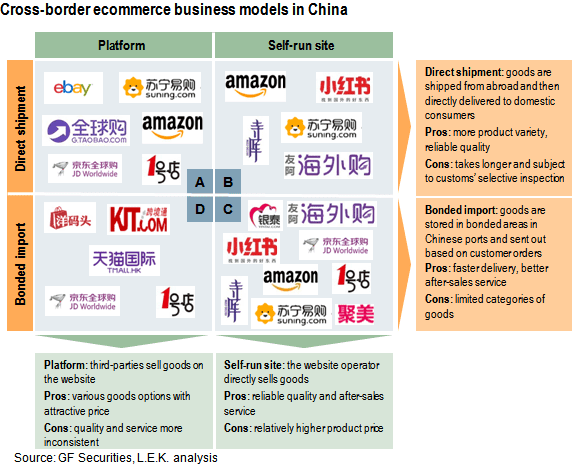
    Business models for cross-border e-commerce can be viewed across two main dimensions: Whether the site serves as a platform that aggregates multiple sellers or sells its own products, and whether delivery to the consumer is made from the source country or from a bonded warehouse.

    Each model has its own quirks (see graphic below), and it is not yet clear whether there is an obvious winner.  It is likely that multiple models will co-exist –for example, a self-run, bonded import model could work for goods with the highest turnover (such as diapers and infant formula), while direct shipment models might better suit the long tail of less-frequently ordered items.
    In terms of product flow, though, the bonded import model has the clear advantage in terms of speed.  Consumers can receive product within days – sometimes only one or two – rather than weeks.
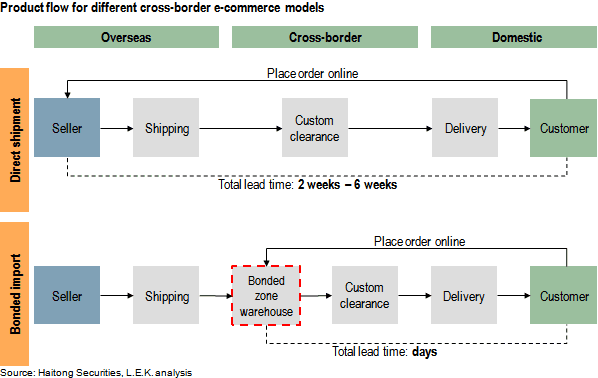
    With both models the seller can choose how much to take on internally, and how much to either outsource or hand over to a partner.  Hundreds of cross-border e-commerce companies have already sprung up in China, providing services that run the gamut from simple customs clearance all the way to a full consignment model.

    Local interests

    While e-commerce, including the cross-border variety, is here to stay, the advantages that it has over traditional imports may not last forever, depending on the product category.  In June of 2015, for example, China’s government lowered import duties on skin care products, which harmonized online and offline prices to an extent.  In 2016, import duties on additional products including handbags and suitcases are also slated to be slashed.

    Regulatory vacuums will likely be filled step-by-step as well.  For example, vitamin potency levels are regulated for products registered and sold in China, but currently these rules are not applied for cross-border e-commerce imports.  Local players are crying foul, and regulators will no doubt feel pressured to act.

    For now, though, cross-border e-commerce is helping to level the playing field by allowing smaller-scale companies to profitably access the vast China market while providing a huge boon in the form of savings and product diversity to Chinese consumers as well. Chalk one up for the little guys on both sides of the border.

  • Thai retailers call for more tax breaks

    Thai retailers call for more tax breaks

    The government should continue endorsing tax breaks for consumers and open more duty-free shops to attract foreign tourists and boost the retail business, according to the Thai Retailers Association (TRA).

    “The tax measure endorsed for the last seven days of last year has helped the whole retail sector to grow by 3.1 per cent in 2015, up from 2.8 per cent in an earlier forecast.

    “It would be great if the government could extend this scheme to cover foreign tourists in order to encourage more spending while they stay in the country,” Jariya Chirathivat, president of the TRA, said yesterday.

    For domestic tourism, the government should continue the tax-deduction measure and implement it twice annually, in the first and second halves of the year. This would increase spending by local people, particularly for tourism, during the low and back-to-school seasons.

    The government should allow more operators to open duty-free shops in major towns and tourist destinations. It is hoped this would reduce the prices of luxury products and other goods, and encourage tourists to spend more.

    “The government should give the green light to more operators to run duty-free shops at major airports and in downtown areas. Currently, there is only one duty-free operator in Thailand.

    “The government should support this by having pick-up counters at major airports for tourists buying duty-free products in downtown shops. This would benefit the tourism industry,” Jariya said.

    The average daily spending per visitor is about Bt5,000, he said. Nearly one-third of that, or about Bt1,400, is for shopping. However, the average tourist shopping expenditure in Thailand is half that in Singapore and a quarter of the outlay in Hong Kong.

    “The problem is tourists don’t come to Thailand mainly for shopping, because most luxury goods here are more expensive than in Singapore or Hong Kong,” she said.

    To strengthen the retail business in 2016, the TRA has offered more proposals to the government for consideration, including speeding up investment in infrastructure projects to create jobs and increase incomes.

    Other ideas are imposing some measures to boost local consumption by focusing on middle-to-high-income earners, restoring shoppers’ confidence, and putting consumers in a shopping mood by running some campaigns during the low season.

    Reducing duties on luxury brand-name imports to attract more shopping from foreign tourists is also needed. According to the Global Blue survey for 2012-13, Thais were ranked sixth in claiming tax refunds on overseas shopping.

    The TRA said the 2015 special tax break was one of the government’s New Year gifts for Thais. All retailers and product makers are registered in the value-added-tax system.

    The measure, which offered tax deductions of up to Bt15,000, augmented consumer purchasing power. Earlier, the government imposed another measure to allow deductions of up to Bt15,000 for individual taxpayers who bought hotel accommodations and other services from tourism operators. Both tax breaks will together allow individual taxpayers to deduct up to Bt30,000 on their personal income tax.

    It was predicted that the shopping spree during the New Year celebrations rose 20 per cent or Bt25 billion and pumped Bt125 billion into the economy in the final month of 2015.

    According to the World Bank, Thailand’s tax collections should reach 21.35 per cent of gross domestic product, but only 16.02 per cent has been collected over the last few years.

    A study of the tax structure found only 327,127 companies and partnerships registered with the corporate-income-tax system, or only 12 per cent of the 2.7 million entities registered with the Commerce Ministry’s Business Development Department.

  • Courts Retail to open second  megastore by year-end

    Courts Retail to open second megastore by year-end

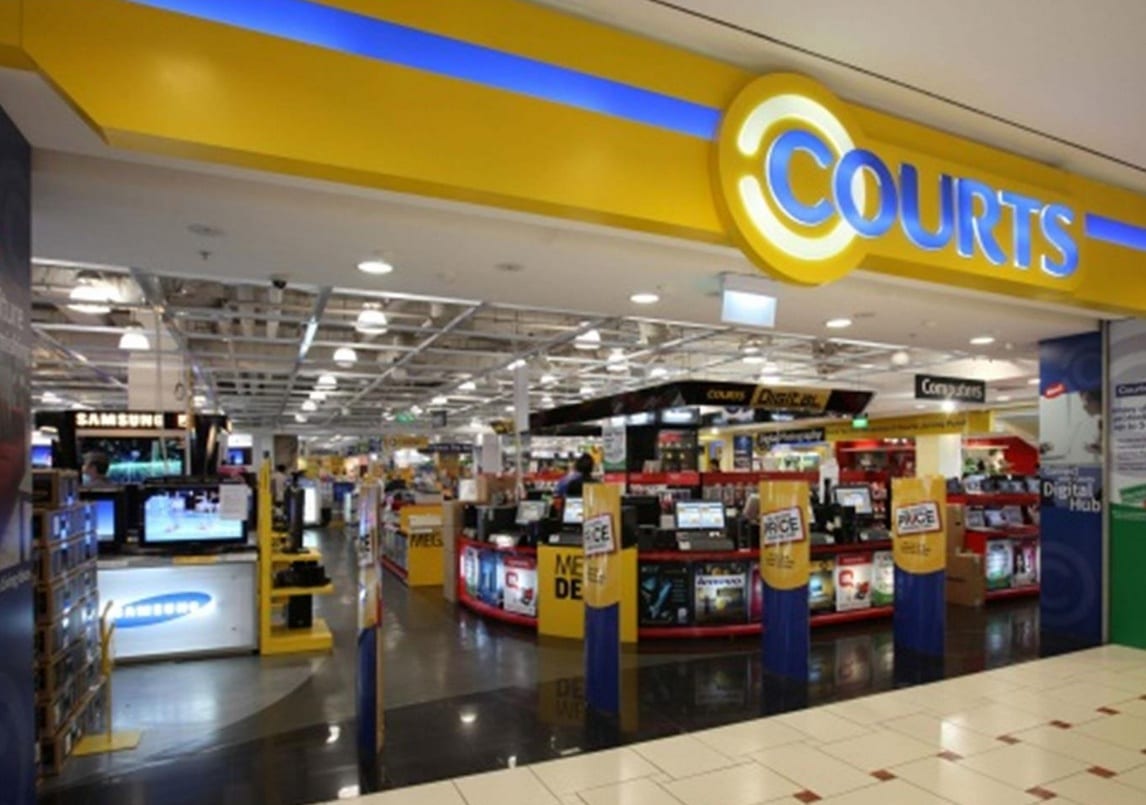
    PT Courts Retail Indonesia, a subsidiary of Singaporean retailer Courts Asia Ltd., will open a new megastore in Bumi Serpong Damai (BSD) City, South Tangerang, Banten, in December as part of the company’s Indonesian expansion.

    Courts Retail Indonesia CEO Roy Santoso said the 24,000-square-meter megastore was currently under construction on a 2.2-hectare plot of land in BSD, a growing township in the southwest of Jakarta with direct toll road access to South and West Jakarta.

    He said the construction of the retailer’s second megastore was 80 percent complete. The store would sell at least 12,000 items from 200 local and international brands. All the electronics and home appliances were local products, while the furniture would comprise 70 percent local and 30 percent imported brands, mostly from Malaysia and China, Roy added.

    “The store spaces will be grouped into four segments: ‘Play’ for electronics, ‘Live’ for home appliances and accessories, ‘Sleep’ for beds and ‘Relax’ for furniture,” he said in a press briefing last week.

    Currently the company has three operating stores: one megastore in Kota Harapan Indah, Bekasi, West Java, and two smaller ones in Bekasi and Bogor, both West Java. It only began active operations in Indonesia in 2014.

    Roy said that Courts Retail would open a maximum of seven stores in total within two years and 10 to 12 stores by 2019 in Greater Jakarta.

    “In these kind of economic conditions, we have to have a sustainable development plan. To reach breakeven, we plan to open two to three smaller-sized stores within two years,” Roy said.

    “Our initial plan had been to have one megastore in each western and eastern part of Greater Jakarta. The eastern part is Bekasi and the western part is BSD. We can still have vast area to build a megastore in BSD,” Roy said.

    “Courts also targets various classes of income groups. In our stores we segment our products into good, better and best so that people can choose. And BSD is easily accessible for people with different income who live in Bintaro and Pondok Indah in South Jakarta and Karawaci in Tangerang, other satellite cities with high numbers of population,” Roy added.

    The company has invested between US$3 million and $5 million for each megastore and $500,000 to $1 million for each smaller store of 2,000 sqm. In total, it has invested around $8 million so far, Roy said.

    The megastore to be launched in BSD will absorb some 300 employees, alongside overall management personnel placed there, too, as the company plans to move its headquarters from South Jakarta to the new outlet by December.

    Amid present competitors in the area, such as Kawan Lama Group’s Ace Hardware and Informa that serve similar product segments, Courts remains optimistic as it offers different product models and promotions.

    Courts Retail promotion strategy includes a flexible credit scheme and cooperation with major credit card issuers, including exclusively with BRI.

    “Other new things offered by Courts include a free delivery service, made-to-order furniture, installation, repair and cleansing services. Our e-shopping website will be ready by the end of this month,” Roy said.

  • Hong Kong Luxury Goods Stores Want Cheaper Rents

    Hong Kong Luxury Goods Stores Want Cheaper Rents

    Rents for retail space on the island of O‘ahu rose to a record earlier this year.  Colliers International says commercial rents here have been rising for the past several years, a trend that’s expected to continue. Commercial rents have also risen in Hong Kong, but some luxury retailers are fighting back.  HPR’s Bill Dorman has more in today’s Asia Minute.

    Selling luxury goods in Hong Kong is not the business it used to be.  Part of that reflects a slowing Chinese economy.  But those who follow the sales say an even bigger impact has been the crackdown on extravagant spending by Chinese government officials.

    This week, the chief financial officer of Gucci’s parent company threatened to close some stores in Hong Kong unless rents are reduced.  He told a conference call of analysts that “many landlords have not necessarily understood that the markets have changed.”

    Bloomberg reports Burberry may also try to lower its rent after its sales in the city fell to a two-year low.  Commercial rents have come down in some parts of Hong Kong, but they remain among the most expensive in the world.  Reuters reports a 500-square foot store space in the neighborhood of Causeway Bay can cost the equivalent of 64-thousand US dollars a month.

    Commercial real estate firm Cushman and Wakefield says annual rent for retailers tops two-thousand dollars a square foot in three different Hong Kong neighborhoods.  Many Chinese shoppers are now traveling beyond Hong Kong to buy luxury goods.  In a report last month, Bain and Company said the world’s luxury goods market is continuing to grow, and its major driver is tourism.

  • Shinsegae opens big mall

    Shinsegae opens big mall

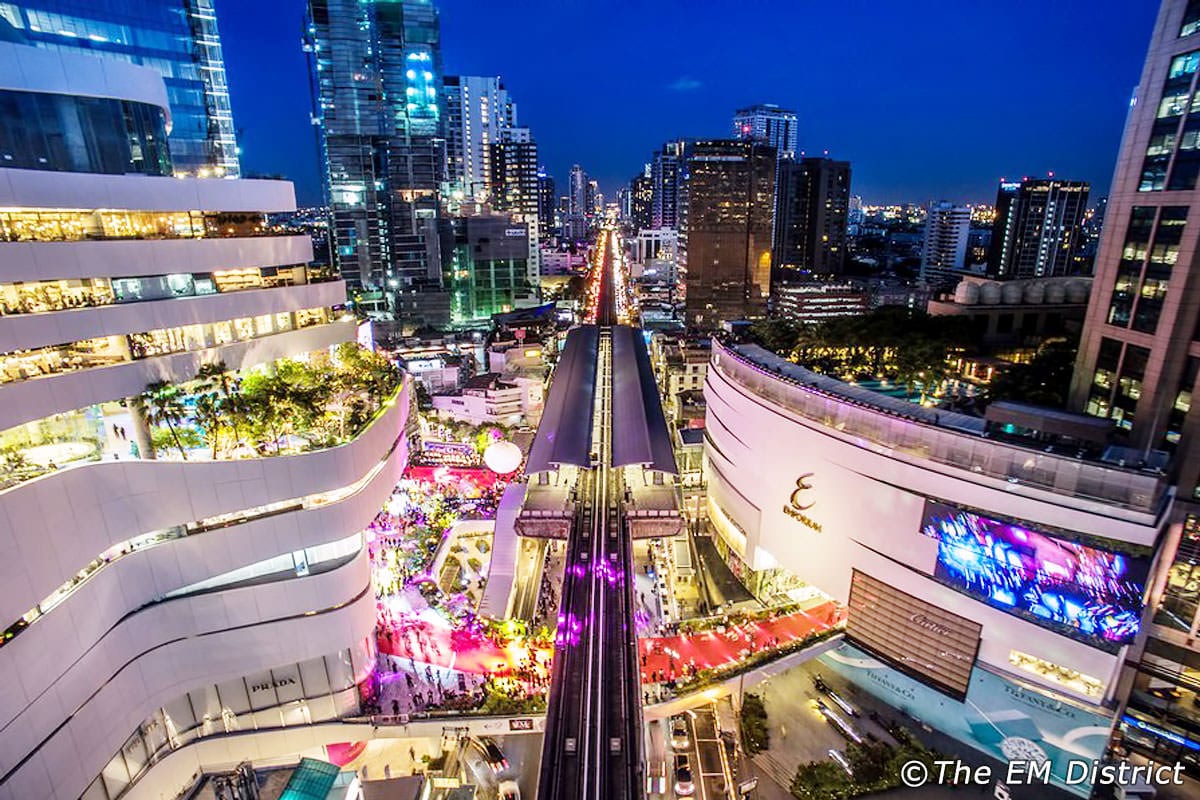
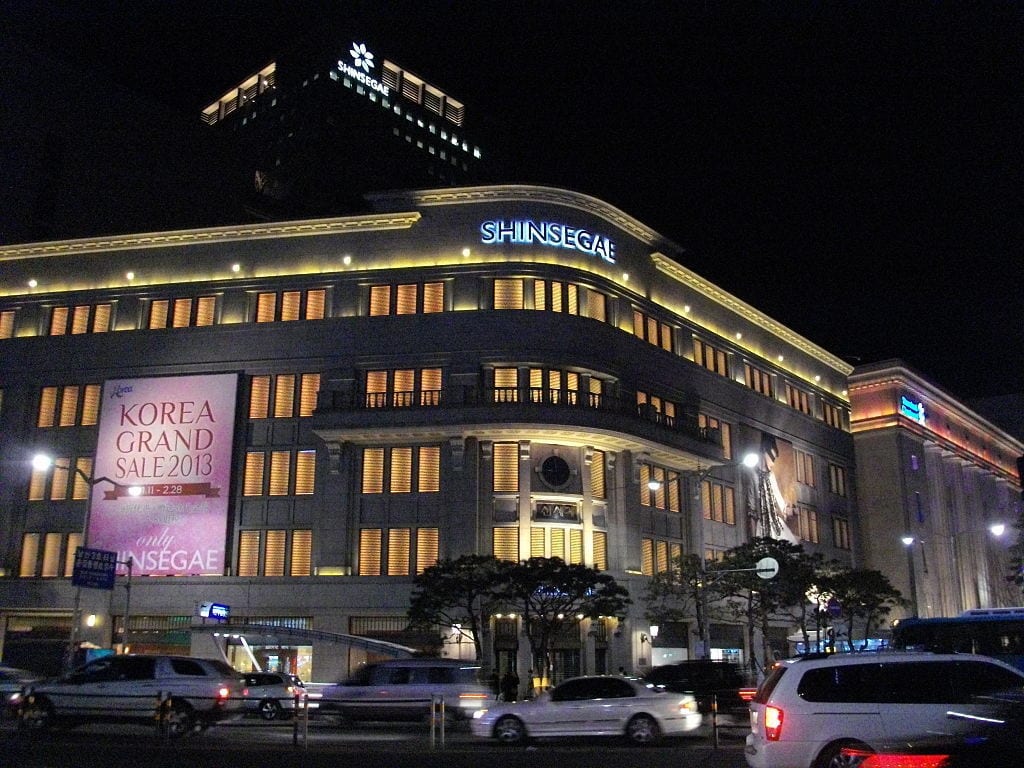
    Korea’s Shinsegae Group is about to open an enormous purchasing centre northwest of Seoul which it hopes will take the battle to Ikea for homewares buying.

    Shinsegae, one of many nation’s largest division retailer operators, will open E-Mart City on June 18, on a website adjoining to the Kintex conference centre in Ilsan, within the Gyeonggi province.

    The corporate is banking on Seoul residents heading out to the centre for a day’s buying, eating and leisure – a serious drawcard being carparking, which shoppers should queue for in downtown locations.

    E-Mart City, stated to be the dimensions of about 10 soccer fields, will inventory furnishings, house home equipment, homewares, groceries and meals. It can function an E-Mart grocery store and a wholesale warehouse.

    Shinsegae believes three branded retail areas will create some extent of distinction from its rivals: an upmarket foodcourt referred to as Peacock Kitchen that includes 14 meals manufacturers and seating for 300 individuals; residence furnishing retailer The Life providing some 5000 merchandise; and multi-brand equipment retailer Electro Mart.

    “We’ve got put all our assets into the mall as a way to set a brand new development in retail enterprise,” stated Shinsegae vice chairman Chung Yong-jin in a press release.

    “The E-Mart City is a cluster of trend-setting shops and good eating places. Individuals will be capable of have a high-quality one-stop purchasing expertise within the city.”

    Ilan is about to be a battlefield for main retailers, with Ikea planning to open its second Korea retailer there in 2017, and Shinsegae’s rivals Lotte, Tesco Residence Plus, Lotte Massive Market, Costco and Hyundai Division Retailer all inside a brief drive.

  • Lane Crawford named Tremendous Retailer of the Yr

    Lane Crawford named Tremendous Retailer of the Yr

    Hong Kong luxurious division retailer Lane Crawford has been named Tremendous Retailer of the Yr within the Hong Kong Retail Business Commerce Awards introduced this week.

    The awards have been introduced at a gala dinner through the three-day Retail Asia Expo 2015 the place greater than 10,000 retailing professionals gathered in Hong Kong this week to showcase progressive options and new concepts on excelling in Asia’s retail market. The 2015 Prime 10 eCommerce Web site Awards have been additionally introduced on the dinner, with the highest accolade going to Nike Hong Kong.

    Hong Kong Retail Business Commerce Awards

    HKRITA’S Business Tremendous Retailer of the Yr: Lane Crawford

    Based in 1850, Lane Crawford is recognised as an business benchmark for innovation and its authority on bodily and digital retailer setting to optimise buyer expertise. With its “Related Commerce” technique, it introduces an internet omnichannel luxurious way of life expertise for patrons in China. Therefore, it’s uncovered to all elements of China and clients, bringing broad choice of style and way of life merchandise to China.

    HKRITA’S Small Enterprise Retailers of the Yr: Museum Context

    With a spotlight of high quality pure supplies, Museum Context has been providing all kinds of merchandise that clients can’t discover elsewhere. Solely 4 years of expertise in Hong Kong, it had showcased its product choice in several places, the place native clients, overseas travellers and expats residents can expertise its story and worth behind.

    HKRITA’S Group Retailers Award: Banyan Tree Gallery

    As a advertising channel for conventional village handmade crafts in numerous of Asia, Banyan Tree Gallery does greater than showcasing craftsmanship. The gallery exhibits nice help to surroundings conservation by designing earth-friendly merchandise. It additionally helps to maintain the craftsmanship and livelihood of native artisan by means of gainful employment.

    China Every day Asia Pacific Retail Management Award: Bang & Olufsen

    Based in 1925, Danish shopper electronics firm Bang & Olufsen (B&O) opened an Asia Pacific Regional workplace in Singapore in 2003. The corporate has since then designed and manufactured a extremely distinctive and unique vary of televisions, music techniques, loudspeakers, telephones, and multimedia merchandise with a strategic concentrate on Asia.

    Stuart Bailey, GM of Diversified Communications Hong Kong, stated the success of the retail business in Hong Kong wouldn’t be potential with out revolutionary retailers.

    “These awards are a token of respect and recognition to those main practitioners for his or her excellent efforts and tireless dedication to the business. We’re glad to kick-start the three-day Expo with such this necessary second witnessed by business leaders, and we belief the Expo would function a useful platform for Asian retailers to know progressive instruments and applied sciences and embrace the worldwide tendencies.”

    The 2015 Prime 10 eCommerce Web site Awards

    The 2015 Prime 10 eCommerce Web site Awards went to (so as):

    1 Nike Hong Kong

    2 ParknShop

    three Canon Hong Kong

    four Bossini Enterprises

    5 Lane Crawford

    6 Lingsik King

    7 Pricerite.com.hk

    eight Sony Hong Kong

    9 Eprint Group

    10 Zuji.com.hk

    Organised collectively between GS1 Hong Kong and Retail Asia Expo, the 2015 Prime 10 eCommerce Web site Awards serve to recognise on-line platforms for delivering steady and exemplary requirements in selling consumer expertise and enterprise gross sales by way of digital portals or web sites.

  • Singapore Metro revenue dives

    Singapore Metro revenue dives

    Singapore’s Metro Holdings has reported an 82.7 per cent fall in its internet revenue to S$7.6 million within the fourth quarter.

    Full yr earnings, nevertheless, rose 33.7 per cent to $142.9 million on income up four.78 per cent to $145.eight million.

    The property improvement group stated revenues within the final quarter rose 19.2 per cent on account of greater turnover in its retail operations following the opening of its new retailer at Metro Centrepoint within the third quarter.

    The corporate blamed the quarterly earnings decline on greater operational prices and overheads within the retail division, largely from the brand new retailer. The corporate additionally booked a writedown within the worth of plant and gear at Metro Centrepoint.

    Metro operates a sequence of department shops and specialty shops in Singapore and Indonesia.

    In Singapore, it has 4 department shops, 9 Monsoon Decorate and one M2 specialty shops. Metro Paragon, its flagship retailer situated on Orchard Rd is positioned on the excessive finish of the market, whereas Metro Woodlands and Metro Sengkang within the suburbs and Metro Metropolis Sq. on the town fringe are positioned as ‘family-friendly shops’.

  • Omni-channel fulfilment critical for retailers to make financial returns on investments

    Omni-channel fulfilment critical for retailers to make financial returns on investments

    Despite increasing investments in omni-channel sales capabilities, many retailers and consumer goods manufacturers find it hard to fulfill omni-channel demand profitably, a new report says.

    The new report The Omni-Channel Fulfillment Imperative prepared for JDA Software Group, Inc. by PwC reveals that an enormous amount of money, energy and time retailers and consumer goods manufacturers are spending to improve their omni-channel sales capabilities. However, only 16 percent of companies say they can fulfill omni-channel demand profitably.

    This study is based on a global survey of more than 400 retail and consumer goods CEOs from around the world, conducted in late 2014.

    It finds that the high cost of fulfilling orders is eroding retailers’ margins as they sell and deliver products across multiple channels. A full 67 percent of respondents reported that these costs are growing as they increase their focus on selling across channels. Survey respondents reported their highest costs associated with omni-channel selling as:

    Handling returns from online and store orders (cited by 71 percent of respondents)
    Shipping directly to the customer (67 percent)
    Shipping to the store for customer pick-up (59 percent)

    The CEOs in the JDA study recognize that they need to continue investing in business improvements to enhance their omni-channel performance. However, reducing the associated logistics costs is not their primary focus. When asked to rank their top initiatives for improving business operations, CEOs’ number-one choice (57 percent) was spending capital on creating new customer experiences. Similarly, when asked to rank strategic growth enablers for the year, reducing/reformatting physical store footprints to focus on expanding the ecommerce business was the top choice at 53 percent.

    “Every time retailers receive an online order, they have a number of options to fulfill that demand. They can pull the product from a local store, send it from a centralized warehouse or ship it directly from the supplier. JDA’s new study demonstrates that most retailers lack the insight to make these decisions in a profitable manner – and are not sufficiently focused on this critical capability gap,” said Kevin Iaquinto, chief marketing officer at JDA. “They need intelligent logistics and fulfillment solutions that can reveal the hidden costs, and the customer service trade-offs, associated with every delivery option. In addition, to truly win in the omni-channel marketplace, retailers need the upfront demand forecasting tools to make sure products are already distributed across all locations in a manner that supports profitable delivery.”

    While they might not be focused on actions today to create profitable fulfillment and delivery schemes, the study shows that CEOs are aware of the importance of profitable omni-channel fulfillment to their future survival.

    Seventy-one percent of respondents said omni-channel fulfillment is either a high or a top priority. And these CEOs are planning to invest an average of 29 percent of their total capital expenditures for 2015 on improving their omni-channel fulfillment performance.

    The fulfillment capability most cited as needing attention was transportation and logistics, named by 88 percent of CEOs as a priority for the future. The second capability CEOs will focus on is improving inventory availability to fill orders, cited by 85 percent.

    “Having products available, then finding the most profitable way to deliver them – are critical activities that lie at the heart of supply chain excellence,” noted Iaquinto. “The CEOs in the JDA survey clearly understand the challenges they have ahead of them with regard to fulfillment, and they know they will have to innovate if they are to be profitable while meeting customer expectations across channels. The good news is that advanced technology can help retailers and consumer goods manufacturers master omni-channel fulfillment. However, until companies fully leverage these solutions, they will fail to realize positive financial returns on their omni-channel investments.”

  • Lotte Mart opens 10th supermarket in Vietnam, to have 60 stores by 2020

    Lotte Mart opens 10th supermarket in Vietnam, to have 60 stores by 2020

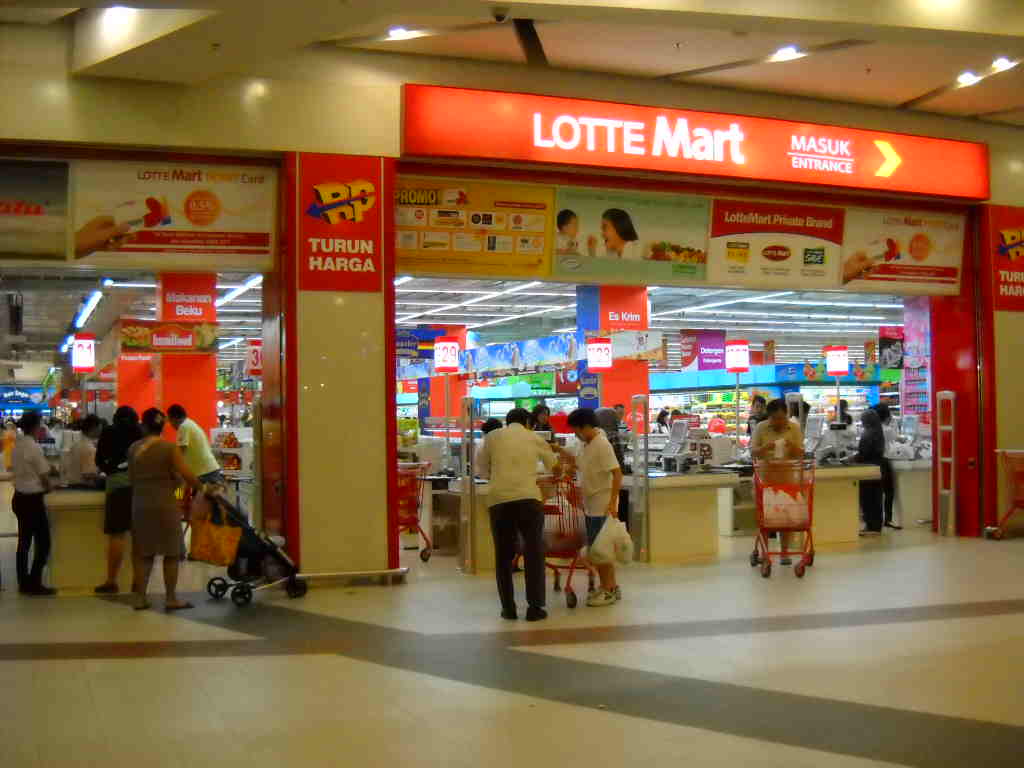
    The South Korean retailer Lotte Mart on Thursday opened its 10th supermarket in Vietnam in Tan Binh District of HCM City, contributing to its expansion nationwide.

    Located at 20 Cong Hoa Street, Lotte Mart Tan Binh has investment capital of USD9 million and covers an area of over 8,500square metres.

    The supermarket operator, which came to Vietnam in 2008, plans to have 60 stores nationwide by 2020.