Retail News CRM

Tag: uber

  • Uber Vietnam CEO leaves post, reasons unknown

    Uber Vietnam CEO leaves post, reasons unknown

    The company had to pay nearly $3 million in back-taxes and fines last month, but it is unclear if this had any bearing on the decision. Uber Vietnam has announced that its CEO Dang Viet Dung has left the company. No information about the reasons for his departure or who will replace him has been revealed.

    Dung, 32, took the helm of Uber Vietnam when the U.S.-based firm first entered the country in 2014.

    A graduate from Amherst College in the U.S., he took the post after halting a master program at Harvard Business School.

    Late last month, tax authorities in Ho Chi Minh City collected VND66.68 billion ($2.93 million) in arrears from Uber Vietnam, including fines for faulty declarations and late payments.

    Following the incident, rumors started to spread that Uber would be leaving Vietnam. The company was quick to dismiss this.

    As of August, Uber had four million users in Vietnam, according to official company data.

  • Saigon calls for carpooling service ban to be revoked as city grinds to a halt

    Saigon calls for carpooling service ban to be revoked as city grinds to a halt

    Carpooling services are convenient because they cost less and reduce congestion, but the transport ministry says they put passengers at risk.

    Ho Chi Minh City’s government has asked the Ministry of Transport to overturn a ban on low-cost carpooling services that was issued in June.

    The ministry previously said it would not allow either Grab or Uber to offer their ridesharing services GrabShare and UberPOOL in Vietnam because sharing a car with a stranger puts passengers at risk

    The decision came a month after the two ride-hailing firms rolled out their services in the city.

    If Uber and Grab disobey the rule, they will be fined VND4-6 million ($175-260) per ride, the ministry said.

    But the ministry’s words seem to have been an empty threat because GrabTaxi is still offering the service, and has also asked for the ban to be lifted, local media reported.

    The ministry asked for the city’s opinion in July. In response the city said it said it is difficult to tell if a Grab or Uber driver is offering a ridesharing service, so it’s nearly impossible to stop them.

    It also said carpooling services are convenient for passengers because they cost less, and more importantly, reduce traffic congestion in the city.

    The city has asked the ministry to allow a carpooling service to be piloted for one year so that it can build regulations to manage it.

    As suggested by the city, only cars with less than nine seats will be allowed to operate the service, and each car can only accept two contracts at once. They must also have specific logos to distinguish them from those that do not offer the service.

    HCMC is looking at ways to limit the number of private vehicles entering the city center to ease congestion.

    Official data show that the city’s transport department had licensed 23,820 cars with under nine seats as of June 30 this year.

    By mid May, the city had more than 8 million private vehicles, an increase of 5.8 percent against the same period last year, including 646,400 private automobiles and 7.4 million motorbikes.

    The current number of autos in the city has nearly tripled the limit set for 2020 and is double the ceiling set for 2025.

    At a meeting with local residents in August, Mayor Nguyen Thanh Phong said the city would revisit a plan to change school and office hours in an attempt to stagger the amount of traffic hitting the city’s streets during rush hours.

    Research conducted by Associate Professor Pham Xuan Mai from the Ho Chi Minh City University of Technology released in March last year found that traffic congestion costs the southern metropolis more than VND18.3 trillion ($820 million) every year.

  • Uber to end post-trip tracking of riders as part of privacy push

    Uber to end post-trip tracking of riders as part of privacy push

    The change, which restores users’ ability to share location data only while using the app, is expected to be announced on Tuesday and rolled out to Apple Inc iPhone users starting this week.

    Uber Technologies Inc is pulling a heavily criticized feature from its app that allowed it to track riders for up to five minutes after a trip, its security chief told, as the ride-services company tries to fix its poor reputation for customer privacy.

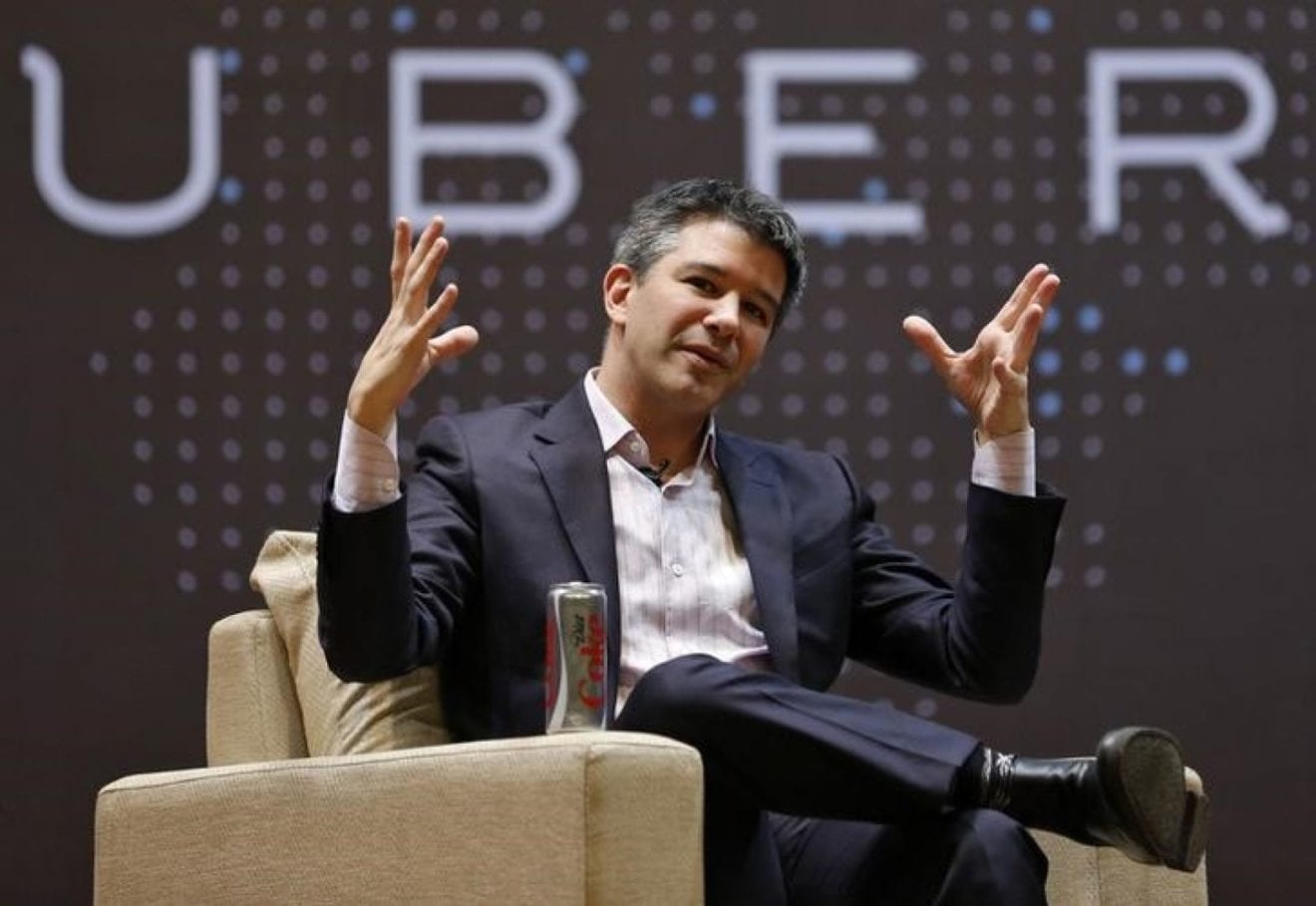
    The change, which restores users’ ability to share location data only while using the app, is expected to be announced on Tuesday and rolled out to Apple Inc iPhone users starting this week. It comes as Uber tries to recover from a series of crises culminating in the ouster of Chief Executive Travis Kalanick and other top executives.

    Dara Khosrowshahi, the CEO of travel-booking company Expedia Inc is set to become Uber’s new chief executive.

    The location-tracking update is unrelated to executive changes, said Joe Sullivan, Uber’s chief security officer, in an interview with Reuters. Sullivan and his team of about 500 have been working to beef up customer privacy at Uber since he joined in 2015.

    “We’ve been building through the turmoil and challenges because we already had our mandate,” said Sullivan, who is a member of the executive leadership team that has been co-running Uber since Kalanick left in June.

    An update to the app made last November eliminated the option for users to limit data gathering to only when the app is in use, instead forcing them to choose between letting Uber always collect location data or never collect it.

    Uber said it needed permission to always gather data in order to track riders for five minutes after a trip was completed, which the company believed could help in ensuring customers’ physical safety. The option to never track required riders to manually enter pickup and drop-off addresses.

    But the changes were met with swift criticism by some users and privacy advocates who called them a breach of user trust by a company already under fire for how it collects and uses customers’ data. Uber said it never actually began post-trip tracking for iPhone users and suspended it for Android users.

    Sullivan said Uber made a mistake by asking for more information from users without making clear what value Uber would offer in return. If Uber decides that tracking a rider’s location for five minutes is valuable in the future, it will seek to explain what the value is and allow customers to opt in to the setting, he said.

    Sullivan said Uber was committed to privacy but had previously suffered “a lack of expertise” in the area.

    The change comes two weeks after Uber settled a U.S. Federal Trade Commission complaint that the company failed to protect the personal information of drivers and passengers and was deceptive about its efforts to prevent snooping by its employees.

    Uber agreed to conduct an audit every two years for the next 20 years to ensure compliance with FTC requirements.

    The location-tracking changes will initially only be available to iPhone users, but Uber intends to bring parity to Android devices, Sullivan said.

    The changes are part of a series of updates expected in the coming year to improve privacy, security and transparency at Uber, Sullivan said.

  • Uber has offered CEO role to Dara Khosrowshahi from Expedia

    Uber has offered CEO role to Dara Khosrowshahi from Expedia

    An Uber spokesperson tells us its board has reached a decision to offer someone the CEO role. We’ve confirmed from a source familiar with the situation that this person is Dara Khosrowshahi, CEO of Expedia.

    Both Meg Whitman and Jeff Immelt had been considered for the top job, but both publicly tweeted that they didn’t want it.

    Some reports on Sunday suggested that Whitman was still in the running anyway.

    The Uber CEO seat has been vacant since June, when co-founder Travis Kalanick resigned.His departure came after former U.S. Attorney General Eric Holder completed an investigation into the company’s culture. Lawsuits and allegations of sexism are what prompted the investigation.

    Since then, the Uber board has been involved with its own lawsuits. Early investor Benchmark Capital, which has one of the board seats, sued Kalanick claiming that he did not disclose material information about the company’s problems.

    They now want Kalanick off the board and say they would not have granted him the power to appoint two additional board seats, which have not been filled. Early investor and former board member, Shervin Pishevar, has intervened in the lawsuit, accusing Benchmark of leaking confidential information.

    Khosrowshahi has headed up Expedia since 2005, after serving as the chief financial officer of IAC for seven years. Expedia has done very well in the stock market under his term and is up 32% so far this year. The stock has nearly tripled in the past five years.

    Several Uber investors have told us that they are happy with the decision, saying that Khosrowshai has the right operational experience to get the job done.

    According to a recent Glassdoor survey based on employee feedback, Khosrowshahi was ranked 39th among the highest-rated CEOs, with more than 2,200 employee reviews combining to assign him a 94 percent approval rating.

  • Uber raises minimum fares in Hong Kong

    Uber raises minimum fares in Hong Kong

    Ride-hailing firm Uber has raised the minimum fares for all rides in Hong Kong by as much as 80 per cent from Monday after “an evaluation of the marketplace” and in response to its drivers’ calls for better income security.

    The minimum fare for an UberX ride – the cheapest car option the company offers, and its most popular – in Kowloon and the New Territories rose from HK$25 to HK$40 after midnight on Monday.

    And the company added a new HK$5 booking fee, which it said would help cover administrative costs, boosting the new flag fall to HK$45, or an 80 per cent jump.
    AdvertisementThe minimum charge for an UberX ride on Hong Kong Island has risen from HK$30 to HK$40. The new booking fee will also apply.
    UberX uses smaller and economy car models at a lower rate, compared to the company’s luxury UberBlack line, which provides professional drivers and pricier cars.

    Why Hong Kong has to accommodate Airbnb and Uber – or slam the door on innovation economy.For UberBlack the new minimum fare is HK$60, up from  HK$50, plus the HK$5 booking fee. The new charging model for UberAssist, for which drivers are trained to provide additional assistance to elderly and disabled people, will be the same as that for UberX. An Uber spokeswoman in Hong Kong said on Sunday that the move to raise fares was a result of a market evaluation. It was also a response to drivers’ calls for better income security.

    Uber last adjusted fares in March last year when it cut the rates for UberX rides in Kowloon and the New Territories.

    Since it began operations in the city in July 2014, the firm has faced hostility from the taxi trade and is still struggling in its fight for legalisation.
    In August 2015, seven Uber drivers were arrested for not having permits and driving without third-party insurance. Police also raided the company’s offices in Hong Kong after complaints from local taxi drivers. Two of the seven drivers were fined and had their licences suspended for one year in January last year.
    In March this year, the remaining five Uber drivers who were convicted of driving without a permit and third-party insurance were fined HK$10,000 each and banned from driving for one year. All five appealed.
    In a series of raids in May, Hong Kong police arrested 22 Uber drivers on suspicion of picking up passengers without a hire car permit and third-party insurance in the largest operation against Uber of its kind.

  • Uber defies Philippine suspension order

    Uber defies Philippine suspension order

    Uber initially obeyed the order and shut down its app on Tuesday morning but relaunched in the afternoon.  Ride-hailing giant Uber on Tuesday defied a Philippine government order to shut down, branding the suspension a “blatant violation” of its rights but risking its drivers being arrested.

    Philippine authorities announced on Monday that they would suspend Uber for one month for failing to have the proper permits to license its drivers.

    Uber initially obeyed the order and shut down its app on Tuesday morning, triggering anger from commuters who lashed out at the government for taking away what had become a trusted alternative to notoriously bad public transport.

    But on Tuesday afternoon Uber relaunched the app, telling commuters via Twitter that it had launched a legal appeal and would continue operations until the dispute was settled.

    In its motion for reconsideration to the transport authority, it said the suspension was a “blatant violation of USI’s (Uber’s) right to due process”.

    The government replied immediately, saying the suspension was still in force and threatening to arrest Uber drivers who violated it.

    “The order stands,” said Aileen Lizada, spokeswoman of the transport authority.

    “Uber is online again, let us apprehend,” she told reporters, narrating her order to traffic enforcers.

    Uber officially launched in Manila in 2014 and the service was later rolled out to a few provincial cities.

    The transport authority requires Uber to get permits for its drivers and vehicles, in the same way taxi companies must. However, Uber insists the drivers are independent contractors and thus do not have to get the permits.

    The dispute is Uber’s latest hurdle in Asia, where it also faced a two-month in hiatus in Taiwan this year. It has operated illegally in Thailand since 2014, though law enforcement has been patchy, with roughly 1.5 million people downloading the app.

    The firm is currently lobbying for a tweak to the decades-old motor law to allow ride-sharing apps in the kingdom.

    The Philippines suspension enraged many local commuters who find Uber and similar companies a better alternative to taxi drivers, who often demand higher fares than what is on their metres, decline to pick up customers and drive shoddy vehicles.

    “To the LTFRB, quit being scumbags and open your eyes to what people need,” Twitter user @sodachar said in reference to the transport authority.

    Politicians also weighed in.

    “The decision of the LTFRB to suspend Uber is both cruel and absurd,” said Senator Grace Poe, who heads the upper chamber’s transport committee.

    Uber has 66,000 drivers in the Philippines, company representatives told a Senate hearing this month.

    President Rodrigo Duterte’s spokesman on Tuesday defended the transport authority’s decision.

    “We affirm the positive and beneficial service offered by the transport network companies. However as per LTFRB, Uber Systems unduly challenged its rules and instructions,” Ernesto Abella said told reporters.

  • Danang denies Uber pilot run

    Danang denies Uber pilot run

    Danang City Department of Transport said on August 2 that they hadn’t allowed Uber and Grab Car to operate yet despite an advertisement about Uber’s pilot run posted on the internet.

    According to the department, the city won’t give the go-ahead until the Ministry of Transport review the two-year pilot project of applying science and technology to support management and connect passenger services of contracted cars such as in Uber and Grab Car cases.

    The ministry will announce the legal framework to better manage such services.

    “After the government and the Ministry of Transport issue legal documents related to the services, we’ll work with related agencies to consult the city people’s committee and allow them to operate in accordance with the procedures and regulations,” the department’s representative said.

    The department will meet with Uber Vietnam to halt the advertised service being made available in the city.

    Uber Vietnam had previously announced on its website that after three years in Vietnam, the company would start a pilot run in Danang starting from August 1. Passengers would be given free rides during the first week.

  • Grab and Uber choking out traditional competition

    Grab and Uber choking out traditional competition

    Vietnamese taxi company Vinasun has seen a decrease in revenue and employees in the first half of this year, claiming it due to the unfair competition in terms of price posed by Grab and Uber.

    Traditional taxi companies, especially Vinasun and Mai Linh Group, are losing the fierce competition with Grab and Uber due to the dizzying rise in the number of Grab and Uber cabs.

    According to newswire Vneconomy, in recent years, the number of Uber and Grab taxis has exceeded the figure of Ho Chi Minh City’s taxi planning. Notably, Uber and Grab’s fleet has reached a total of 21,000, while Ho Chi Minh City’s taxi demand is 11,000-12,000 only.

    The oversupply of cabs has not only contributed to traffic jams and losses in tax revenue, but also created difficulties for traditional taxi companies.

    Now Uber and Grab are battling for dominance, while competing with traditional taxi brands at the same time.

    In general, UberX fares range about VND7,000-8,000 per kilometre, while GrabTaxi charges VND9,000-11,000 per kilometre. In spite of this difference in fares, both Uber and GrabTaxi have their own tactics to seize passengers.

    Mai Linh Group and Vinasun lament competition

    Vietnamese taxi company Vinasun has reported an decrease in revenue and employees in the first half of this year.

    According to newswire Vnexpress, in the second quarter of this year, Vinasun’s net revenue reached VND810 billion ($35.75 million) only, a record low since 2014. Besides, the after-tax profit in the second quarter fell 50 per cent on-year to VND16 billion ($706,299). The cumulative figure of the first six months was VND1.9 trillion ($706.29 million), signifying a decrease of 15 per cent on-year.

    Within the first six months of this year, the number of Vinasun’s employees decreased by approximately 8,000 people, to 9,179.

    According to a Vinasun representative, the company’s business results may remain gloomy until the end of this year.

    Regarding Mai Linh Group, according to its 2016 financial report, the company’s revenue was VND3.73 trillion ($164.65 million), equalling an increase of 32.3 per cent on-year. However, its pre-tax profit was VND61.12 billion ($2.74 million), a sharp 62 per cent fall due to increasing financial and management expenditures.

    Besides, Mai Linh claimed that the dizzying growth of the fleets of Grab and Uber makes it increasingly difficult for the company to perform.

    Traditional taxi companies persist

    In early June, Ta Long Hy, deputy general director of Vinasun, said the company would keep pressing litigation against Grab and Uber for unfair competition, a campaign that has recruited many other Vietnamese taxi companies from Hanoi and Ho Chi Minh City.

    Hy said that the company is gathering evidence. Besides, Vinasun would also propose that the government review its price management policies.

    Vinasun is not alone in its claim of unfair competition against Uber.

    In December 2016, as reported by indiatimes.com, the Indian equivalents of Uber, Ola and Meru, have separately urged government agencies to formulate policies which would undercut the ability of US-based Uber to offer steep discounts to passengers and generous incentives to drivers.

    On April 7, as reported by the Guardian, in a ruling that is subject to appeal, a court in Rome upheld a complaint filed by taxi unions and banned Uber because it contributes to unfair competition.

    The court gave Uber ten days to terminate the use of its various phone applications on Italian territory, along with promotion and advertising activities. However, the ban was suspended about a week after it was implemented as the company appealed. On May 26, the ban was officially lifted.

  • Indonesia sets tariff ranges for online car-hailing services

    Indonesia sets tariff ranges for online car-hailing services

    Indonesia set minimum and maximum tariffs for online car-hailing services in a bid to ensure comparable pricing with conventional transport providers and address complaints of undercutting, sending shares of the nation’s top two taxi firms soaring.

    Ride-hailing services such as US group Uber Technologies Inc, Southeast Asia’s Grab and Indonesia’s GO-JEK have heavily subsidised their drivers in Indonesia in order to gain market share in the country of 250 million people, analysts say.

    The transport ministry said in a statement on Sunday that it had set a tariff range for online car-hailing services of 3,500-6,000 rupiah (S$0.35-S$0.62) per kilometre for the islands of Java, Bali and Sumatra.

    For Kalimantan, Sulawesi, Nusa Tenggara, Maluku and Papua, the range is 3,700-6,500 rupiah per kilometre.

    The regulation kicked in on July 1 and will be evaluated in the next six months, the ministry said. “There has to be a balance between conventional and online transport, so that has to be regulated,” Pudji Hartanto Iskandar, director-general of land transport at the ministry, told by phone.

    The news sent shares of Indonesia’s two biggest taxi operators, PT Blue Bird Tbk and PT Express Transindo Utama Tbk, surging on Monday.

    By 0340 GMT, Blue Bird shares jumped as much as 10.7 per cent, while Express gained as much as 4.3 per cent. The broader Jakarta stock exchange was 0.7 per cent higher.

    Drivers of Blue Bird and Express have called for a ban on ride-hailing services, claiming they were subject to less stringent requirements than conventional taxis.

    Uber said in an emailed statement it had yet to receive a copy of Indonesia’s regulations. “However, we remain committed to working with the government to find a path forward that accommodates the interests of riders and driver partners and supports innovation, competition and customer choice,” Uber said.

    Grab said it is ready to cooperate with the transport ministry and to comply with regulations. “After receiving direction from the government, we will review the policy and make the necessary adjustments to ensure that our driver-partners will still earn the best incomes when using the Grab platform,” it said in an email.

    GO-JEK did not provide an immediate comment. Blue Bird and Express did not immediately respond to requests for comment.

  • Vietnam bans new carpooling services from Uber, Grab

    Vietnam bans new carpooling services from Uber, Grab

    The authorities say sharing a car with a stranger comes with risks that passengers should not ignore. It’s yet another bumpy ride for popular ride-hailing services Uber and Grab.

    Their new carpool versions in Vietnam, UberPOOL and GrabShare, have been blocked by the Ministry of Transport, not long after their summer launch.

    Low-cost services that allow drivers to pick up an extra person along the way will create risks for the passenger, the ministry said in a new statement. stopping short of mentioning any such incidents.

    The ban is to protect Vietnamese passengers from what could happen, it said.

    If Uber and Grab disobey the rule, they will be fined VND4-6 million ($175-260) per ride.

    Last month, U.S.-based Uber and Malaysia-based Grab rolled out their carpooling services in Vietnam, promising to help passengers save 30 percent of payments by splitting the costs.

    Uber and Grab entered Vietnam in 2014. Since then, the two have repeatedly made headlines for regulatory issues.

    Exisiting service providers have not been happy. Vinasun and Mai Linh, the two major taxi companies in Vietnam, blame their business difficulties on Uber and Grab, saying the competition has been “unfair” because the foreign firms are not subjected to strict tax rules.

  • Hanoi attempts to manage app-car services like taxis

    Hanoi attempts to manage app-car services like taxis

    Hanoi will manage the operation of app-based taxi service, including Uber and Grab, in a way similar to traditional taxis to guarantee a fair business environment.

    The move followed Hanoi, HCM City and Danang taxi associations petitioning the Ministry of Transport to call for a more equal business environment for taxi services.

    Hanoi People’s Committee have completed a plan on restricting the number of private vehicles for the 2017-2020 period and a vision until 2030 which is expected to be discussed and passed by the municipal people’s council at the meeting of early next month.

    According to the plan, the city will apply more strict management regulations on cars of below nine seats which operate under app-based taxi service in terms of vehicle number, quality and operational scope.

    App-based taxis will be managed in a way similar to traditional firms to ensure equal competition.

    The city’s transport department will check the specific number of Uber and Grab and if the figure exceeds the regulated level, the firms will have to stop operations.

    Uber and Grab taxis are also required to have logo, badge or their own paint colour. Signposts banning Uber, Grab maybe be put up on Hanoi streets.

    The associations called authorities to set the same rules for Uber and Grab.

    According to Do Quoc Binh, Chairman of Hanoi Taxi Association, over the past month, almost of 90 taxi firms in the city urged the association to seek the municipal trade union federation’s approval for their drivers to march through local streets in opposition to Uber and Grab.

  • Taxi firms release apps to compete with Uber and Grab

    Taxi firms release apps to compete with Uber and Grab

    The firms have complained about supposed unfair competition with Uber and Grab. Vinasun said the average wage for drivers had dropped and many drivers had already quit.

    The firms demanded authorities apply measures to ensure fairer competition such as forcing Uber and Grab drivers to use taxi badges.

    Meanwhile, some firms have started to upgrade their technology to attract customers such as Thanh Cong in Hanoi that released a mobile app similar to Uber and Grab. Thanh Cong also allows customers to call for taxis from Facebook.

    They announced a fleet of cars without taxi badges like Uber to carry customers on routes that ban taxis. Thanh Cong said the management charge their drivers need to pay was only half of what Uber and Grab were collecting.

    Other taxi firms have also employed measures to compete in the growing market. Mai Linh, Vinasun and Taxi Group also released apps with similar purposes and functions. SAPA Thale Holding then released their own Uber-like app called APPP Passengers.

    The Ho Chi Minh City Taxi Association previously claimed that traditional taxi firms were being threatened as more personal cars were now in use by Uber and Grab than traditional taxi fleets. It asked the government to reconsider the open policy towards app-based taxi firms.

    “More worryingly, taxi firms have to bear various kinds of taxes including the VAT and corporate income tax. But the Grab and Uber’s taxes are only 4-5% of the traditional firms’,” the association claimed in a written document.

    Ha Huy Quang, deputy director of Hanoi Department of Transport accused Uber and Grab of not following the traffic planning and being opaque in tax duties.

  • Uber CEO Travis Kalanick resigns under investor pressure

    Uber CEO Travis Kalanick resigns under investor pressure

    Kalanick’s decision ‘was a surprise to everyone’, a second Uber spokesman said. Uber Technologies Inc Chief Executive Travis Kalanick, co-founder of one of the most influential technology companies of its generation, resigned on Tuesday under mounting pressure from investors over his leadership.

    Kalanick’s departure caps a tumultuous period for the world’s largest ride-services company, which upended the taxi industry and transportation regulations globally with Kalanick at the helm.

    “I love Uber more than anything in the world and at this difficult moment in my personal life I have accepted the investors’ request to step aside so that Uber can go back to building rather than be distracted with another fight,” Kalanick said in a statement first reported by the New York Times and verified by an Uber spokesman.

    Kalanick, 40, has faced increased scrutiny in recent weeks following an investigation into the culture and workplace practices at a company he helped start in 2009 and is now the world’s most highly valued startup.

    But it was a chorus of demands for changes at the top from some of Uber’s biggest investors that ultimately forced Kalanick out, according to a source familiar with the matter.

    Venture capital firm Benchmark, whose partner Bill Gurley is one of Uber’s largest shareholders and sits on its board, as well as investors First Round Capital, Lowercase Capital, Menlo Ventures and Fidelity Investments, all pressed Kalanick to quit.

    They delivered a letter to Kalanick while he was in Chicago, the New York Times reported, citing people with knowledge of the situation. The newspaper, which was first to report Kalanick’s resignation, said he would remain on Uber’s board.

    Kalanick’s decision “was a surprise to everyone”, a second Uber spokesman said.

    Kalanick’s departure comes after a lengthy investigation led by former U.S. Attorney General Eric Holder.

    Uber hired Holder to look into its culture and workplace practices after a female former employee publicly accused the company of what she described as brazen sexual harassment.

    Privately held Uber has been valued at $68 billion, shattering the norms for Silicon Valley startups, and the company embodied many of Kalanick’s aggressive and pugnacious personality traits.

    Following the release of recommendations stemming from the Holder investigation, which called for increased controls and oversight at the company, Kalanick said last week he would take a leave of absence for an undetermined period.

    He said he needed space to grieve the death of his mother, who died recently in a boating accident in which his father was also seriously injured, and to work on his leadership skills.

    Gurley, one of Kalanick’s closest confidants, praised the CEO on Twitter, after calling for his resignation.

  • Transport Ministry denies Uber and Grab pilots ended

    Transport Ministry denies Uber and Grab pilots ended

    At the carrier’s annual shareholder meeting on Tuesday, it was said that the 191 million shares with a par value of VND10,000 (44 US cents) per share could be sold in the fourth quarter or at any other time that the management board decides.

    Current shareholders will have the right to buy the shares at a rate of 15.5 per cent, meaning that an investor will be able to one additional share for every 15.5 shares he owns at the moment.

    Among the additional shares are 164.73 million shares sold to State shareholders and 16.77 million shares issued to the firm’s Japanese strategic investor ANA Holding Inc. Other shareholders will be able to purchase 9.7 million shares.

    The share issuance is expected to raise VND1.91 trillion (nearly $85 million), which would help the aviation group cover a part of the cost of purchasing new planes and making payments for its suppliers.

    In 2017, Vietnam Airlines plans to spend VND2.1 trillion – 72 per cent of this year’s spending budget – purchasing 10 A350-900WB planes and eight Boeing 787-9 planes.

    This year’s business plan also includes VND87.9 trillion in combined revenue, an annual increase of 22.7 per cent.

    However, the combined post-tax profit of VND1.33 trillion marks a 35 per cent drop from 2016.

    The targeted post-tax profit is lower based on worries about higher fuel costs and rising global oil prices as well as rising amortisation costs generated by the purchase of new planes.

    Last year’s post-tax profit was a record high for Vietnam Airlines, supported by oil prices that hit a historical 12-year bottom in mid-January 2016. Crude prices have rebounded about 47.5 per cent since then. This year’s business plan is developed based on a $64 per barrel oil price scenario.

    The company also attributed the decline in annual post-tax profit to slow growth of market purchasing power, which is forecast at 9.5 per cent for 2017.

    The slow rise in market purchasing power means Vietnam Airlines will have to face a decline in its Revenue per Available Seat Kilometre (RASK) – a term of unit cost used in the aviation industry.

    The RASK figure in 2017 is forecast at 5 per cent lower than 2016 and 22 per cent lower than 2015.

    Meanwhile, competition is heating up n the international markets as low-cost carriers enhance their presence in Viet Nam and in the Northeast and Southeast Asian regions, traditional markets for Vietnam Airlines.

    In addition, the Noi Bai and Tan Son Nhat international airports, the biggest in Viet Nam, will undergo repairs and maintenance at the year end. This will reduce business activities in those two airports by 30 per cent and force aviation firms to cut the number of flights to and from those airports by at least 15 per cent during the day.

    Share price concerns

    Vietnam Airlines also plans to switch listing its shares from the Unlisted Public Company Market (UPCoM) to either the HCM Stock Exchange or the Ha Noi Stock Exchange.

    Shares of the company, under code HVN, debuted on UPCoM at VND39,200 per share on January 3. Its share price has lost nearly one-third of its value to close Tuesday at VND26,825.

    In comparison, the share price of low-cost carrier Vietjet has risen by 18 per cent to end Tuesday at VND126,500 per share. Vietjet shares debuted on the stock market at the end of February.

    Such decline of share price has raised some concerns among the firm’s shareholders about the company’s strength and competence.

    According to the firm’s chief accountant, Tran Thanh Hien, the share price is quite stable and reflects Vietnam Airlines as an aviation company that meets international standards and practices.

    Hien said that the movement of share prices depends on various factors, including business performance, business strategy, market conditions and liquidity.

    For some firms, the amount of floating shares is quite small, showing that the company’s stock structure is dense and making share prices low, according to Hien.

    Compared to the low-cost carrier Vietjet, Vietnam Airlines focuses on the high-class segment with provision of high-quality products and services, said general director Duong Tri Thanh.

    Low-cost carriers have developed strongly in recent years and account for 60 per cent of the domestic market. This sector is expected to grow 20-30 per cent per year in the coming years.

    Vietnam Airlines would, therefore, push harder its operation in international markets, he said.

    For the domestic market, Vietnam Airlines would concentrate its business on the low-cost segment in co-operation with Jetstar Pacific. The two firms would try to keep their market shares at least 30 per cent, Thanh said.
  • Uber, Grab conquer airport taxi market

    Uber, Grab conquer airport taxi market

    Uber launched a service package at the flat price of VND150,000 to carry passengers from any location in the inner city of Hanoi. In HCM City, Grab sometimes has a promotional fee of VND20,000 for trips to the airport.

    “You will have to pay VND130,000 for every trip to the airport with traditional taxi service, while it’ll take you VND70,000 to go with Grab, and sometimes the fee is just VND20,000 when Grab runs sale promotion campaign,” Tin, a passenger said.

    Uber, Grab cars flood airports

    Quang Huy in Cau Giay district, Hanoi said the service fee of VND150,000 set by Uber is ‘very reasonable’ which is much lower than the fee of VND200,000-250,000 he has to pay to traditional taxis.

    “I wonder if Uber gives any support to taxi drivers, so they can charge so little. However, as a customer, I really like this. And Uber’s services are acceptable,” he said.

    However, some passengers complained that it is difficult to catch Uber taxis. Uber drivers tend to refuse to serve passengers, saying that the VND150,000 service fee set by Uber is too low, which cannot bring profit to them.

    Hieu, a driver, said with the fee, drivers pocket VND40,000-50,000 for every trip to the airport after paying for fuel and other expenses. He would rather serve passengers within the city to get more profit.Uber drivers confirmed that they won’t serve passengers at the service fees set by Uber.

    Reporters also tried to hail Uber taxis and all drivers refused to serve when asked to go to Noi Bai Airport.

    Airport taxi firms complain about income 

    Traditional taxi drivers complained that their income has become unstable, though it is now the high season: children are finishing their academic year and people are beginning to travel.

    Quang Truong from Bac Ninh province, an airport taxi driver, said the appearance of Uber and Grab has badly affected his job. He could serve 10 trips a day on the Hanoi – Noi Bai route, but the number has been cut by half.

    However, Truong doesn’t think Uber and Grab drivers have better income.

    “More taxis in the market means higher competition and lower income,” he said.