Tag: Vietnam Airlines

  • Government to keep 65 pct stake in banks, airport operators

    Government to keep 65 pct stake in banks, airport operators

    The government will retain minimum ownership of 65 percent in state-owned banks and airport operators that privatize from now through 2025.

    It will keep a similar rate in large mining companies.

    The rates will be 50-65 percent in airlines and water utilities, basic chemical production and fuel importing companies.

    But companies that have a bearing on national security, such as landmine producers and map makers, will not be privatized.

    Others, where it will continue to own 100 percent, are power transmission and national grid management, currency printing and gold bullion production.

  • Vietnam Airlines cleared for 12 repatriation flights from US

    Vietnam Airlines cleared for 12 repatriation flights from US

    National flag carrier Vietnam Airlines has received permission from U.S. authorities to conduct 12 repatriation flights this year, the first of which is scheduled for this month.

    The first flight will leave Hanoi on June 22 for Washington D.C. with a stop in Alaska before returning to Vietnam on June 24.

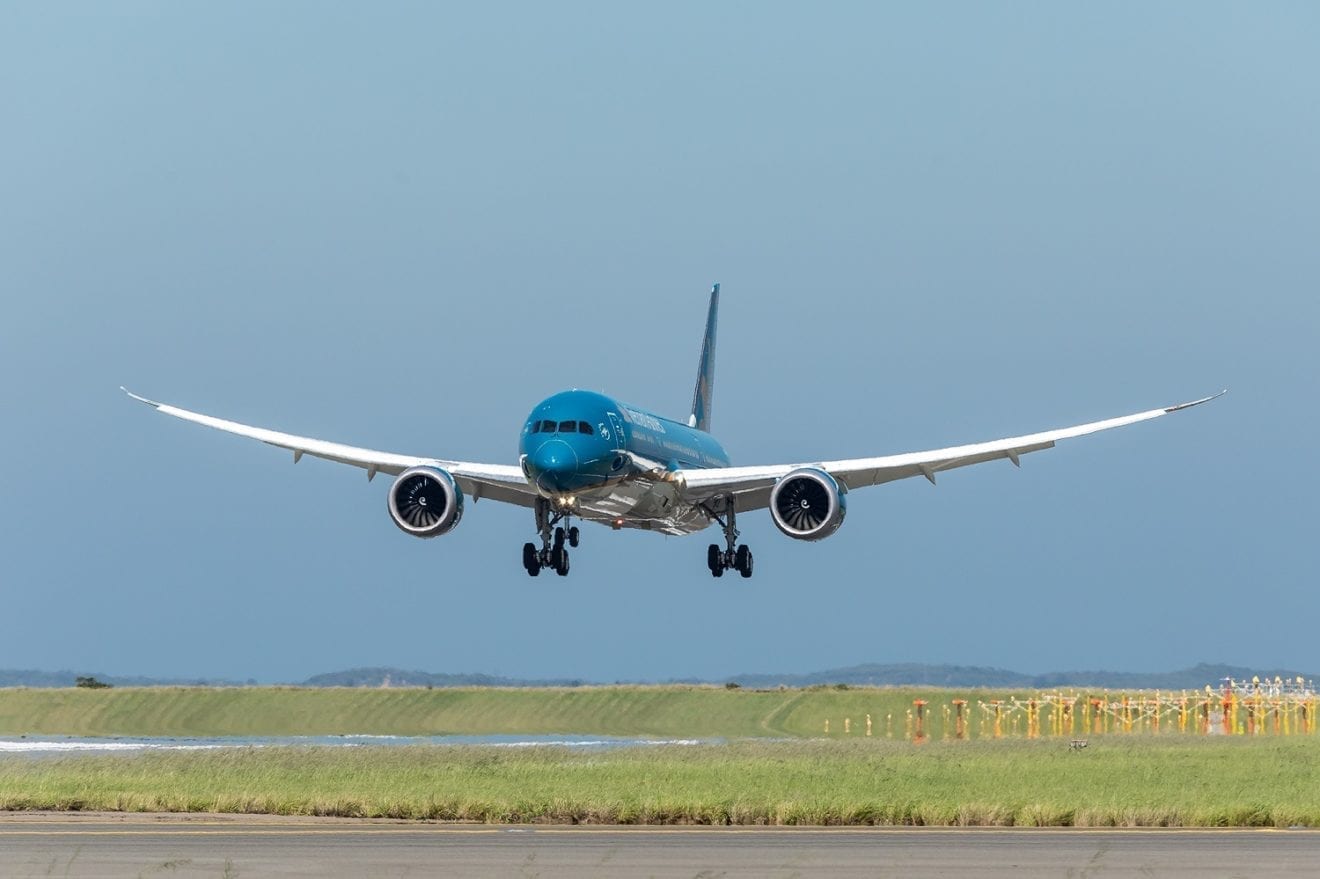
    The airline will use its biggest wide-body aircraft – the Boeing 787 or the Airbus A350 for these flights.

    It remains the only Vietnamese carrier to receive flight permits from the U.S. Transportation Security Administration (TSA), which is said to have stringent requirements. The examination process for the 12 flights took one month.

    Vietnam Airlines expects the flights to help evaluate the possibility of conducting regular flights between the two countries after the Covid-19 pandemic has been contained.

    Last year, it conducted 20 flights between Vietnam and the U.S. to serve Vietnamese citizens and U.S. experts, and to transport goods.

  • Vietnam Airlines to sell 11 aircraft

    Vietnam Airlines to sell 11 aircraft

    National flag carrier Vietnam Airlines has said it will auction 11 Airbus A321 CEO aircraft manufactured in 2004, 2007 and 2008.

    The sale, which is set to take place this year, is part of its program to replace old-generation aircrafts that have been used for over 12 years. It also aims to increase its cash flow at a time of trouble for the pandemic-hit aviation sector.

    The carrier had sold nine aircraft last year and five in 2019. It had a fleet of 107 aircraft at the end of last year, including 51 Airbus A321 CEO aircraft.

    The carrier posted its largest quarterly loss ever in Q1 at VND4.97 trillion ($216 million), pushing its accumulated loss to VND14.22 trillion, marginally surpassing its charter capital.

    If its performance continues in the same vein, the airline’s HVN ticker on the Ho Chi Minh Stock Exchange (HoSE) might be delisted. It has already received a warning from the bourse on April 15.

  • Vietnam Airlines signs up for international vaccine passport program

    Vietnam Airlines signs up for international vaccine passport program

    Vietnam Airlines has signed an agreement with the International Air Transport Association to trial a vaccine passport next month.

    It will implement the IATA Travel Pass initiative that allows people to store verified Covid-19-test and vaccination certificates on a smartphone app.

    They must be issued by authorized facilities registered with IATA.

    Le Hong Ha, CEO of Vietnam Airlines, said: “The most important goal of the initiative is to revive people’s faith in air transport and ensure safe and smooth travel.”

    Nick Careen, an IATA board member, said it is a solution for facilitating international travel during the pandemic.

    Three countries have signed up for the use of the IATA Travel Pass, Singapore, Panama and Estonia, and 30 airlines.

  • Pandemic grounds 39 Vietnam aircraft

    Pandemic grounds 39 Vietnam aircraft

    Vietnam had 39 aircraft, or over 14 percent of its fleet, grounded in the first quarter after a new Covid-19 outbreak cut travel demand.

    Eighteen of the grounded aircraft belonged to national flag carrier Vietnam Airlines, 14 to budget carrier Vietjet, four to Pacific Airlines and three to Bamboo Airways, according to the Civil Aviation Authority of Vietnam (CAAV).

    Vietnam’s fleet of 269 aircraft is 13 more than it had last year.

    The country closed the borders and canceled all international flights in March last year, allowing in only certain categories of people with stringent conditions.

    Vietnamese carriers served 5.8 million passengers in the first quarter this year, down 45 percent year-on-year.

  • Vietnam Airlines once again calls for setting minimum fares

    Vietnam Airlines once again calls for setting minimum fares

    Vietnam Airlines wants aviation authorities to set floor fares and increase the ceiling, saying it would ensure fair competition among carriers.

    In a proposal it sent to the Civil Aviation Authority of Vietnam, it wants the fare ceiling to be increased by VND50,000-250,000 ($2.17-10.86), and minimum fares to be 35 percent of the ceiling, or VND787,500-1.01 million.

    It claimed having minimum fares would ensure fair competition among airlines and help them overcome the hardship caused by the Covid-19 outbreak, but said they could be scrapped once the aviation industry recovers from the pandemic.

    Analysts said if the proposal is accepted, airlines would not be able to offer free flight tickets under promotions, and tourism companies and passengers would be the losers.

    In 2017, Vietnam Airlines had suggested fixing minimum domestic fares of VND1.54-4.2 million ($68-$185), while its subsidiary Jetstar Pacific had proposed VND600,000-1.2 million.

    But both were rejected by the Ministry of Transport.

  • Vietnam Airlines to resume commercial flights to Asian destinations this week

    Vietnam Airlines to resume commercial flights to Asian destinations this week

    Vietnam Airlines will reopen international commercial flights connecting Hanoi and HCMC with several Asian destinations including South Korea, Japan and Australia, starting this Saturday.

    The national flag carrier said flights from Hanoi to South Korea’s Incheon City will depart every Thursday while there will have seven flights from Hanoi to Japan’s Narita City in April, with the first scheduled to depart on April 3.

    The carrier will also operate one flight from Hanoi to Australia’s Sydney every Saturday, while flights from HCMC to Sydney would depart every Thursday and Sunday.

    On return trips, the carrier would only carry Vietnamese citizens being repatriated or foreign experts with permission to enter the country. Vietnam is yet to open its doors to foreign tourists.

    A representative of the carrier said the resumption of these international routes are meant to meet growing travel demand of Vietnamese citizens wishing to study and work abroad as well as stranded foreigners longing to return home.

    In addition to these routes, the national flag carrier is planning to operate inbound commercial flights to carry passengers from Japan, South Korea and Taiwan, but is awaiting the government’s approval for this move.

    Vietnam closed national borders and canceled all international flights in March last year. Since then, only Vietnamese repatriates, foreign experts and highly-skilled workers are being allowed in with stringent conditions.

    Vietnam Airlines had said earlier that it is awaiting approval from the U.S. government to launch regular direct flights to that country.

    Vietnamese aviation authorities Wednesday proposed allowing vaccinated foreign passengers into the country from September without requiring centralized quarantine.

  • Vietnam Airlines on threshold of regular direct flights to US

    Vietnam Airlines on threshold of regular direct flights to US

    Vietnam Airlines is awaiting approval from the U.S. government to launch regular direct flights to the country to serve repatriation needs of the Vietnamese community.

    A representative of the national flag carrier told VnExpress that a large number of Vietnamese citizens living in the U.S. wish to return home, but the carrier has already operated all repatriation flights permitted by the U.S. authorities.

    From May to August last year, the carrier has carried out a total 12 repatriation flights as permitted by American aviation authorities to bring Vietnamese citizens home amid the complicated developments of the pandemic.

    The Board of Directors of Vietnam Airlines has just approved a plan to launch regular direct flights to the U.S., saying this is the appropriate time to do it using the wide-bodied Boeing Dreamliner. They expect that this move will help increase revenue and minimize financial damage inflicted by the pandemic.

    As soon as the carrier receives approval from the U.S. government, it will operate regular flights to repatriate Vietnamese citizens as well as carry foreign experts and diplomats wishing to enter Vietnam for work.

    Depending on the recovery of the aviation market and when the Covid-19 pandemic is contained, the airline expects to operate direct flights between Vietnam and the U.S. from 2022 onwards.

    The U.S. Federal Aviation Administration issued a Category 1 rating to the Civil Aviation Authority of Vietnam under its International Aviation Safety Assessment program in 2019, meaning it met safety standards to operate flights to the U.S.

    Vietnam Airlines also got the green light to operate direct flights from Hanoi and Ho Chi Minh City to several American destinations in September 2019. No such a flight under the permit has been scheduled to date.

    There are currently no non-stop routes between the two countries, and passengers have to transit through East Asia, the journey taking between 18-21 hours. A direct flight would bring the travel time down to 14-16 hours.

    Vietnam Airlines reported a loss of over VND11.1 trillion ($483 million) last year after the Covid-19 pandemic grounded all its international flights.

  • Vietnam Airlines to invest $430 mln to offer ground services at Long Thanh airport

    Vietnam Airlines to invest $430 mln to offer ground services at Long Thanh airport

    Vietnam Airlines plans to invest VND9.9 trillion ($430 million) in the under-construction Long Thanh International Airport to become a provider of ground services and in-flight meals.

    It plans to provide aircraft maintenance services, supply jet fuel and meals, serve passengers in lounges, and set up duty-free shops, the carrier said in a proposal to authorities.

    These are services the state-owned carrier already provides at major airports in the country.

    It will bring in 30 percent of the amount from its own resources and borrow the rest.

    Its subsidiaries can either set up facilities at the airport or joint ventures with the Airports Corporation of Vietnam (ACV), which oversees the construction and would operate the airport, the proposal said.

    It hopes to get a dedicated area at the airport to build hangars for aircraft maintenance and in the terminal to prioritize its customers.

    Construction of the first of three phases of Long Thanh International Airport in the southern province of Dong Nai, 40 kilometers east of Ho Chi Minh City, began in January.

    The $4.6-billion first phase of the airport is set to be completed by 2025 when it will be able to handle 25 million passengers and 1.2 million tons of cargo a year.

    The final phase will be completed by 2040, when the airport will have four runways and four passenger terminals. It will have a capacity of 100 million passengers and five million tons of cargo.

  • Vietnam Airlines suffers $483 mln loss

    Vietnam Airlines suffers $483 mln loss

    Vietnam Airlines reported a loss of over VND11.1 trillion ($483 million) last year as the Covid-19 pandemic grounded all its international flights.

    The figure was lower than its projection in December of over VND12 trillion.

    Revenues were down nearly 59 percent to VND40.83 trillion as its total number of flights fell by over 27 percent to 86,978.

    The government recently approved a bailout for the carrier, with the State Bank of Vietnam (SBV) allowed to provide a refinanced loan of up to VND4 trillion at zero interest.

    Vietnam Airlines also received permission to issue more shares to existing shareholders to increase its capital.

    The country’s aviation industry suffered badly last year due to flight restrictions to curb the spread of the novel coronavirus, and the number of air passengers plunged by 41 percent to 32.3 million, according to the General Statistics Office.

  • Government to invest $345 million to bail out Vietnam Airlines

    Government to invest $345 million to bail out Vietnam Airlines

    The State Capital Investment Corporation said it is in discussions with Vietnam Airlines to invest VND8 trillion ($345.49 million) in the carrier through a rights issue.

    It follows a government resolution to resolve the difficulties faced by the airline due to the impact of the Covid-19 pandemic, Nguyen Chi Thanh, general director of the sovereign fund, said at a press conference late last week.

    The resolution requires the State Bank of Vietnam to reimburse loans of up to VND4 trillion to credit institutions that have lent to Vietnam Airlines and allow the carrier to make rights issues to existing shareholders to supplement its capital.

    Thanh said: “Vietnam Airlines will issue shares worth VND8 trillion to existing shareholders, accounting for 25 percent of the carrier’s charter capital. SCIC, acting on behalf of the Government, plans to buy these shares.”

    The government-owned 86.16 percent in Vietnam Airlines on December 31, 2019.

    Thanh said the airline is making plans for a rights issue, and SCIC’s task is to determine a reasonable issue price close to the market price and is working with Vietnam Airlines on this.

    “In order to do that, Vietnam Airlines must be valued, and this requires at least a five-year business plan if we use the discounted cash flow method.”

    The SCIC would appoint a “globally reputed auditing company,” and the latter would identify the most appropriate valuation method possibly within a month, he said.

    Vietnam Airlines expects losses of VND12 trillion for 2020 compared to a VND3.37 trillion profit in 2019.

    It presently flies an average of 300 flights a day on more than 60 domestic routes. It has resumed flights to Japan, though not from that country, and plans to resume flights soon to mainland China, Taiwan, Laos, and Cambodia.

    In November, the National Assembly approved a bailout that could see the carrier get VND12 trillion and allows it to sell more shares to existing shareholders to boost cash reserves.

  • Vietnam Airlines gets new CEO

    Vietnam Airlines gets new CEO

    Vietnam Airlines deputy director Le Hong Ha will take over as the national carrier’s new CEO starting January 1, 2021.

    Ha, 48, will replace Duong Tri Thanh who retires Thursday after almost five years at the helm.

    Ha began working for Vietnam Airlines in 1994 as has occupied several key positions.

    In 2015, he was appointed the CEO of Vietnam Airline’s subsidiary Jetstar Pacific (now Pacific Airlines), and is currently the chairman of the jet fuel supplier Skypec.

    Vietnam Airlines has forecast a loss of VND14.44 trillion ($625 million) this year because of the Covid-19 pandemic.

    The number of passengers it served this year is estimated to fall 51 percent year-on-year to nearly 14.23 million, with the number of flights plunging 48 percent to 96,500.

  • Vietnam Airlines set to perform better than expected

    Vietnam Airlines set to perform better than expected

    National carrier Vietnam Airlines expects 2020 losses of VND12 trillion ($521.11 million), about 17 percent lower than it had forecast in August.

    The carrier’s consolidated revenue this year is estimated at VND42.5 trillion, with parent company revenues reaching VND33 trillion, exceeding targets set earlier this year by 4.8 percent and 1.4 percent respectively, Vietnam Airlines chairman Dang Ngoc Hoa said Tuesday at an extraordinary general shareholders’ meeting.

    This allows the company to undershoot the VND14.45 trillion loss figure forecast at the annual general meeting in August, he said.

    This year’s loss could be reduced further by VND2.86 trillion after completing adjustments for amortization of repair, maintenance and ground services costs in accordance with government policy that allows delayed payments to help support airlines, Hoa said.

    In 2020, Vietnam Airlines operated about 96,500 flights, down more than 48 percent over last year. The airline transported 14.23 million passengers and about 195,000 tons of cargo, down 51 percent and 47 percent respectively over 2019, he said.

    Hoa said that for the next five years (2021- 2025), Vietnam Airlines will focus on restoring production and business activities, undertaking a comprehensive restructuring plan which will overhaul areas such as capital ownership and finance, assets and portfolios. It will strive to ensure lean production, and improve business efficacy with the sale and leaseback of aircraft.

    The national carrier will also wholly or partly divest its capital in a number of high-performing enterprises in the air-transport service supply chain to improve cash flow, offset accumulated losses, and create funds for investment and development, he added.

    Vietnam Airlines currently operates more than 60 domestic routes with an average of 300 flights per day. It has resumed one-way flights to Japan and plans to reopen routes soon to mainland China, Taiwan, Laos and Cambodia.

    In mid-November, Vietnam’s National assembly approved a bailout for the carrier that can see it get up to VND12 trillion in funds and will be allowed to sell more shares to existing shareholders to boost cash reserves.

  • Vietnam Airlines seeks shareholder loans

    Vietnam Airlines seeks shareholder loans

    Vietnam Airlines Group has called an extraordinary shareholders’ meeting next week to source low-interest loans to accelerate Covid-19 recovery.

    At the meeting, to be held on Dec. 29, the flag carrier will seek loans from its shareholders that comprise the government with an over 86 percent stake, Japanese aviation company ANA Holdings with 8.7 percent, and other organizations and individuals.

    The National Assembly in November approved a plan for the central bank to refinance Vietnam Airlines and rollover loans. The airline had earlier asked for a relief package of VND12 trillion.

    The group will also seek shareholder approval to issue more shares to existing stakeholders and so increase its capital.

    Vietnam Airlines Group, consisting of the carrier and subsidiaries Pacific Airlines and Vietnam Air Services Company (VASCO), posted a loss of VND10.75 trillion ($464 million) for January-September as the Covid-19 pandemic slashed its number of flights.

    It has forecast the figure would rise to VND15.2 trillion for the whole year.

    All Vietnamese airlines have fallen victim to Covid-19 this year with the number of flights plunging 36 percent year-on-year to 19.

  • Headwinds buffet Vietnamese carriers through 2020

    Headwinds buffet Vietnamese carriers through 2020

    The Vietnamese aviation industry has gone through one of its most challenging years ever as the Covid-19 pandemic restricted flights and caused airlines huge losses. The number of flights the country’s five commercial airlines operated fell 36 percent year-on-year in the first 11 months to 196,600, according to the Civil Aviation Authority of Vietnam (CAAV).

    They carried 29.4 million passengers, down 41.7 percent, according to the General Statistics Office.

    Vietnam Airlines was the worst hit. Duong Tri Thanh, its CEO, said that the pandemic has set back the aviation industry by three or four years, and has brought down his company’s cash holdings to near zero.

    Vietnam Airlines Group, consisting of the carrier and its subsidiaries Pacific Airlines and Vietnam Air Services Company (VASCO), posted a loss of VND10.75 trillion ($464 million) for January-September.

    The number of passengers it served in the period fell by 41 percent to 10.2 million.

    It has cut sales and management expenses and reduced the salaries of pilots and cabin crew. It has increased the number of repatriation flights bringing Vietnamese nationals home from other countries.

    But these efforts cannot save the company from suffering one of its worst years in nearly three decades as a commercial airline, with its losses this year forecast to rise to VND15.2 trillion. Budget carrier Vietjet is in a similar situation, with losses of nearly VND925 billion in the first nine months and the number of flights falling by 43 percent to 58,300.

    The airline was forced to cut managers’ salaries by half as revenues plunged, and it would take three years for the industry to recover to pre-pandemic levels, a Vietjet spokesperson said in November.

    In contrast, 2019 saw new carrier Bamboo Airways enter the Vietnamese skies, Vietnam Airlines achieve all-time high profits and the number of air passengers continues to grow in double digits.

    The tough times began in March when the government ordered the suspension of all international flights to curb the spread of the novel coronavirus and domestic travel demand slumped amid fears of the pandemic.

    “The impact of Covid-19 has been unprecedented for the aviation industry,” Dinh Viet Thang, head of the CAAV, told the media in June, pointing out there were times when only 1-2 percent of Vietnam’s 250 aircraft were operating.

    The second and third quarters were the most challenging period for the industry as a three-week nationwide social distancing campaign in April caused airlines’ revenues to plummet and the second outbreak in July halted their attempts to boost domestic travel and achieve recovery.

    Aviation expert Nguyen Thien Tong said it would take at least until 2022 for the industry to recover to pre-pandemic levels because the fear of contagion remains globally.

    Air travel demand would rise slowly even after Covid-19 is contained globally because many business people have learned to conduct meetings online to keep their companies running during the pandemic and people’s incomes have shrunk, he said.

    One major factor in any possible recovery will be government support. The National Assembly in November approved a plan for the central bank to refinance Vietnam Airlines and rollover loans. The airline had earlier asked for a relief package of VND12 trillion.

    Lawmakers also cut environmental tax on jet fuel by 30 percent from August this year until the end of next year.

    Tong said: “More low-interest loans should be given to airlines based on how much tax they have contributed in recent years, not how much ownership the government has in them.”

    The tourism industry needs to offer more promotions to foster domestic aviation since it is unclear when regular international flights would resume, he said.

    The newly licensed Vietravel Airlines should wait until the market recovers in 2022 before it begins flying since its entry would only worsen things for existing airlines, he added.