Tag: honda

  • Thai auto sales pose dilemma for Vietnam

    Thai auto sales pose dilemma for Vietnam

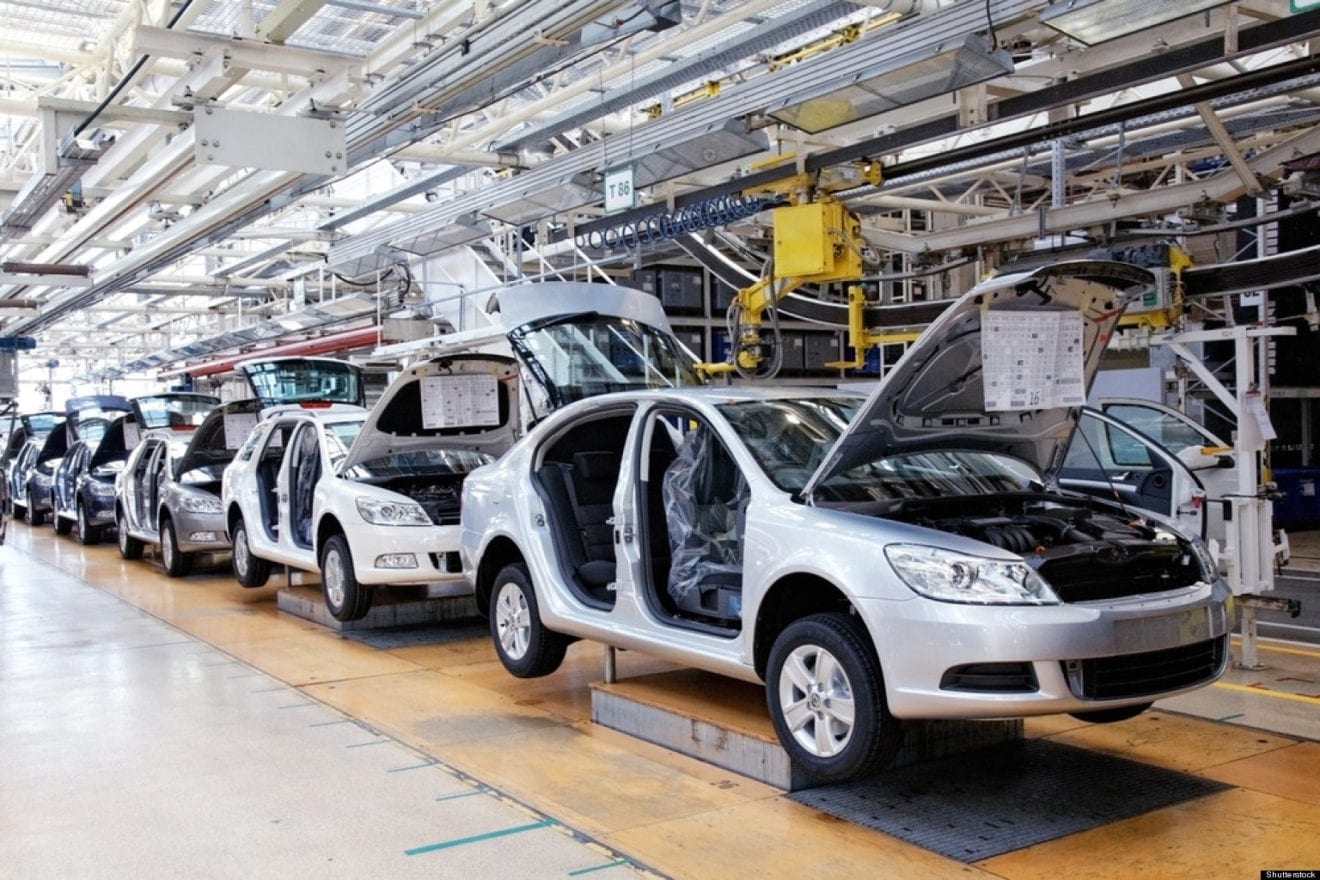
    Statistics from the General Department of Vietnam Customs show that the foreign sector controls roughly 80% of the local car and automobile (excluding motorbike) retail market with a sales volume eclipsing all of Southeast Asia.
    thai auto sales pose dilemma for vietnam hinh 0

    Auto distributors and original equipment manufacturers (OEMs) based out of Thailand hold the largest share of the retail market followed by the Republic of Korea (RoK) and China in descending order of magnitude.

    Compared to Vietnam, Thailand’s success at attracting top brands the likes of Ford, Toyota, Honda and Nissan, is in large part attributable to the countries more favourable tax structure.

    Taxes and fees account for up to 50% of the final sales price of a vehicle manufactured in Vietnam, a figure that is more than 20% higher than the comparable taxes and fees charged in Thailand.

    Prior to the emergence of the ASEAN Economic community (AEC) the Vietnam government was able to regulate the local auto industry via the imposition of import tariffs and local taxes as appropriate.

    However, with the arrival of the AEC at the beginning of 2016 and the elimination of import tariffs pursuant to the ASEAN Trade in Goods Agreement, Thai auto sales in Vietnam have shot up rapidly.

    Under the agreement, the import tax on automobiles from Thailand and other ASEAN members – Myanmar, the Philippines, Malaysia, Singapore, Laos, Indonesia, Cambodia, Brunei and Vietnam – have dropped by 40-50% in 2016.

    They will continue to fall by another 30% in 2017 and be eliminated entirely by the end of 2018.

    Meanwhile, the Vietnam government has not concurrently reduced the taxes and fees on local manufacturing of autos and this explains, in large part, why vehicles produced in Thailand are less expensive.

    Notably, Thailand also has more than 2,000 OEMs, which has aided the country’s rise to become the biggest hub for auto and part exports not only to Vietnam but the entire Southeast Asian region.

    Without a doubt, say many leading experts, after 2018, the complete roll back of the import duty will put ownership of an automobile within reach of the majority of Vietnamese citizens.

    This, they say, could lead to explosive sales growth and a myriad of adverse consequences for the nation.

    It’s problematic because its puts excessive pressure on the public transport infrastructure, overburdens traffic systems and potentially threatens traffic congestion that would choke off commerce.

    Not to mention the threat to public health brought about by pollution and auto accidents, they say, noting the elevated need for the government to advocate strongly for effective policies that reduce auto use throughout the nation.
     

  • Honda recalls 668,000 more cars in Japan over Takata air bags

    Honda recalls 668,000 more cars in Japan over Takata air bags

    Honda Motor Co on Thursday said it was recalling about 668,000 vehicles in Japan to replace air bag inflators supplied by Takata, as part of an expanded nationwide recall announced earlier this year.

    Japan’s second-largest automaker said it had recalled models including its Fit subcompact hatchback model, and the Civic and Accord sedan models over passenger-side air bags. Vehicles produced between 2009 and 2011 were affected, it added.

    The latest announcement takes Honda’s global tally of recalled air bags to about 51 million, around half of the roughly 100 million slated for recall worldwide over inflators which are at risk of exploding with excessive force.

    Defective air bags have been linked to at least 14 deaths and 150 injuries worldwide, and are at the center of the auto industry’s biggest ever product recall.

    Thursday’s recall comes after Japan’s transport ministry in May ordered automakers to recall an additional 7 million vehicles in Japan equipped with Takata air bag inflators which do not contain a drying agent, in phases by 2019, following an expanded recall by U.S. transport authorities.

    Without a drying agent, the ammonium nitrate-based propellant used in Takata inflators has a tendency to explode violently following prolonged exposure to hot, humid conditions, spraying metal shrapnel into vehicle compartments.

    Honda, once Takata’s largest customer, has said that it would stop using Takata-made inflators in its new models, and has stopped procuring replacement inflators from the company.

    Battered by the recalls, Takata is looking for a financial backer to help overhaul its business and carry ballooning costs as its stock price has crumbled almost 90 percent since early 2014 and it faces potentially billions of dollars of liabilities.

  • India becomes Honda’s biggest 2 wheeler market

    India becomes Honda’s biggest 2 wheeler market

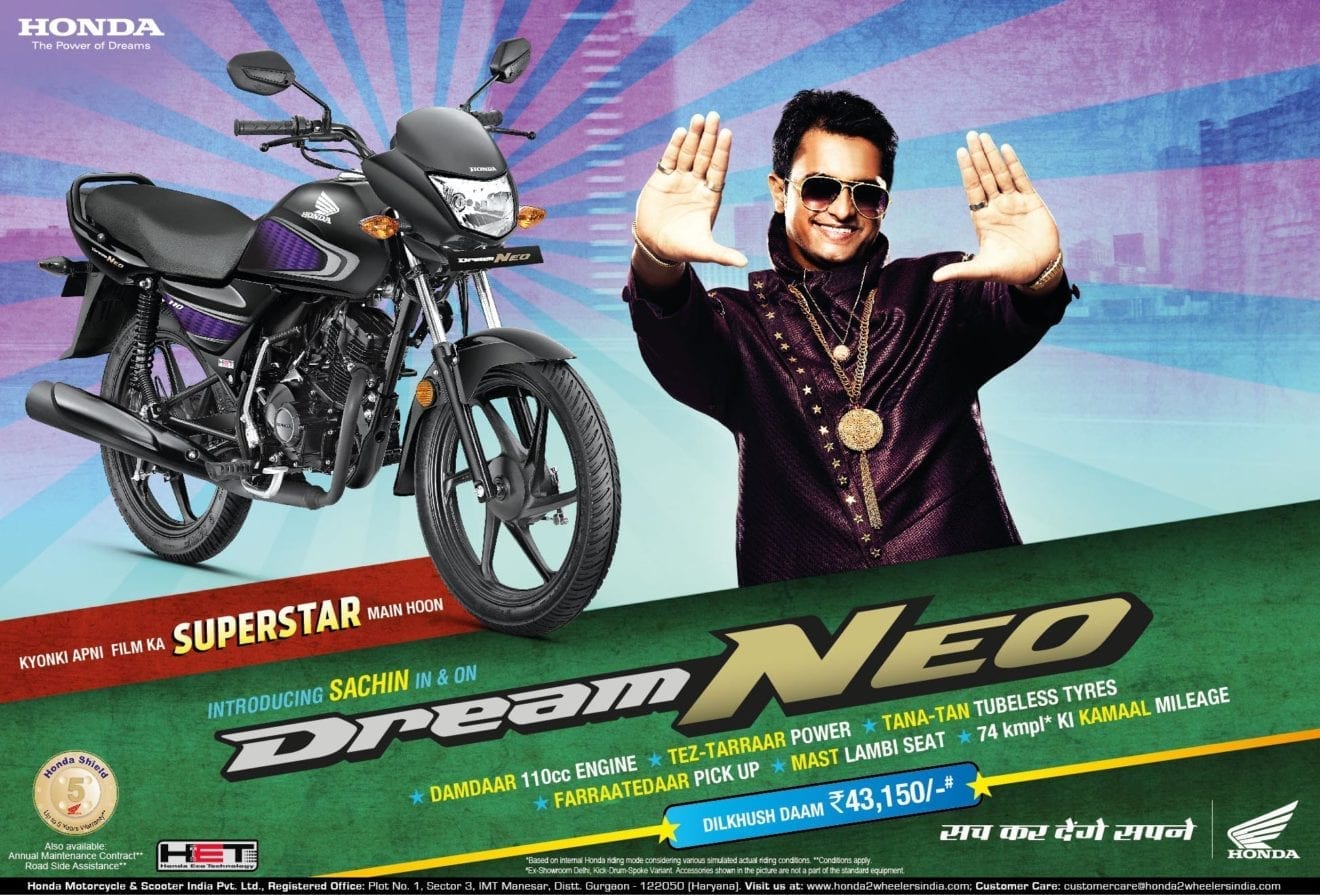
    Riding on a sustained double-digit growth in scooter volumes, Japanese auto major Honda has seen India emerge as its biggest two-wheeler market this financial year.

    Honda Motorcycle and Scooter India (HMSI) recently overtook the company’s volumes from the Indonesian market.
    Into the sixth year of the split with its Indian partner Hero, HMSI has sold 1.23 million units during the April-June quarter, 16 per cent more than the 1.06 million units sold in Indonesia.
    The corresponding volumes for India and Indonesia last year was 1.01 million and 1.03 million units, respectively. With this increased volume, India now brings 29 per cent of Honda’s global two wheeler sales compared to 25 per cent a year ago.
    In Indonesia, for instance, it commands 80 per cent share; the share in Vietnam is 70 per cent of the market.

    “Considering the low two-wheeler penetration in India, we believe that it will continue to lead the global two-wheeler market, as new demand will continue to come from rural and semi-urban areas in the future. The road infrastructure is increasing rapidly while public transport is not able to meet daily commuting needs of millions,” said Y S Guleria, senior vice-president, sales and marketing, HMSI.

    Honda is the second-biggest two-wheeler player in the Indian market.

    It is also present in the passenger vehicle market, where it is the sixth-largest player and has a five per cent share.

    In the two wheeler market, however, Honda enjoys a 28-per cent market share though Hero MotoCorp is the leader with a 37-per cent share. In the scooter segment, Honda sits on a strong 59-per cent share. It is this segment that is driving the company’s India volumes.

    Scooters account for two-thirds of HMSI’s India sales, up significantly from 54 per cent a year ago. The scooter market has grown 24 per cent this year so far on a rising base, helped by double digit growth for last two consecutive years. Motorcycles, as a segment, did not do well for last two years due to weakness in rural markets on sub normal monsoon. That is set to change this year.

    Improved sentiments in rural markets due to good rainfall and higher wages of the government employees will be positive growth triggers for the industry. Guleria said the Indian market has been showing constant growth in recent years while other big markets such as Indonesia and Brazil have been showing downtrend due to their economic slowdown.
    HMSI saw a capacity addition in June this year with the opening of its dedicated scooter plant in Gujarat that added 1.2 million unit annual production capacity. HSMI aims to end this year with total sales of 5.4 million units, up 26 per cent from last year’s 4.28 million units. Honda globally is expected to sell 18 million units this year.
  • Honda hoping for 20% industrywide sales jump on Indonesian tax amnesty

    Honda hoping for 20% industrywide sales jump on Indonesian tax amnesty

    Indonesia’s tax amnesty could boost industrywide car sales by a fifth as people spend their newly declared wealth on big-ticket items, according to the local unit of Honda Motor Co.

    “The car ownership ratio in Indonesia is relatively low and there’s enough room for producers to sell more,” Jonfis Fandy, head of sales and marketing at PT Honda Prospect Motor, said in an interview Friday at the Gaikindo Indonesia International Motor Show.

    “If the tax amnesty program proves to be a success, we could see an increase of as much as 20 percent next year,” he said as people crowded around the latest models at the annual expo in Jakarta.

    Indonesia’s central bank estimates the reprieve, which runs through March 2017, could lure as much as 560 trillion rupiah ($43 billion) of undeclared income back to the country from overseas.

    If the amnesty lives up to those projections, it will lift economic growth and enable the government to continue with an ambitious infrastructure program.

    With a population of 256 million, Indonesia is Honda’s third-biggest overseas market after the U.S. and China.

    Honda, which is No. 2 in the Indonesian car market behind Toyota Motor Corp., posted 35 percent sales growth in the first half, official data show, compared with 1.2 percent expansion for the industry as a whole.

    Some of Honda’s fastest expansion is occurring in outlying areas of the archipelago, such as Sulawesi in eastern Indonesia, Fandy said. If the 20 percent growth estimate comes to pass in 2017, that would be the sharpest growth since 2012.

    Total car sales will rise to 1.05 million units in 2016 from 1.01 million last year, Yohannes Nangoi, chairman of Indonesia’s automotive industry association, known as Gaikindo, told reporters on Aug. 11.

    PT Astra International, which manufactures and distributes Toyota cars in Indonesia, recorded a 4.1 percent expansion in sales in the first half, Gaikindo figures show. Toyota controls 33 percent of the market, with Honda at 21 percent.

    “The comeback of the Indonesian market is extremely good for Japanese automakers” struggling with a shrinking home market, said Koji Endo, a Tokyo-based analyst at SBI Securities Co. “Honda may benefit the most as it has a big share in the motorcycle market there and people tend to step up to vehicles of the same brand.”

    Southeast Asia’s largest economy beat estimates to expand 5.18 percent in the second quarter from 4.92 percent in the previous three months. Bank Indonesia is forecasting full-year growth of 5.4 percent, including an estimated 0.3 percentage point increase from the amnesty.

    While the tax reprieve could boost automotive sales, it’s too early to tell how successful it will be and if Honda’s projection is achievable, said Isnaputra Iskandar, an analyst at PT Maybank Kim Eng Securities in Jakarta. Iskandar raised Astra International to a buy this month, citing the improving economy and a recent rule reducing the minimum level for hire-purchase deposits for vehicle purchases. Honda’s Indonesian unit isn’t listed.

    Honda sold 109,662 cars in Indonesia in the first half and is targeting 180,000 for the full year, said Fandy, who oversaw an almost quadrupling of sales in the 10 years through 2015. The company has the capacity to produce 200,000 cars a year at its manufacturing plant in Karawang, east of Jakarta, and has the flexibility to increase that to 240,000, he said.

    “Indonesia is among the few countries in the world with a bright future for the automotive industry,” Fandy said.

  • Yamaha, Honda, Suspected of Cartel Practice

    Yamaha, Honda, Suspected of Cartel Practice

    PT Yamaha Indonesia Motor Manufacturing (YIMM) and PT Astra Honda Motor (AHM) have been suspected of involved in motorcycle cartel practice. The suspicion was raised after an investigation conducted by the Commission for the Supervision of Business Competition (KPPU). Both companies are suspected of controlling prices of 110 to 125cc Automatic Scooter products.

    KPPU’s investigation team, led by Frans Adiyatma, explained that they have found an electronic mail sent by YIMM President Director Yoichiro Kojima to Yamaha Indonesia marketing team.

    “Kojima instructed the marketing team to adjust their prices in accordance with Honda motorcycle price increase,” Frans said on Tuesday.

    The price fixing was suspected to occur following an agreement made between Kojima and Mr. Inuma, President Director of Astra Honda Motor. An email dedicated to YIMM Vice President Dyonisius Beti mentioned that “President Kojima-san has requested us to follow Honda price increase many times since January 2014, because of his promise with Mr Inuma, president of AHM at a golf course.”

    KPPU Chief Syarkawi Rauf said that the investigation was carried out to protect consumers and to allow consumers to purchase motorcycles at competitive prices.

    In response to the allegation, Yamaha General Manager M. Masykur argued that his company had never been involved in cartel practices. “Yamaha has been doing business in Indonesia for 42 years, the company will certainly comply with Indonesian laws,” Masykur stated.

  • Honda eyes efficiency with new assembly line format in Thailand

    Honda eyes efficiency with new assembly line format in Thailand

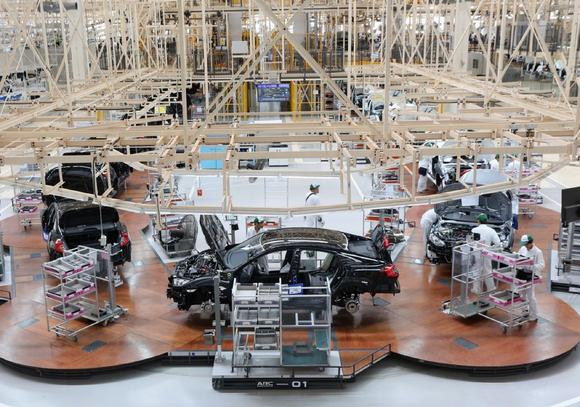
    Honda Motor has installed a new type of production line that is about 10% more efficient at an automobile plant in Thailand, the company said Thursday.

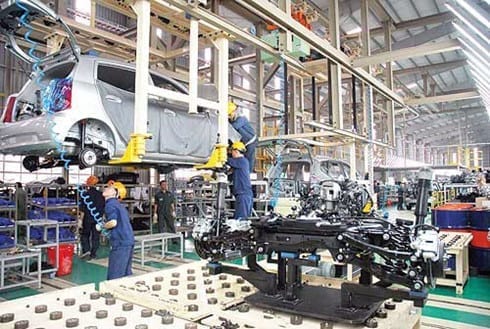
    Until now, each worker was typically responsible for adding one type of part to a vehicle, and had to walk between the conveyor and the parts shelf whenever work on one vehicle was completed. With the new system, four workers ride a unit that moves on a conveyor, with boxes of parts at the ready, allowing them to continuously install multiple parts. This reduces walking to get parts.

    Known as an ARC line, the new format was introduced at a plant in the eastern Thai province of Prachinburi that began turning out finished autos in March and makes some 60,000 Civic sedans annually. It is being applied to about 20% of total assembly procedures, including the attaching of wiring and interior parts after the body has been painted.
    Layout changes for conventional production lines required considerable time and investment, whereas with the new method the conveyor that moves the line can be flexibly lengthened or shortened as needed. Production is easily raised or lowered by adjusting the number of units, and a smaller investment is required when adding vehicle models or changing production volumes.
    After monitoring performance under the new approach, Honda will consider expanding its use.
  • Honda BR-V prototype debuts at Gaikindo in Indonesia

    Honda BR-V prototype debuts at Gaikindo in Indonesia

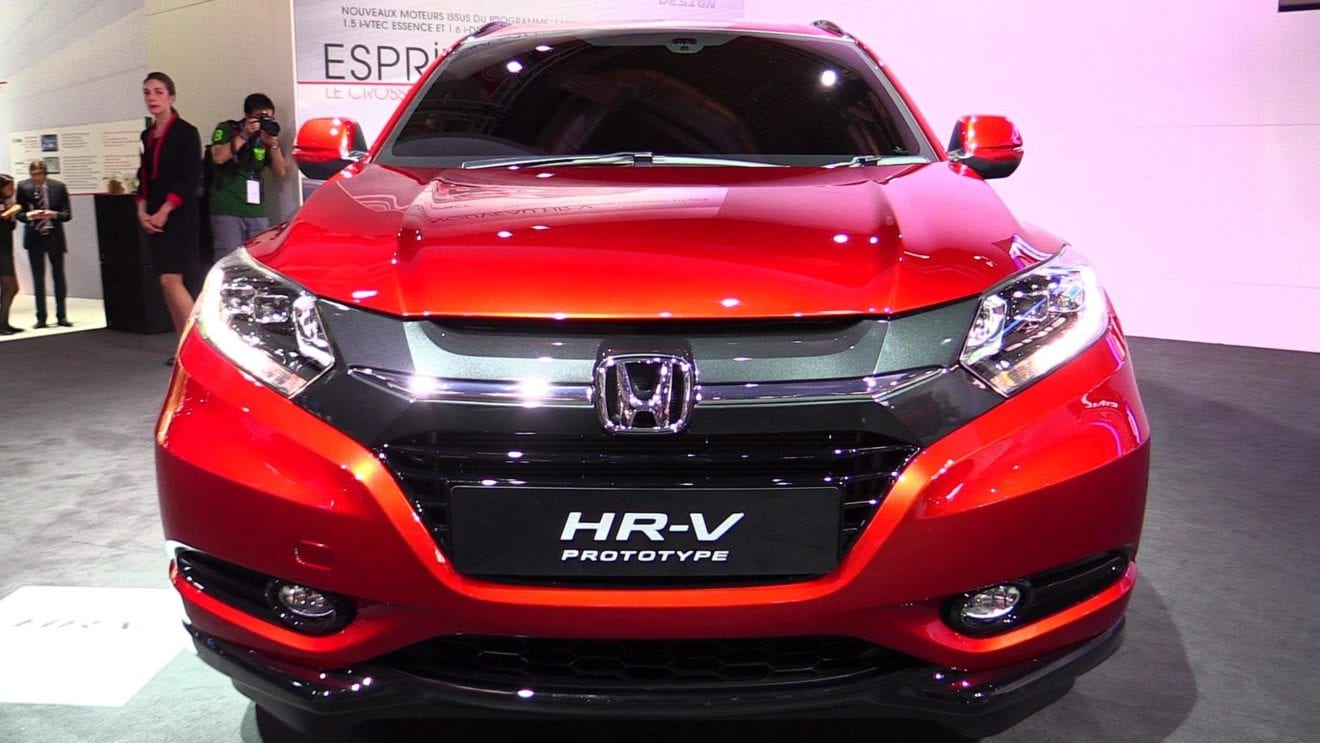
    Japanese automotive major Honda has unveiled its Honda BR-V Prototype, powered by a 1.5 liter i-VTEC engine with 6-speed manual transmission or a continuously variable transmission (CVT), at GAIKINDO Indonesia International Auto Show (GIIAS) 2015.

    honda

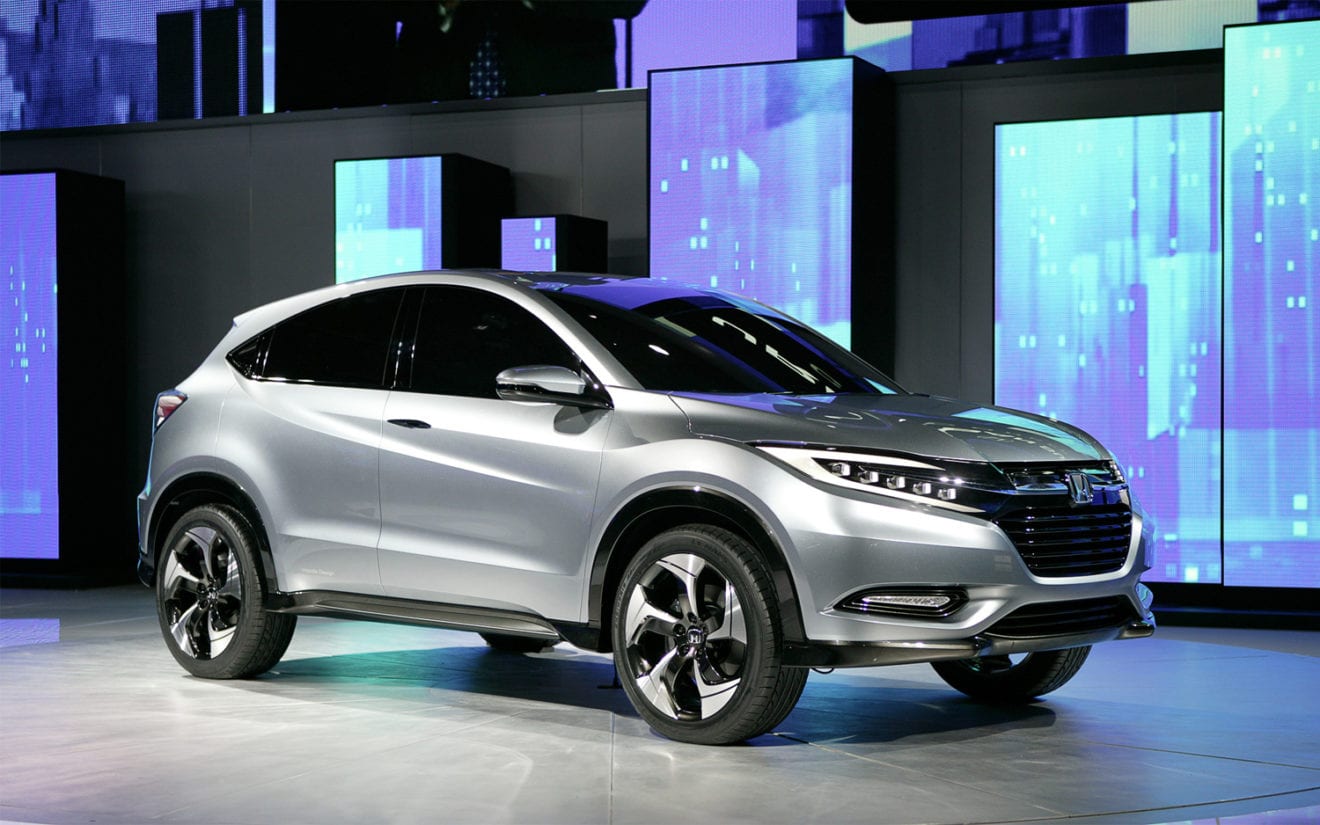
    Stated to blend the appearance of an SUV with the spacious cabin of an MPV, the new vehicle will first hit the stores in Indonesia next year at a price range between $16,432 and $18,932.

    Production of the vehicle will begin at the firm’s facility at Karawang, Indonesia, in January.

    Honda Motor regional operation (Asia and Oceania) COO Noriaki Abe said: “Honda started business in Indonesia in 1971, and the importance of this country for Honda’s auto business has been increasing year by year.

    “With the all-new 7-seat BR-V and the rest of the Honda line-up, we will continue to offer exciting products and the joy of driving to our customers in Indonesia.”

    With the exterior sporting high ground clearance, big roof rails for all grades, LED connected tail light design in C-character and new 16-inch aluminum wheels, the interior flaunts a spacious and comfortable cabin with additional knee room and head room.

    PT Honda Prospect Motor president director Tomoki Uchida said: “Honda BR-V was developed to fulfill the needs of Indonesian customers. We believe Honda BR-V will be greatly received by customers in Indonesia and become the main attraction in this year’s motor show.”

  • Honda Click 125i scooter imported into India for R&D purpose

    Honda Click 125i scooter imported into India for R&D purpose

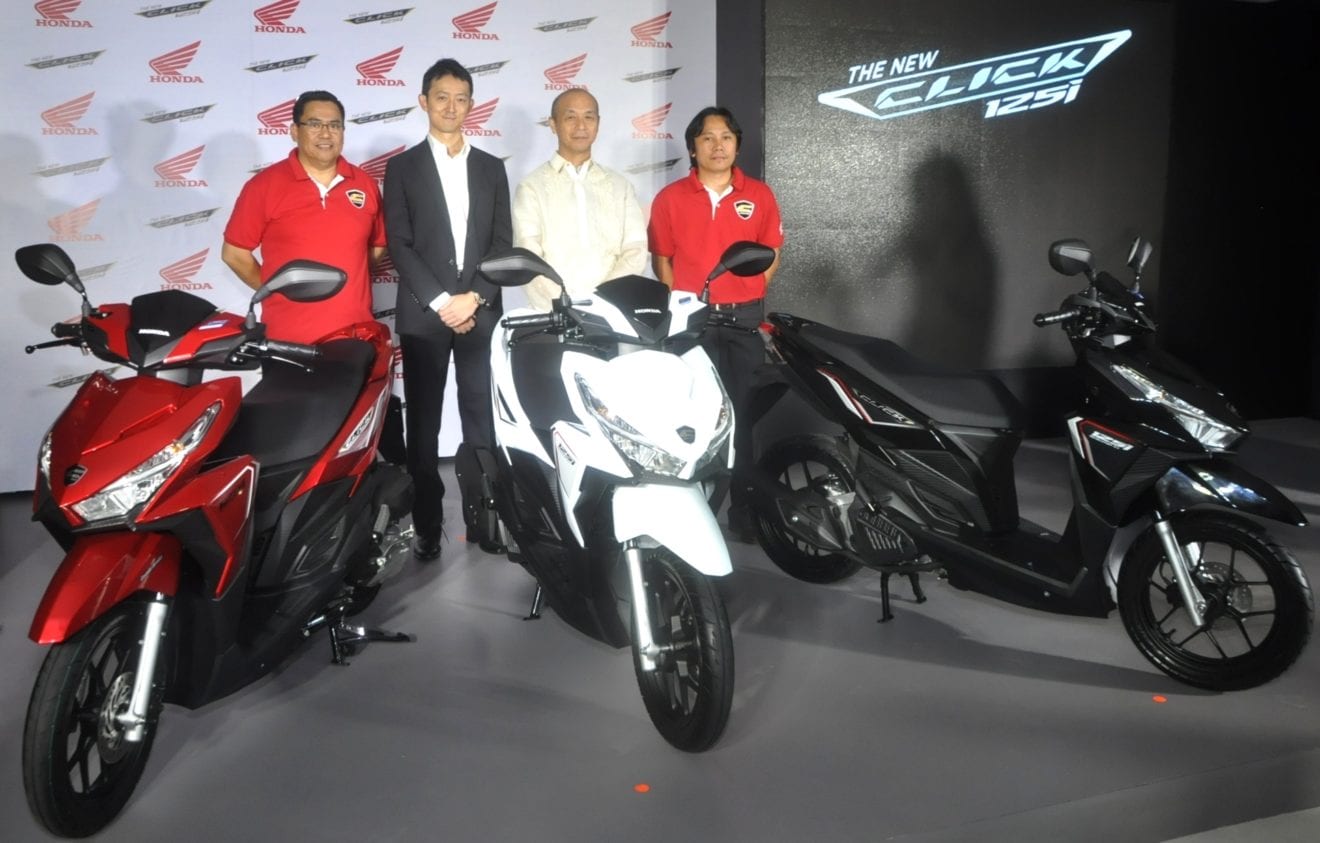
    Seeing the growing two-wheeler market, two-wheeler manufacturers are launching their new products to increase market shares. Last month, Honda’s Activa range of scooters has put the Japanese manufacturer at number one position in scooter sales. It seems that Honda wants to further enhance its sales in the scooter segment. The company has just imported the Click 125i scooter into India for research and development purposes and might even think about launching it in the future.

    Honda Click 125i scooter imported into India for R&D purpose
    Dubbed as the ‘future of scooters’, the Click 125i is a sleek and sharp looking scooter that was mainly developed for countries like Thailand and Indonesia. The Click 125i is powered by 125cc PGM-FI built-in Liquid cooled engine that gives 11.4 PS of maximum power and 11.16 Nm torque.

    It also has ‘The Idling Stop System’ (ISS) technology that helps the company to achieve high fuel efficiency. This system removes wasteful fuel consumption by automatically switching the engine off after 3 seconds in traffic lights and other short stops; and when you have to move all you have to do is just twist the throttle. The Click 125i is claimed to return an excellent fuel efficiency of 64.3 km/liter that is the highest number in 125cc segment scooter.

    To further provide the benefit of Honda Smart Technology, the Click 125i is also equipped with is Combi-Brake System (CBS) which balances braking at rear wheels and front wheel evenly. Though the scooter has been imported for R&D purpose, the possibility of Honda launching Click125i in India cannot be ignored.

  • Honda Thailand to Unveil New-Gen CUV Prototype

    Honda Thailand to Unveil New-Gen CUV Prototype

    Honda Thailand’s BR-V prototype, a new-generation CUV, will make its world premiere at the upcoming Gaikindo Indonesian International Auto Show.

    The BR-V (Bold Runabout Vehicle), on display at the Aug. 20-30 event in Tangerang, Indonesia, features a solid exterior design with high ground clearance, large alloy wheels and sleek roof rails. It seats seven in a 3-row configuration.

    The BR-V is powered by a 1.5L gasoline engine with two advanced transmissions available.

    Honda R&D Asia Pacific in Thailand developed the new vehicle for the Asian market.

  • Honda BR-V bookings to open at Indonesia Motor Show

    Honda BR-V bookings to open at Indonesia Motor Show

    Honda, the Japanese automaker, yesterday released the design sketches of the much-awaited compact SUV. Based on the Brio platform, the prototype of the crossover will be premiered at the 2015 Indonesian International Auto Show in August. If reports are to be believed, Indonesia will be the first market to see the launch of this much-awaited BR-V crossover.

    Honda BR-V (Brio SUV) bookings to open at Indonesia Motor Show
    Bookings for the crossover will open at the 2015 Indonesia Motor Show itself. For the Indian market, the Brio SUV is expected to make its debut at the 2016 Delhi Motor Show while the launch could take place by the mid-2016. The BR-V crossover is developed by Honda R&D Asia Pacific Co., Ltd. (HRAP) in Thailand, and it will target Asian markets.

    The Honda BR-V crossover will be a seven-seater car, and is expected to get better quality interiors. The vehicle features a rugged design with high ground clearance, single slat chrome grille, LED daytime running headlamps and large alloy wheels.

    Under the hood is a 1.5-litre i-VTEC petrol engine that is good for 117bhp of power. This engine will be paired to a five-speed manual or a CVT gearbox. India-spec model will also get a diesel engine option, 1.5-litre i-DTEC motor paired to a six-speed manual gearbox.